Artwork
Pietà with Virgin and St. John
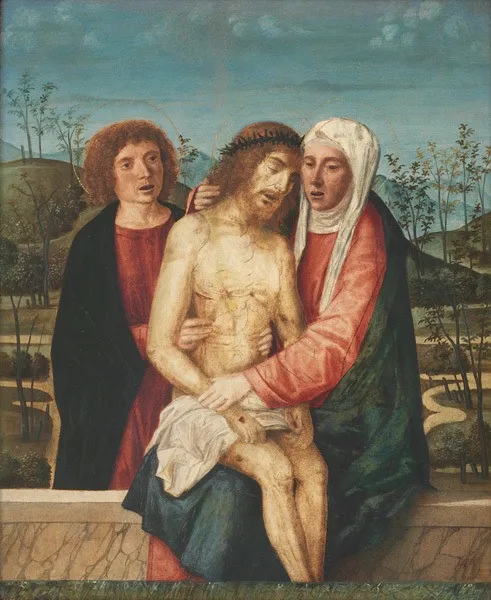
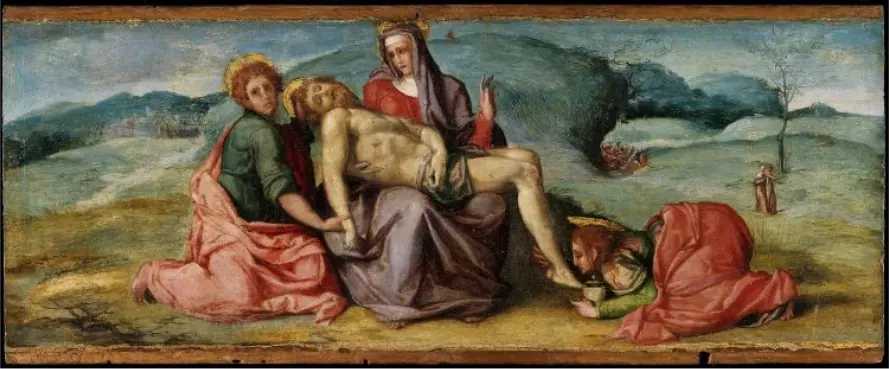
Pietà with Virgin and St. John is an unspecified painting by the Venetian Renaissance artist Giovanni di Niccolò Mansueti. It dates from 1506 and is held in the collection of the Statens Museum for Kunst. Created in 1506, this oil painting presents a restrained tableau of mourning.
About this work
Subject & Meaning
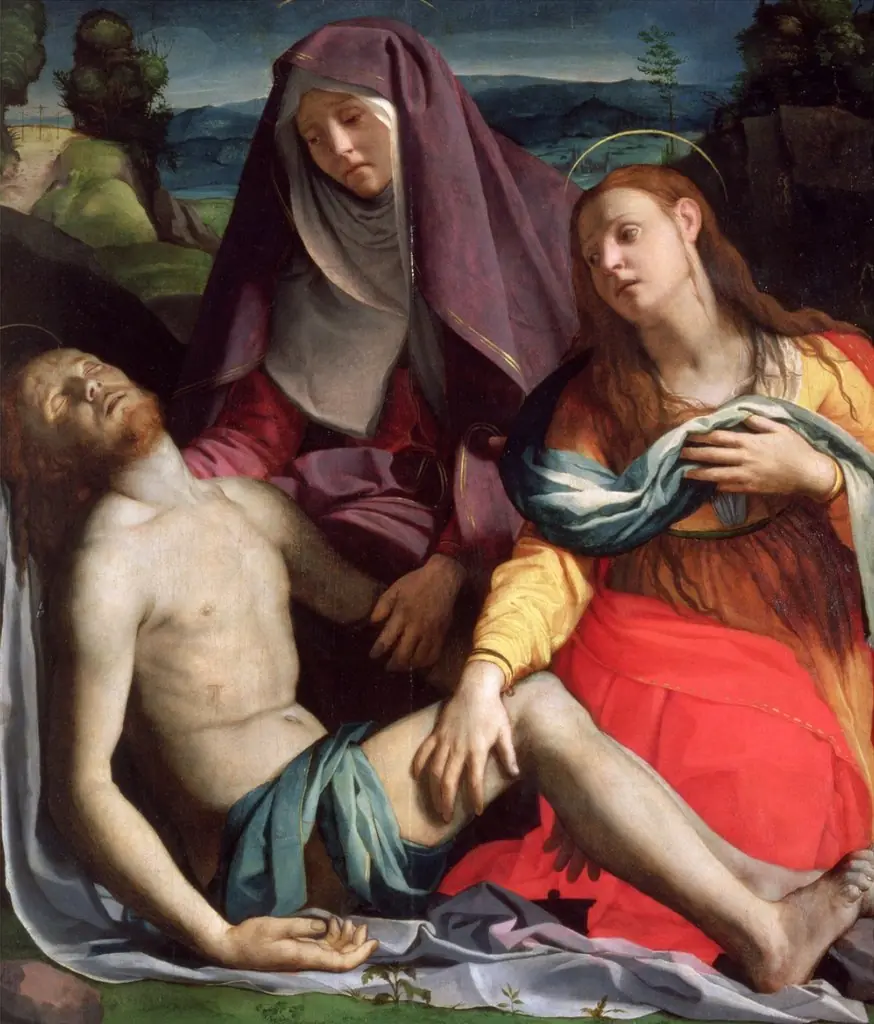
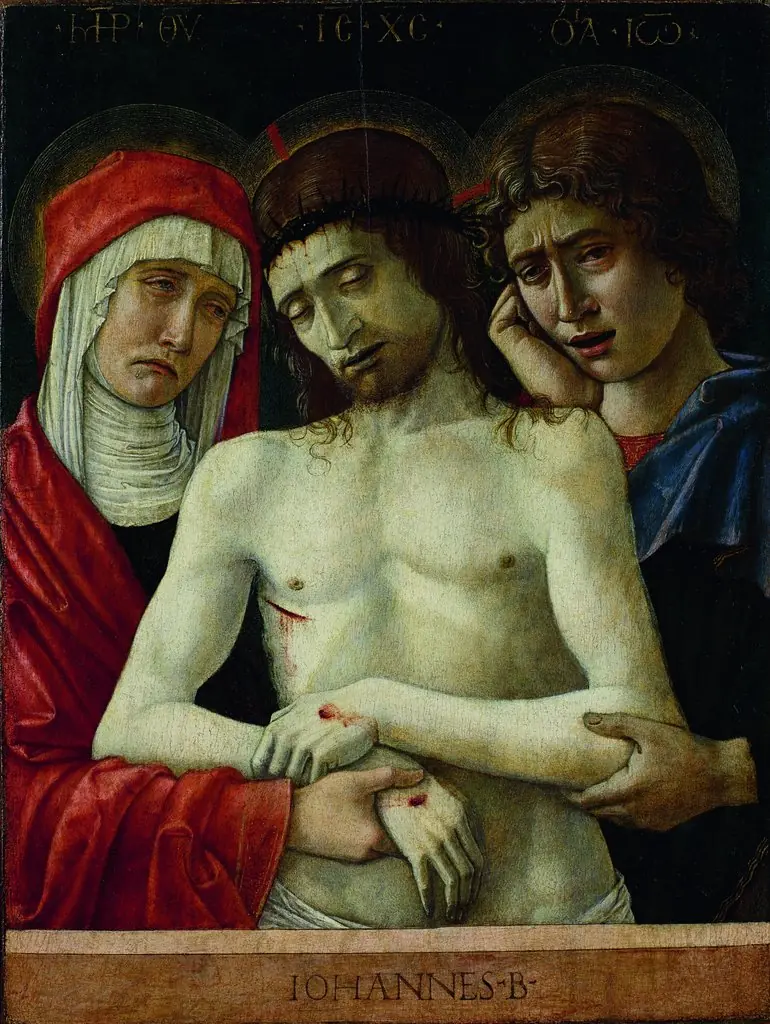
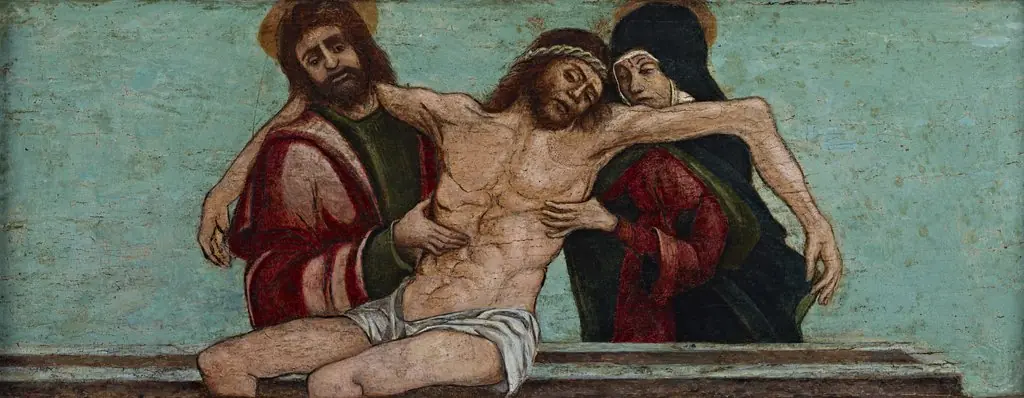
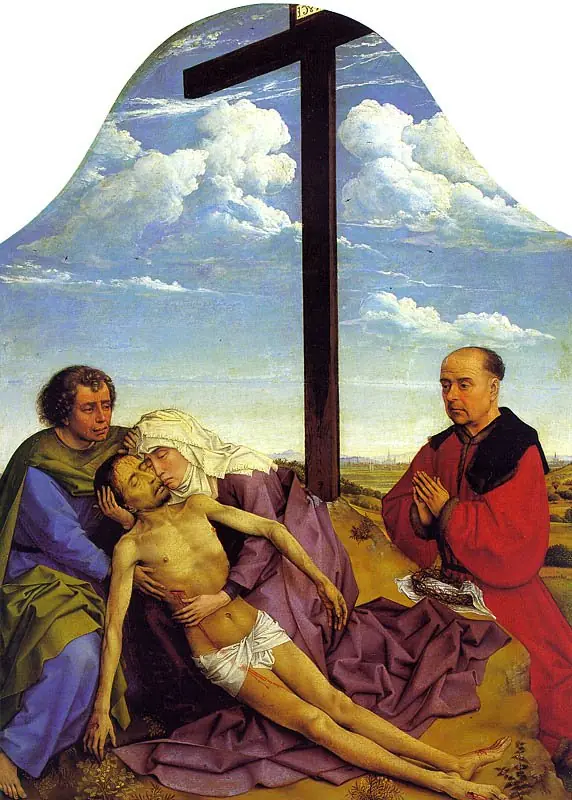
The painting depicts a Pietà, a devotional subject showing the Virgin Mary mourning over the dead body of Christ after the Crucifixion.
The painting depicts a Pietà, a devotional subject showing the Virgin Mary mourning over the dead body of Christ after the Crucifixion. Saint John the Evangelist is included as an attendant figure, a common elaboration of the traditional Pietà composition that emphasizes the shared grief of Christ's closest followers. The presence of John the Evangelist underscores the theme of compassionate witness and the transmission of sacred narrative.
As a religious work dated to 1506, it reflects early sixteenth-century Venetian devotional conventions, presenting the scene with emotional immediacy intended to inspire the viewer's empathetic meditation on Christ's sacrifice.
History & Provenance
The work was painted by Giovanni di Niccolò Mansueti in 1506, as recorded by both the artist’s dated signature and internal documentation.
It entered the collection of the Statens Museum for Kunst in Copenhagen, where it remains in the museum’s holdings. The painting’s creation history is tied to a Venetian context, with no documented commissioning patron specified in available sources.
Giovanni di Niccolò Mansueti's Pietà with Virgin and St. John, created in 1506, is held in the collection of the Statens Museum for Kunst. The painting, which depicts the Virgin, St. John, and the dead Christ, is part of the museum's holdings of religious art. No specific inventory or accession number is provided in the available records, nor is there documentation of a specific exhibition history for this work in the provided sources.
Overview
Created in 1506, this oil painting presents a restrained tableau of mourning. Central to the composition is a woman cradling a lifeless male figure, his head resting on her lap, while a younger man stands behind them, his hand resting gently on her shoulder. The backdrop features a calm landscape of trees and rolling hills beneath a clear blue sky, reinforcing the solemn atmosphere.
Technique & Style
Executed in the Venetian Renaissance idiom, the painting employs soft modeling of flesh and a delicate handling of light that creates a gentle chiaroscuro. The palette balances warm reds and cool greens, while the landscape background is rendered with atmospheric perspective. The composition reflects the influence of contemporaries such as Cima da Conegliano and Vittore Carpaccio, evident in the harmonious arrangement and naturalistic detail.
Context
Mansueti’s pietà belongs to a period when Venetian artists were integrating Byzantine coloristic traditions with emerging Renaissance realism. The inclusion of the Virgin, Christ, and St. John aligns with devotional practices of the early sixteenth century, while the serene landscape reflects the era’s interest in situating sacred narratives within recognizable natural settings.
Artist & collection
Artist
Giovanni di Niccolò Mansueti (also known as Giovanni Mansueti; c. 1465 – March 26, 1527) was an Italian painter. Little is known of his biography. He was active in Venice from 1485 to 1526. A pupil of Gentile Bellini,…