Artwork
A Cat Stealing Fish
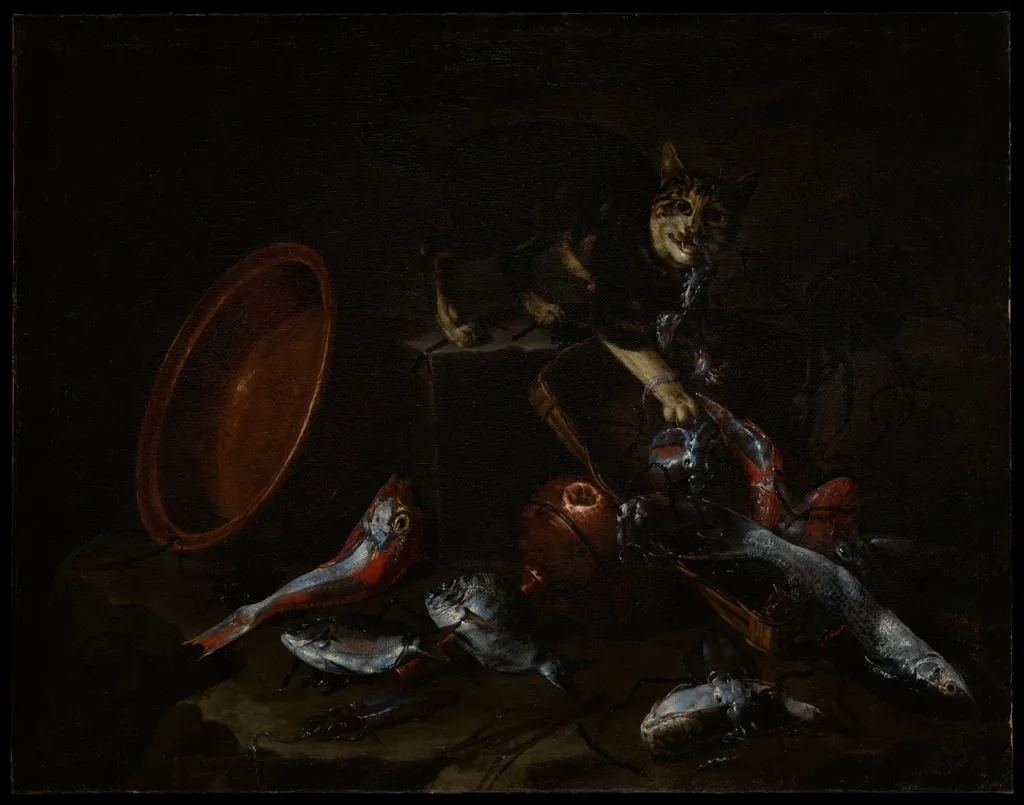
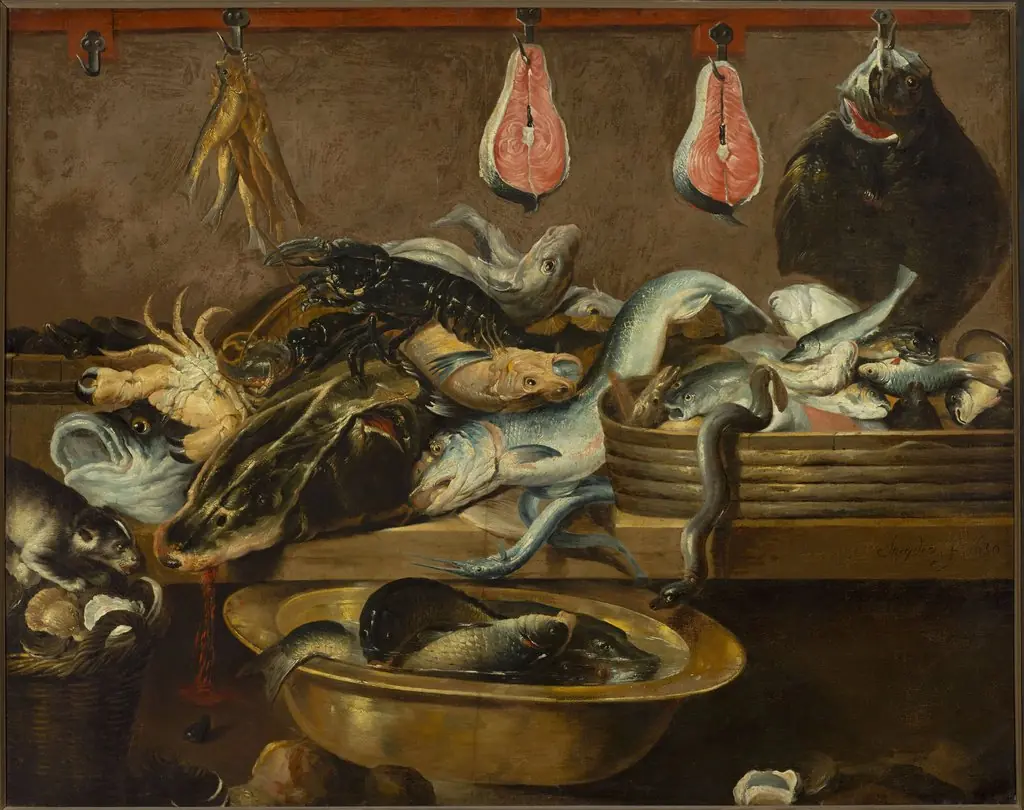
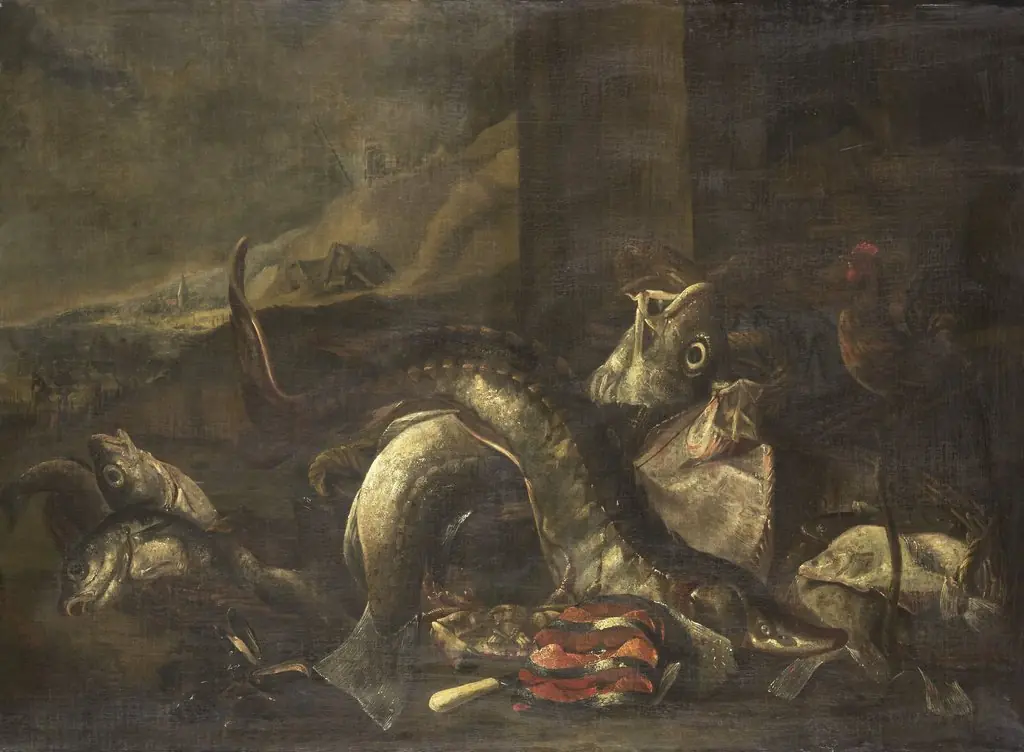
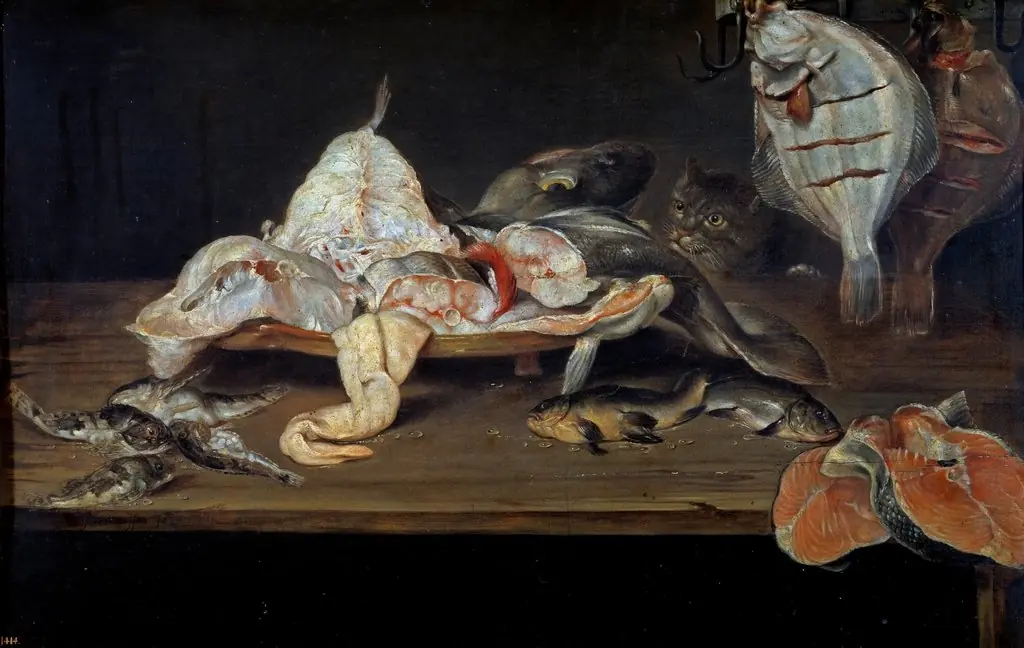
A Cat Stealing Fish is an oil painting by the High Baroque Italian artist Giuseppe Recco. It dates from 1660 and is held in the collection of the Metropolitan Museum of Art.
About this work
Technique & Style
Giuseppe Recco's handling reflects the Genoese still life tradition, with the genre classification and material identified as oil paint on canvas.
A Cat Stealing Fish is an oil painting executed on canvas, a standard support for seventeenth-century Italian still life production. The work measures 96.5 by 128.3 centimeters, a horizontal format that accommodates the broad arrangement of fish and the cat at the center of the composition. Giuseppe Recco's handling reflects the Genoese still life tradition, with the genre classification and material identified as oil paint on canvas. The painting belongs to the still life genre, depicting a cat and fish as its principal subjects.
History & Provenance
A Cat Stealing Fish is an oil-on-canvas painting executed in 1660 by the Neapolitan still‑life specialist Giuseppe Recco. The work depicts a domestic scene of a cat poised to snatch a fish, rendered in the tight, naturalistic style characteristic of late Baroque still‑life painting. Its early ownership is documented through William T. Blodgett, who held the piece before it entered the collection of the Metropolitan Museum of Art, where it remains on view.
No record of a specific commission survives, and the painting’s creation history is inferred from contemporary dated works by Recco, which consistently bear the year 1660.
The painting is held by the Metropolitan Museum of Art in New York, where it is inventoried as A Cat Stealing Fish (1660), oil on canvas (96.5 × 128.3 cm). It entered the collection in 1887 through the bequest of William T. Blodgett, who donated it alongside other works to the museum.
Overview
Giuseppe Recco's A Cat Stealing Fish, painted in oil around 1660, exemplifies the Italian High Baroque still-life tradition. This work captures a moment of quiet drama as a feline attempts to pilfer from a basket of fish. Recco, known for his detailed and lifelike compositions, created a scene that highlights both the animal's intent and the textural qualities of its surroundings. The painting is part of The Metropolitan Museum of Art's collection.
Subject & Meaning
The painting centers on a cat caught in the act, its paw extending into a wicker basket filled with fish. The artist renders the cat's fur in warm, golden shades, contrasting with the cool, silvery tones of its intended prey. This focused interaction, set against a deep, dark background, creates a sense of immediate engagement, drawing the viewer into the animal's stealthy endeavor.
Context
Active during the 17th century, Giuseppe Recco was a prominent figure in Italian Baroque painting, particularly celebrated for his still-life compositions. His work contributed to the genre's development by focusing on realistic depictions of everyday objects, food, and animals. A Cat Stealing Fish reflects the period's interest in naturalism and dramatic lighting, characteristic of the High Baroque style prevalent in Italy.
Own this work as a print
Artist & collection
Artist
Giuseppe Recco (1634 – 29 May 1695) was an Italian painter in the Baroque style. He specialized in a variety of still lifes.