Artwork
Mercury Falling in Love with Herse
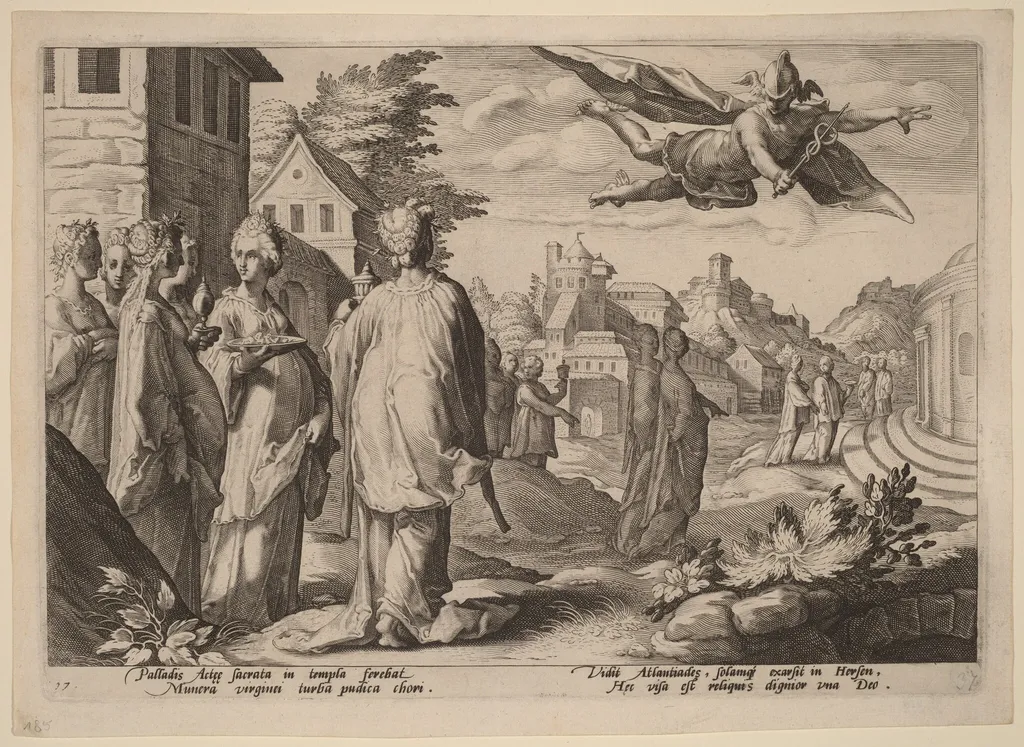
Mercury Falling in Love with Herse is an ink print by the Renaissance artist Hendrick Goltzius. It dates from 1590 and is held in the collection of the National Gallery of Art.
- Inscription
- Inscribed:lower left in plate: 17. Palladis Actee sacrata in templa... / ...Hec visa est reliques dignior una Deo; by later hand, lower left in graphite: 500/91002
About this work
Overview
The monochrome image presents a bustling composition that combines a townscape, a group of figures on the ground, and a winged deity hovering above.
Around 1590, Hendrick Goltzius produced an engraving on laid paper titled Mercury Falling in Love with Herse. The monochrome image presents a bustling composition that combines a townscape, a group of figures on the ground, and a winged deity hovering above. Central to the scene are two women, one holding a scroll, the other a tray, while the god Mercury, identifiable by his lyre, looks down upon them.
Subject & Meaning
The print depicts the mythological episode in which Mercury, the Roman messenger, becomes enamored with Herse, one of the female figures. Herse is shown in a long robe, clutching a scroll that may allude to a written promise or message, while the presence of the lyre emphasizes Mercury’s role as a patron of the arts and love.
Technique & Style
Goltzius employed the burin to incise fine, intersecting lines across the paper, creating a dense network of cross‑hatching that models volume and shadow. This meticulous line work, characteristic of Northern Mannerist engraving, allows intricate details, from the architecture on the hill to the folds of the garments, to emerge within a single black‑and‑white surface.
History & Provenance
The engraving belongs to the period when Goltzius was at the height of his printmaking activity, producing some of his most elaborate works. Though the original owner is unknown, the piece has been documented in several European collections since the 17th century, reflecting its circulation among connoisseurs of Dutch prints.
Context
Created during the early Baroque era, the work illustrates the Northern Mannerist fascination with classical mythology and complex compositions. Goltzius, a German‑born artist who settled in the Dutch Republic, integrated Italianate mythic themes with a distinctly Dutch attention to detail, bridging Renaissance humanist interests and the emerging Baroque sensibility.
Own this work as a print
Artist & collection
Artist
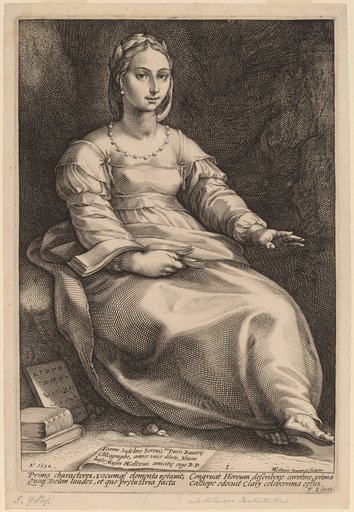
Hendrick Goltzius (German: , Dutch: ; né Goltz; January or February 1558 – 1 January 1617) was a German-born Dutch printmaker, draftsman, and painter.

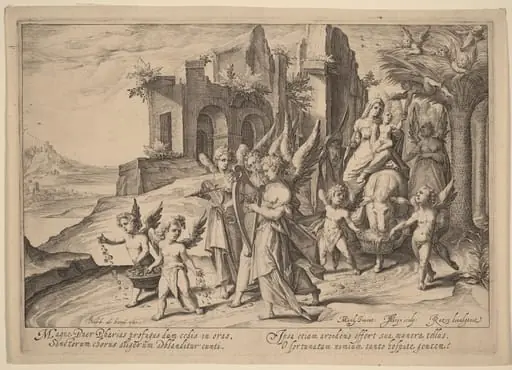 Return from the Flight into Egypt
 Thisbe Frightened by the Lion
 Clymene Urging Phaeton to Find Helios
 Adoration of the Shepherds
![Temporalis Aeternitas [Second Version], by Italian 17th Century](https://artifactworldgallery.com/img/italian-17th-century--temporalis-aeternitas-second-version--2b55857961773f67-w320.webp) Temporalis Aeternitas [Second Version]
Temporalis Aeternitas [Second Version] The Daughters of Cecrops Open the Casket Entrusted to Them by Minerva
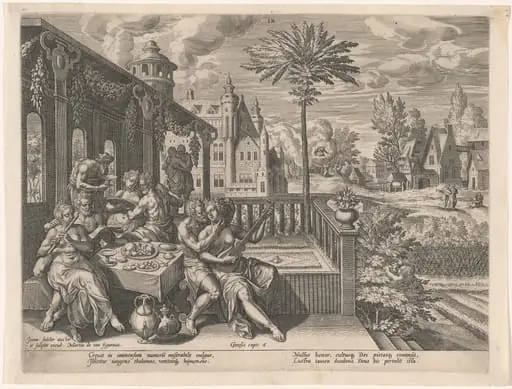 The Perniciousness of Men
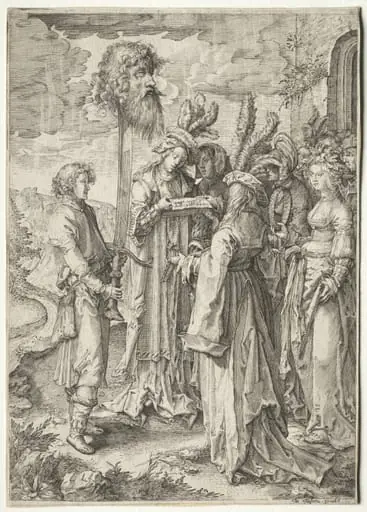 David with the Head of Goliath
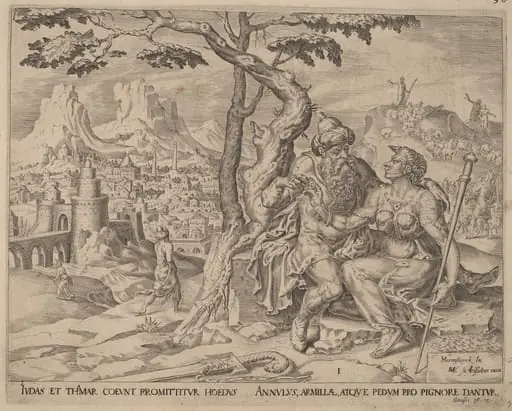 Judah Giving Tamar the Pledge
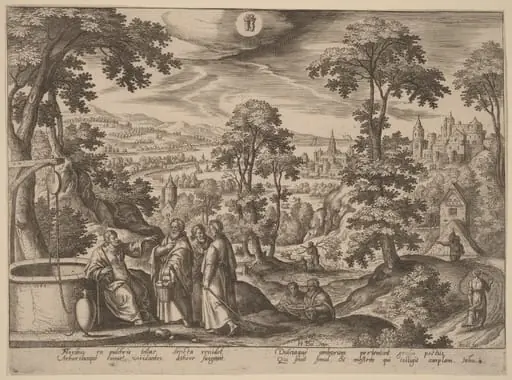 Christ and the Woman of Samaria
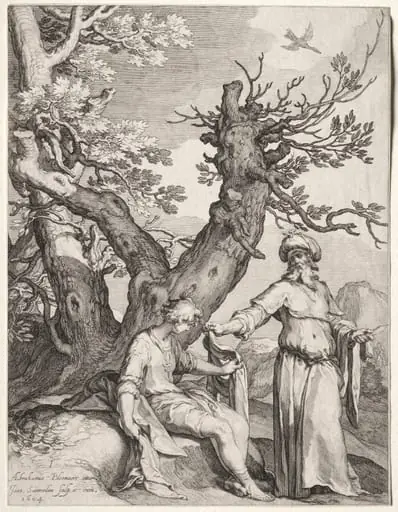 Ahijah and Jeroboam
- The Daughters of Cecrops Open the Casket Entrusted to Them by Minerva