Artwork
The Fall of Man
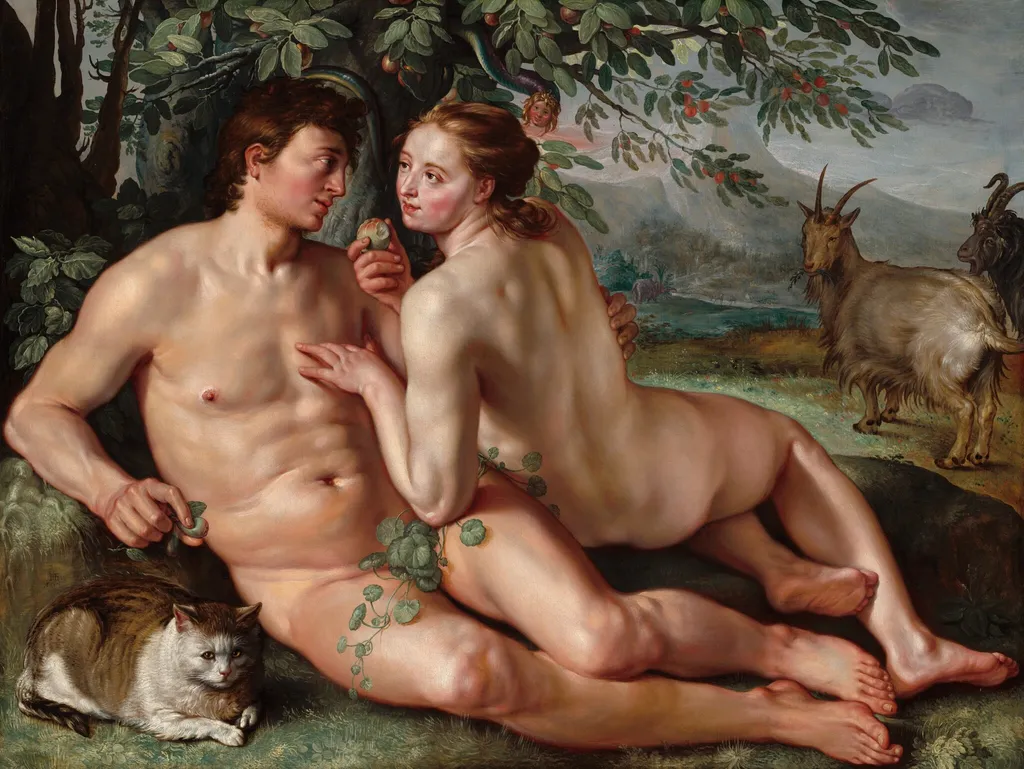
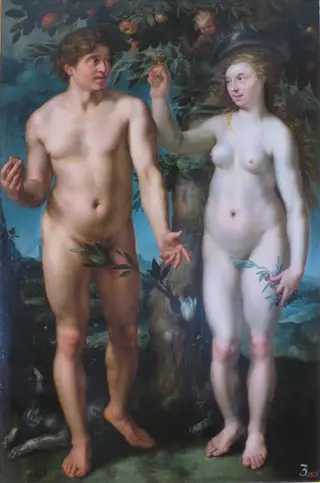
The Fall of Man is an oil painting by the Baroque artist Hendrick Goltzius. It dates from 1616 and is held in the collection of the National Gallery of Art.
- Inscription
- Inscribed:lower left in monogram: HG / AE 1616
About this work
Subject & Meaning
The composition includes the couple, the serpent, and the tree of knowledge, symbols that convey themes of temptation, sin, and the loss of innocence.
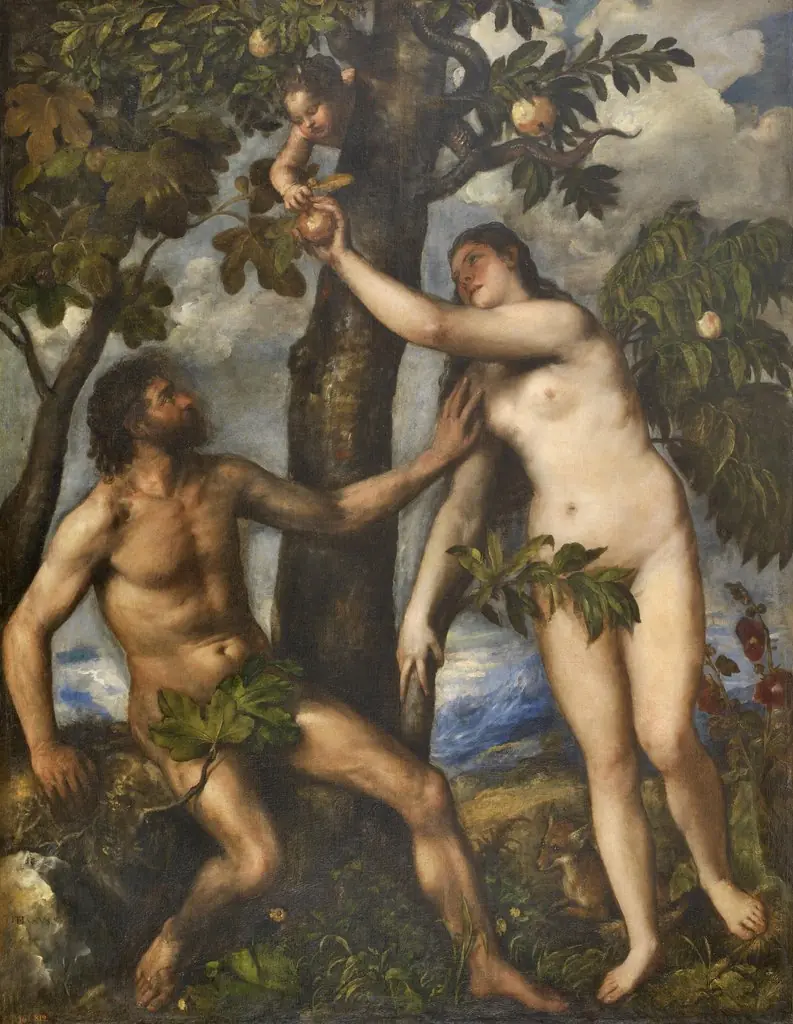
The Fall of Man (1616) by Hendrick Goltzius portrays the biblical moment when Adam and Eve partake of the forbidden fruit, an episode that marks humanity's first act of disobedience. The composition includes the couple, the serpent, and the tree of knowledge, symbols that convey themes of temptation, sin, and the loss of innocence. As a religious painting, the work functions as a visual sermon on moral transgression and its consequences.
The painting entered the National Gallery of Art's collection in 1996, having previously passed through several owners documented in sale records and archival notes.
Technique & Style
The Fall of Man (1616) is an oil on canvas work measuring approximately 104.5 cm in height by 138.4 cm in width. Executed in oil paint, the piece depicts the biblical moment of the Fall, as Adam and Eve take the forbidden fruit, a subject typical of Goltzius's religious output. The canvas support and the application of oil allow rich coloration and modeling of the figures. The painting is presently housed in the National Gallery of Art, Washington, D.C.
History & Provenance
The Fall of Man, painted by Hendrick Goltzius in 1616, is an oil on canvas work measuring roughly 104.5 × 138.4 cm. Its early ownership is uncertain; it may have been owned by Boudewijn de Man in Delft, who sold it in 1644, and later appeared in an Amsterdam private collection in 1671. The painting surfaced again in a Paris auction in June 1774, then passed to collector Camillo Davico in Turin before being acquired by Mario Micheletti. A Swiss private owner later sold it at Christie's New York in 1996, after which the National Gallery of Art in Washington, D.C., purchased the piece.
The work is held by the National Gallery of Art, Washington, D.C., under inventory number 1996.10.1. It appeared at the Christie's, Manson & Woods sale in New York on 15 May 1996 as lot 51. The painting's earlier exhibition history prior to 1996 is not documented in the available sources.
Overview
Hendrick Goltzius, a German-born Dutch artist, completed The Fall of Man in 1616. This oil on canvas painting belongs to the religious genre, depicting a pivotal biblical narrative. Goltzius, initially renowned as a leading engraver of the early Baroque period, transitioned to painting later in his career. His work in both mediums showcased a distinctive technical skill and a sophisticated approach to composition.
Context
Hendrick Goltzius established his reputation primarily as the foremost Dutch engraver of his era, celebrated for his intricate compositions and unparalleled technical skill within the early Baroque and Northern Mannerist traditions. His decision to embrace painting in the middle of his career marked a significant shift, allowing him to explore color and texture in new ways. This painting reflects his mature period, where his printmaking precision informed his approach to the canvas.
Own this work as a print
Artist & collection
Artist
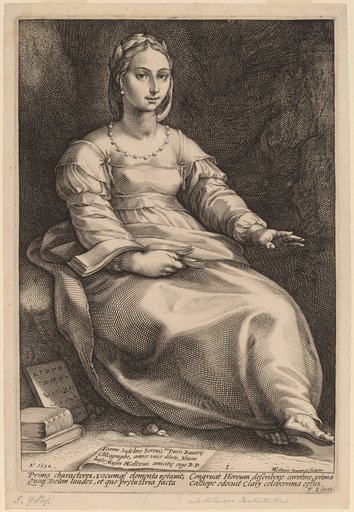
Hendrick Goltzius (German: , Dutch: ; né Goltz; January or February 1558 – 1 January 1617) was a German-born Dutch printmaker, draftsman, and painter.




![The Fall of Man [middle panel]](https://artifactworldgallery.com/img/the-fall-of-man-middle-panel--51048cc74e2325c7-w320.webp)