Artwork
William, Count of Nassau, Prince of Orange
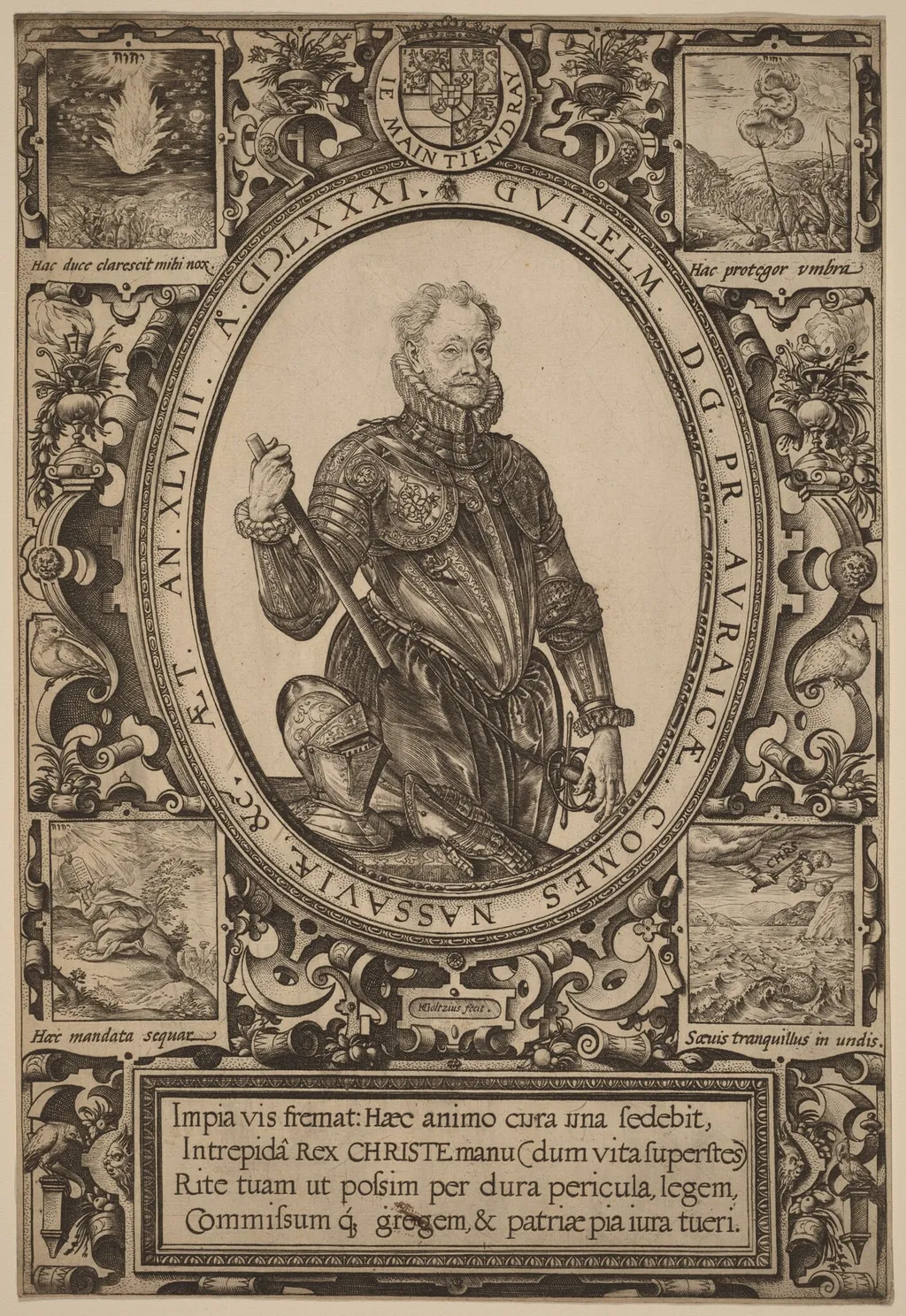
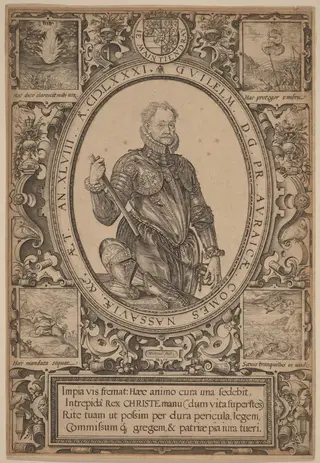
William, Count of Nassau, Prince of Orange is an ink print by the Renaissance artist Hendrick Goltzius. It dates from 1581 and is held in the collection of the National Gallery of Art.
- Inscription
- Inscribed:in small cartouche below portrait, in plate: H.Goltzius fecit.; in border around portrait: GUILELM D.G. PR. AVRAICAE. COMES. NASSAUIAE. AET. AN. XLVIII. A. (I)LXXXI.; at top, in border around coat of arms, in plate: IE MAINTIENDRAY; in cartouche at bottom, in plate: Impia vis fremat: Haec animo cura una sedebit, / Intrepida Rex Christe manu (dum vita superstes) / Rite tuam ut possim per dura pericula, legem, / Commissumque gregem, et patriae pia iura tueri. (The violent godless must tremble. This one care occupies me, Lord Christ, that so long as I live, undaunted by the arduous dangers, I can protect Thy law, the flock entrusted to me, and the sacred privileges of the fatherland.); under vignette at upper left, in plate: Hac uce clarescit mihi nox. (The night is illuminated for me by this light.); under vignette at upper right, in plate: Hac protegor umbra. (I am protected by this shadow.); under vignette at lower right, in plate: Saevis tranquillus in undis. (Calm amidst the raging seas.); under vignette at lower left, in plate: Haec mandata sequar. (I shall follow these commandments.) [Latin translations from Leeflang, Huigen, and Ger Luijten. _Hendrick Goltzius (1558-1617): Drawings, Prints and Paintings._ Amsterdam: Rijksmuseum, 2003, p. 67.]
About this work
Overview
Hendrick Goltzius produced this copper‑plate engraving of William, Count of Nassau, Prince of Orange in 1581. The print presents the Dutch leader in a formal pose, his attire highlighted by a prominent ruff and meticulously rendered facial features. Executed during the early Baroque period, the work exemplifies the high level of precision for which Goltzius was renowned.
Subject & Meaning
William of Orange, the principal commander of the Dutch Revolt against Spanish domination, is portrayed here as a dignified statesman. The careful rendering of his clothing and bearing conveys both his noble status and his role as a unifying figure for the nascent Dutch Republic, reflecting contemporary reverence for his political leadership.
Technique & Style
The engraving displays Goltzius’s characteristic fine line work and intricate cross‑hatching, achieving subtle tonal variations across the portrait. His command of the Northern Mannerist aesthetic is evident in the elaborate composition and the elegant treatment of the subject’s drapery, while the crispness of the ruff demonstrates the artist’s meticulous approach to detail.
History & Provenance
Created in the late sixteenth century, the print circulated among supporters of the Dutch cause and served as a visual affirmation of William’s authority. Goltzius, originally trained in Germany, established his workshop in Haarlem, where he produced this and numerous other prints that documented the political climate of the era.
Context
The portrait belongs to a broader wave of portraiture that celebrated leaders of the Dutch independence movement. Goltzius’s reputation as the pre‑eminent Dutch engraver of his time ensured that his depictions of William influenced subsequent representations of the prince, while his later turn to painting expanded his artistic impact beyond printmaking.
Own this work as a print
Artist & collection
Artist
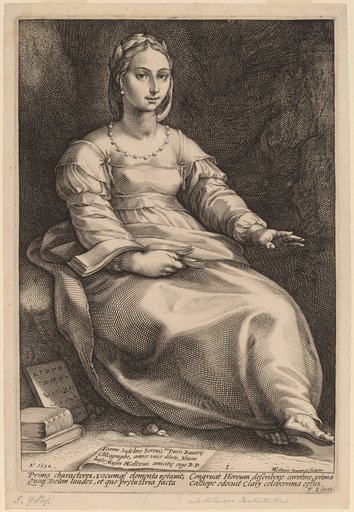
Hendrick Goltzius (German: , Dutch: ; né Goltz; January or February 1558 – 1 January 1617) was a German-born Dutch printmaker, draftsman, and painter.

- William, Count of Nassau, Prince of Orange
 William, Count of Nassau, Prince of Orange
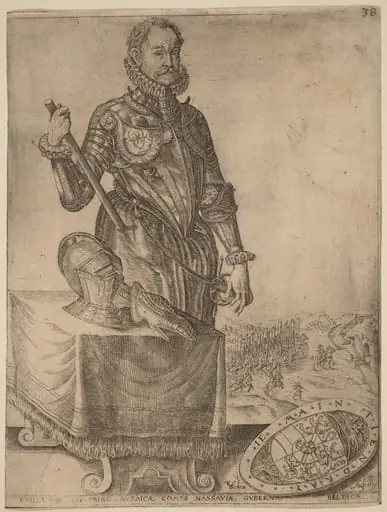 William of Nassau, Prince of Orange
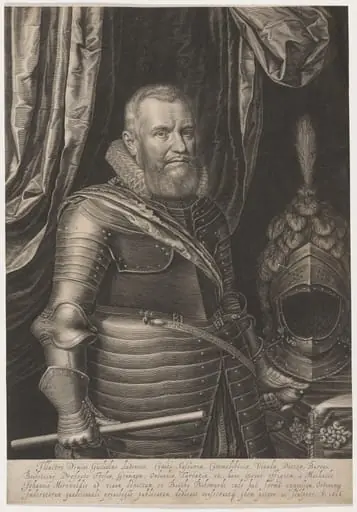 William Louis, Count of Nassau
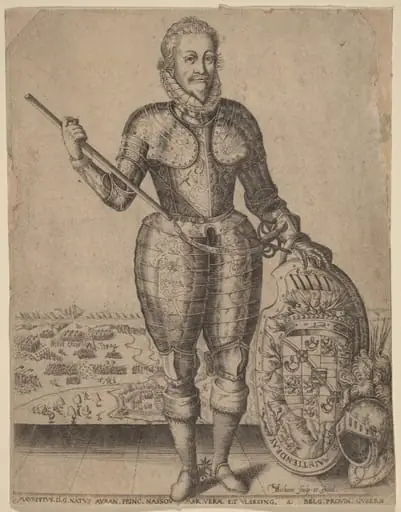 Maurice of Nassau, Prince of Orange
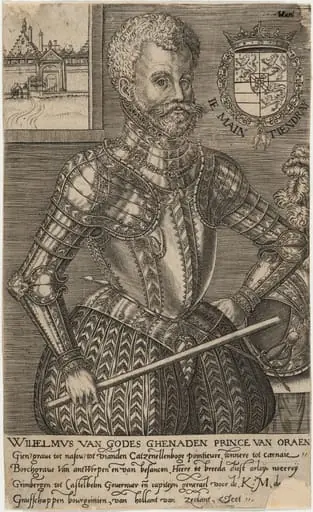 William I, Prince of Orange
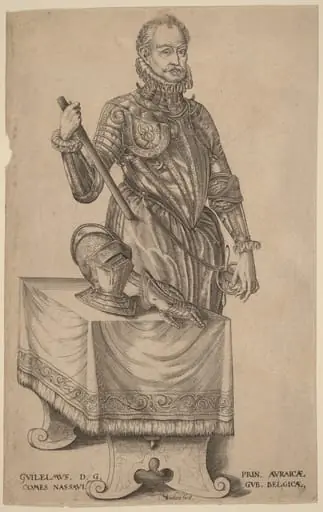 William of Nassau, Prince of Orange
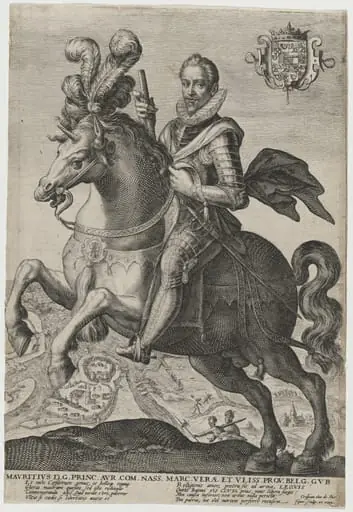 Maurice of Nassau, Prince of Orange
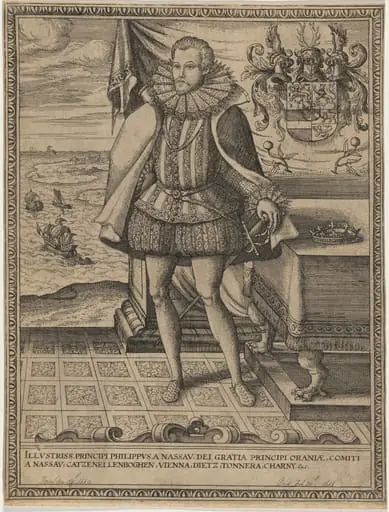 Philip William, Prince of Nassau