Artwork
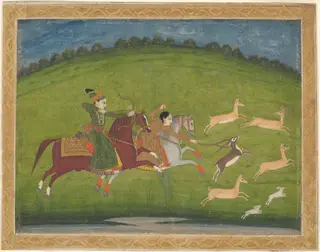
Antelope and deer hunt
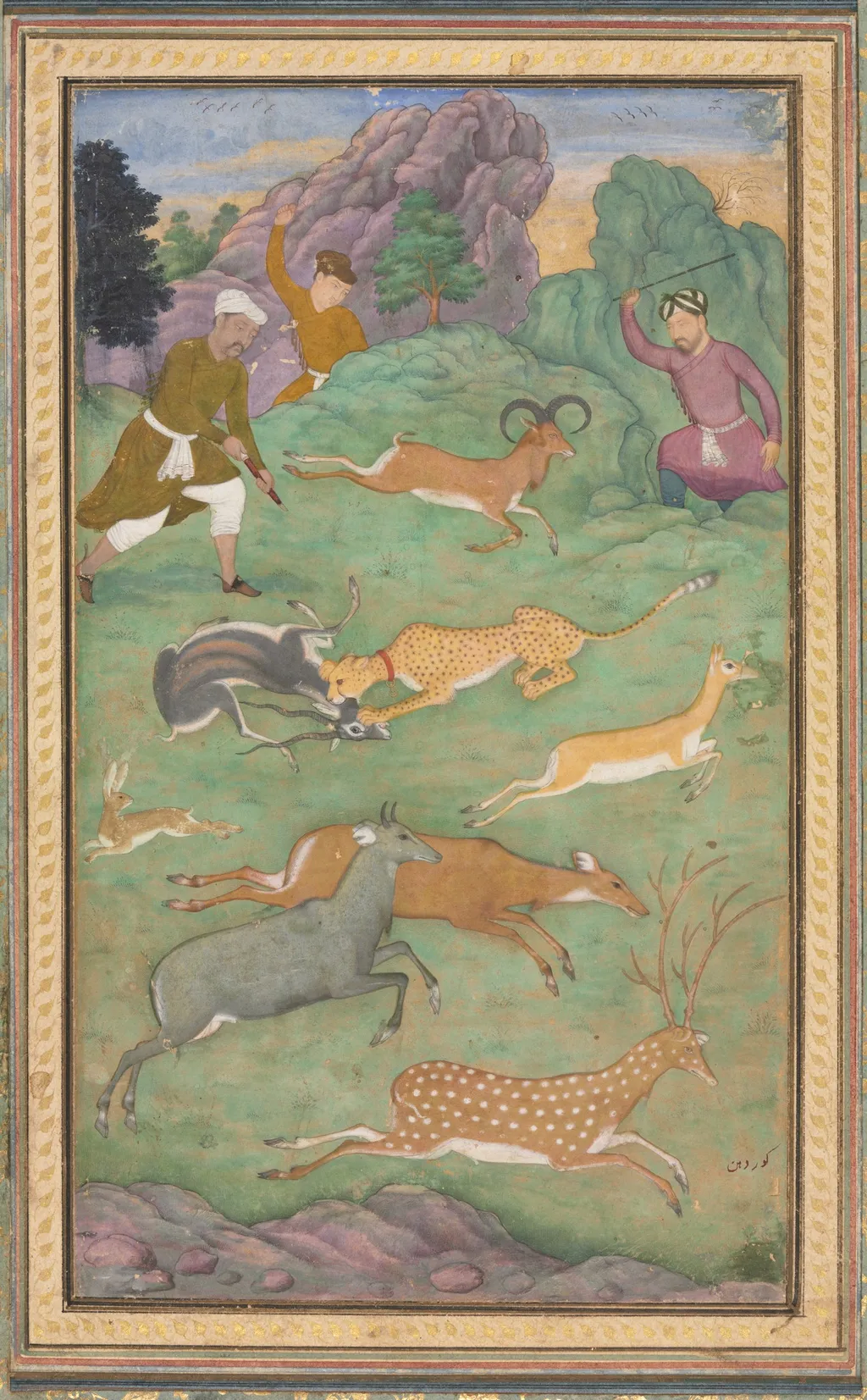
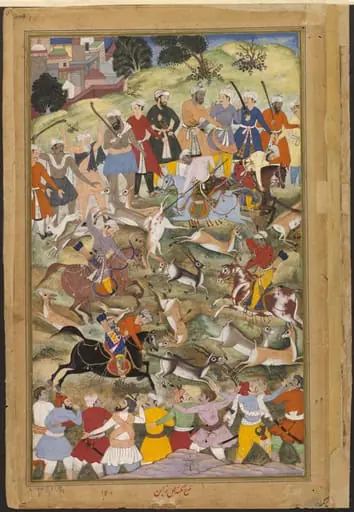
Antelope and deer hunt is an unspecified painting by the Patna School of Painting artist Govardhan. It dates from 1607 and is held in the collection of the Cleveland Museum of Art.
About this work
Subject & Meaning
The painting depicts a dynamic hunt scene centered on antelope and deer pursued by mounted hunters, set within a Mughal courtly environment.
The painting depicts a dynamic hunt scene centered on antelope and deer pursued by mounted hunters, set within a Mughal courtly environment. The artist Govardhan renders the animals in naturalistic detail against a stylized landscape, emphasizing the chase’s energy through flowing lines and rhythmic composition. The subject reflects the Mughal court’s interest in royal pastimes, where hunting symbolized both sovereign power and aristocratic leisure.
Govardhan’s work belongs to a broader tradition of Mughal animal studies that merged naturalism with imperial ideals, where the depiction of game animals carried connotations of abundance and the ruler’s dominion over the natural world.
History & Provenance
The painting Antelope and deer hunt was created in 1607 by the Indian artist Govardhan, who was active between approximately 1596 and 1645. The work is currently held in the collection of the Cleveland Museum of Art, where it is cataloged under the accession number 1939.66. This acquisition date suggests the museum obtained the piece in 1939, though specific details regarding prior ownership, commissioning patrons, or the intermediate chain of custody are not provided in the available records. The inception of the work is firmly established as January 1, 1607.
Overview
Created in 1607 by the Mughal court painter Govardhan, this small oil painting captures a dynamic hunting episode set within a verdant, rocky terrain. The composition centers on a cheetah lunging after a fleeing creature, while hunters and a flock of deer and antelope disperse in rapid motion, rendered with a delicate palette and careful attention to surface detail.
Technique & Style
Govardhan employs the Mughal school’s hallmark of rich, saturated colors and softly modeled forms. The cheetah’s spotted fur is rendered with minute stippling, while the hunters’ bright garments contrast against the muted earth tones of the landscape. Atmospheric perspective is suggested by a pale, distant sky and subtly blurred limbs that convey movement.
Context
Hunting scenes were a staple of Mughal visual art, reflecting the emperors’ fascination with sport and the natural world. This piece aligns with contemporaneous works that emphasize precise observation of animal anatomy and landscape, illustrating the synthesis of Persian artistic heritage with Indian naturalism that defined the Mughal aesthetic.
Own this work as a print
Artist & collection

Artist
Govardhan (fl. 1595–1640) was a Mughal era Indian painter of the Mughal school of painting. His father Bhavani Das, had been a minor painter in the imperial workshop. Like many other Mughal painters, they were…

- Antelope and deer hunt
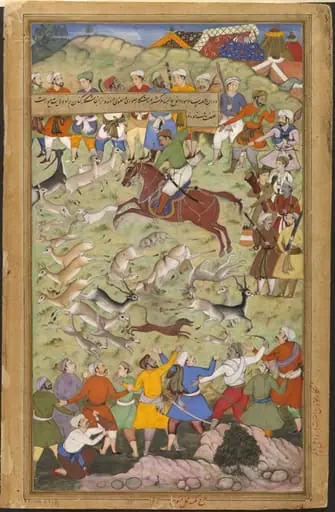 Akbar hunting at Palam, near Delhi
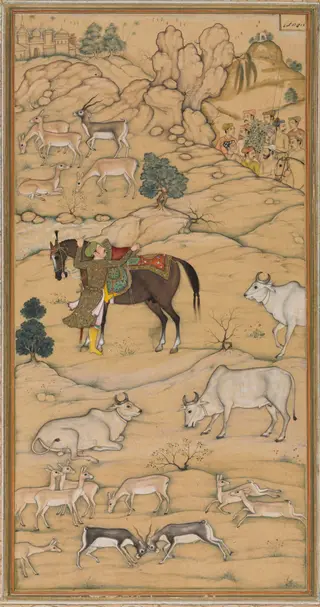 Akbar Mounting his Horse; page from the Chester Beatty Akbar Nama (History of Akbar)
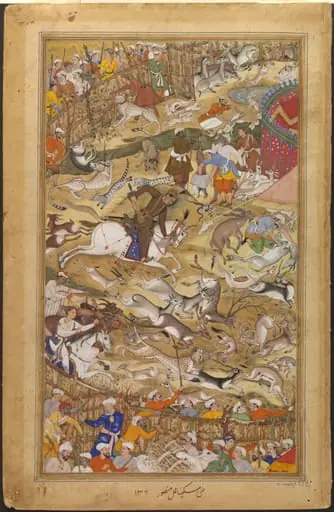 Akbar
Akbar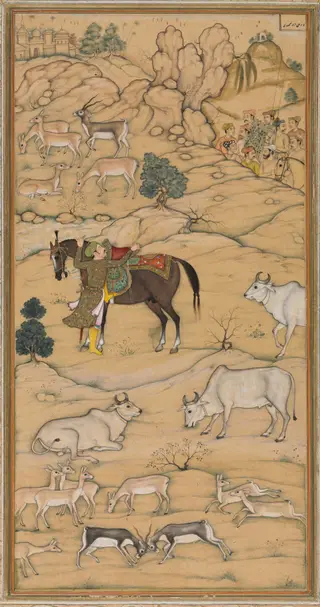 Akbar Mounting his Horse; page from the Chester Beatty Akbar Nama (History of Akbar)
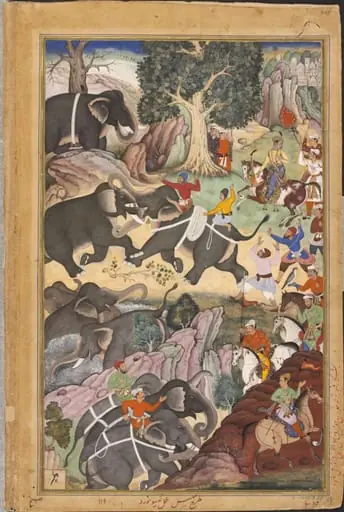 Akbar
Akbar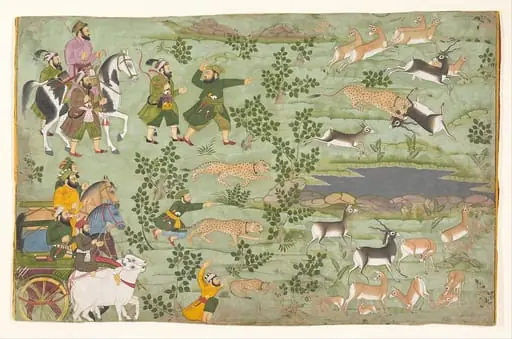 Untitled
 Akbar
Akbar Royal women shooting from a pavilion
 Prince and Princess Hunting Blackbuck
 Akbar and Hamid Bakari
 Prince and Princess Hunting Blackbuck