Artwork
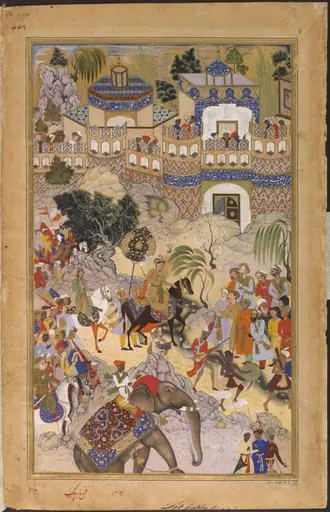
Akbar Mounting his Horse; page from the Chester Beatty Akbar Nama (History of Akbar)
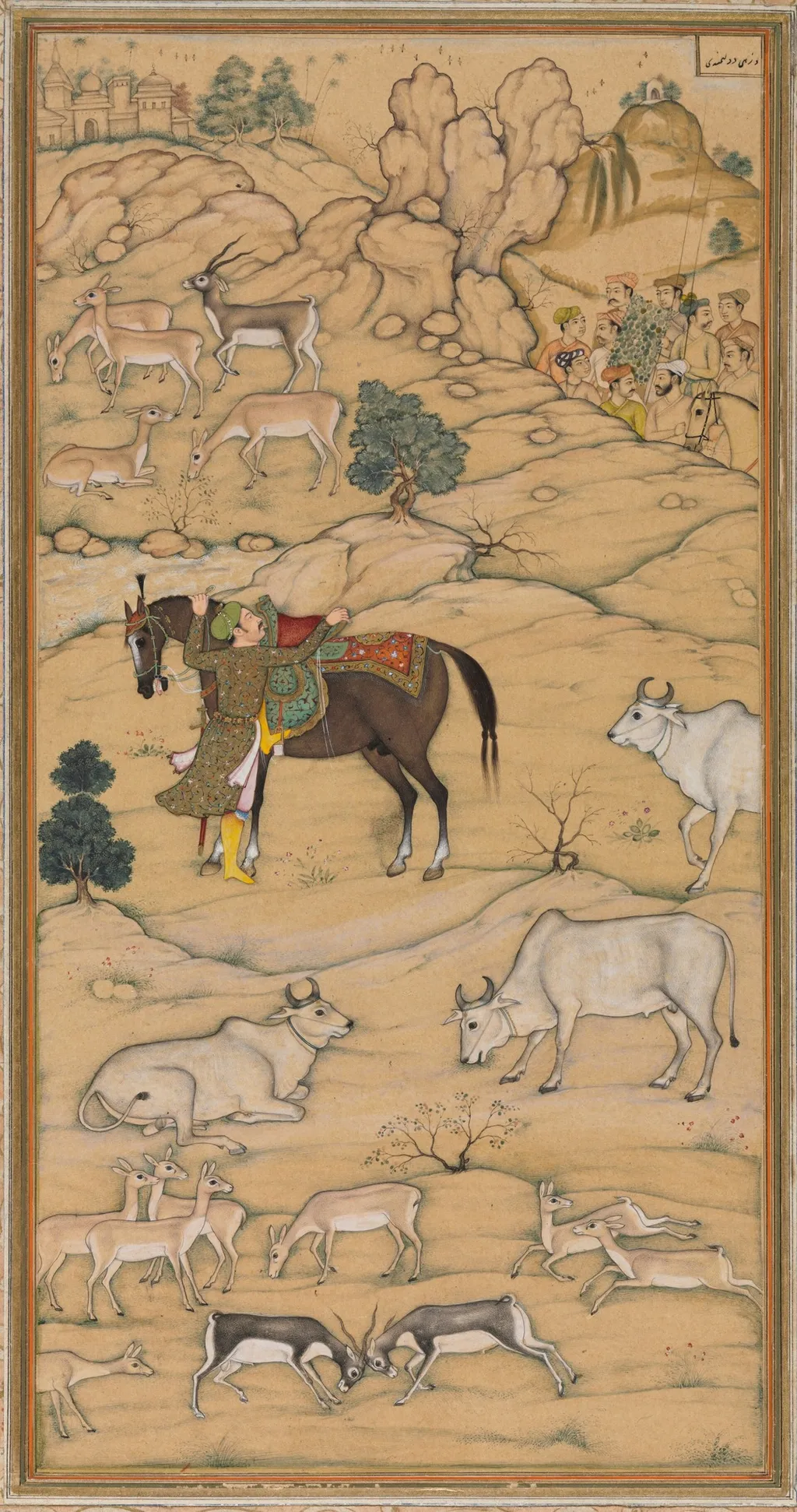
Akbar Mounting his Horse; page from the Chester Beatty Akbar Nama (History of Akbar) is an unspecified painting by the Mughal Painting artist Sur Das. It dates from 1606 and is held in the collection of the Cleveland Museum of Art.
About this work
Technique & Style
5 cm and retains its original handling without significant loss of pigment or surface abrasion, preserving the vivid reds and golds of the manuscript’s palette.
The painting is executed in opaque watercolor on paper, a technique characteristic of Mughal manuscript illumination. Sur Das Gujarati rendered the scene with fine, controlled brushwork that emphasizes the dynamic movement of the horse and rider, while the composition balances intricate decorative borders with a flattened spatial depth typical of 16th‑century Indian manuscript painting. The work measures 33.5 cm × 23.5 cm and retains its original handling without significant loss of pigment or surface abrasion, preserving the vivid reds and golds of the manuscript’s palette.
History & Provenance
The painting Akbar Mounting his Horse was created in 1606 by the artist Sur Das Gujarati, who was active in the 16th century. The work is a page from the Akbar Nama (History of Akbar), a manuscript commissioned by the Mughal emperor Akbar to document his reign. The Akbar Nama was produced in the imperial atelier, where Sur Das Gujarati contributed as a painter.
The page entered the collection of the Cleveland Museum of Art, where it is currently held as accession number 1939.65.
The painting Akbar Mounting his Horse, created in 1606 by the Indian artist Sur Das Gujarati, is held in the collection of the Cleveland Museum of Art. The work is cataloged under the accession number 1939.65. While the provided sources confirm the museum's ownership and the specific inventory number, they do not contain information regarding a specific exhibition history for this page from the Chester Beatty Akbar Nama.
Overview
The work depicts a figure in brightly patterned attire astride a dark horse, set against a barren, rocky terrain that stretches toward distant hills. Around the rider, deer and cattle roam, while a small structure and a group of seated figures appear in the far background, suggesting a narrative scene of movement and observation.
Subject & Meaning
The central figure is identified as the Mughal emperor Akbar, portrayed preparing to mount his horse. The surrounding fauna and pastoral elements evoke the emperor's association with hunting and royal procession, situating the scene within a broader depiction of courtly life and the natural world.
Context
Created within the Mughal tradition of illustrated histories, the scene aligns with other courtly narratives that combine portraiture, landscape, and animal motifs. Such illustrations served both documentary and decorative purposes, reinforcing imperial authority through visual storytelling.
Artist & collection
Artist
Sur Das spent his life inking the Mughal court’s endless parade of envoys and battles, a quiet scribe sketching power moves with a line so spare it feels like he’s holding his breath.

- Akbar Mounting his Horse; page from the Chester Beatty Akbar Nama (History of Akbar)
 Akbar and Hamid Bakari
 Akbar
Akbar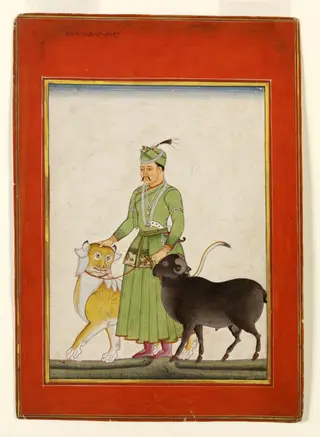 Emperor Akbar
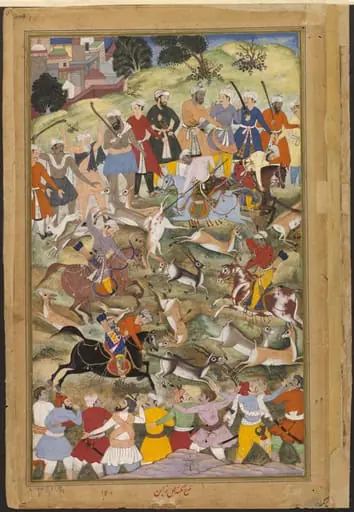 Akbar
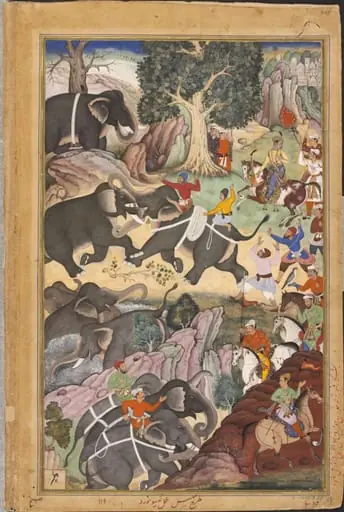
Akbar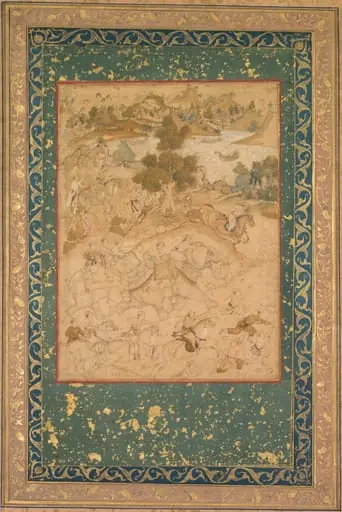 Akbar supervising the capture of wild elephants at Malwa in 1564, painting 90 from an Akbar-nama (Book of Akbar) of Abu’l Fazl (Indian 1551–1602)
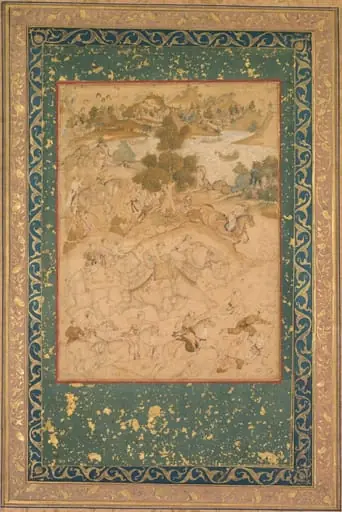 Akbar supervising the capture of wild elephants at Malwa in 1564, painting 90 from an Akbar-nama (Book of Akbar) of Abu’l Fazl (Indian 1551–1602)
 Akbar
Akbar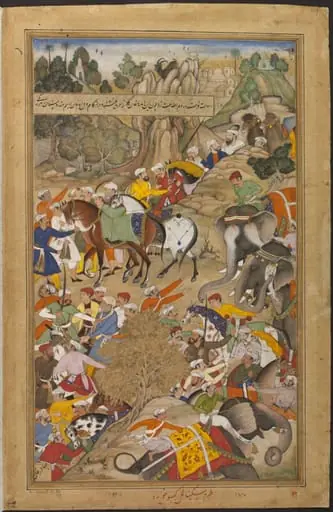 Khan Kilan
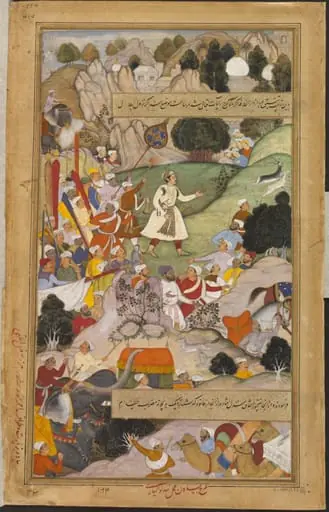 Akbar
Akbar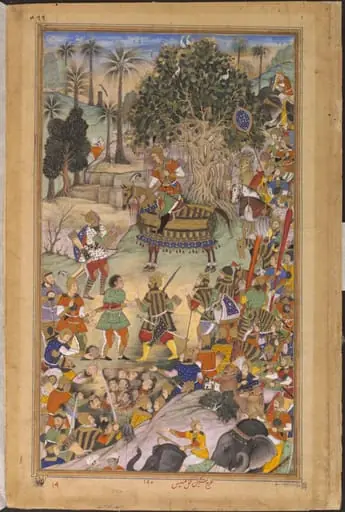 Muhammad Husain Mirza and Akbar
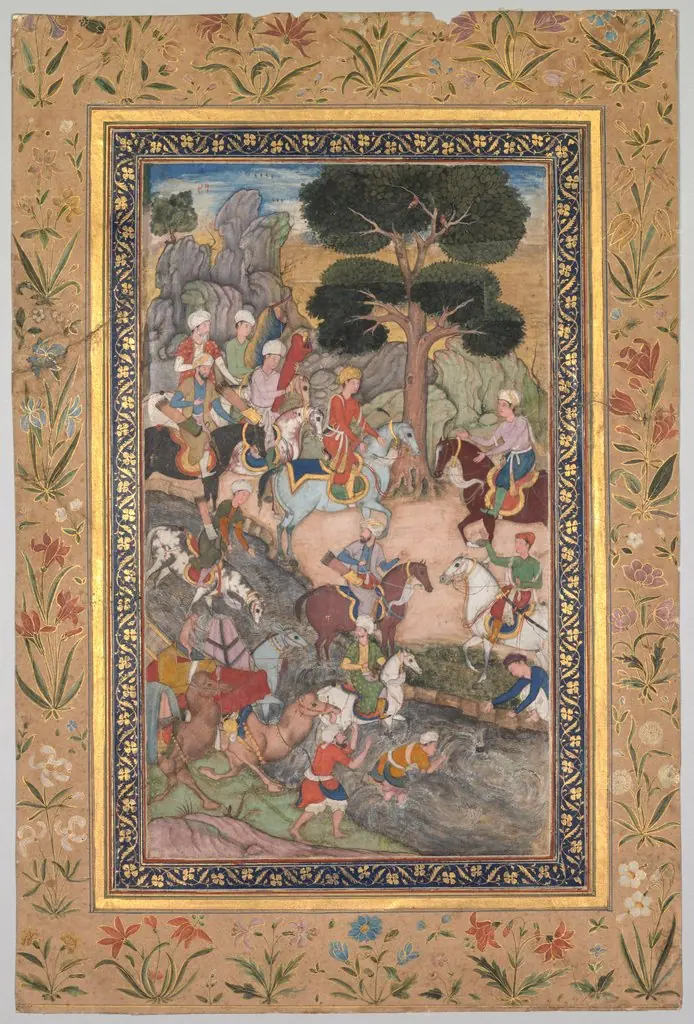 Babur meeting with Sultan Ali Mirza at the Kohik River, from a Babur-nama (Memoirs of Babur)
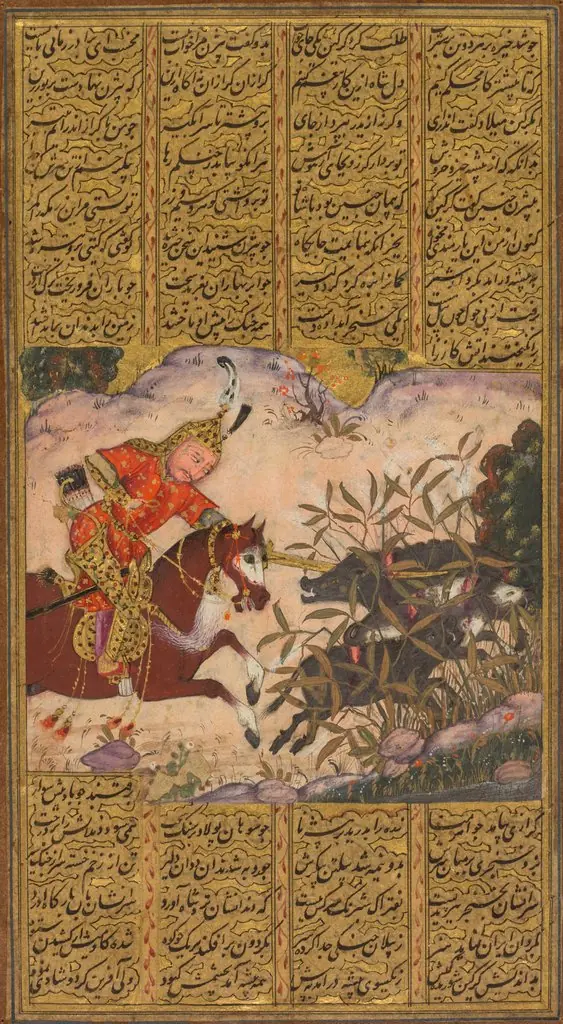 Bijan killing the wild boars of Irman, from a Shah-nama (Book of Kings) of Firdausi (Persian, about 934–1020)
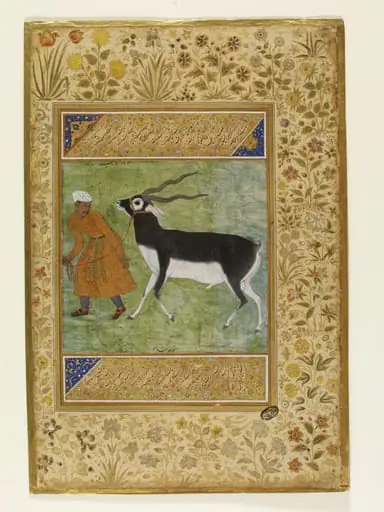 Untitled
 Babur meeting with Sultan Ali Mirza at the Kohik River, from a Babur-nama (Memoirs of Babur)
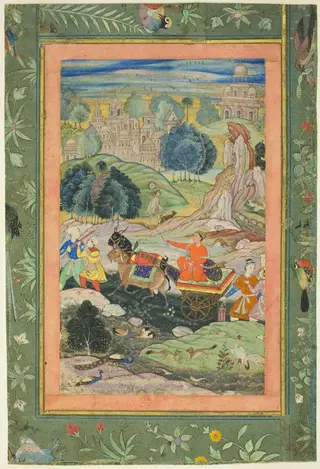 Prince Riding in Chariot Drawn by Goats
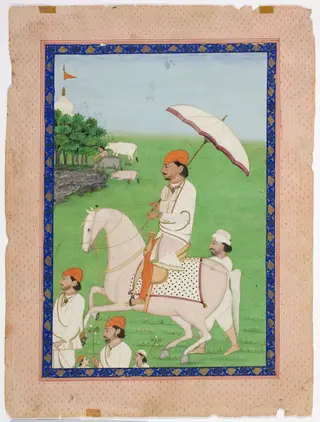 Sikh Gentleman Riding with Retainers
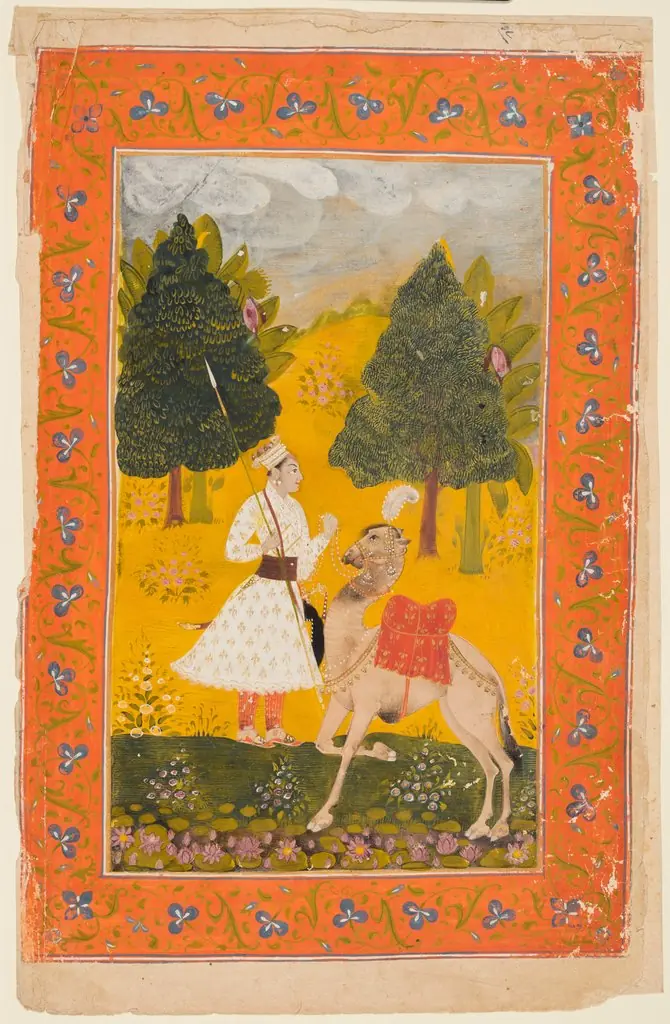 Maru Ragini, from a Ragamala (Garland of Melodies)
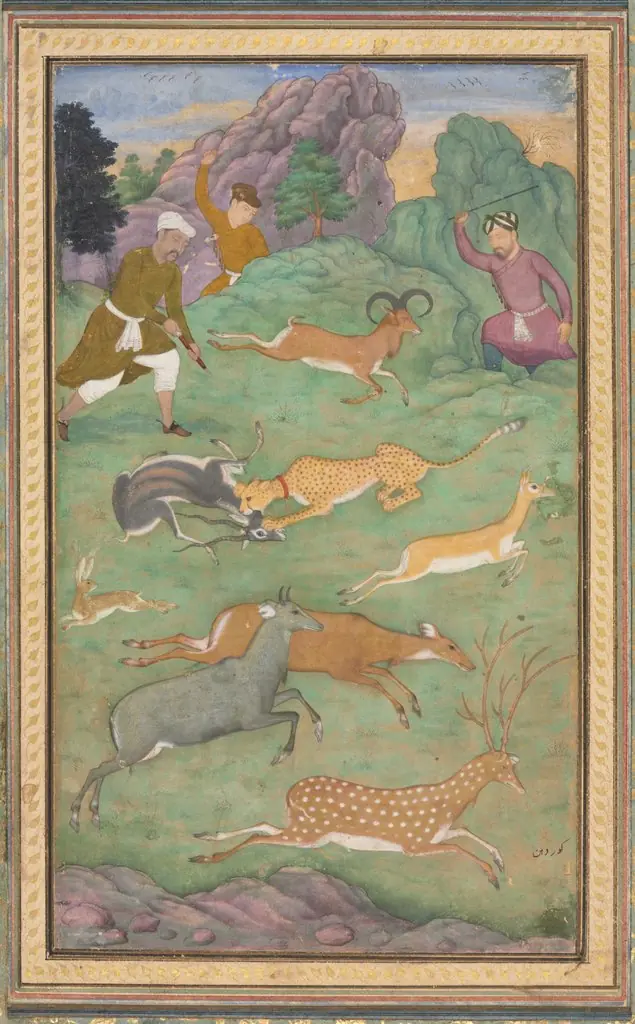 Antelope and deer hunt
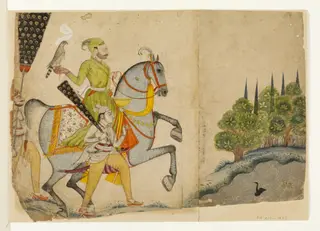 Mian Mukand Dev
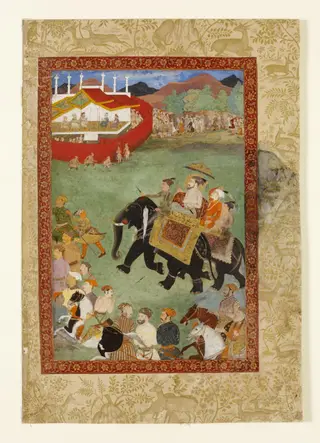 Shah Jahan and three sons