Artwork
Fuga para o Egipto
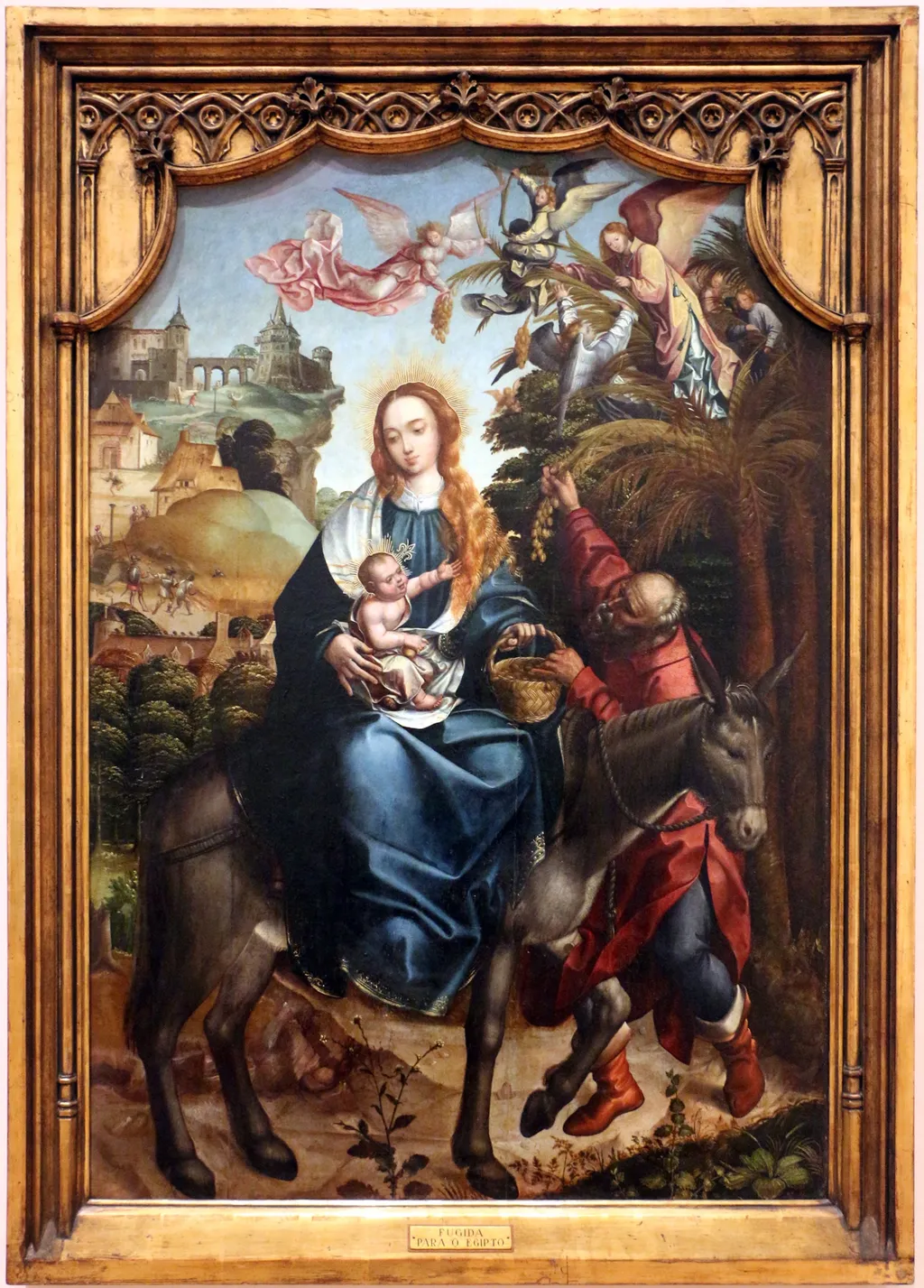
Fuga para o Egipto is an unspecified painting by the Mannerist artist Gregório Lopes. It dates from 1527 and is held in the collection of the National Museum of Ancient Art.
About this work
Overview
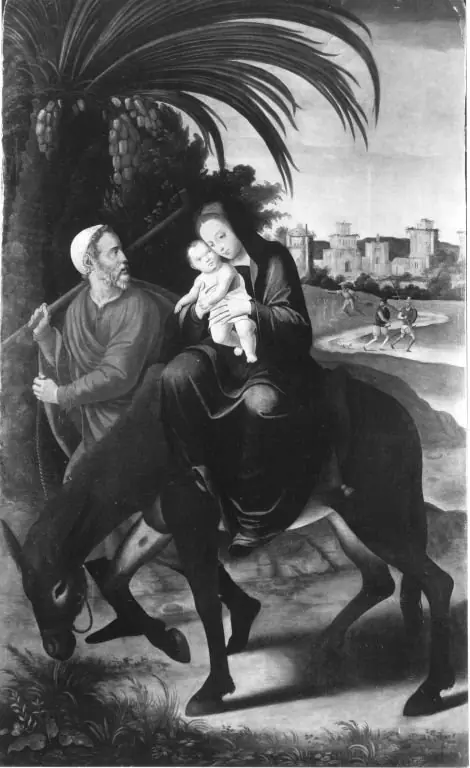
Fuga para o Egipto (Flight into Egypt), painted by Gregório Lopes in 1527, is a significant religious work from the Portuguese Renaissance.
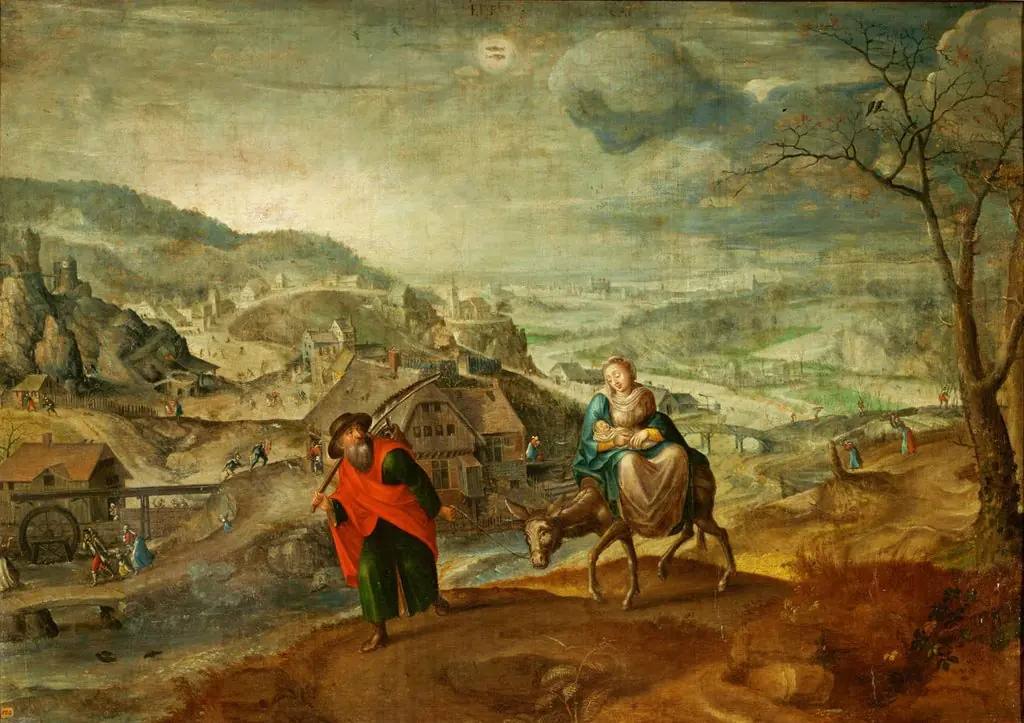
Fuga para o Egipto (Flight into Egypt), painted by Gregório Lopes in 1527, is a significant religious work from the Portuguese Renaissance. The composition depicts the Holy Family's journey to Egypt, centering on the Virgin Mary seated on a donkey while holding the infant Jesus. She is dressed in a blue robe with a white mantle, while Joseph, clad in red, leads the animal by a rope.
The scene is set against a detailed landscape featuring palm trees and a distant cityscape with architectural structures and a bridge, reflecting the artist's interest in integrating biblical narratives with recognizable European settings. Above the earthly scene, a host of angels and figures populate the sky, adding a celestial dimension to the narrative. Created during a period of intense religious devotion in Portugal, this work exemplifies Lopes' mature style, characterized by balanced composition, clear narrative focus, and the synthesis of Flemish influences with local traditions.
It stands as a key example of early 16th-century Portuguese panel painting, demonstrating the artist's ability to convey spiritual themes through structured, accessible imagery.
Subject & Meaning
The composition centers on the Virgin Mary seated on a donkey, cradling the infant Jesus, as they journey toward Egypt. A figure in red guides the animal, while angels and distant figures populate the sky, underscoring the divine protection afforded to the Holy Family during their exile.
Technique & Style
Lopes employs a vivid palette of blues, greens, and earth tones, rendering the landscape with palm trees, a distant city, and a bridge. The figures are delineated with clear contours, and the use of light creates a gentle contrast between the foreground procession and the atmospheric background.
History & Provenance
The painting entered the National Museum of Ancient Art’s holdings in the early 20th century, following acquisition from a private collection. Its provenance prior to that remains undocumented, but the work has been consistently identified as a product of Lopes’s mature period.
Context
Produced during the Portuguese Renaissance, the piece reflects the period’s emphasis on narrative clarity and devotional purpose. Lopes, a prominent court painter, often addressed biblical themes, and this work aligns with contemporary visual conventions that sought to make sacred stories accessible to lay viewers.
Own this work as a print
Artist & collection