Artwork
Untitled
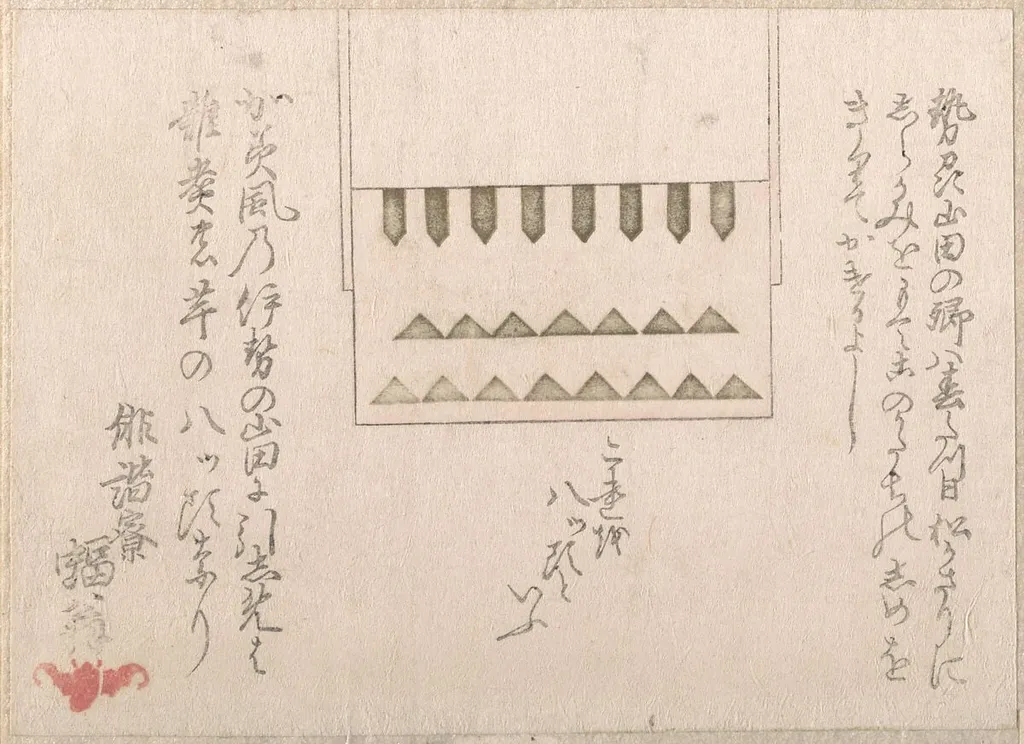
Untitled is an ink print by the Baroque artist Haikairyō Henpuku. It dates from 1800 and is held in the collection of the Metropolitan Museum of Art.
About this work
Overview
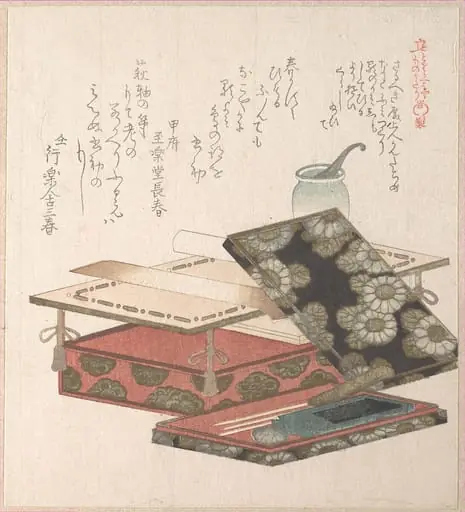
This early nineteenth‑century surimono, executed in ink and limited color on paper, presents a compact composition centered on a rectangular box. Inside, two orderly rows of sharp implements are displayed: six elongated blades occupy the upper tier, while six triangular points line the lower tier. The background is left unadorned, emphasizing the objects and the surrounding Japanese calligraphy.
Subject & Meaning
The arrangement of blades and points suggests a cataloguing of tools or weapons, perhaps intended as a visual inventory or a poetic illustration of precision. The accompanying brush‑written characters, likely a short verse or label, provide a textual counterpart that clarifies the depicted items, reinforcing the print’s function as a didactic or commemorative piece.
Technique & Style
Created as a surimono, the work employs the meticulous woodblock carving typical of private, limited‑edition prints. Ink outlines define the forms, while selective touches of red pigment add accent without disrupting the overall restraint. The clean line work and balanced composition reflect the disciplined aesthetic favored by Edo‑period printmakers for specialized commissions.
History & Provenance
The print was produced around 1800 by the artist known as Haikairyō Henpuku, a practitioner of the surimono genre. It entered the collection of The Metropolitan Museum of Art, where it is catalogued as part of the museum’s holdings of Japanese woodblock prints, illustrating the medium’s diversity beyond popular ukiyo‑e subjects.
Context
Surimono were often created for poetry gatherings, festivals, or private patronage, allowing artists to experiment with refined techniques and elaborate designs. This piece exemplifies that tradition, focusing on a singular, almost diagrammatic subject rather than narrative scenes, thereby highlighting the print’s role as a visual complement to literary content.
Artist & collection

- Untitled
 Untitled
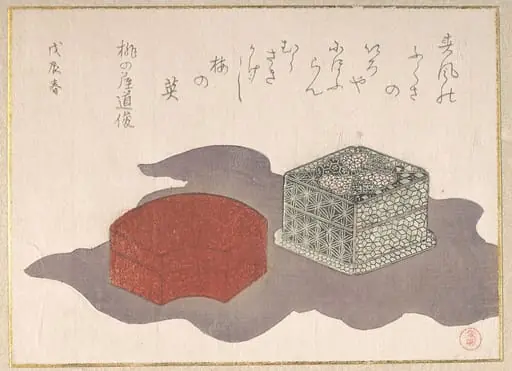
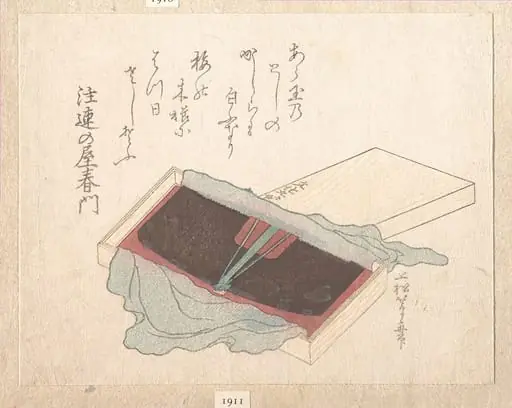 蒔絵櫛|Box with a Lacquer Comb
 Untitled
 Untitled
 Untitled
 Untitled
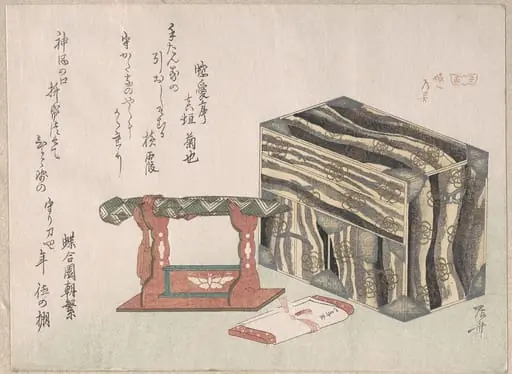
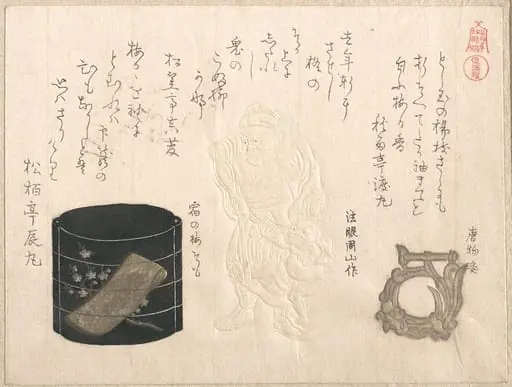 『名物革仝印籠仝根付』 印籠根付『春雨集』 摺物帖|“Inrō and Netsuke,” from the series Famous Leathers, Inrō, and Netsuke (Meibutsu kawa, inrō, netsuke)From the Spring Rain Collection (Harusame shū), vol. 2
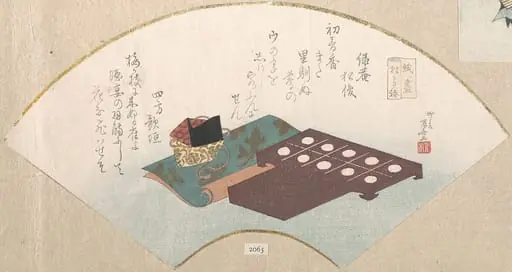 Untitled
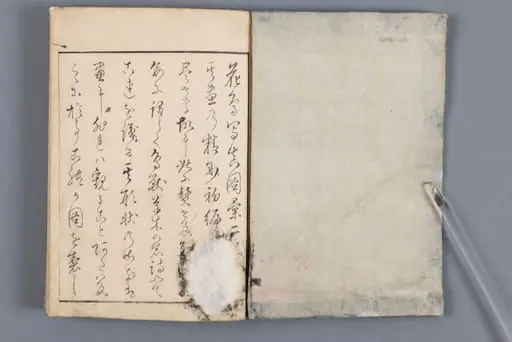 Atlas kwiatów i ptaków rysowanych z natury
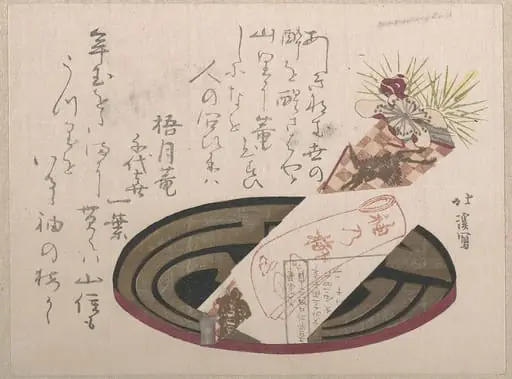 Untitled
 Untitled