Artist
Subject
Calligraphy is a subject in art. The gallery holds 25 works in this subject in art, including works by Emperor Huizong, Fūgai Ekun and Gao Fenghan.
Calligraphy (from Ancient Greek καλλιγραφία (kalligraphía) 'beautiful writing') is fine handwriting taken to the level of visual art. It involves the design and execution of lettering or characters using a pen, ink brush, or other writing instruments.
Calligraphy, from the Ancient Greek kalligraphía meaning 'beautiful writing,' is the practice of fine handwriting elevated to the level of visual art. It encompasses the design and execution of lettering or characters using pens, ink brushes, and other writing instruments. While distinct from typography and non-classical hand-lettering, calligraphy occupies a central place in multiple artistic traditions. Its significance varies dramatically across cultures: in East Asia and the Islamic world, it stands as a major art form, whereas in the West it has functioned variously as a sacred activity, a practical skill, and a revived artistic pursuit. The core of calligraphy lies not merely in legibility but in achieving aesthetic balance and expressive force through the physical act of writing.
The treatment of calligraphy has evolved distinctly across cultures and eras. In ancient China, the earliest characters were oracle bone script carved on ox scapulae and tortoise plastrons for divination purposes. The bronzeware script followed, with the Mao Gong ding containing 500 characters, the largest known bronze inscription. Under Qin Shi Huang around 220 BCE, Li Si's unification created 3,300 standardized small seal characters. The clerical script emerged as a more regularized form, followed by the transitional Wei Bei style during the North and South dynasties. The regular script (kaishu), finalized by Zhong You (151-230 CE), was later promoted through woodblock printing under Emperor Mingzong of Later Tang. In Europe, medieval monasteries preserved calligraphy as the primary means of literary transmission. The Carolingian minuscule served as a foundation, later revived during the Italian Renaissance around 1300. Niccolo Niccoli developed a new humanistic script in 1420, and printed books initially incorporated hand-added calligraphic elements. The invention of printing gradually reduced the role of the copyist, though legal and administrative documents continued to require handwritten forms. A 19th-century revival, particularly in England with figures like Edward Johnston, Alfred Fairbank, and Marion Richardson, transformed calligraphy into a self-conscious art form and educational movement.
Calligraphy's legacy persists in multiple forms. In East Asia, it remains vital to contemporary traditional culture, with Chinese, Japanese, and Korean calligraphy each maintaining distinct identities. Chinese calligraphy continues to influence garden design through paired vertical plaques and horizontal name tablets. In the Islamic world, Ottoman calligraphy developed until the early 20th century as one of the most refined forms of the art. Western calligraphy survives in wedding invitations, logo design, film props, certificates, and computer font design, where the tension between legibility and expressive form continues to animate practice. The contemporary definition emphasizes 'giving form to signs in an expressive, harmonious, and skillful manner.' The 19th-century revival established calligraphy as both hobby and autonomous art form, a status it retains. The collection's 27 works, spanning from Song dynasty China to Qing dynasty albums and Japanese screens, testify to the enduring capacity of beautiful writing to bridge utility and art, text and image, personal expression and cultural tradition.
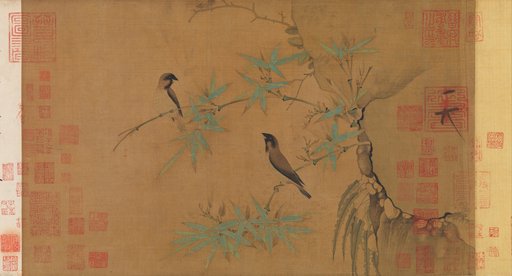
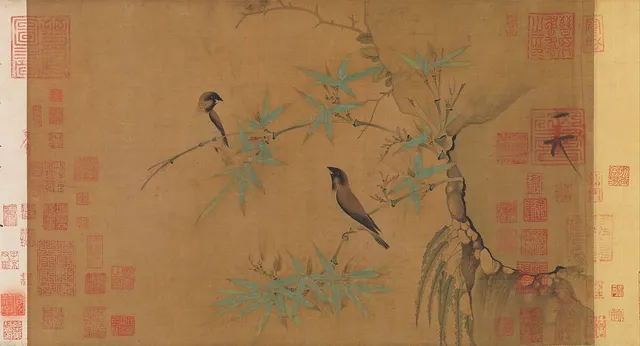
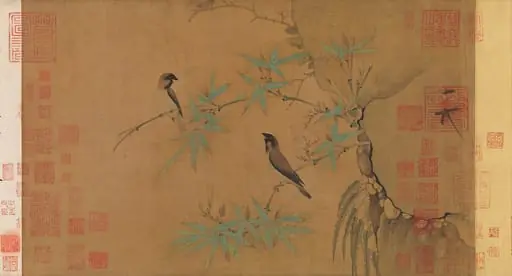 北宋 徽宗 竹禽圖 卷|Finches and bamboo
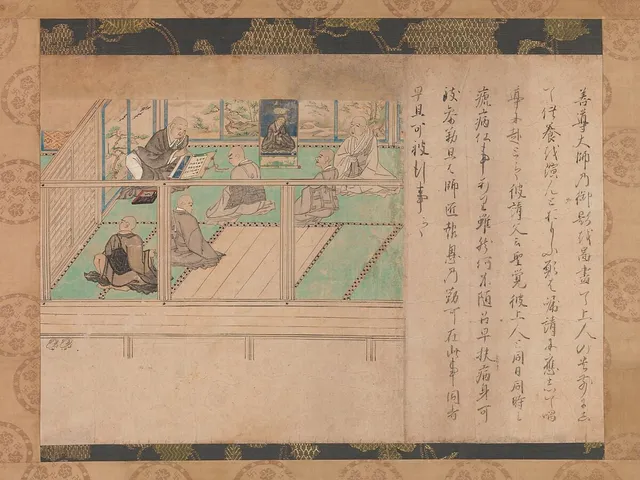
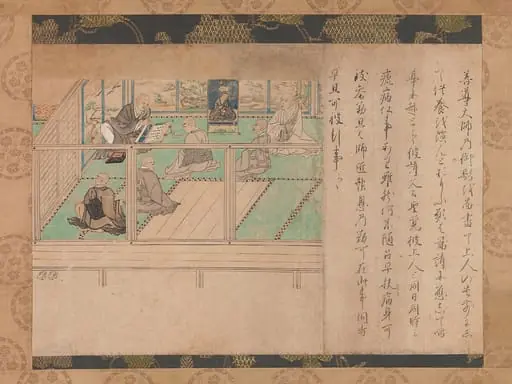 拾遺古徳伝絵断簡|Illustrated Biography of Hōnen (Shūikotokūden-e)
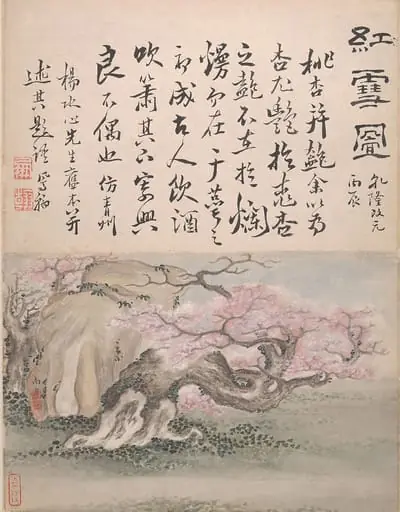 清 傳高鳳翰 書畫合璧 冊|Landscapes and Calligraphy
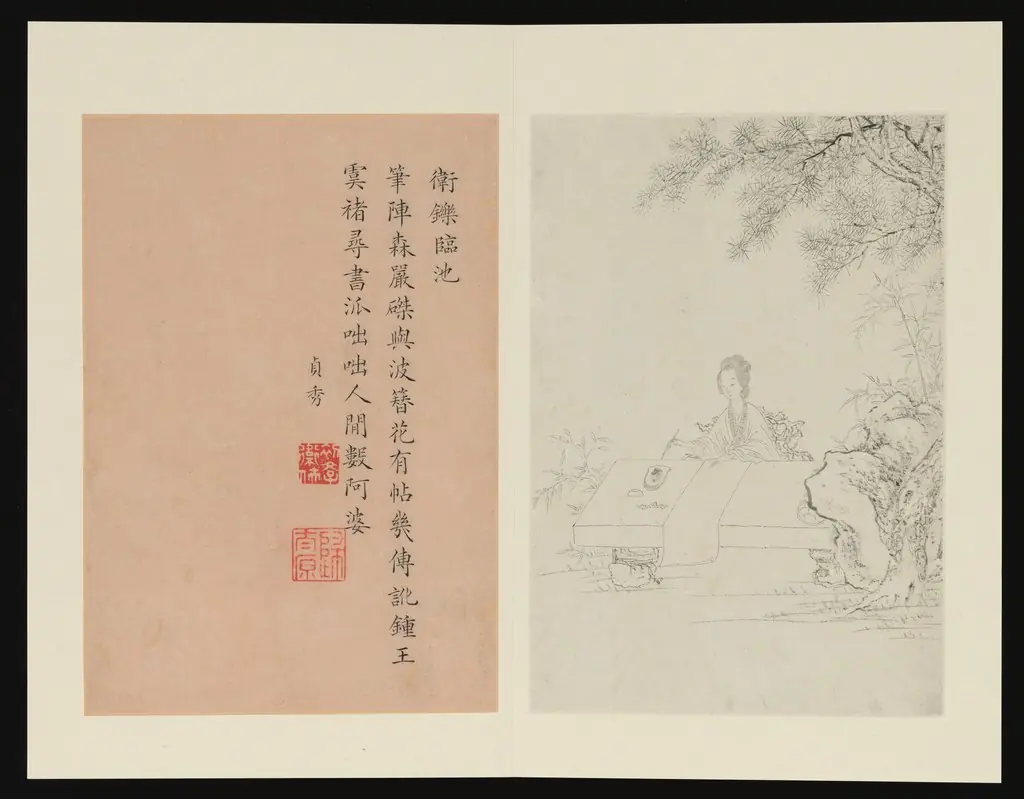 Famous Women
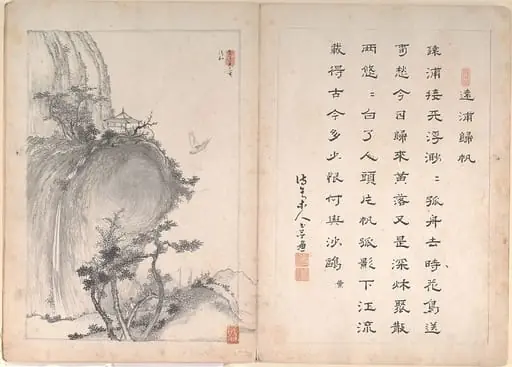 清 詩午閑人 瀟湘八景詩畫 冊|Eight Landscape Scenes and Calligraphy
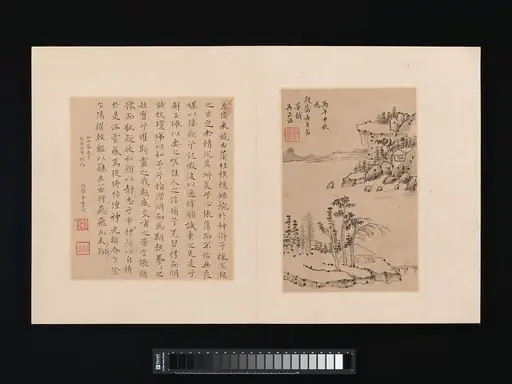 清 諸家 名家書畫 冊|Album of painting and calligraphy for Maoshu
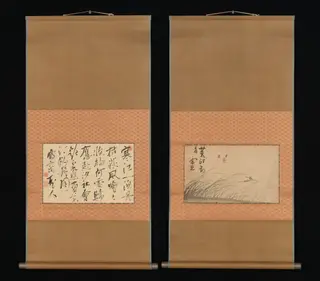 Fishing Boat on Reed Covered Bank and Calligraphy
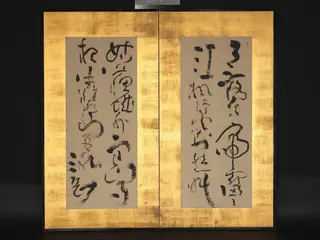 池大雅書 「楓橋夜泊」屏風|"Maple Bridge Night Mooring"
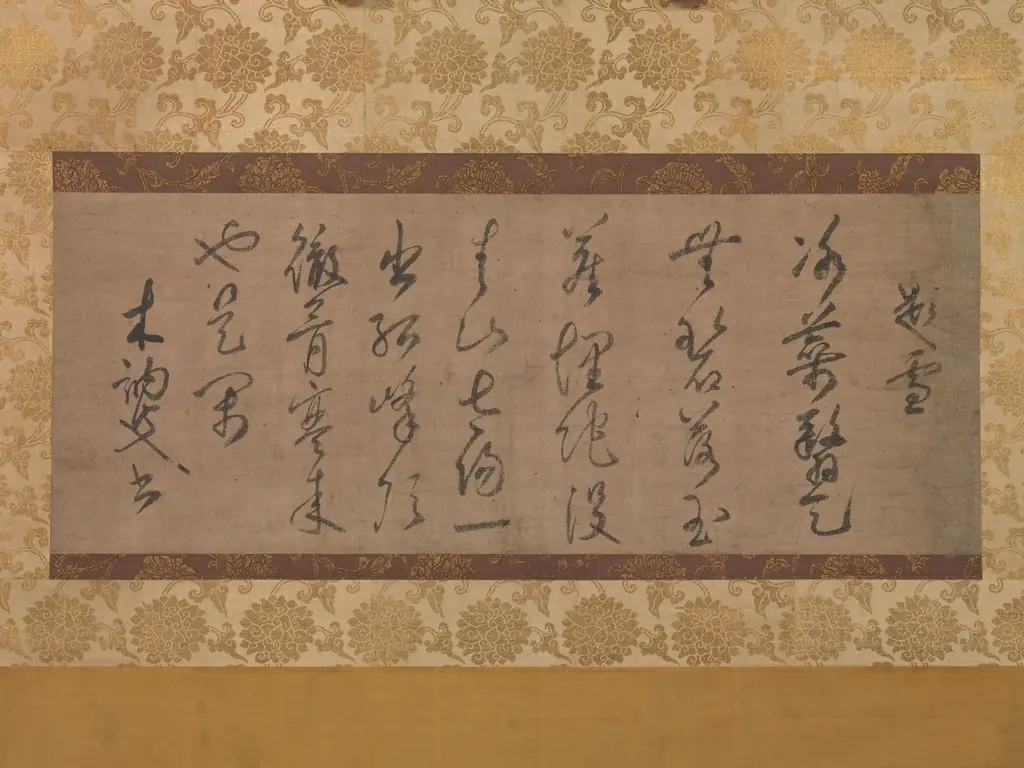 Poem on the Theme of Snow
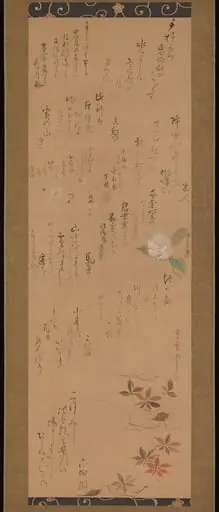 Untitled
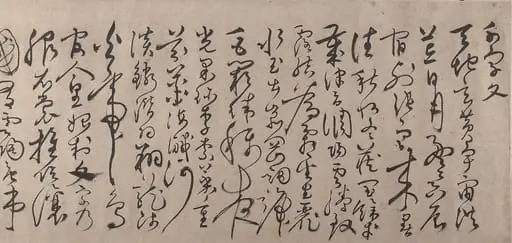 Untitled
![For a hundred years [I have been] a person with no attachments](https://artifactworldgallery.com/img/jiun--for-a-hundred-years-i-have-been-a-person-with-no-attachments--b29f06e3a79d2459-w320.webp) For a hundred years [I have been] a person with no attachments
For a hundred years [I have been] a person with no attachments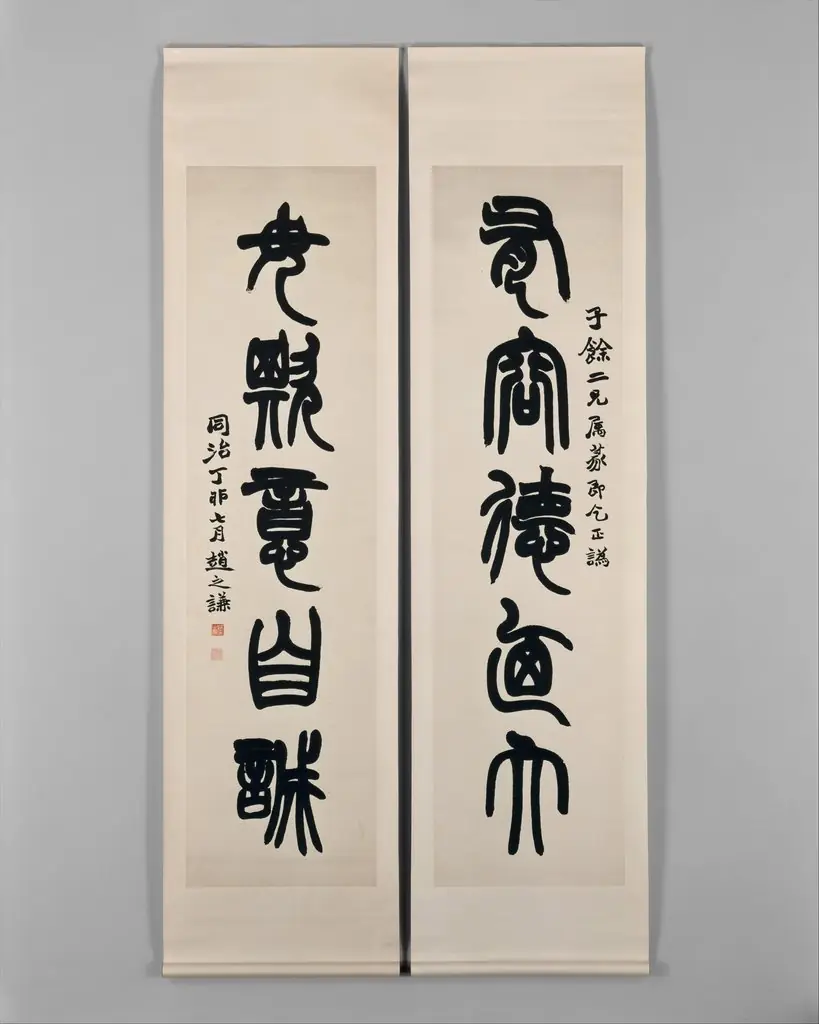 Couplet
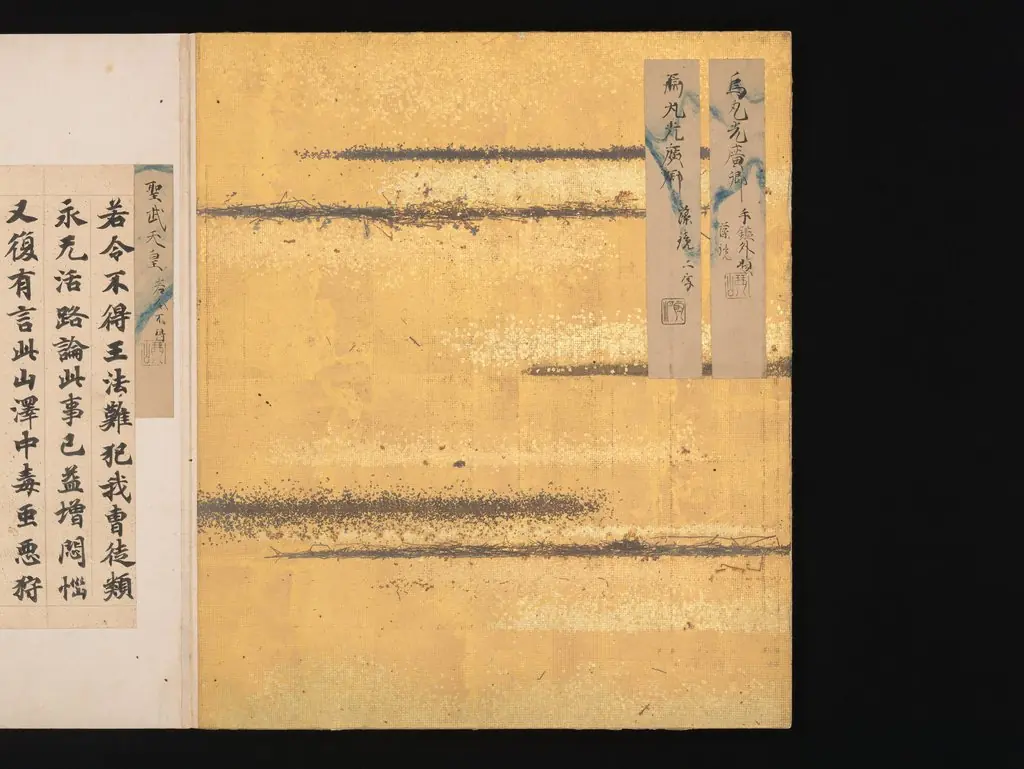 A Mirror of Gathered Seaweed (Mokagami) Calligraphy Album
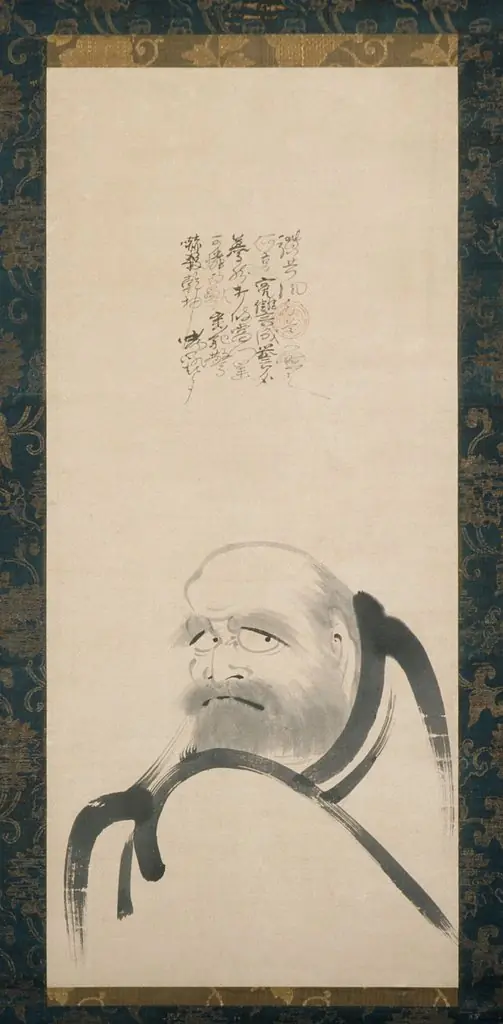 Daruma
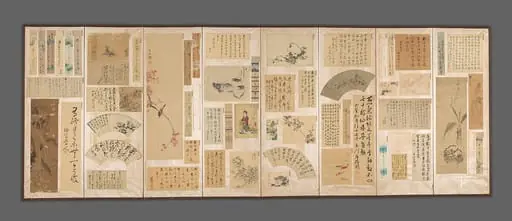 伊賀上野文人達の貼り混ぜ屏風|Paintings and Calligraphy by Literati of Iga Ueno
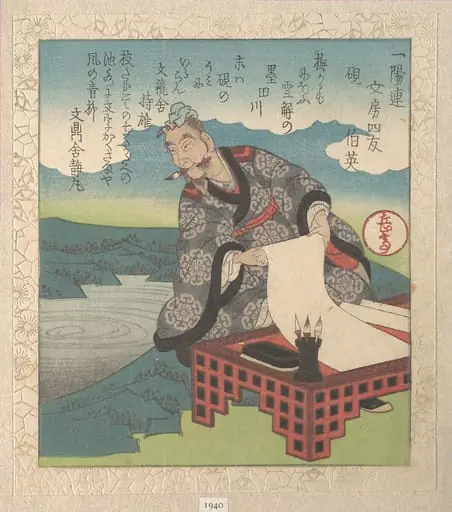 「一陽連文房四友 硯 伯英」『春雨集』 摺物帖|The Chinese Calligrapher Boying (Japanese: Hakuei; also known as the “Sage of Cursive Script”); “Inkstone” (Suzuri), from Four Friends of the Writing Table for the Ichiyō Poetry Circle (Ichiyō-ren Bunbō shiyū) From the Spring Rain Collection (Harusame shū), vol. 1
 Casa Geometrului - Semănător - proiect colorat pentru stereopoem
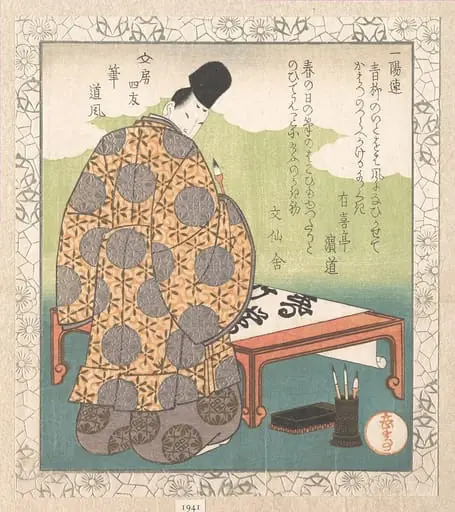 「一陽連文房四友 筆 道風」『春雨集』 摺物帖|The Heian Court Calligrapher Ono no Tōfū (894–966); “Calligraphy Brush” (Fude), from Four Friends of the Writing Table for the Ichiyō Poetry Circle (Ichiyō-ren Bunbō shiyū)From the Spring Rain Collection (Harusame shū), vol. 1
 Fila VII – P. Neamț
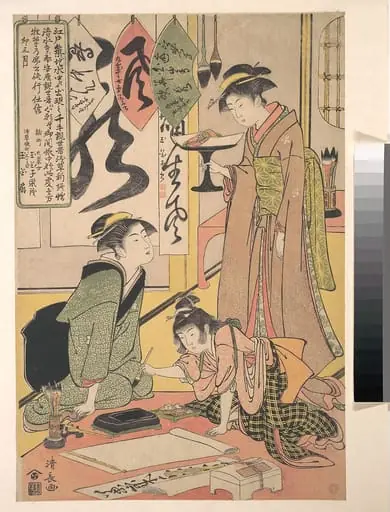 玉花子栄茂図|Gyoku-kashi Eimo Preparing Calligraphy Offerings
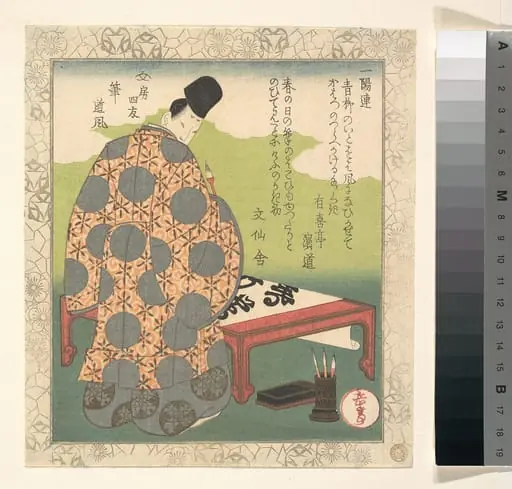 Untitled
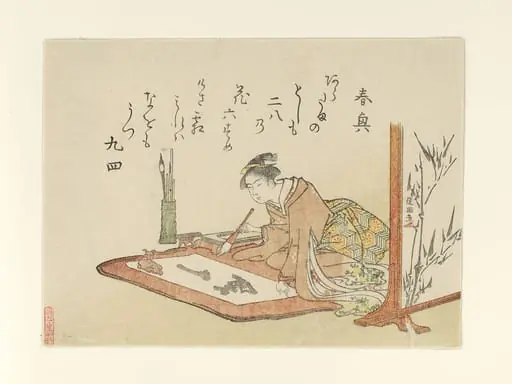 書初め図|Young Woman Writing Calligraphy
 Muzeu
Muzeu Studiu I – Transplant de aripă
Calligraphy (from Ancient Greek καλλιγραφία (kalligraphía) 'beautiful writing') is fine handwriting taken to the level of visual art.
Artifact World Gallery holds 25 public-domain Calligraphy works, all free to view and download.
Key Calligraphy artists in the collection include Emperor Huizong, Fūgai Ekun and Gao Fenghan.
Calligraphy works in the collection are held by Metropolitan Museum of Art, Gavrila Simion Eco-Museum Research Institute Tulcea and Los Angeles County Museum of Art.
Your cart is empty
Browse artworks →