Artwork
大鵬正鯤筆 伯珣照浩賛 雪竹図|Bamboo in Snow
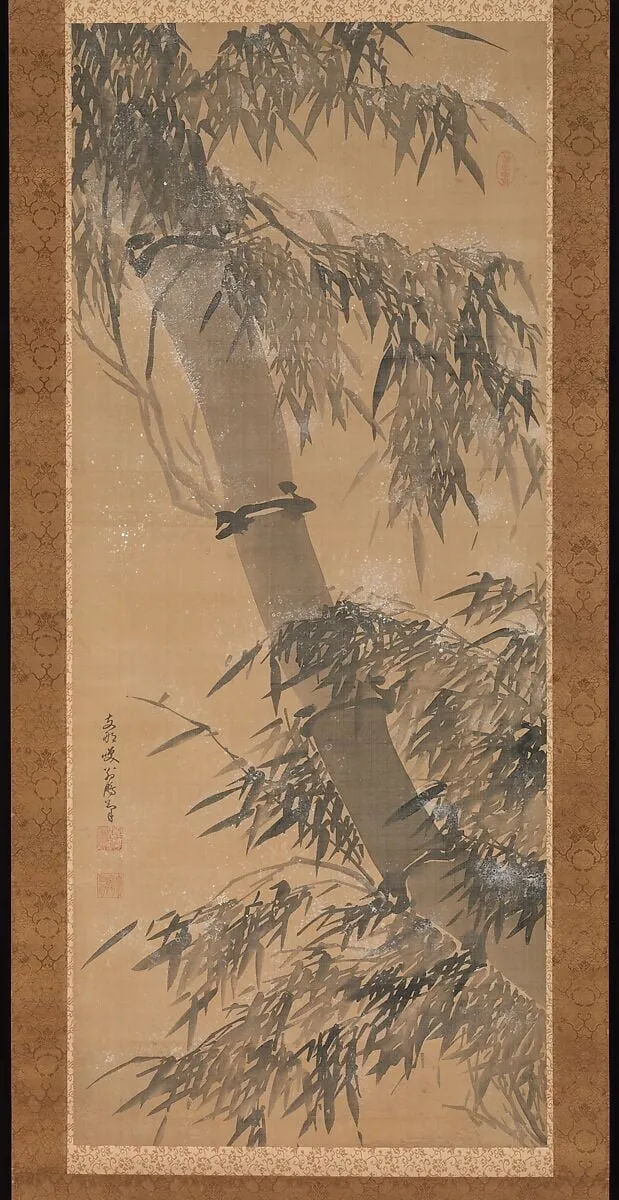
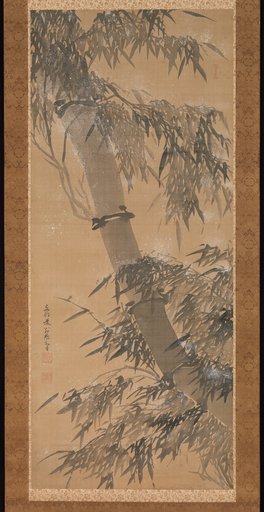
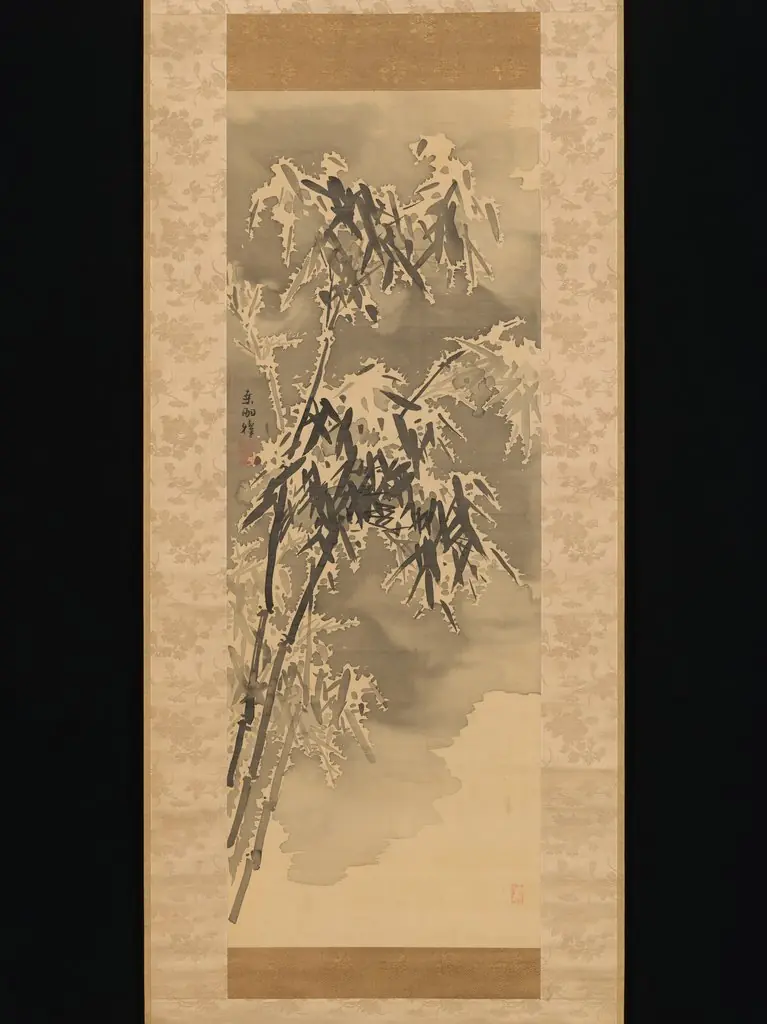
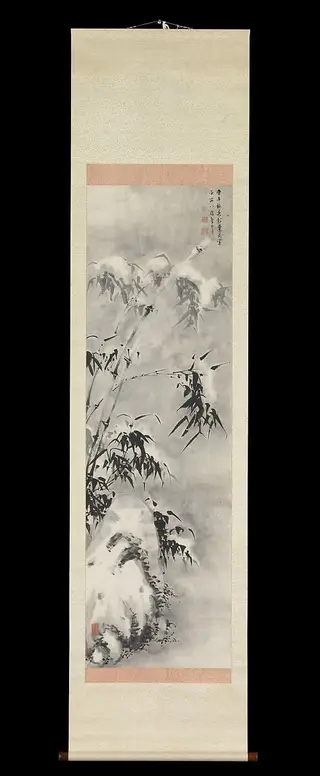
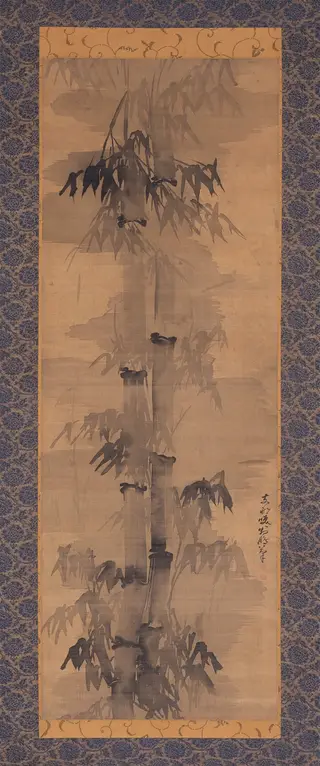
大鵬正鯤筆 伯珣照浩賛 雪竹図|Bamboo in Snow is an ink painting by the Chinese Orthodox School artist Hakujun Shōkō. It dates from 1774 and is held in the collection of the Metropolitan Museum of Art.
About this work
Subject & Meaning
The painting shows a stand of bamboo rendered in ink on silk, set against a snow‑covered landscape.
The painting shows a stand of bamboo rendered in ink on silk, set against a snow‑covered landscape. Bamboo (Bambusoideae) is portrayed as a symbol of moral integrity, resilience and scholarly purity, while the snow underscores transience and the quiet beauty of winter. Created in 1772 by the Japanese artist Hakujun Shōkō (also known as Taihō Shōkon), the work was intended for display as a hanging scroll in a scholar’s study, embodying literati ideals of modest virtue amid adversity.
Its depiction of bamboo in snow reflects traditional East Asian iconography that associates the plant with endurance and the fleeting nature of worldly concerns.
Technique & Style
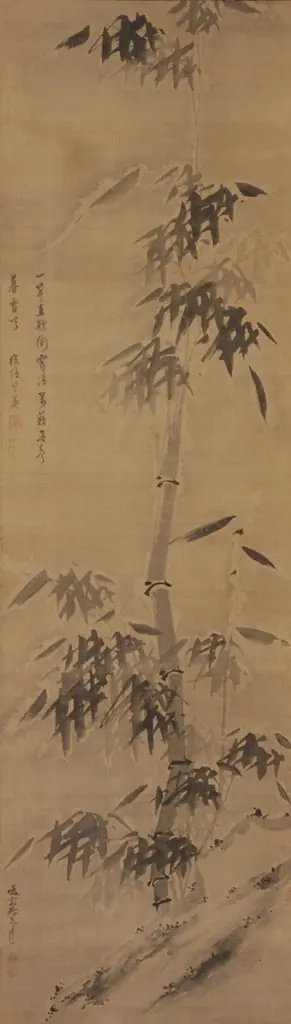
Created in 1772, Bamboo in Snow is executed as a pair of hanging scrolls utilizing ink on silk. The work, attributed to Taihō Shōkon (also known as Hakujun Shōkō), falls within the landscape genre and specifically depicts bamboo (Bambusoideae). As an ink-on-silk painting from Japan, the medium dictates a formal approach where the artist relies on the tonal variations of black ink to render the subject matter against the white silk ground, a traditional method for capturing the texture and resilience of bamboo in winter conditions.
The support of silk allows for the fluid application of ink characteristic of East Asian brushwork, while the hanging scroll format indicates its intended function as a display object. The piece is currently held in the collection of the Metropolitan Museum of Art.
Overview
Hakujun Shōkō created Bamboo in Snow in 1774, a pair of hanging scrolls rendered in ink on silk. This painting presents a serene depiction of bamboo stalks lightly covered with snow, characteristic of East Asian ink wash traditions. The composition emphasizes the delicate interplay between the stark plant forms and the subtle atmospheric effects of winter.
Context
This painting aligns with a long-standing tradition of ink wash landscapes in Japan, particularly those featuring bamboo. Such works often emphasize natural forms and evoke a contemplative mood through their restrained aesthetic. The choice of bamboo as a primary subject connects Bamboo in Snow to a broader cultural appreciation for its symbolic qualities and its visual appeal within the context of East Asian art.
Artist & collection