Artwork
The Cloister of Santa Maria di Gesù at Palermo
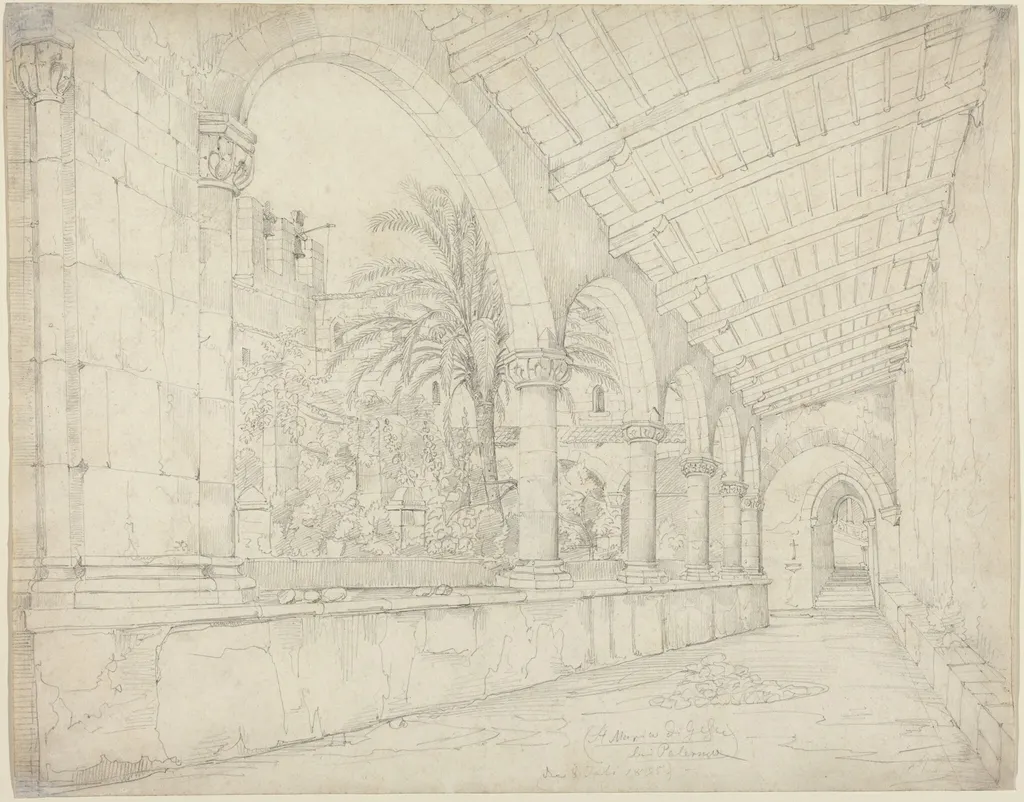
The Cloister of Santa Maria di Gesù at Palermo is a graphite drawing by the Romanticist artist Anton Hallmann. It dates from 1835 and is held in the collection of the National Gallery of Art.
- Inscription
- Inscribed:by the artist, lower right in graphite: St Maria di Gesu / bei Palermo / den 8 Juli 1835
About this work
Overview
Anton Hallmann’s 1835 graphite drawing portrays the cloister of Santa Maria di Gesù in Palermo. Executed on wove paper, the work records a tranquil courtyard framed by tall stone walls and arched openings. A solitary palm tree occupies the centre, its foliage casting subtle shadows across the paved ground, while a few figures move beneath the arches, suggesting everyday activity within the space.
Subject & Meaning
The composition captures the architectural serenity of the cloister, emphasizing the interplay between built form and natural elements. The palm tree, unusual in a Mediterranean monastic setting, serves as a focal point that draws the eye inward, while the sparse human presence hints at the cloister’s function as a place of contemplation and passage rather than bustling congregation.
Technique & Style
Rendered in graphite on smooth wove paper, Hallmann employs a nuanced range of hatching and cross‑hatching to model light and shadow.
Rendered in graphite on smooth wove paper, Hallmann employs a nuanced range of hatching and cross‑hatching to model light and shadow. The contrast between the darkened stone textures and the illuminated areas under the palm’s canopy creates a sense of depth. The drawing reflects the 19th‑century practice of on‑site sketching, where artists recorded architectural details and atmospheric effects directly from observation.
History & Provenance
Created during Hallmann’s travels in Sicily, the drawing was likely produced as part of a broader study of Italian architecture popular among European artists of the period. The work has remained in private collections before entering a museum archive, where it is cited as an example of early travel documentation and the artist’s interest in historic religious sites.
Own this work as a print
Artist & collection


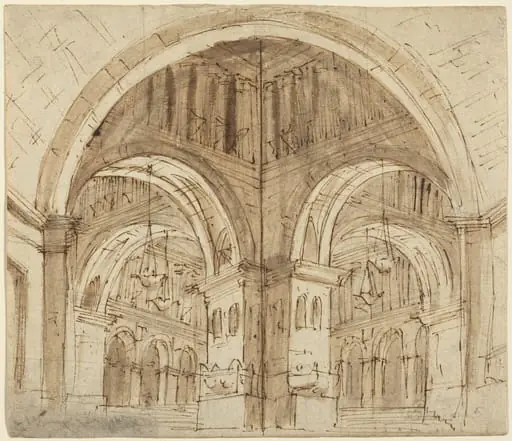
- Design for a Vaulted Hall
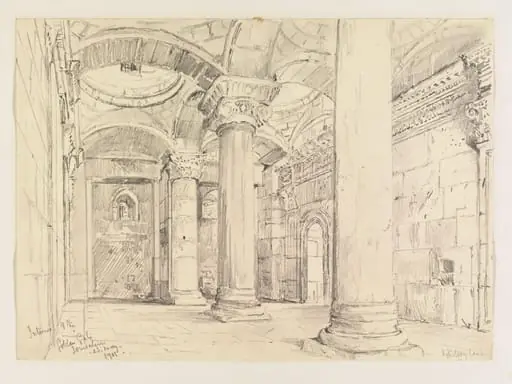 Interior of the Golden Gate Jerusalem
![A Terrace and Garden on Capri [recto], by François-Édouard Bertin](https://artifactworldgallery.com/img/francois-edouard-bertin--a-terrace-and-garden-on-capri-recto--8bd3839591b56d81-w320.webp) A Terrace and Garden on Capri [recto]
A Terrace and Garden on Capri [recto]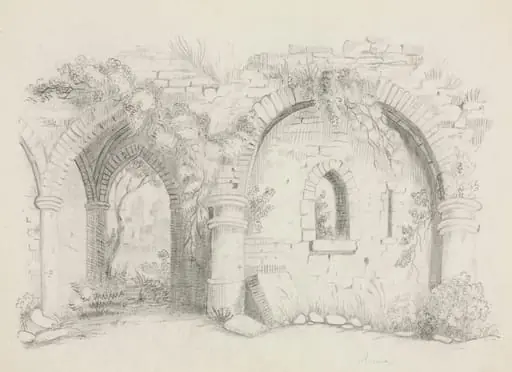 Ruins
Ruins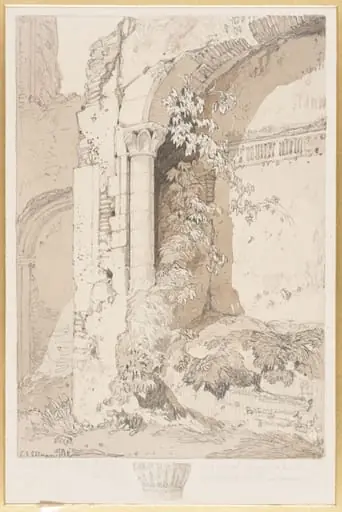 Ruins of the Abbey, Thetford, Norfolk
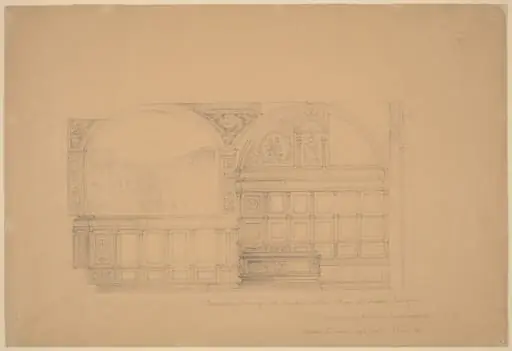 Perugino's Udienza del Cambio in the Collegio del Cambio, Perugia
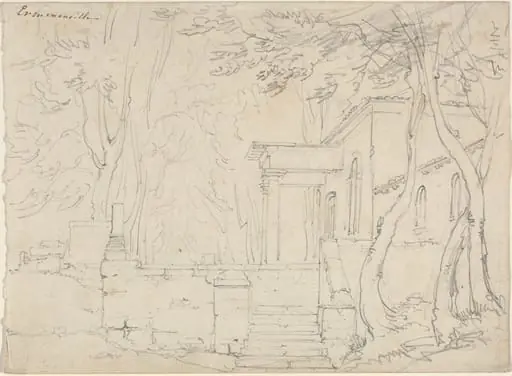 House with a Portico at Ermenonville
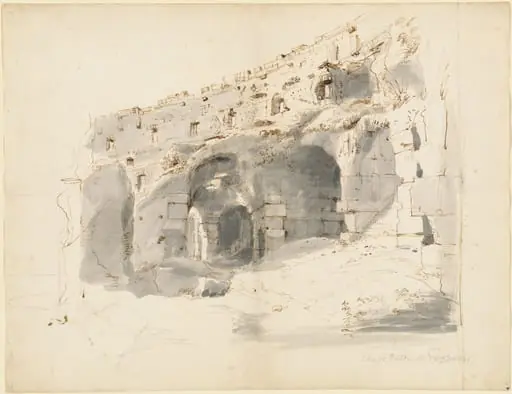 The Ruins of an Ancient Amphitheater
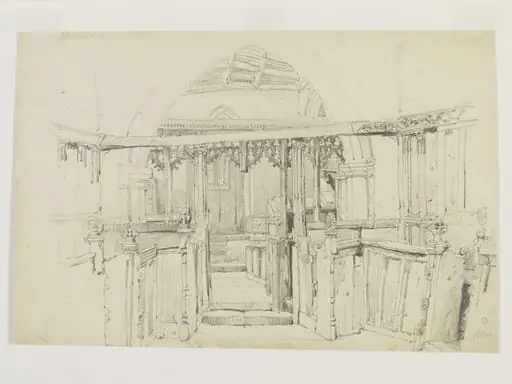 Blore-Ray Church in Staffordshire
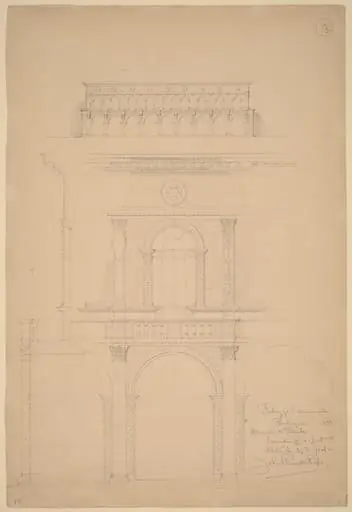 Palazzo Communale, Bologna
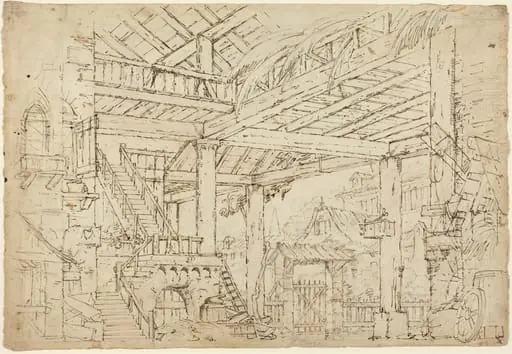 Interior of a Barn Built on Ancient Ruins
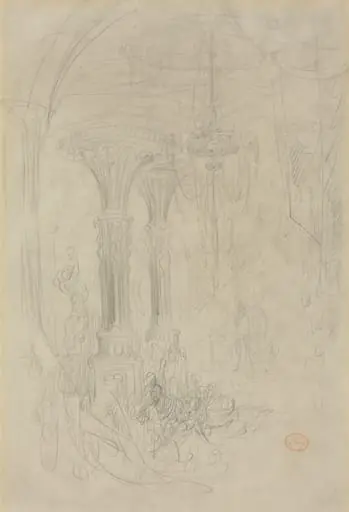 Cleopatra