Artwork
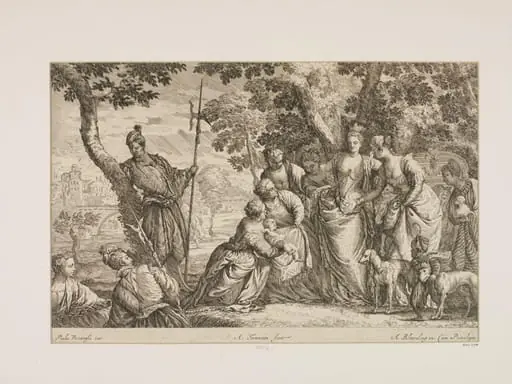
Captn. Wallis on his arrival at O'Taheite, in conversation with Oberea the Queen, while her attendants are performing a favourite Dance called the Timrodee
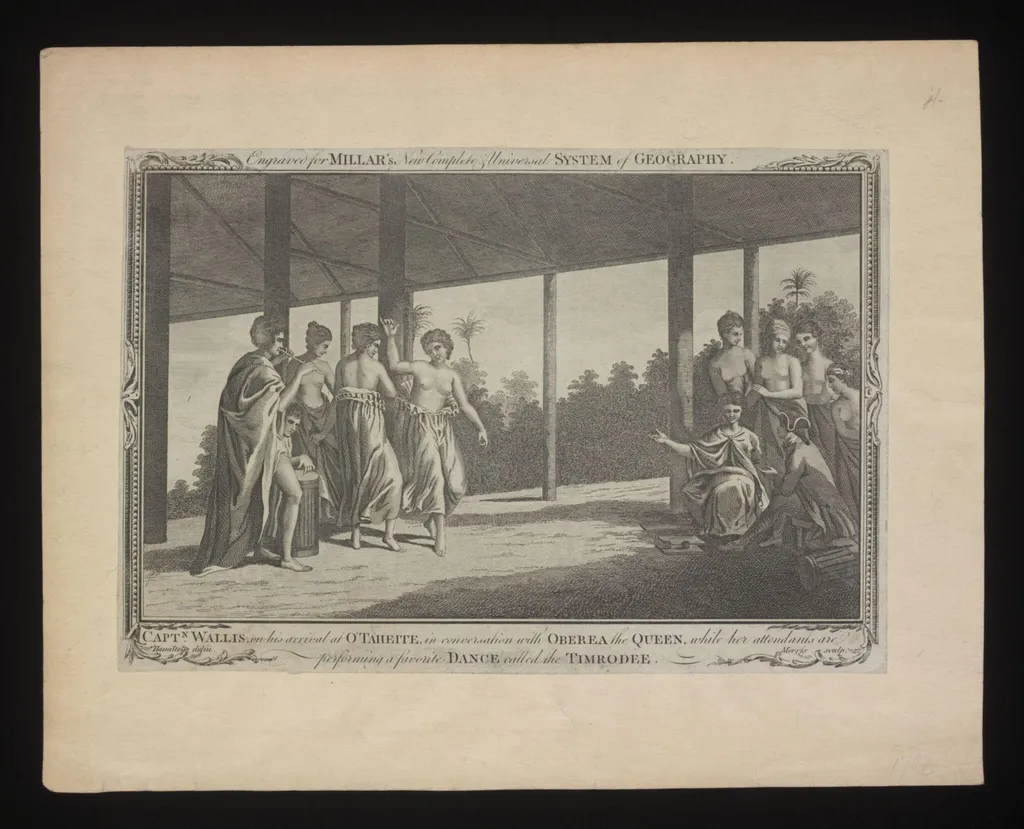
Captn. Wallis on his arrival at O'Taheite, in conversation with Oberea the Queen, while her attendants are performing a favourite Dance called the Timrodee is a print by the Romanticist artist Hamilton. It dates from 1782 and is held in the collection of the Victoria and Albert Museum.
About this work
Overview
This 1782 engraving, created by William Morris after a design by John Hamilton, illustrates Captain Samuel Wallis’s 1767 encounter with Queen Oberea of Tahiti.
This 1782 engraving, created by William Morris after a design by John Hamilton, illustrates Captain Samuel Wallis’s 1767 encounter with Queen Oberea of Tahiti. It was produced for Millar’s geographical compendium and reflects European efforts to document Pacific encounters through printed imagery. The scene blends observation with artistic interpretation, framing indigenous culture as both exotic and orderly for a Western audience.
Subject & Meaning
The print depicts Wallis engaged in conversation with Oberea, the ruling queen, while attendants perform the timrodee, a traditional Tahitian dance. The composition suggests a moment of diplomatic exchange, yet the inclusion of the dance emphasizes cultural spectacle. It frames indigenous practices as performative for foreign observers, revealing colonial-era assumptions about native customs as curiosities to be recorded and displayed.
Technique & Style
Executed as a line engraving, the image employs fine, controlled strokes to delineate figures and foliage. The foreground figures are rendered with formal precision, while the background dancers are slightly stylized, their movements suggested through rhythmic repetition. The composition is tightly structured, prioritizing clarity over naturalism, typical of illustrations meant for mass reproduction in 18th-century reference works.
History & Provenance
The image originated from sketches made during Wallis’s 1767 voyage aboard the Dolphin, later adapted by Hamilton and engraved by Morris. It was reused across multiple publications, including Millar’s geography series, indicating its popularity as a visual shorthand for Pacific contact. Its circulation helped standardize European perceptions of Tahiti, even as it simplified complex cultural interactions into a single, repeatable scene.
Context
Produced during the height of British Pacific exploration, the print reflects broader imperial interests in cataloging distant lands and peoples. The timrodee dance, noted for its appeal to visitors, became a symbol of Tahitian hospitality, yet its depiction here serves more as a backdrop to European authority than as an independent cultural expression. Such images reinforced narratives of discovery and civilizational encounter.
Legacy
The engraving contributed to a visual lexicon of Pacific encounters that persisted in European publishing for decades. While historically valuable as a record of early contact, it also exemplifies the selective framing of indigenous life through colonial lenses. Today, it is studied less for its accuracy than for its role in shaping Western perceptions of Oceania during the Age of Exploration.
Own this work as a print
Artist & collection
Artist
This 18th-century artist left behind playful scenes of birds and colonial encounters.

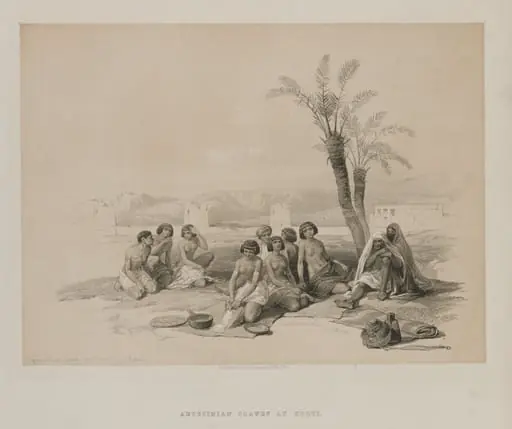
- Egypt and Nubia, Volume I: Abyssinian Slaves Resting at Korti-Nubia
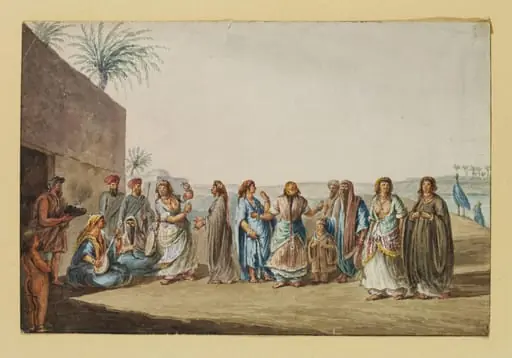 An Egyptian Ball, At Ned Sili
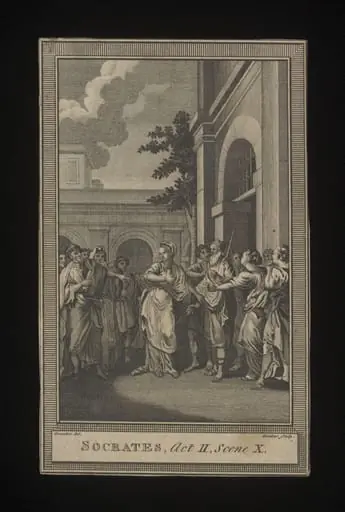 Print depicting Act II, Scene 10 of <i>Socrates,</i>
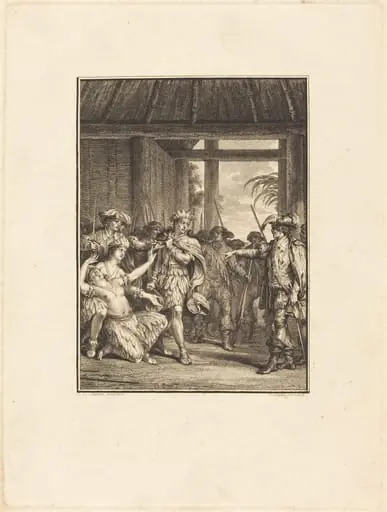 La découverte du nouveau monde
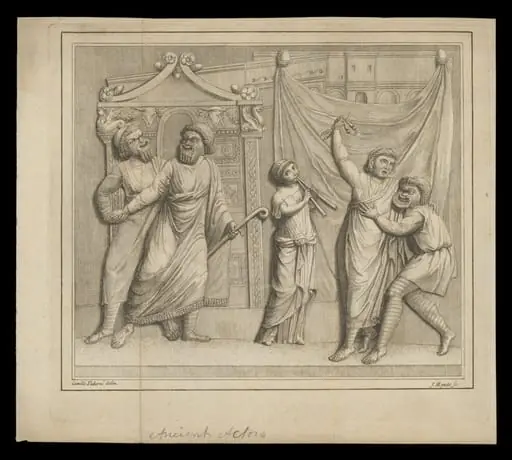 H Beard Print Collection
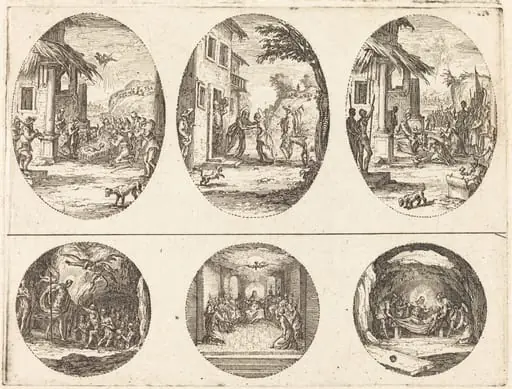 Mysteries of the Passion
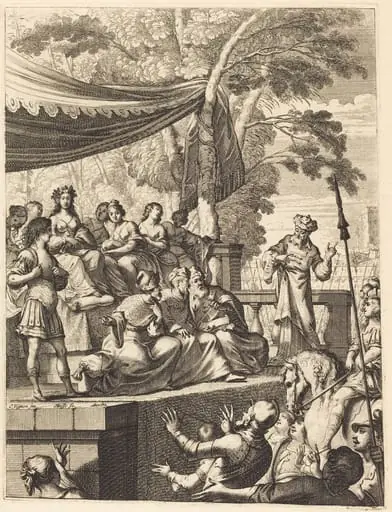 Illustration to Jean Desmarets' "L'Ariane"
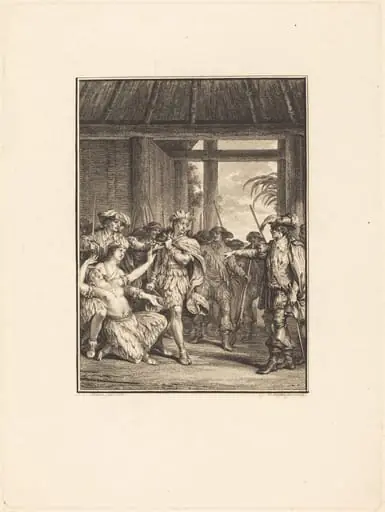 La découverte du nouveau monde
 H Beard Print Collection
 H Beard Print Collection
 Egypt and Nubia, Volume III: Dancing Girls at Cairo
 Infant Moses