Artwork
Kåde heste
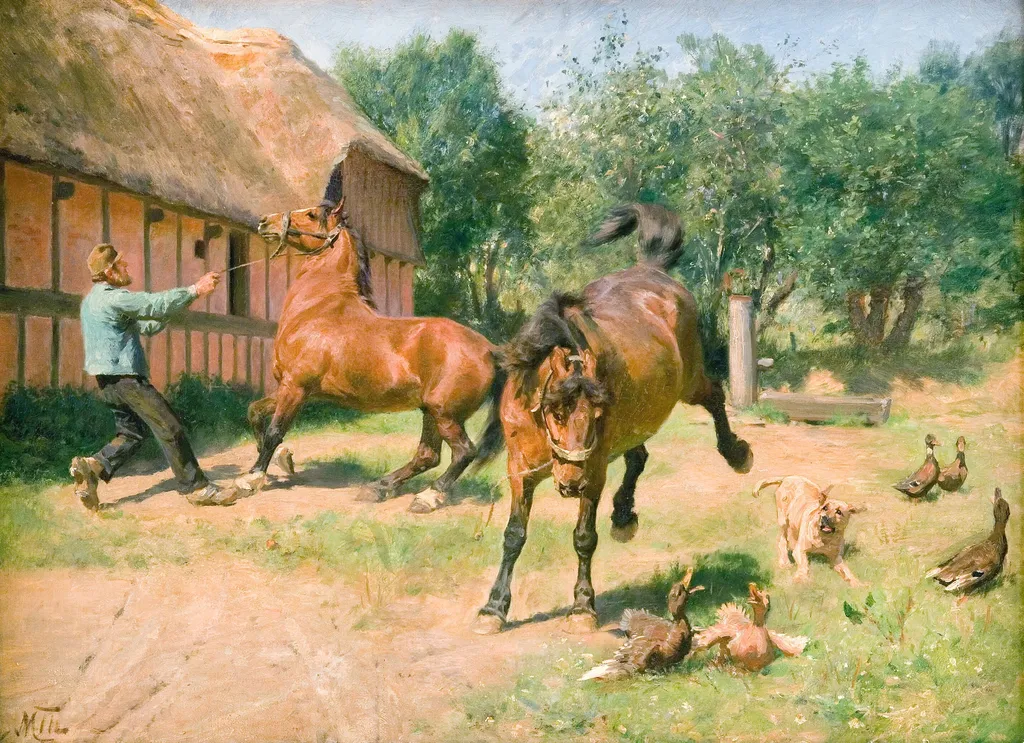
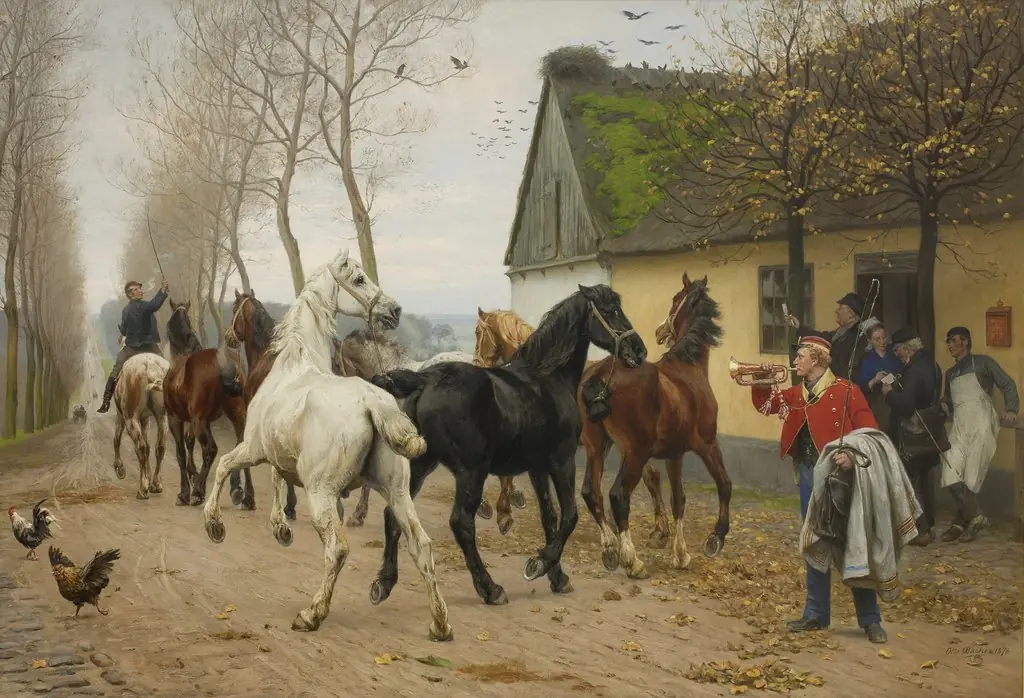
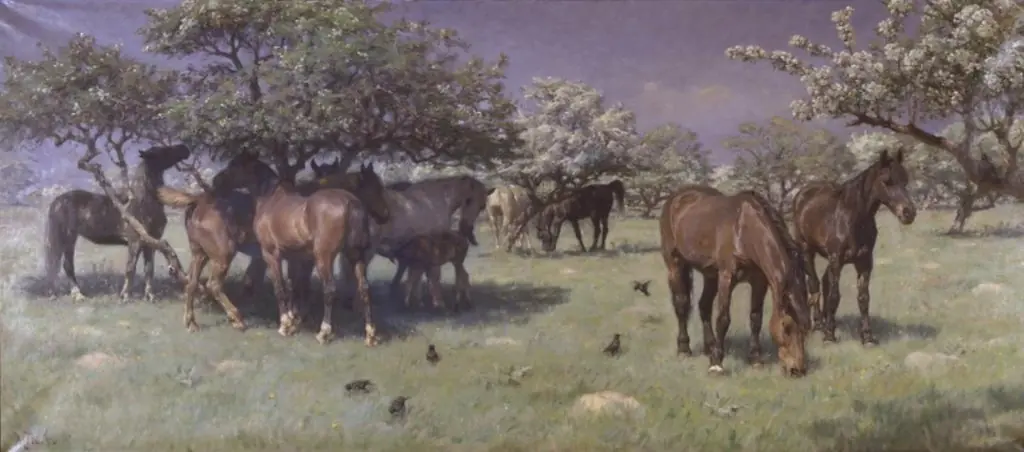
Kåde heste is an oil painting by the Impressionist artist Hans Michael Therkildsen. It dates from 1894 and is held in the collection of the Statens Museum for Kunst.
About this work
Subject & Meaning
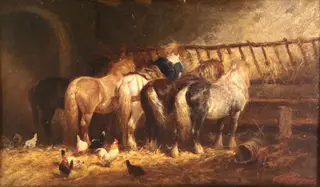
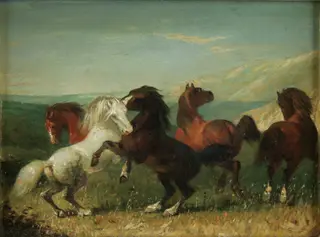
Painted in 1887 by Hans Michael Therkildsen, Kåde heste is an animal genre work that visually depicts a dynamic interaction between a horse, a dog, and a duck.
Painted in 1887 by Hans Michael Therkildsen, Kåde heste is an animal genre work that visually depicts a dynamic interaction between a horse, a dog, and a duck. The title, translating to 'Playful Horses' or 'Frisky Horses,' combined with the inclusion of multiple species, suggests a narrative centered on lively, perhaps chaotic, behavior within a naturalistic setting. As a piece of animal art, the composition focuses on the physical characteristics and spontaneous movements of the creatures rather than employing complex allegorical symbolism.
The work represents a straightforward observation of fauna, capturing a moment of interspecies engagement without evident metaphorical layers beyond the depiction of vitality and play.
Technique & Style
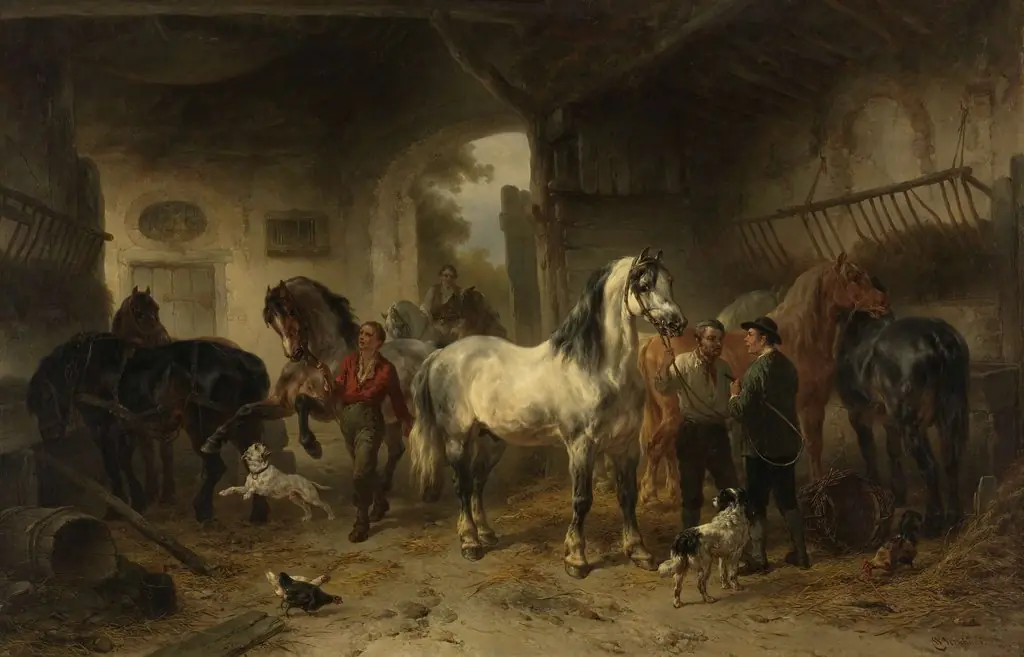
Executed in oil on canvas, the work measures 73 by 99 centimeters. The handling is smooth and naturalistic, with carefully observed details of horse anatomy and fur rendered through blended, controlled brushwork. The composition centers on a horse standing beside a dog and duck, using a muted palette of earth tones and subdued greens to convey a quiet, pastoral mood.
The style aligns with nineteenth-century European animal painting, emphasizing accurate depiction and restrained expression over dramatic effect.
History & Provenance
The painting Kåde heste was created in 1887 by Hans Michael Therkildsen, as confirmed by both the artist’s record and the work’s catalogued date in institutional sources. The canvas depicts a scene of horses alongside dogs and ducks, aligning with Therkildsen’s specialization in animal art. By the late 19th century, the painting entered the collection of Statens Museum for Kunst, where it has remained as part of the national collection.
The museum’s records list the work under its Danish title, noting dimensions of 73 cm in height and 99 cm in width, executed in oil on canvas. No documented commission or early ownership history prior to the museum’s acquisition has been traced in the available sources.
The painting Kåde heste is held in the collection of the Statens Museum for Kunst in Copenhagen. Created in 1887 by Hans Michael Therkildsen, the work is cataloged within the museum's holdings of animal art. The source material does not provide a specific inventory or accession number for the piece, nor does it document any past or future exhibition history.
Overview
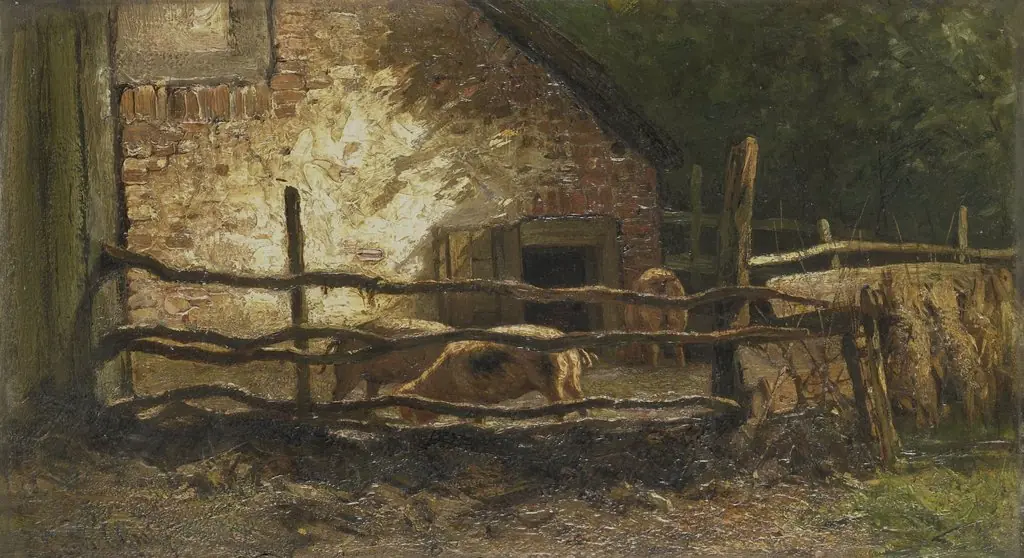
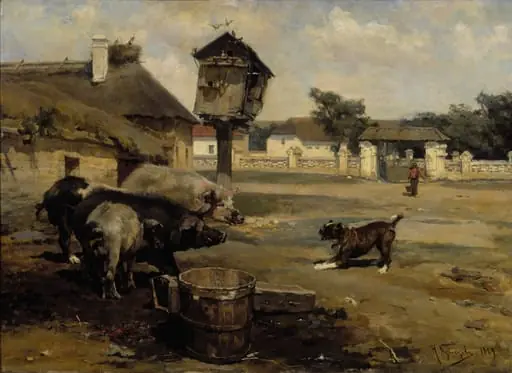
Hans Michael Therkildsen’s 1894 oil painting, titled Kåde heste, portrays a rural scene of animal activity. A man is seen guiding two horses across a dusty courtyard while a dog darts ahead and ducks take flight among the grass. An aged thatched house and a modest wooden fence frame the background, anchoring the composition in a simple countryside setting.
Context
The piece belongs to a period when Danish artists frequently depicted agrarian subjects, reflecting national interest in rural identity. Therkildsen’s focus on everyday farm work aligns with broader trends in late‑19th‑century Scandinavian painting, which favored realistic observation over idealized romanticism.
Own this work as a print
Artist & collection