Artwork
Adam and Eve
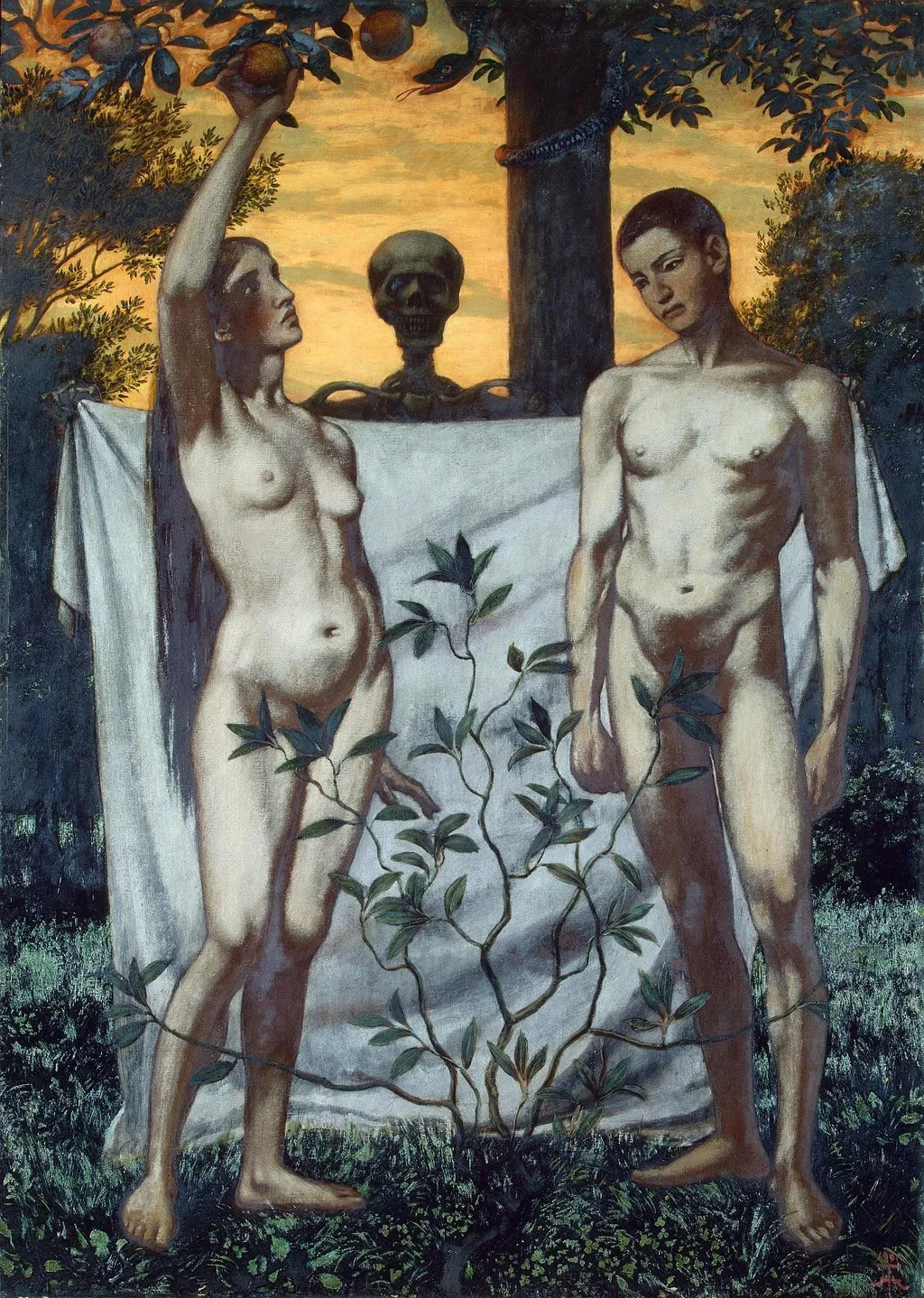
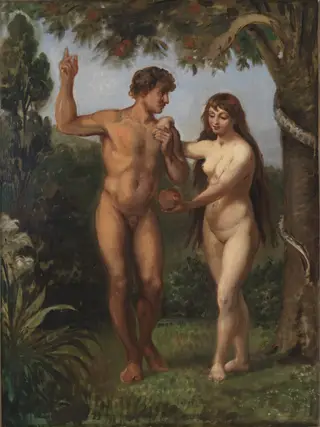
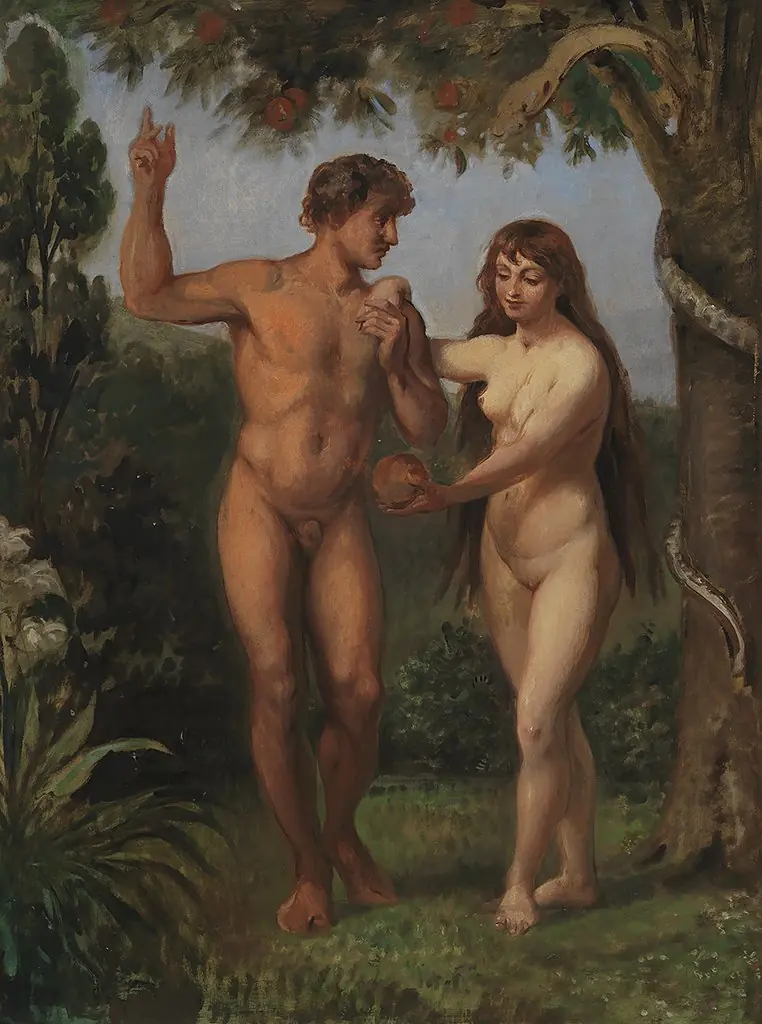
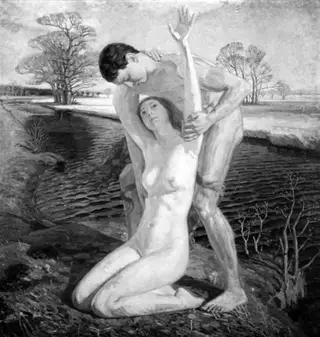
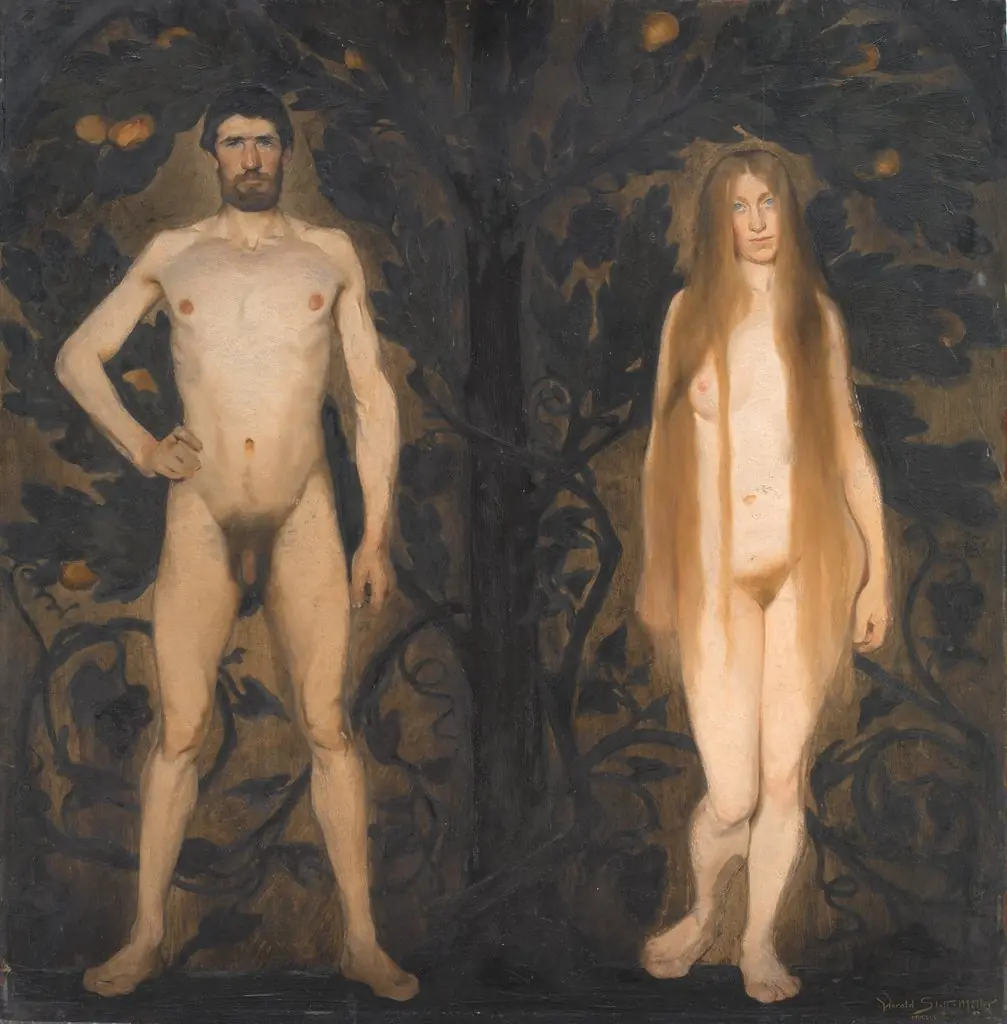
Adam and Eve is an oil painting by the Symbolist artist Hans Thoma. It dates from 1899 and is held in the collection of the Hermitage Museum.
About this work
Subject & Meaning
The work functions as a religious composition centered on the narrative of humanity's first transgression.
Hans Thoma's 1897 oil painting on canvas portrays the biblical moment of the fall of man, depicting Adam and Eve within the Garden of Eden alongside the apple tree and the serpent. The work functions as a religious composition centered on the narrative of humanity's first transgression. Dimensions of 110 cm by 78.5 cm were created in Germany for inclusion in the Hermitage Museum's collection in Saint Petersburg.
History & Provenance
Hans Thoma created "Adam and Eve" in 1897, an oil on canvas work measuring 110 by 78.5 centimeters that illustrates the biblical fall of man with Adam and Eve beneath an apple tree alongside a serpent. The painting entered the collection of the Hermitage Museum in Saint Petersburg, where it remains on display. Its inception was recorded in 1897, and it is categorized as a religious artwork produced in Germany.
Overview
Hans Thoma’s 1899 oil painting Adam and Eve presents two barefoot figures situated in a luminous garden. The scene is bathed in a warm, golden light that fades toward the edges, creating a tranquil yet subtly dramatic atmosphere. The work is part of the State Hermitage Museum’s collection, exemplifying Thoma’s late‑19th‑century approach to biblical subjects.
Technique & Style
Thoma employs a soft chiaroscuro, allowing light to model the figures’ flesh while deepening the surrounding shadows. The delicate handling of oil paint renders the skin with a naturalistic sheen, and the golden sky contributes to a serene yet slightly theatrical ambience. The overall style reflects Symbolist tendencies while retaining a clear, regional realism.
Context
Adam and Eve aligns with Thoma’s broader interest in German folklore and religious motifs, integrating local cultural sensibilities into a universal story. The inclusion of the skull and vine reflects contemporary Symbolist preoccupations with the transience of life, situating the work within the broader artistic currents of fin‑de‑siècle Europe.
Own this work as a print
Artist & collection
Artist
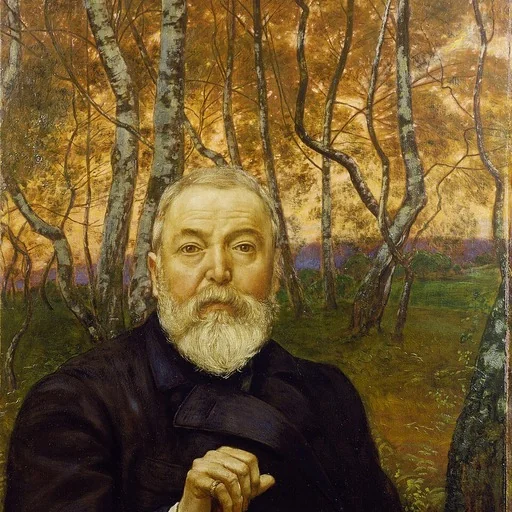
Hans Thoma (2 October 1839 – 7 November 1924) was a German painter. An alumnus and later professor of Karlsruhe Academy, he is known for his landscapes, portraits, and symbolic works rooted in German regional life and…