Artwork
Picnic Party
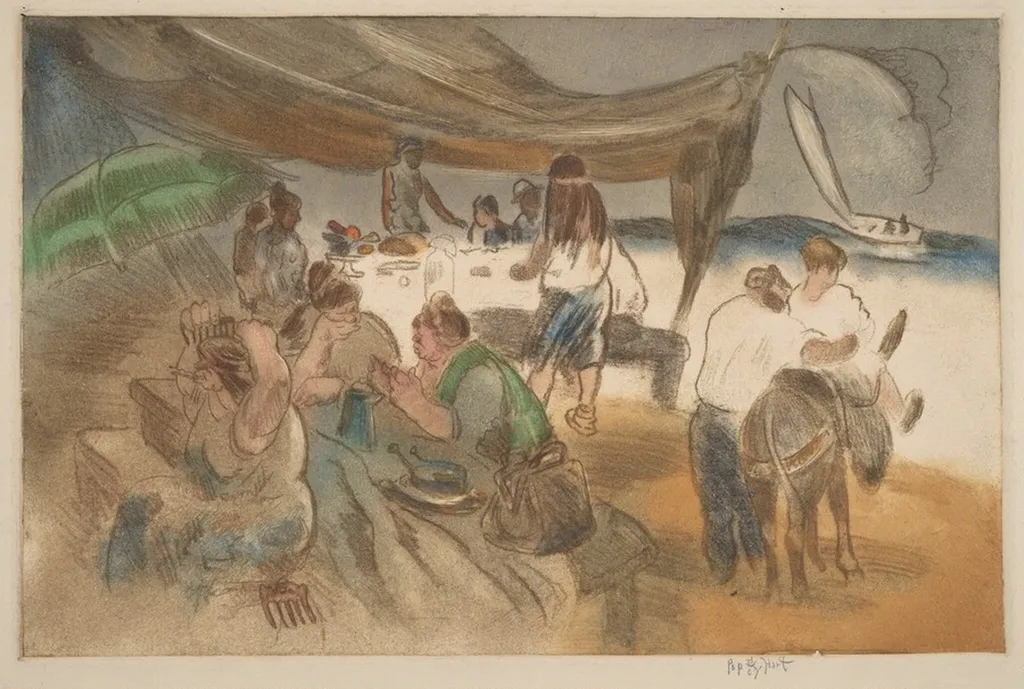
Picnic Party is an ink print by George Overbury Hart. It dates from 1925 and is held in the collection of the National Gallery of Art.
About this work
Overview
Hart’s use of multiple printing techniques gives the image a delicate, tonal richness, distinguishing it from more rigidly linear prints of the period.
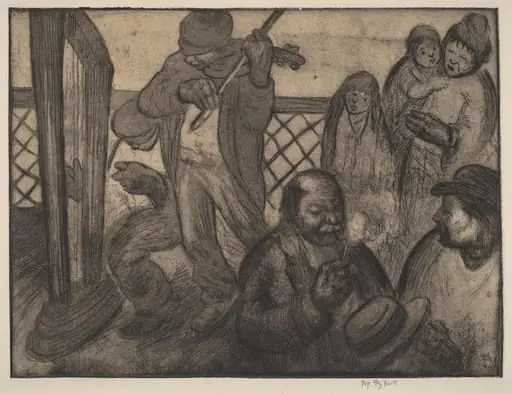
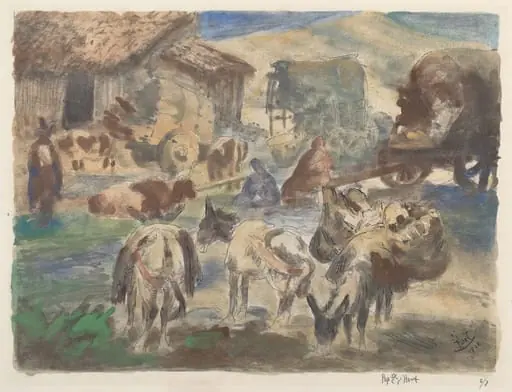
Picnic Party is a 1925 color etching and softground print by George Overbury Hart. It depicts a group of elegantly dressed individuals gathered outdoors, engaged in leisurely activities. Though presented as a rural outing, the scene reflects urban social rituals of the 1920s.
Hart’s use of multiple printing techniques gives the image a delicate, tonal richness, distinguishing it from more rigidly linear prints of the period.
Subject & Meaning
The figures in Picnic Party are not engaged in a spontaneous outdoor meal but rather perform a stylized version of upper-middle-class recreation. Their postures and attire suggest a curated social event, revealing Hart’s interest in the performative nature of leisure. The scene subtly critiques or observes the rituals of genteel society, framed with gentle irony rather than overt satire.
Technique & Style
Hart employed softground etching to achieve soft, atmospheric lines that mimic the texture of fabric and skin. Combined with color etching, the print layers subtle hues to suggest light and depth without heavy shading. The technique allows for a tactile quality in clothing and foliage, enhancing the sense of realism while maintaining a light, airy composition characteristic of his approach to everyday subjects.
History & Provenance
Created in 1925, Picnic Party emerged during Hart’s most active period as a printmaker, when he focused on scenes of American social life. The work was likely produced for private collectors and print societies rather than public exhibition. Its survival in institutional and private collections attests to its recognition among contemporaries who valued nuanced, intimate printmaking over grand narratives.
Context
In the mid-1920s, American artists increasingly turned to domestic and social themes as alternatives to European modernist trends. Hart’s work aligned with a movement that celebrated ordinary moments with technical precision and quiet observation. Picnic Party reflects this shift, capturing the rhythms of postwar American life through the lens of leisure, class, and refined aesthetics.
Legacy
Hart’s Picnic Party remains a representative example of early 20th-century American printmaking that prioritized subtlety over spectacle. While not widely known today, it influenced later artists interested in the intersection of technique and social commentary. Its continued presence in museum collections underscores its role as a quiet but significant document of interwar American visual culture.
Artist & collection


![Men Drinking at a Table [verso], by George Overbury Hart](https://artifactworldgallery.com/img/george-overbury-hart--men-drinking-at-a-table-verso--7e9475e5b5079377-w320.webp)
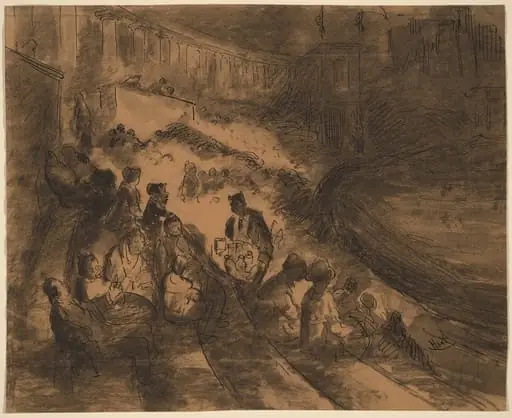
![Chicken Vendors [recto], by George Overbury Hart](https://artifactworldgallery.com/img/george-overbury-hart--chicken-vendors-recto--d97b582e13465974-w320.webp)
![Soupe à Trois Sous (Soup for three sous [pennies]), by James McNeill Whistler](https://artifactworldgallery.com/img/james-mcneill-whistler--soupe-a-trois-sous-soup-for-three-sous-pennies--2346a97cdbb9d5e9-w320.webp)