Artwork
Black-billed Cuckoo
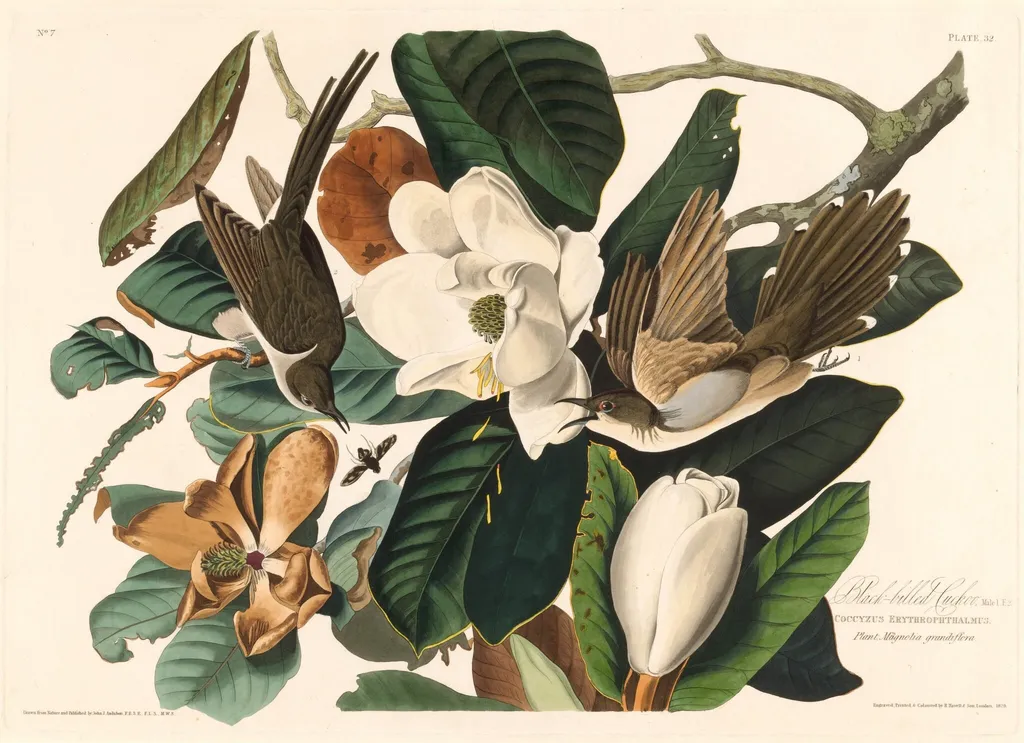
Black-billed Cuckoo is an ink print by the Romanticist artist Havell, Jr., Robert. It dates from 1828 and is held in the collection of the National Gallery of Art.
About this work
Overview
Black-billed Cuckoo is a hand-colored engraving and aquatint print created by Robert Havell Jr. in 1828 on Whatman wove paper. It showcases the Havell family's renowned aquatint expertise.
Subject & Meaning
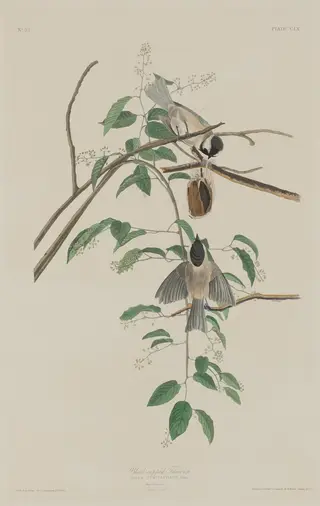
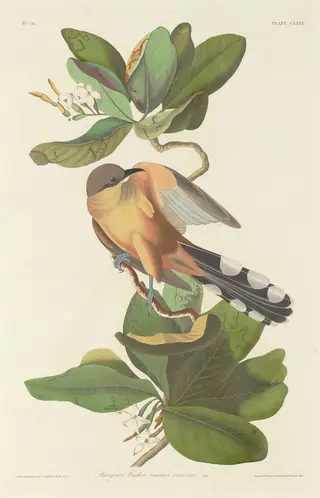
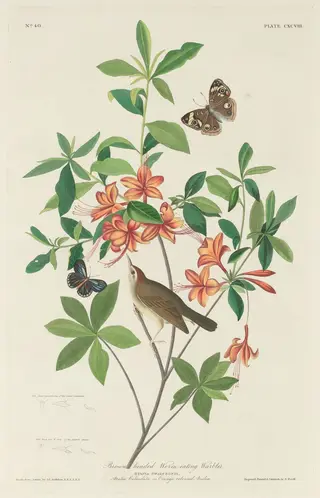
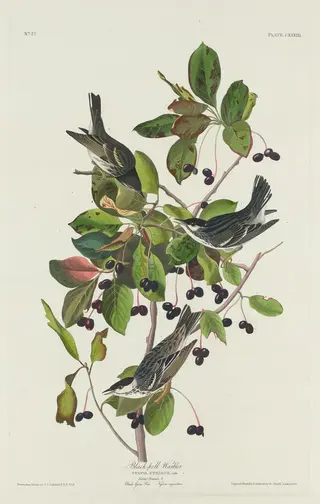
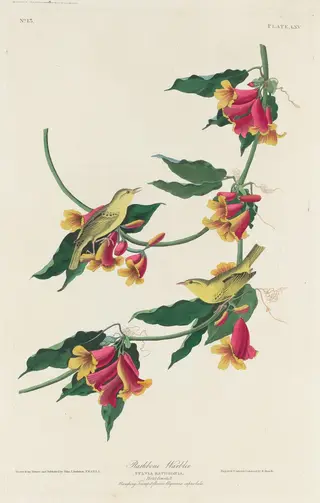
The print depicts a natural scene with two black-billed cuckoos in flight amidst a branch of large, detailed green leaves with prominent veins and big white flowers featuring yellow centers. A small insect is also present, adding to the composition's realism.
Technique & Style
Characterized by the Havell family's precise reproductive engraving style, the work exhibits meticulous detail, capturing the texture of flower petals and the movement of the birds, conveying a sense of liveliness.
History & Provenance
Part of a British engraving tradition influenced by Indian art and culture, Black-billed Cuckoo follows the lineage of Robert Havell Jr.'s family, notably his father Robert Havell the Elder and uncle Daniel Havell, all distinguished engravers.
Context
While specific contextual influences on Black-billed Cuckoo are not detailed, it reflects 19th-century interests in natural history and the artistic exchange between British and Indian cultural practices.
Legacy
Black-billed Cuckoo contributes to Robert Havell Jr.'s body of work, suggesting appeal to those interested in his other pieces, though its broader impact or notable exhibitions are not specified.
Own this work as a print
Artist & collection
Artist
The Havell family of Reading, Berkshire, England, included a number of notable engravers, etchers and painters, as well as writers, publishers, educators, and musicians.