Artist
Havell, Jr., Robert
United Kingdom of Great Britain and Ireland
Havell, Jr., Robert is an United Kingdom of Great Britain and Ireland Romanticism artist. 426 works are cataloged here, principally at National Gallery of Art.
The Havell family of Reading, Berkshire, England, included a number of notable engravers, etchers and painters, as well as writers, publishers, educators, and musicians. In particular, members of this family were among the foremost practitioners of aquatint; and had a long association with Indian art and culture. The family first came to notice through the brothers Luke Havell (drawing master, 1752?–1810) and Robert Havell the Elder (engraver and publisher, 1769–1832); along with their nephew Daniel Havell (engraver, 1786–1822).
Overview
Robert Havell Jr. (25 November 1793-11 November 1878) was an English engraver and painter who became the principal engraver of John James Audubon's monumental natural history publication The Birds of America. Born into the distinguished Havell family of Reading, Berkshire, a dynasty renowned for its mastery of aquatint engraving, Havell Jr. engraved all but the first ten plates of Audubon's folio, a contribution now recognized as a significant artistic achievement in its own right. After emigrating to the United States in 1839 at Audubon's invitation, he settled in the Hudson River valley and became a painter associated with the Hudson River School, dedicating his later career to landscape painting.
Biography & dates
Robert Havell Jr. was born in Reading, Berkshire, England, in December 1793, the eldest son of Robert Havell Sr. and Lydia Miller Phillips. The Havell family constituted one of England's foremost dynasties of engravers, etchers, and aquatint specialists. His father operated a printing and engraving business in London's Marylebone district, later known as Havell and Son from 1818 to 1825, which gained renown for aquatint engraving and colouring. By 1801, the elder Havell had established himself at 3 Chapel Street, off Tottenham Court Road.
The collaboration that would define Havell Jr.'s career began after a period of estrangement. Having quarrelled with his father and left London to pursue an independent artistic career, Havell Jr. was contacted by his father in 1824 when John James Audubon approached Robert Havell Sr. to engrave a portfolio of 240 drawings. Recognizing the project's magnitude, the elder Havell enlisted his son. Havell Jr. agreed to engrave the plates while his father supervised printing and colouring, a partnership that continued until Robert Havell Sr.'s retirement in 1828.
In 1839, Havell Jr. accepted Audubon's invitation to come to America, initially residing in Brooklyn before settling in Ossining on the Hudson River. He later moved to Tarrytown, New York, in 1857, where he remained until his death on 11 November 1878. He is buried in Sleepy Hollow Cemetery in New York state.
Style & movement
Havell's artistic practice spanned two distinct phases and mediums. In England, he specialized in aquatint engraving, a technique in which his family held particular expertise. His work on The Birds of America demonstrated extraordinary technical precision in translating Audubon's watercolour and pastel studies into printed plates, employing the tonal gradations of aquatint to render feathers, foliage, and atmospheric effects.
After relocating to America, Havell gradually shifted his primary attention to landscape painting in oils. He developed a practice of travelling through the Hudson River valley in a homemade horse-drawn trailer, sketching and taking notes in the field before translating these studies into larger finished paintings. This working method, combining direct observation with studio composition, aligned him with the Hudson River School, the mid-nineteenth-century American landscape movement. He continued to produce aquatints and city panoramas, but his painted output increasingly focused on the scenery of the Hudson River valley.
Major works
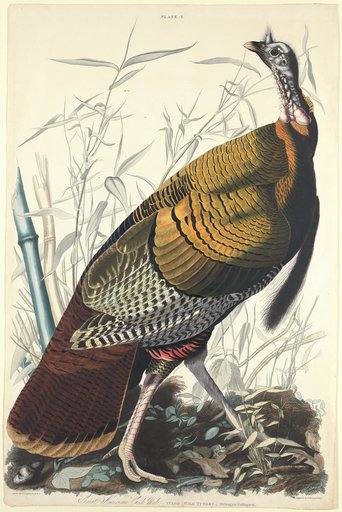
Havell's most significant achievement remains his aquatint engraving for John James Audubon's The Birds of America, published between 1827 and 1838. He engraved all but the first ten plates of this monumental folio, a total contribution that contemporary and subsequent critics have deemed essential to the publication's success. The work has been described in America as "perhaps the most significant natural history publication of all time."
Following his emigration, Havell produced painted landscapes of the Hudson River valley, though specific titles and current locations of individual paintings are not documented in the available sources. He also continued to create aquatints and city panoramas during this period.
Influences & students
Havell's most significant professional relationship was with John James Audubon, with whom he collaborated extensively on The Birds of America and with whom he formed a close friendship during their lengthy association. This collaboration was initially mediated through his father, Robert Havell Sr., who had established the family business's reputation in aquatint engraving. The Havell family itself constituted a network of artistic influence. His uncle Luke Havell (1752?, 1810) was a drawing master at Reading Grammar School who had been apprenticed to the signwriter Ayliffe Cole. His cousin Daniel Havell (1786-1822) worked in partnership with Robert Havell Sr. before establishing an independent career as an aquatint engraver. Another cousin, William Havell (1782-1857), was a painter whose watercolours provided subjects for family publishing projects, including Twelve Picturesque Views of the River Thames (1812). No pupils or direct followers of Havell Jr. are recorded in the available sources.
Legacy
Havell's legacy rests primarily on his engraving work for The Birds of America, which is now recognized as a significant artistic achievement independent of its documentary function. His aquatint plates are considered an essential component of the publication's success and enduring reputation.
His later career as a Hudson River School painter represents a secondary but significant trajectory, marking the transition from an English reproductive engraver to an American landscape artist. The shift reflects broader patterns of transatlantic artistic exchange in the nineteenth century. His death in 1878 and burial in Sleepy Hollow Cemetery place him within the geographic and cultural orbit of the Hudson River School's American setting.
Works by Havell, Jr., Robert
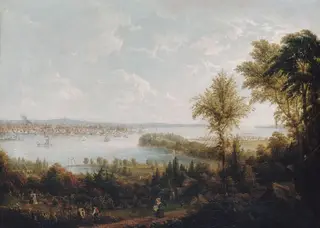 View of the Bay and City of New York from Weehawken
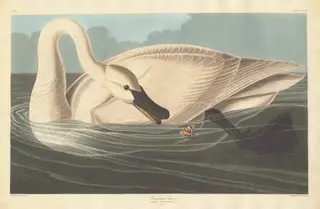 Trumpeter Swan
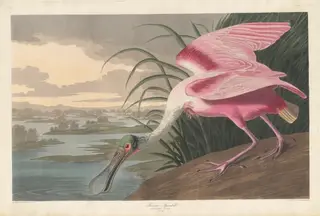 Roseate Spoonbill
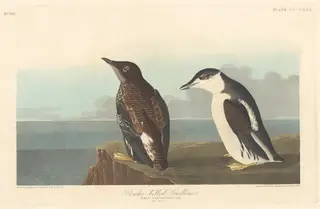 Slender-billed Guillemot
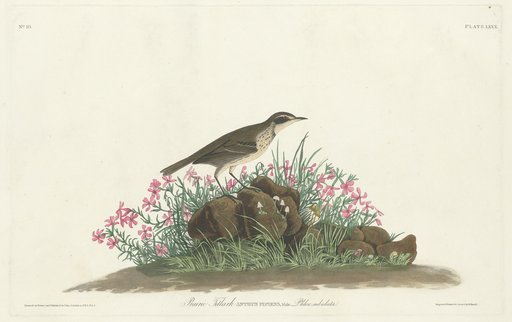
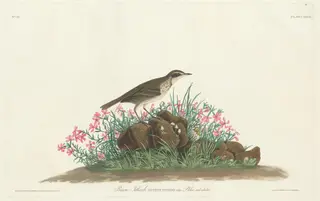 Prairie Titlark
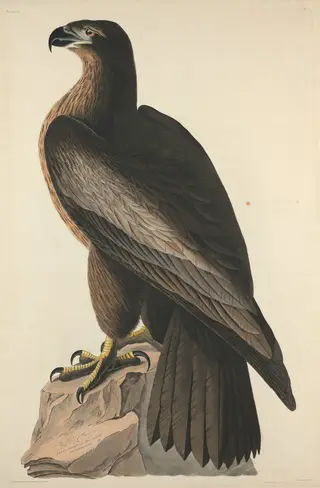 The Bird of Washington or Great American Sea Eagle
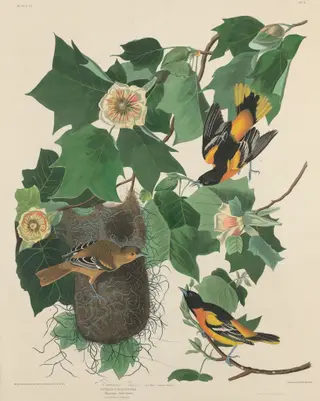 Baltimore Oriole
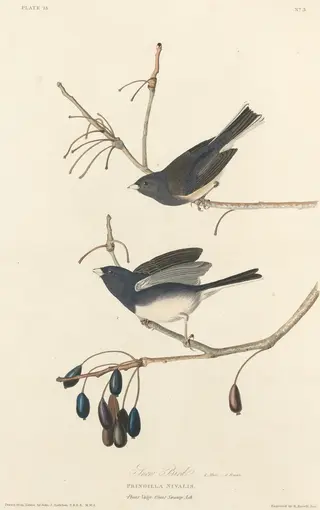 Snow-Bird
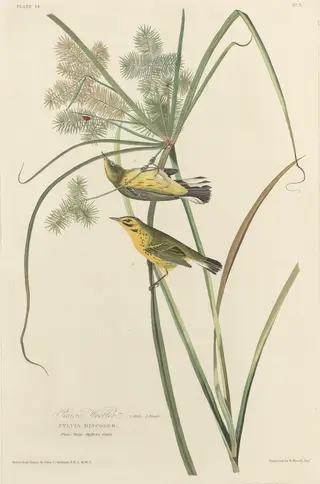 Prairie Warbler
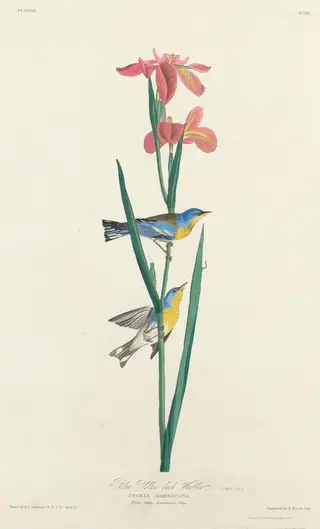 Blue Yellow-backed Warbler
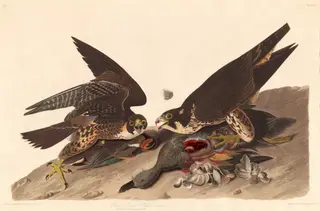 Great Footed Hawk
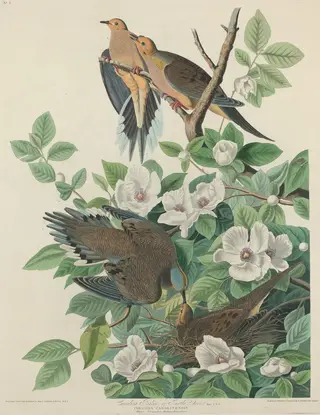 Carolina Pigeon or Turtle Dove
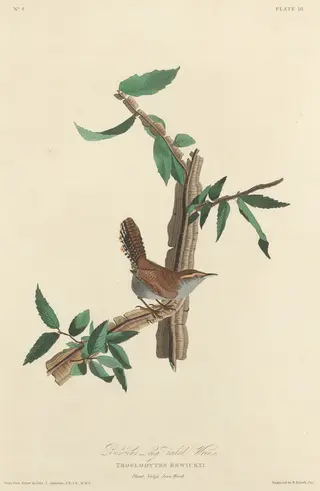 Bewick's Long-tailed Wren
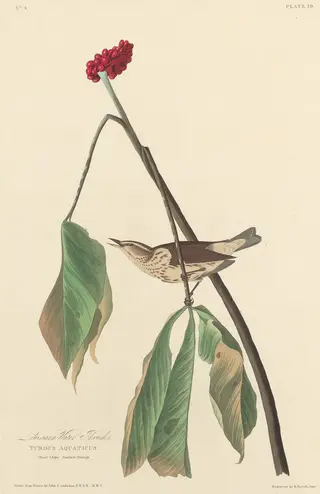 Louisiana Water Thrush
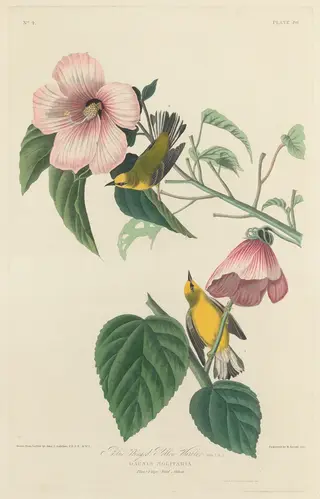 Blue-winged Yellow Warbler
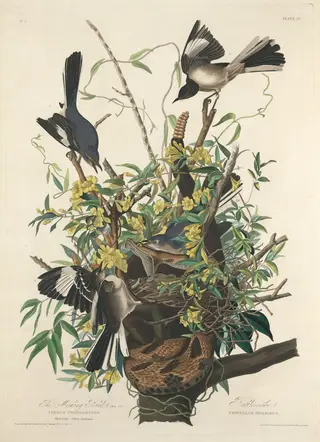 The Mocking Bird
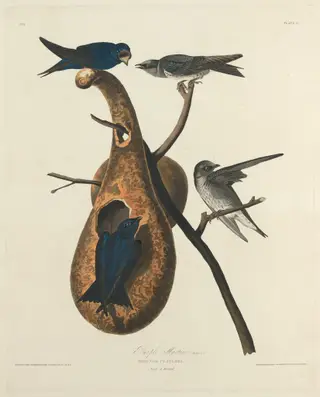 Purple Martin
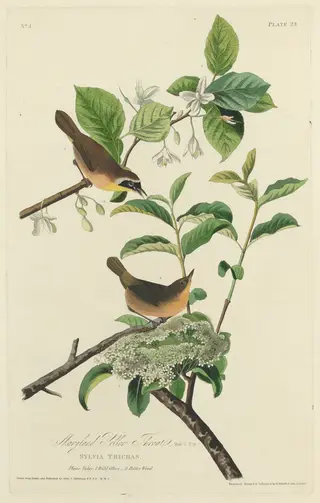 Maryland Yellow Throat
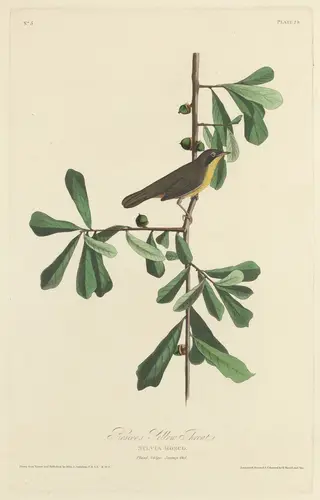 Roscoe's Yellow Throat
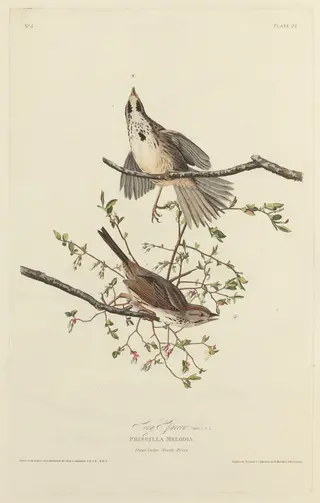 Song Sparrow
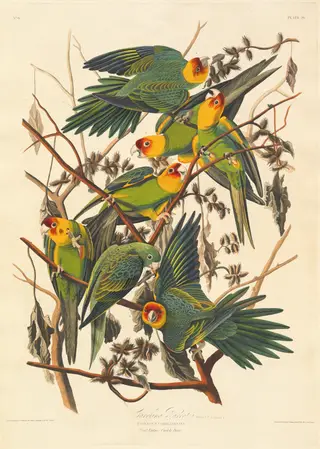 Carolina Parrot
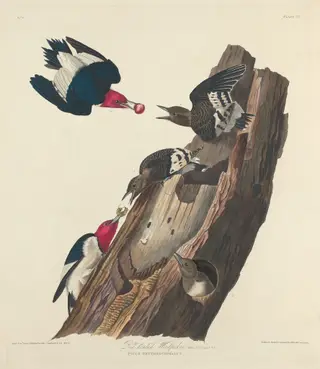 Red-headed Woodpecker
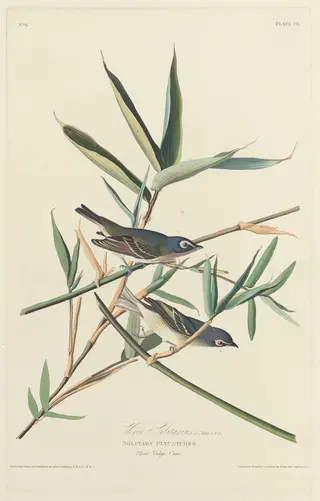 Solitary Flycatcher
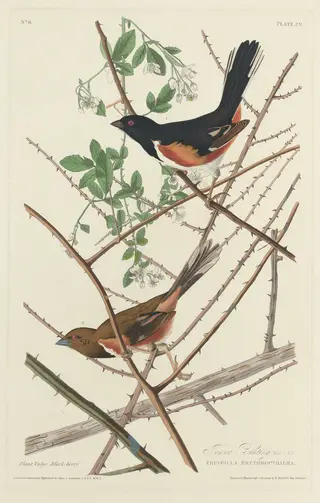 Towee Bunting
426 works in the catalog · 24 shown
Collections represented


Artists in a similar vein