Artwork
Cow Bunting
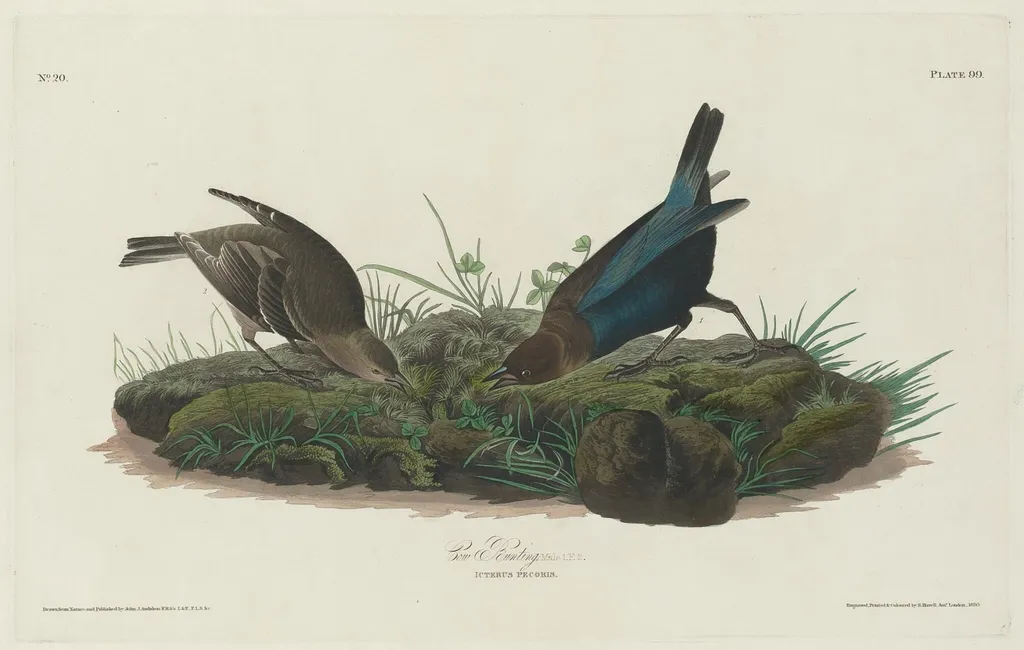
Cow Bunting is an ink print by the Romanticist artist Havell, Jr., Robert. It dates from 1830 and is held in the collection of the National Gallery of Art.
About this work
Overview
Created in 1830, Cow Bunting is a hand‑colored engraving combined with aquatint, executed on Whatman wove paper. The print presents a close‑up view of two birds perched within a moss‑ and twig‑lined nest, set against an unadorned white background that emphasizes the subjects.
Subject & Meaning
The composition depicts a pair of cow buntings, one bearing brown plumage and the other displaying blue‑black feathers with an elongated tail. The careful rendering of the nest’s texture and surrounding foliage suggests a naturalistic study, typical of early‑19th‑century ornithological illustration.
Technique & Style
Robert Havell Jr. employed fine line engraving to delineate feather detail, while aquatint provided soft tonal washes that give the birds a luminous quality. Hand‑applied colour enhances the subtle contrasts, reflecting the scientific illustration aesthetic prevalent in the period.
History & Provenance
The work originates from the Havell family workshop in Reading, Berkshire, a lineage renowned for printmaking expertise and for producing images linked to British interest in Indian art and natural history. The paper choice, Whatman wove, was a standard support for high‑quality prints of the era.
Context
During the early 1800s, detailed printed studies of birds served both educational and decorative purposes, often accompanying texts on natural history. Havell’s production aligns with this tradition, combining artistic skill with the emerging demand for accurate visual documentation of wildlife.
Own this work as a print
Artist & collection
Artist
The Havell family of Reading, Berkshire, England, included a number of notable engravers, etchers and painters, as well as writers, publishers, educators, and musicians.

- Boat-Tailed Grackle
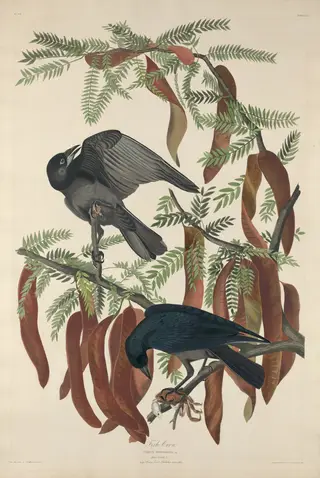 Fish Crow
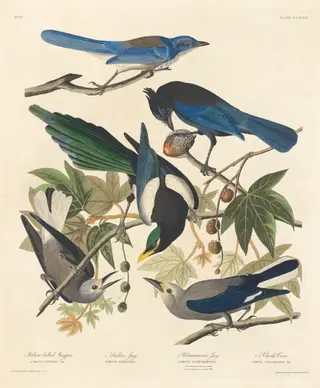 Yellow-billed Magpie, Stellers Jay, Ultramarine Jay and Clark's Crow
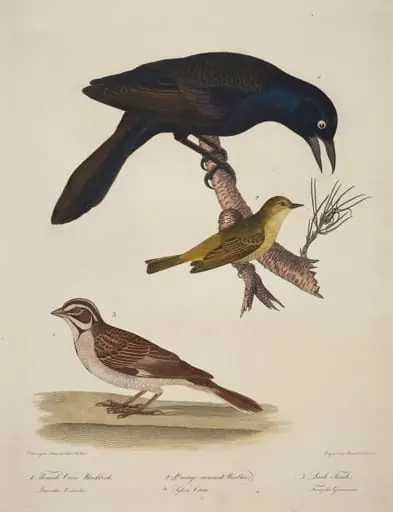 Female Crow Blackbird, Orange-Crowned Warbler, Lark Finch
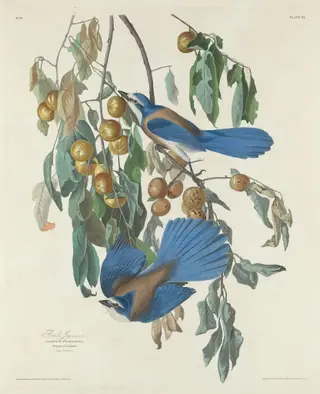 Florida Jays
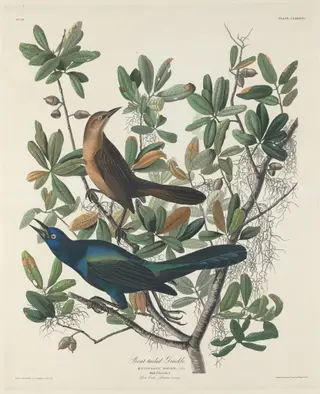 Boat-tailed Grackle
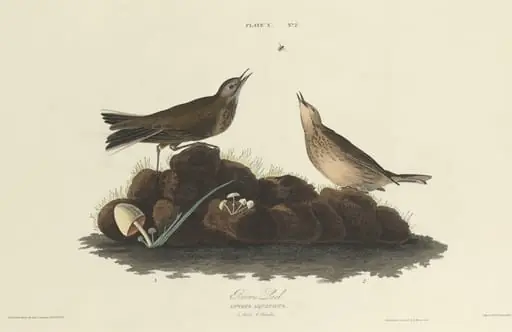 Brown Lark
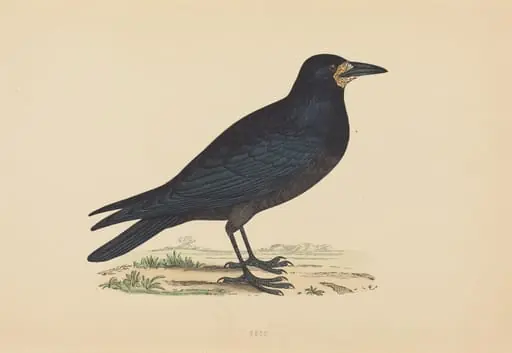 Rook
Rook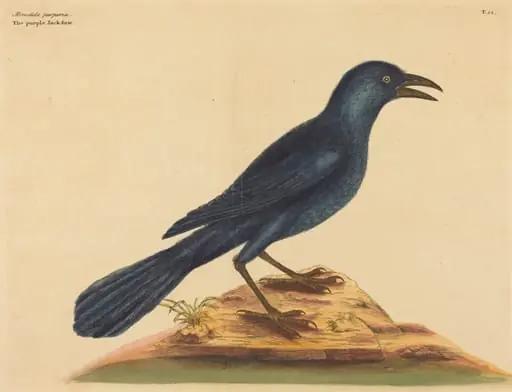 The Purple Jack Daw (Gracula Quiscula)
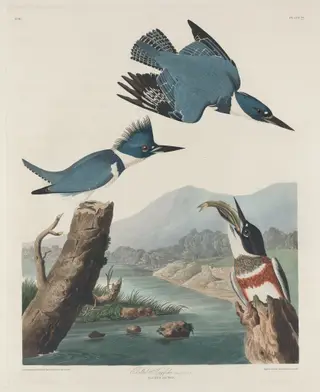 Belted Kingsfisher
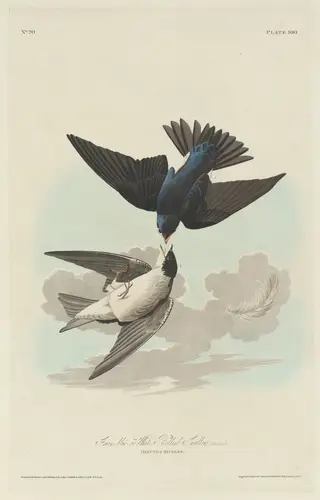 Green-blue or White-bellied Swallow
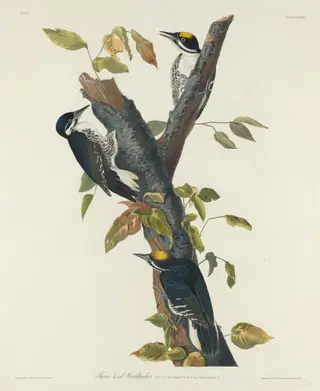 Three-Toed Woodpecker