Artwork
Portrait of Franz Josef I, Emperor of Austria
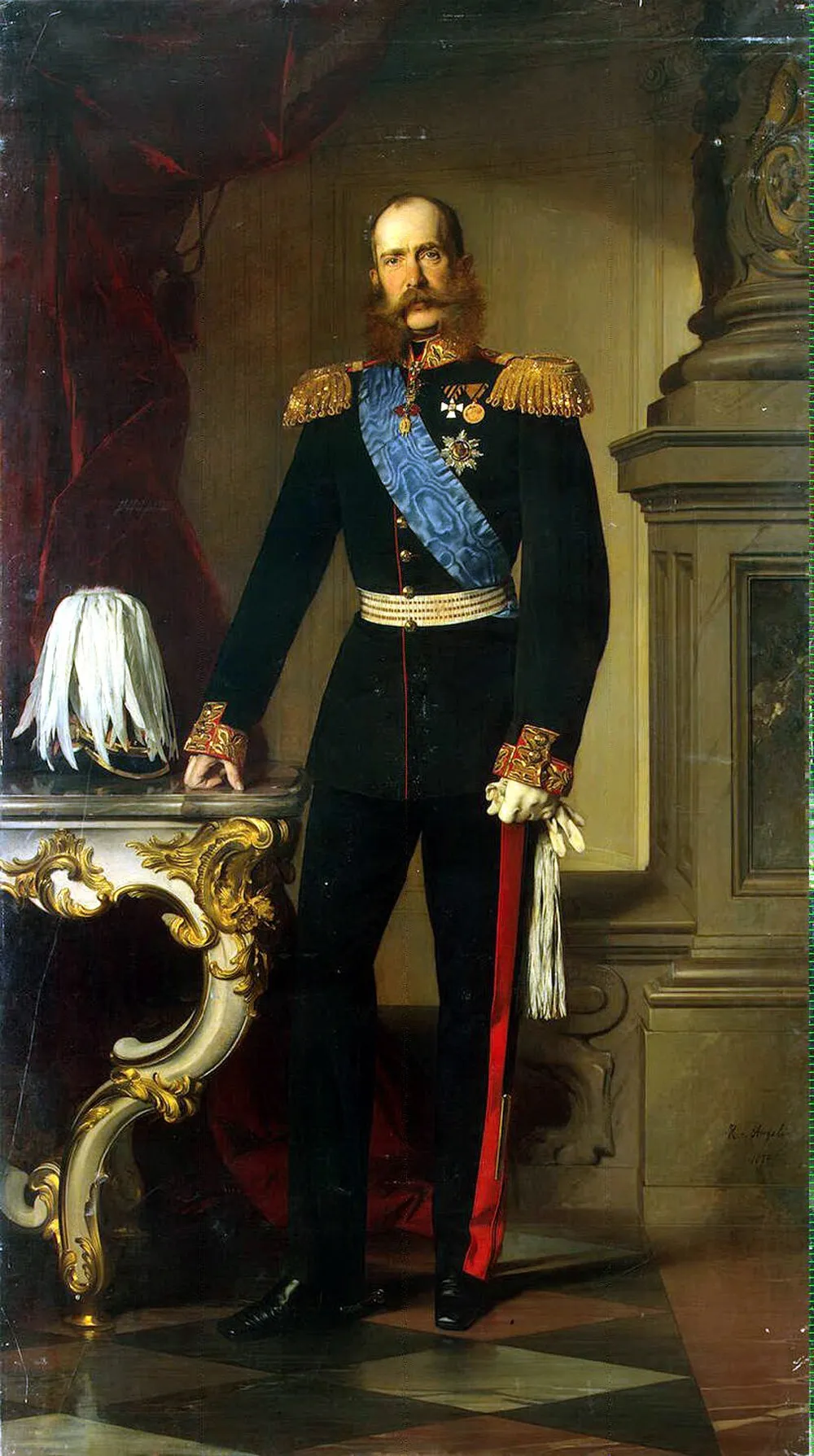
Portrait of Franz Josef I, Emperor of Austria is an oil painting by the Realist artist Heinrich von Angeli. It dates from 1874 and is held in the collection of the Hermitage Museum.
About this work
Overview
Portrait of Franz Josef I, Emperor of Austria is an oil-on-canvas portrait painted in 1874 by the Austrian artist Heinrich von Angeli.
Portrait of Franz Josef I, Emperor of Austria is an oil-on-canvas portrait painted in 1874 by the Austrian artist Heinrich von Angeli. The full-length painting, measuring 242 by 134 centimetres, depicts the Habsburg emperor in military regalia and is now held in the collection of the Hermitage Museum in Saint Petersburg, Russia. The work is a significant example of von Angeli's society portraiture, demonstrating the naturalistic approach and technical precision that earned him commissions from European royalty and political elites during the late nineteenth century.
Subject & Meaning
The portrait depicts Franz Joseph I, who ruled Austria from 1848 until his death in 1916, making him one of the longest-reigning monarchs in European history. The emperor is shown standing in formal military dress, his body positioned frontally to convey authority and direct engagement with the viewer. His dark navy or black uniform is embellished with gold epaulettes and red and gold embroidered cuffs, while a light blue sash crosses his chest and medals decorate his left breast. The white belt at his waist and the white gloves held in his left hand add points of visual contrast. His right hand rests upon an ornate console table with gilded scrollwork, upon which a plumed hat has been placed. The composition employs traditional iconography of power: heavy red drapery to the left suggests the ceremonial space of the court, while architectural elements to the right, including a stone column and carved pedestal, evoke classical stability and imperial continuity. The geometric floor pattern in muted earth tones anchors the figure in a defined space, while the lighting from the upper left illuminates his face and chest, drawing attention to the personal presence of the monarch within the apparatus of state.
Technique & Style
Von Angeli executed the portrait in oil on canvas with a smooth, highly finished technique that renders textiles, metal, and stone with precise material fidelity. The palette is dominated by deep blues, blacks, and crimson reds, punctuated by warm gold accents against neutral stone and wall tones. This restrained but rich colour scheme focuses attention on the figure while maintaining tonal harmony throughout the composition. The brushwork is controlled and seamless, avoiding visible strokes in favour of an enamel-like surface that was characteristic of academic portraiture of the period. The lighting is carefully staged, falling from the upper left to model the emperor's face and chest while leaving the background in softer shadow, a device that creates depth and focuses the viewer's attention on the sitter's presence. The signature and date appear in the lower right corner, a conventional placement that asserts the artist's authorship without disrupting the pictorial unity. This approach aligns with von Angeli's known preference for naturalistic portrayal rather than idealisation, a stance that distinguished him from more flamboyant court painters such as Franz Xaver Winterhalter.
History & Provenance
The portrait was painted in 1874 in Austria, during a period when von Angeli was actively travelling between Berlin, London, and Vienna to execute commissions for European elites. The painting entered the collection of the Hermitage Museum in Saint Petersburg, Russia, where it remains today. Its acquisition by the Hermitage reflects the museum's extensive holdings of European court portraiture and its particular interest in works connected to imperial and royal houses. The painting has also been disseminated through reproduction, including photogravure prints produced by the Vienna-based establishment of Richard Paulussen, which circulated images of the work as part of broader advertising materials for reproductive printmaking services. The work's presence in the Hermitage places it within one of the world's most significant repositories of European painting, ensuring its continued accessibility to scholars and the public.
Context
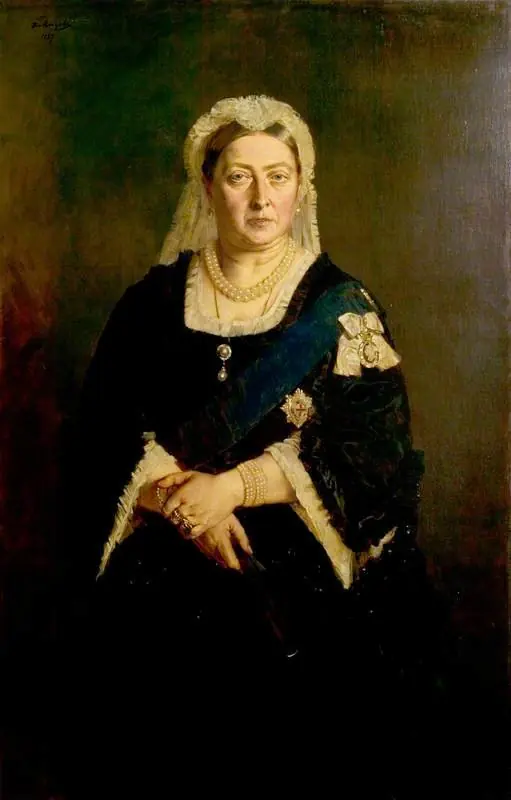
Heinrich von Angeli was born in 1840 in Ödenburg, then part of the Austrian Empire and now Sopron in Hungary. He trained at the Academy of Fine Arts Vienna, the Kunstakademie Düsseldorf, and in Munich before establishing himself in Vienna in 1862. From 1870 onward, he built a career as a portraitist to the powerful, travelling between major European capitals to fulfil commissions. His success was attributed particularly to his skill in depicting uniforms, pearls, and other jewels with convincing material presence. The 1874 portrait of Franz Joseph belongs to a period of intense productivity for von Angeli, during which he also painted Queen Victoria in 1875, a work that earned him praise from the monarch for its honesty. In 1877, Buckingham Palace arranged for Ulysses S. Grant to sit for him. His client list included Kaiser Wilhelm I, Benjamin Disraeli, and Lord Kitchener, among others. Several of his works entered the British Royal Collection, and his paintings are also held by the Wallace Collection and the Victoria and Albert Museum. In 1915, he received the German Order Pour le Mérite for Sciences and Arts. He died in Vienna in 1925. The portrait of Franz Joseph exemplifies the function of court portraiture in the late Habsburg period, serving both as personal likeness and as an instrument of political representation during an era when monarchical imagery was essential to the projection of authority across diverse imperial territories.
Legacy
The portrait continues to serve as a significant document of Habsburg imperial representation and of von Angeli's position within the network of European court painters in the late nineteenth century. The painting's residence in the Hermitage ensures its place within the institutional narrative of European art history, while its reproduction in various media, including photogravure, attests to its role in broader visual culture beyond the museum walls. Von Angeli's approach to portraiture, with its emphasis on naturalistic depiction over idealisation, influenced the conventions of elite portraiture and contributed to a shift in how monarchs chose to be represented. The work remains a touchstone for understanding the intersection of artistic practice, political power, and imperial identity in Central Europe during the decades before the First World War transformed the political order that Franz Joseph had embodied for nearly seventy years.
Artist & collection

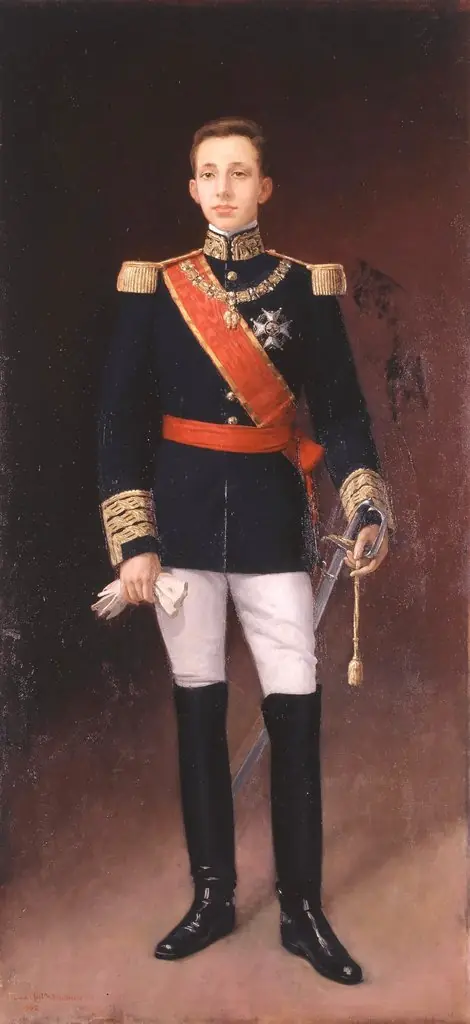 Alfonso XIII
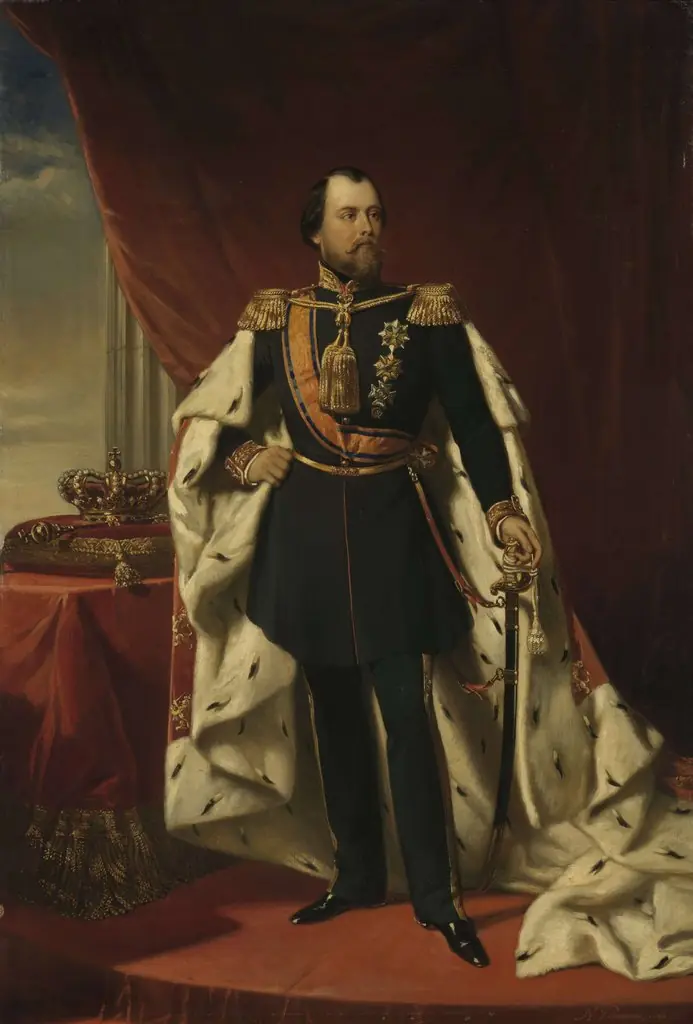 Portrait of William III, King of the Netherlands
 Portrait of Prince Vasily Dolgorukov
 Oskar I, 1799-1859, konung av Sverige och Norge
 Portrait of Grand Prince Alexander Nikolayevich
 El rey Francisco de Asís con uniforme de capitán general
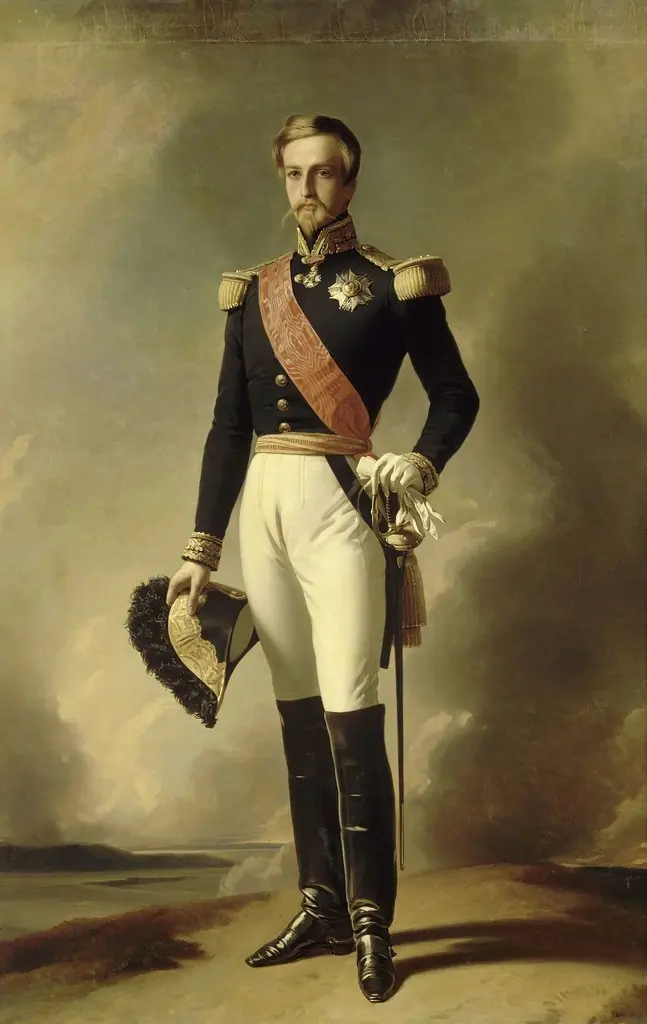 Portrait of Prince Henri, Duke of Aumale (1822-1897)
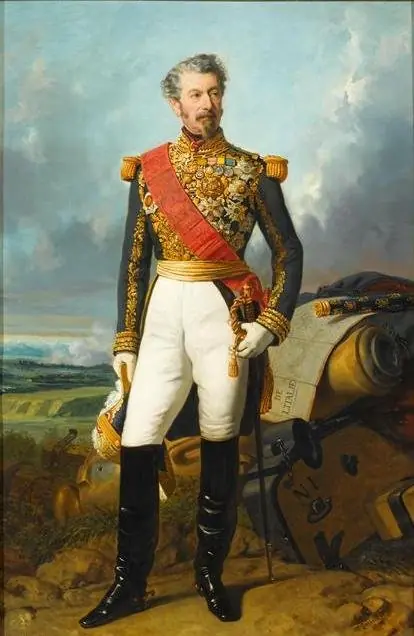 Adolphe Niel, maréchal de France (1802-1869)
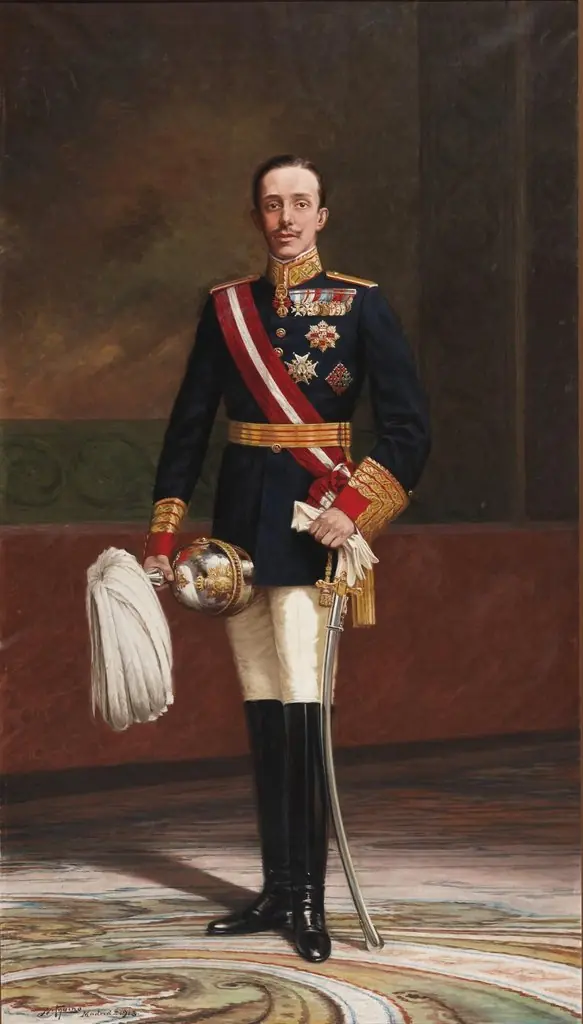 Alfonso XIII con uniforme de capitán general
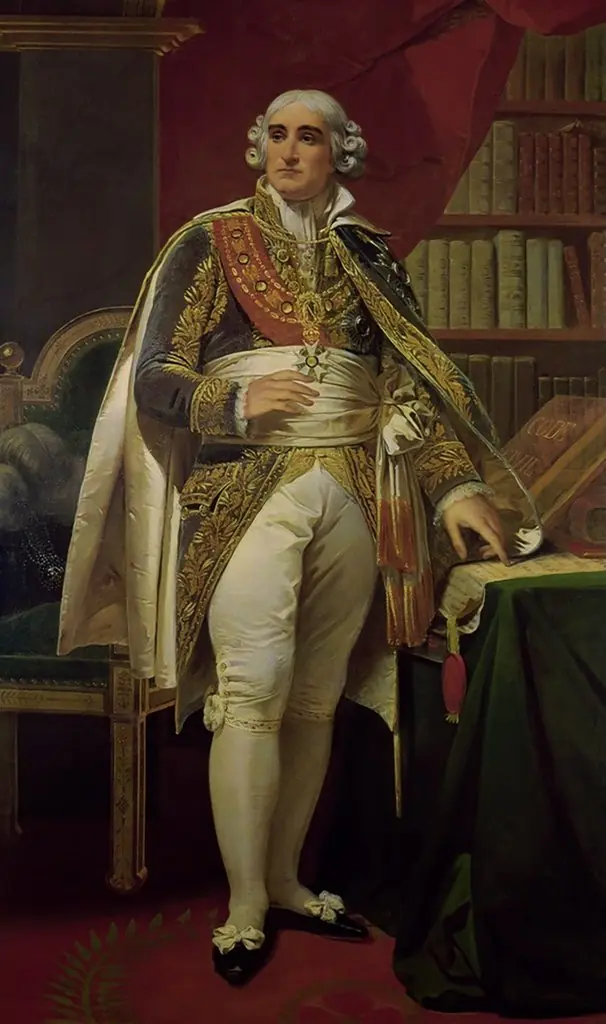 Portrait de Parme, duc de Cambacérès, Archichancelier de l'Empire