Artwork
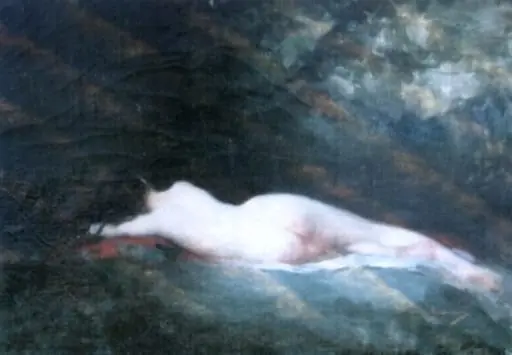
Reclining Nude
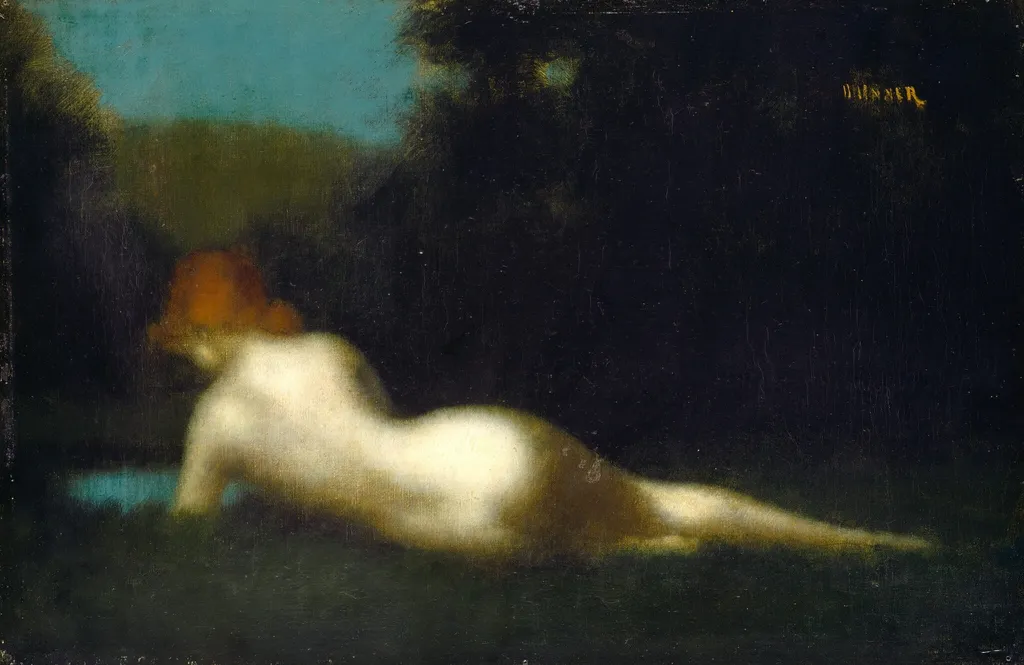
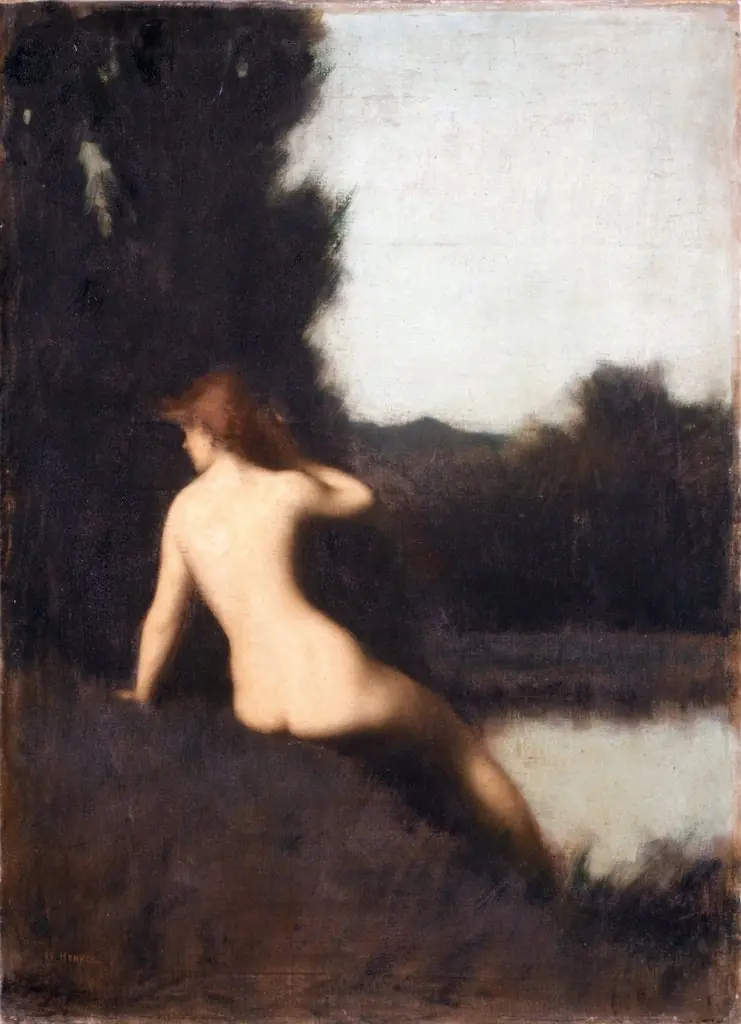
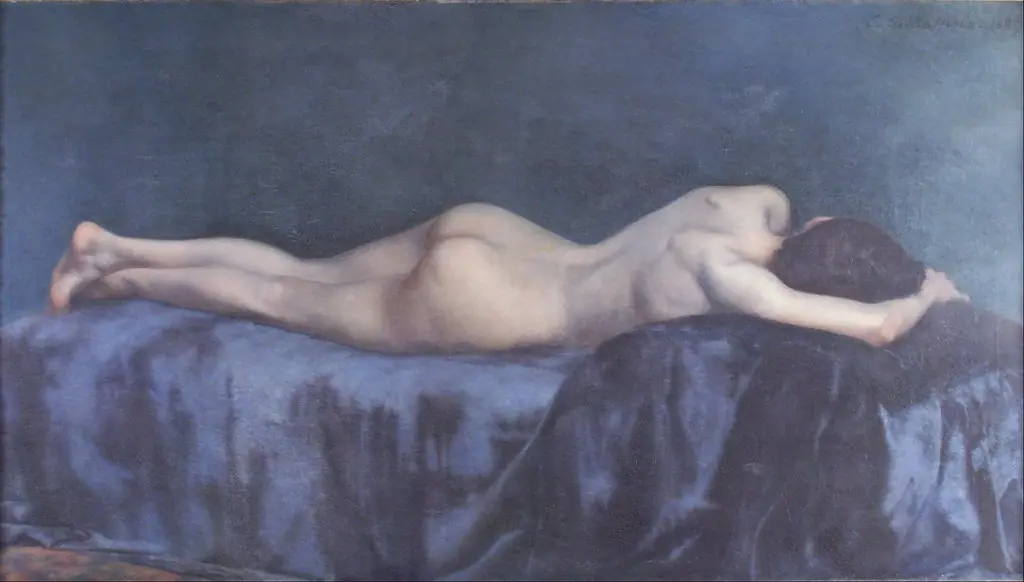
Reclining Nude is an oil painting by the Realist artist Jean-Jacques Henner. It dates from 1900 and is held in the collection of the National Gallery of Art.
- Inscription
- Inscribed:upper right: HENNER
About this work
Subject & Meaning
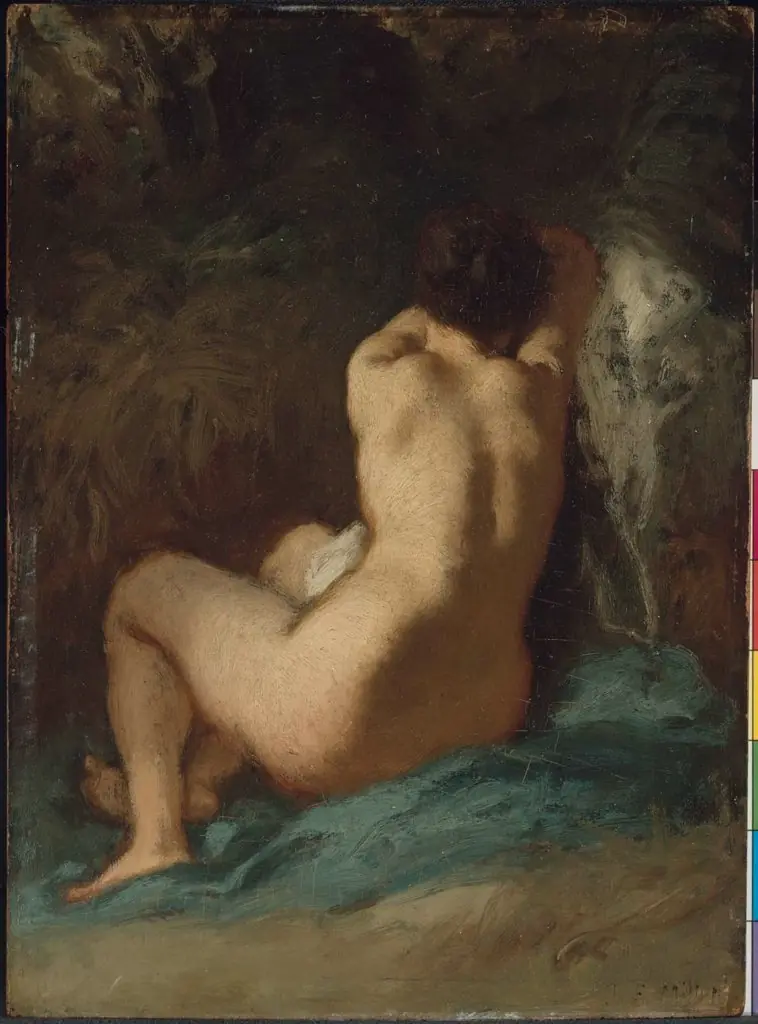
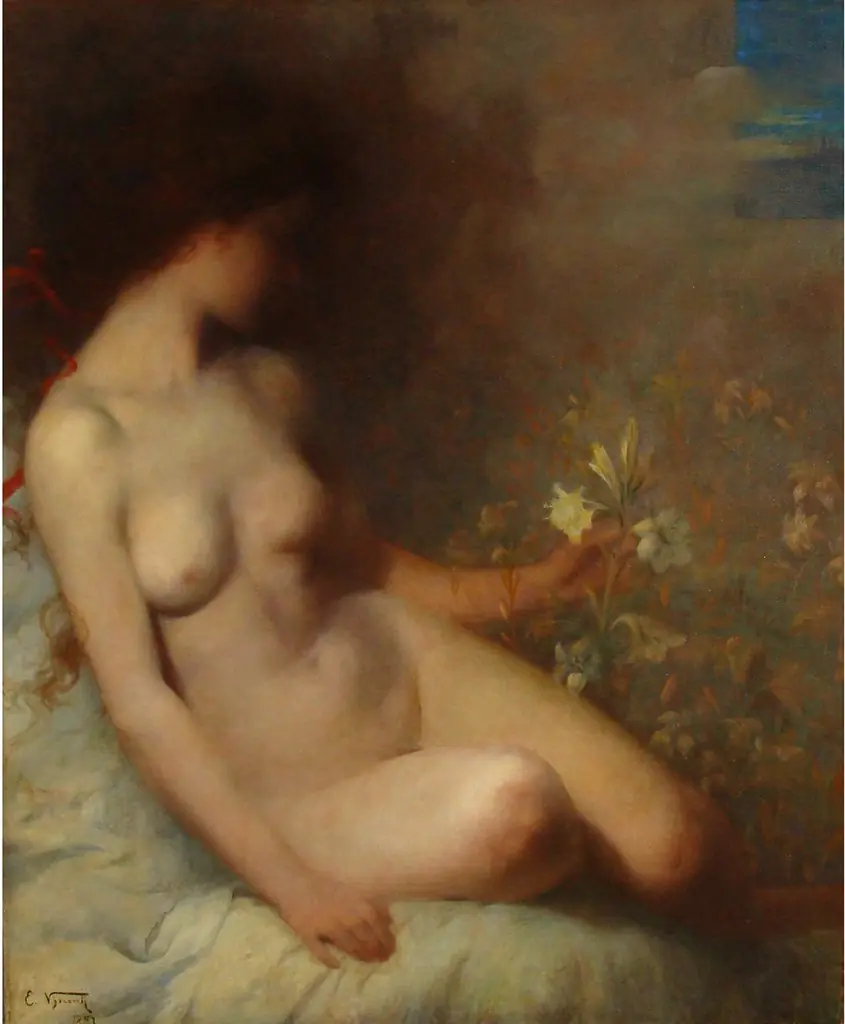
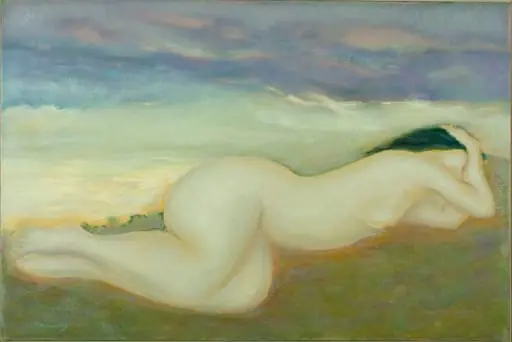
Jean-Jacques Henner's _Reclining Nude_ portrays a woman who is nude and half-reclining, viewed from the back. The composition focuses on her back, waist, and red hair. The subject is a straightforward depiction of a female nude, with no further iconographic or symbolic elements identified in the available records.
History & Provenance
Painted in 1900, Jean-Jacques Henner's Reclining Nude was first owned by the New York firm Fishel, Adler and Schwartz.
Painted in 1900, Jean-Jacques Henner's Reclining Nude was first owned by the New York firm Fishel, Adler and Schwartz. It then passed to J.S. Aron and was sold at auction by the American Art Association on 24 February 1921 (lot 7), probably to William R. Timken (1866–1949). After Timken's death, the painting descended to his widow, Lillian Guyer Timken (1881–1959), who bequeathed it to the National Gallery of Art, Washington, in 1960. No record of a specific commission has survived.
Overview
Jean-Jacques Henner's Reclining Nude, an oil on canvas, presents a female figure in a state of repose. This undated work, measuring 27.4 by 41.5 centimeters, exemplifies the Alsatian artist's consistent engagement with the nude form throughout his career. Housed at the National Gallery of Art, Washington, it showcases the subdued lighting and atmospheric qualities characteristic of his Symbolist-influenced oeuvre from the nineteenth century.
Technique & Style
The painting demonstrates Henner's academic training combined with his distinctive stylistic innovations. He employed a technique known as sfumato, creating a hazy, veiled effect that softens contours and imbues the scene with a dreamlike quality. This, coupled with dramatic chiaroscuro, or strong contrasts between light and shadow, allows the figure to emerge from muted half-light, a method often associated with French Symbolist painting of the era.
Context
Born in Alsace in 1829, Jean-Jacques Henner received rigorous academic training at the École des Beaux-Arts in Paris, culminating in the prestigious Prix de Rome in 1858. He subsequently established himself as a prominent figure among French Symbolist painters. His contributions to art were recognized with significant honors, including elevation to Commander of the Legion of Honour and his election to the Institut de France, succeeding Alexandre Cabanel.
Own this work as a print
Artist & collection

Artist
Jean-Jacques Henner (5 March 1829 – 23 July 1905) was a French painter, noted for his use of sfumato and chiaroscuro in painting nudes, religious subjects and portraits.