Artwork
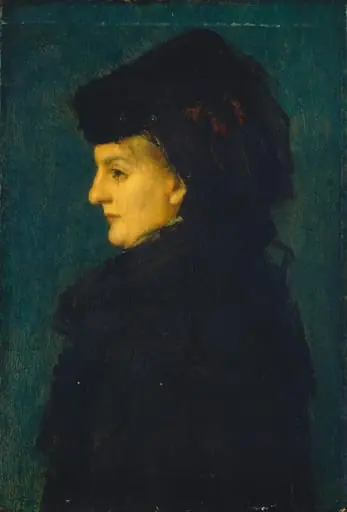
Standing Woman
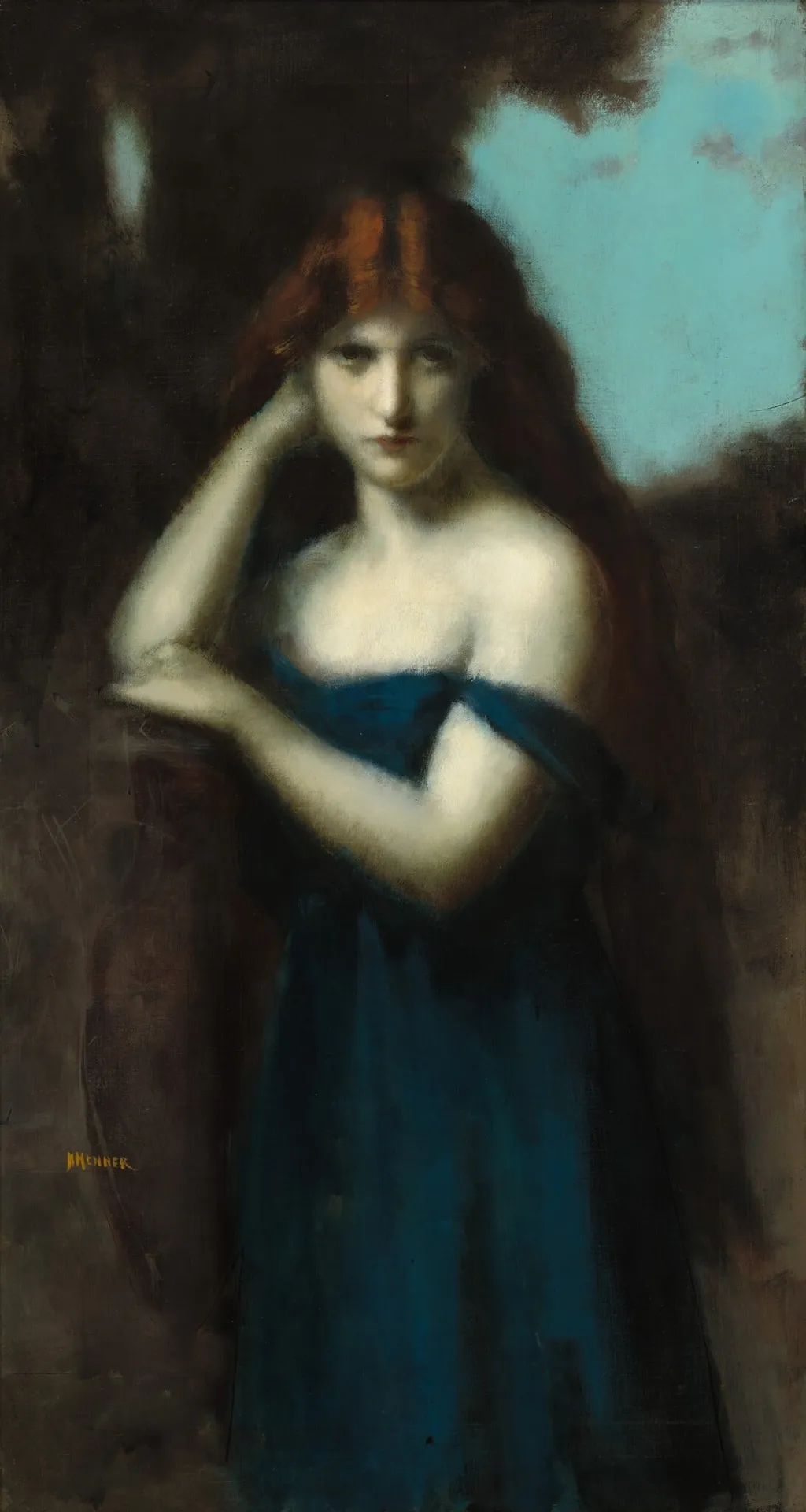
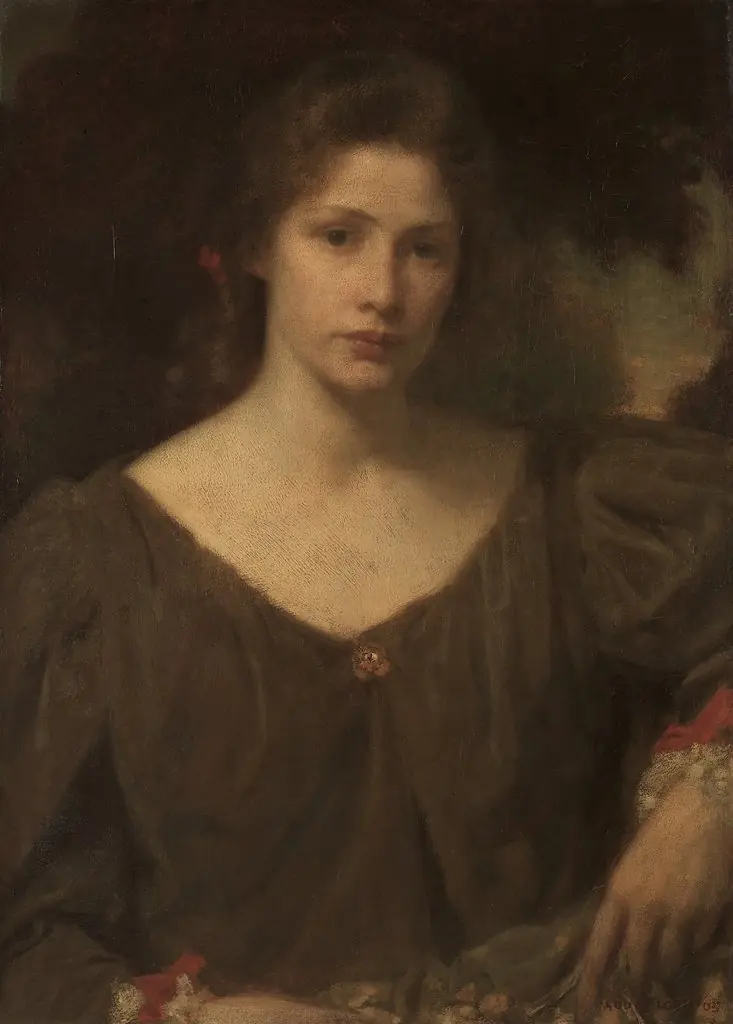
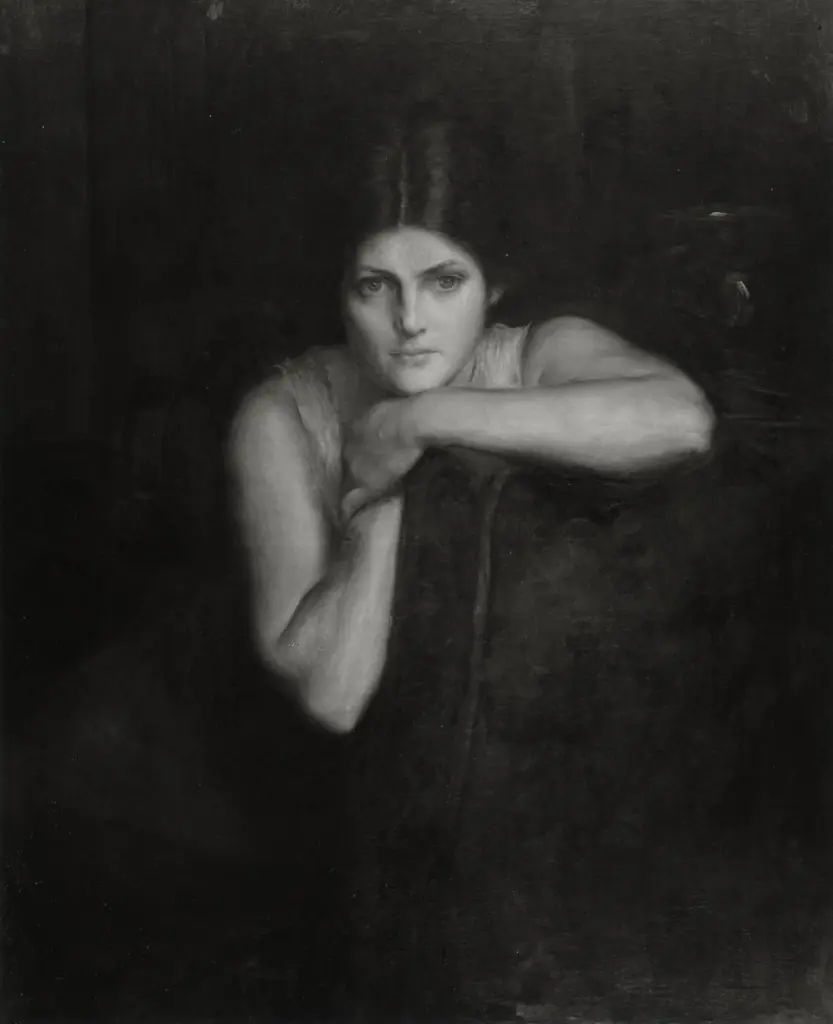
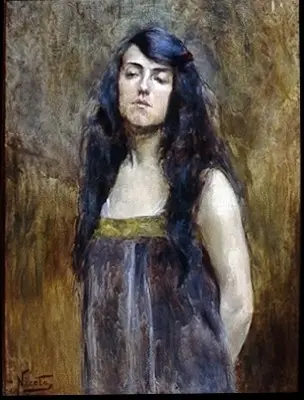
Standing Woman is an oil painting by the Post-Impressionist artist Jean-Jacques Henner. It dates from 1903 and is held in the collection of the National Gallery of Art.
- Inscription
- Inscribed:lower left: J J Henner
About this work
Subject & Meaning
The work depicts a solitary female figure rendered in a classical pose that emphasizes quiet dignity and introspection.
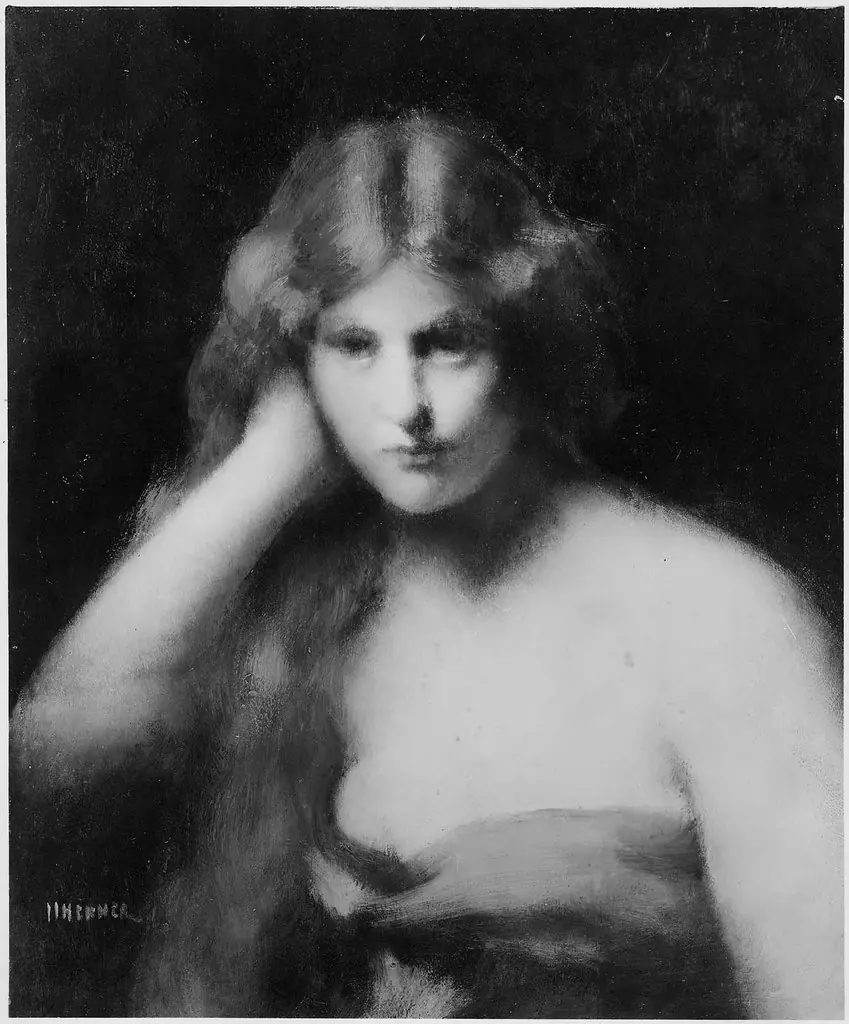
The work depicts a solitary female figure rendered in a classical pose that emphasizes quiet dignity and introspection. Henner models the sitter with soft chiaroscuro and a restrained palette, evoking a timeless, almost allegorical presence rather than a fleeting contemporary identity. The composition’s understated elegance suggests an idealized femininity rooted in academic tradition, inviting viewers to contemplate inner virtue rather than narrative specifics.
This interpretation aligns with scholarly readings of the artist’s practice, which often employed such poised subjects to explore themes of serenity and moral poise.
Technique & Style
Standing Woman is executed in oil on canvas, a traditional easel-painting medium consistent with Jean-Jacques Henner's academic practice. The canvas measures 100.33 cm in height by 54.61 cm in width, producing a tall, narrow format suited to a single full-length figure. The work is classified as a painting and is held in the National Gallery of Art in Washington, D.C., having entered the Corcoran Gallery of Art in 1937 through the Walker bequest before its 2015 transfer to the National Gallery.
History & Provenance
Jean-Jacques Henner created the oil on canvas painting Standing Woman in 1903. The work entered the collection of Edward C. Walker (died 1915) and his wife Mary Griffin Walker (1855–1937), who held it at their residences in Willistead Manor, Walkerville, Ontario, and Washington. Upon Mary Walker's death, the painting was bequeathed to the Corcoran Gallery of Art in Washington on May 4, 1937.
In 2015, the National Gallery of Art in Washington, D.C., acquired the artwork following the dissolution of the Corcoran's collection.
The painting Standing Woman by Jean-Jacques Henner is currently held by the National Gallery of Art in Washington, D.C. Its provenance traces to Edward C. and Mary Griffin Walker of Willistead Manor, who bequeathed the work to the Corcoran Gallery of Art on May 4, 1937. The National Gallery of Art subsequently acquired the piece in 2015. While the work has been associated with the Corcoran Gallery of Art in its history, the provided sources do not list specific exhibition dates or titles.
Context
Standing Woman is an oil on canvas painting by Jean-Jacques Henner created in 1903. The work entered the collection of the National Gallery of Art in Washington, D.C., following its acquisition in 2015 from the Corcoran Gallery of Art, which had received it as a bequest from Edward C. Walker and Mary Griffin Walker in 1937. Art historical scholarship situates the painting within Henner's broader oeuvre of academic figure studies, reflecting late 19th-century French academic traditions while demonstrating evolving approaches to portraiture in the early 20th century.
Its provenance traces a clear path from private ownership through major American cultural institutions, underscoring its significance within institutional collecting histories.
Overview
Created circa 1903 by French artist Jean-Jacques Henner, Standing Woman is an oil on canvas that presents a solitary female figure against a muted backdrop. The work belongs to the later phase of Henner’s career, when he was exploring the interplay of light and shadow in figurative subjects.
Artist & collection

Artist
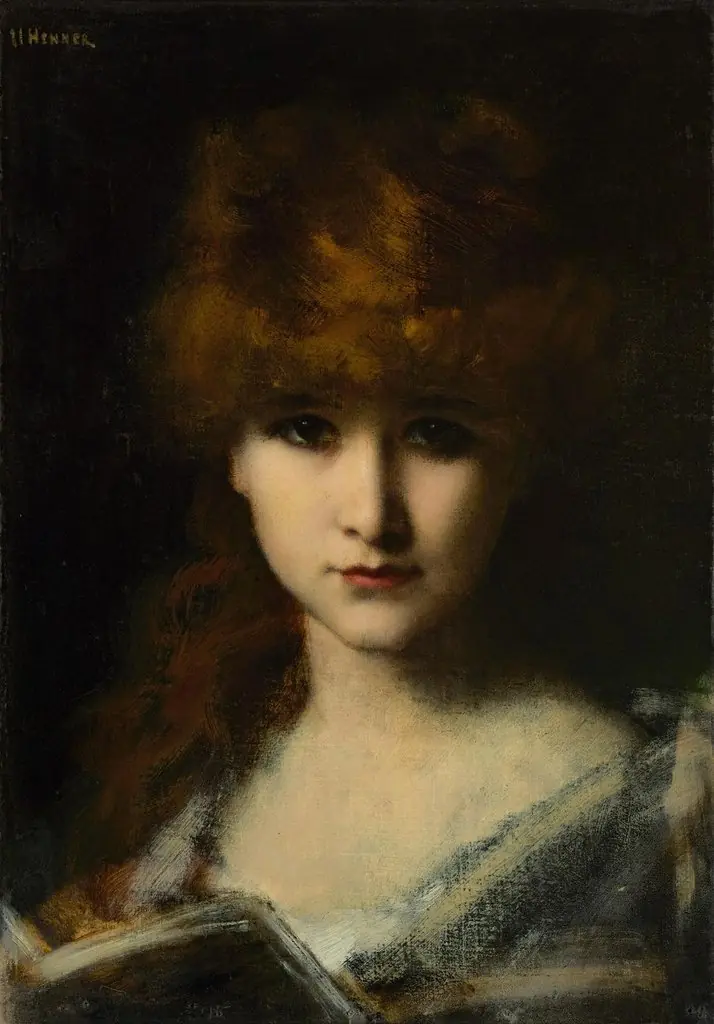
Jean-Jacques Henner (5 March 1829 – 23 July 1905) was a French painter, noted for his use of sfumato and chiaroscuro in painting nudes, religious subjects and portraits.