Artwork
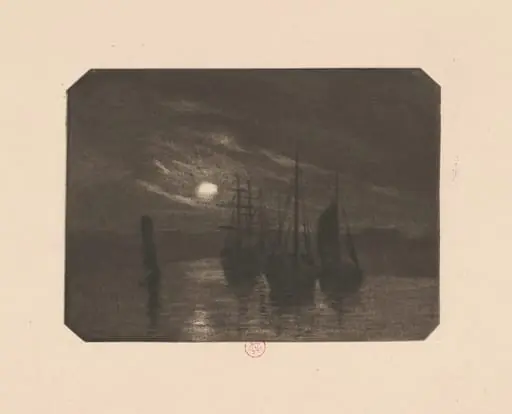
Effect of Moon at Dieppe
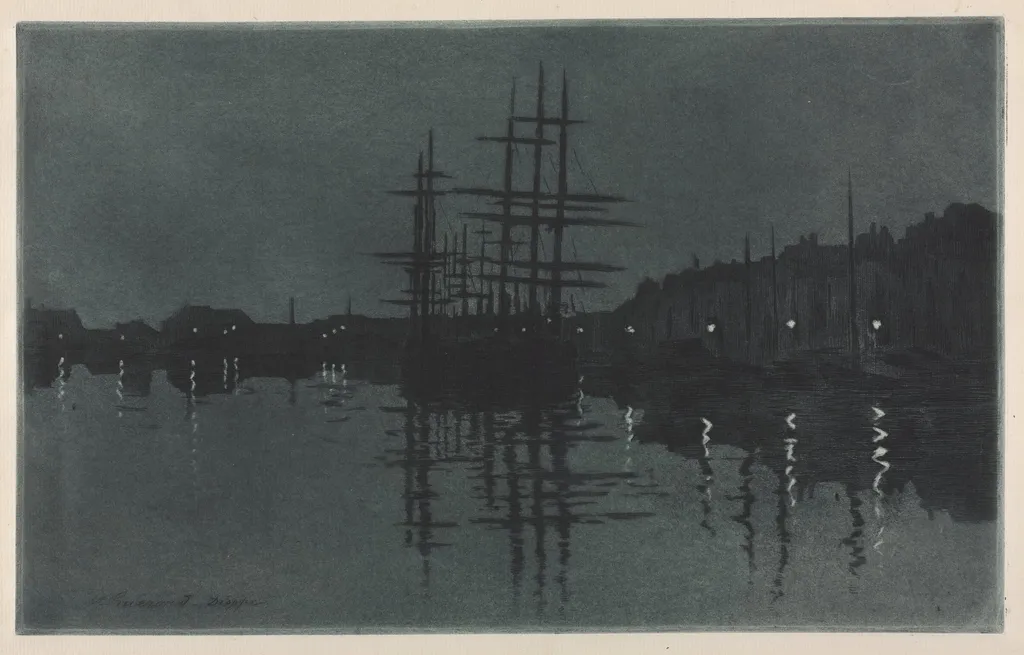
Effect of Moon at Dieppe is a print by the Impressionist artist Henri-Charles Guérard. It dates from 1885 and is held in the collection of the Cleveland Museum of Art.
- Accession no.
- 2009.553
- Credit line
- Gift of John Bonebrake
About this work
Overview
Effect of Moon at Dieppe is a print by Henri Charles Guérard, created using color etching. The work depicts a serene nighttime scene in Dieppe, France.
Technique & Style
Guérard achieved the soft, moonlit effect by burnishing away etched lines on the plate, leaving areas unprinted to create highlights on the white paper. This technique allowed him to capture the glow of lights around the harbor and their reflections in the water.
History & Provenance
Guérard began experimenting with color etching around 1885, a period that saw a resurgence in color intaglio prints in France, influenced by 18th-century French etchings and Japanese color woodcuts introduced in the 1860s.
Subject & Meaning
The print conveys a quiet, contemplative atmosphere, with the moonlight casting a gentle glow on the harbor scene. The artist's use of soft colors and subtle light effects creates a sense of depth and mood.
Own this work as a print
Artist & collection
Artist
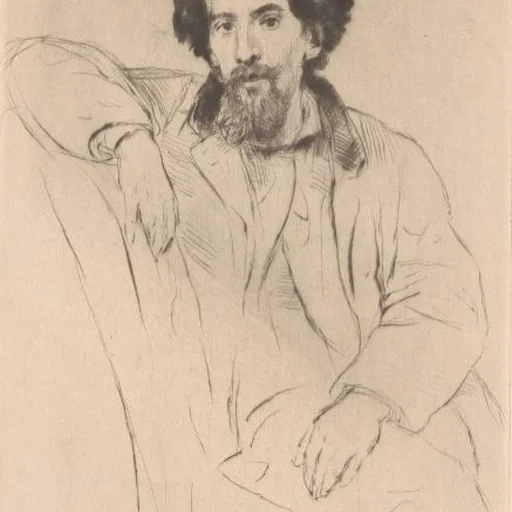
Henri Charles Guérard (26 April 1846, Paris - 24 March 1897, Paris) was a French painter and printmaker, particularly in etching and lithography.