Artwork
The Palace of Aurora
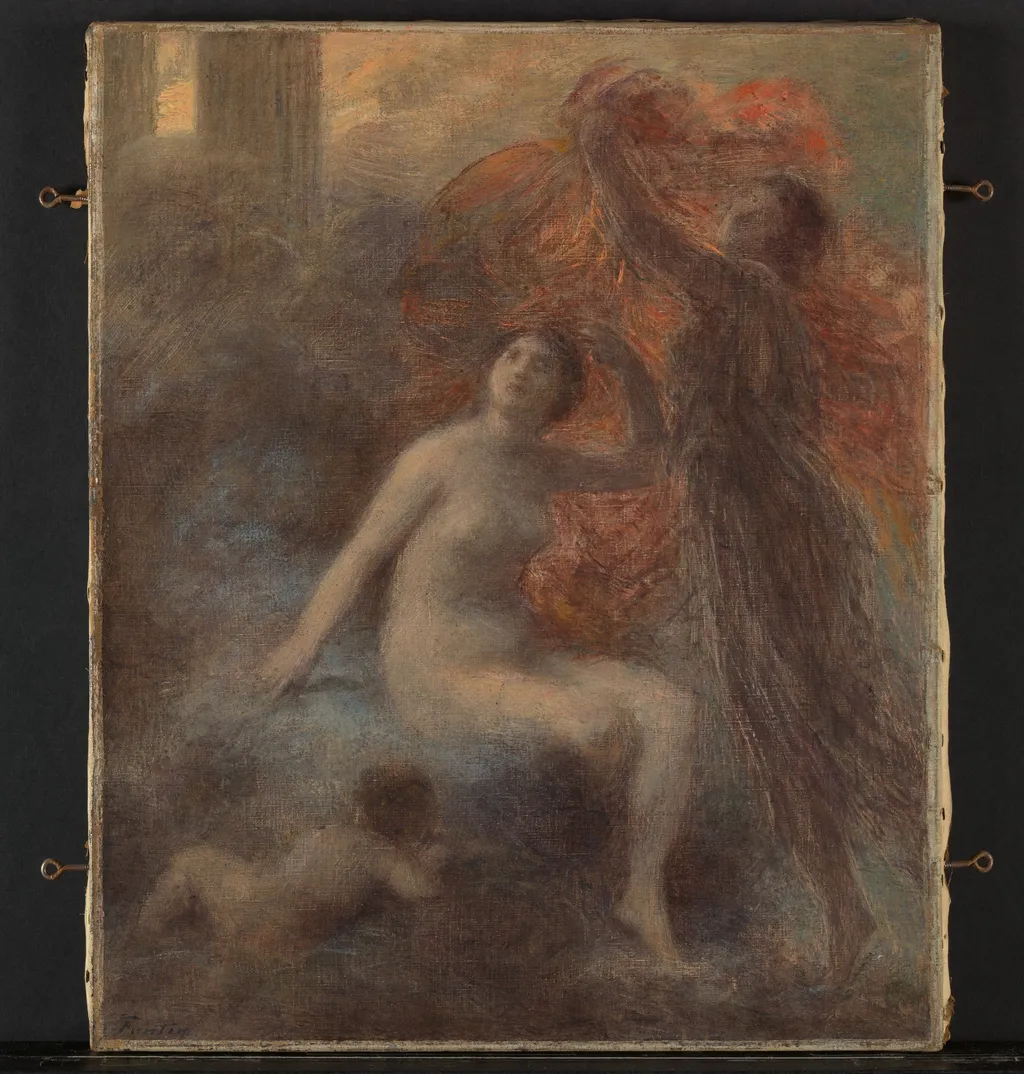
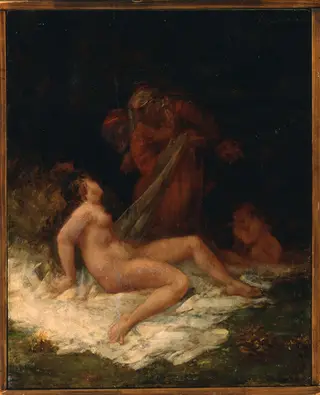
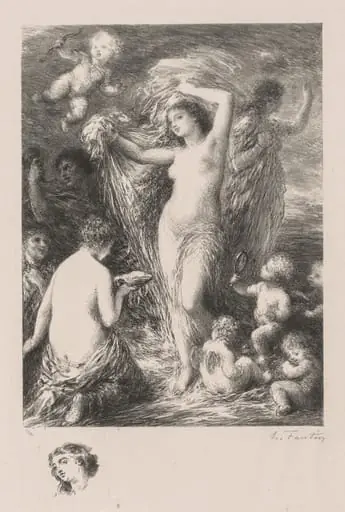
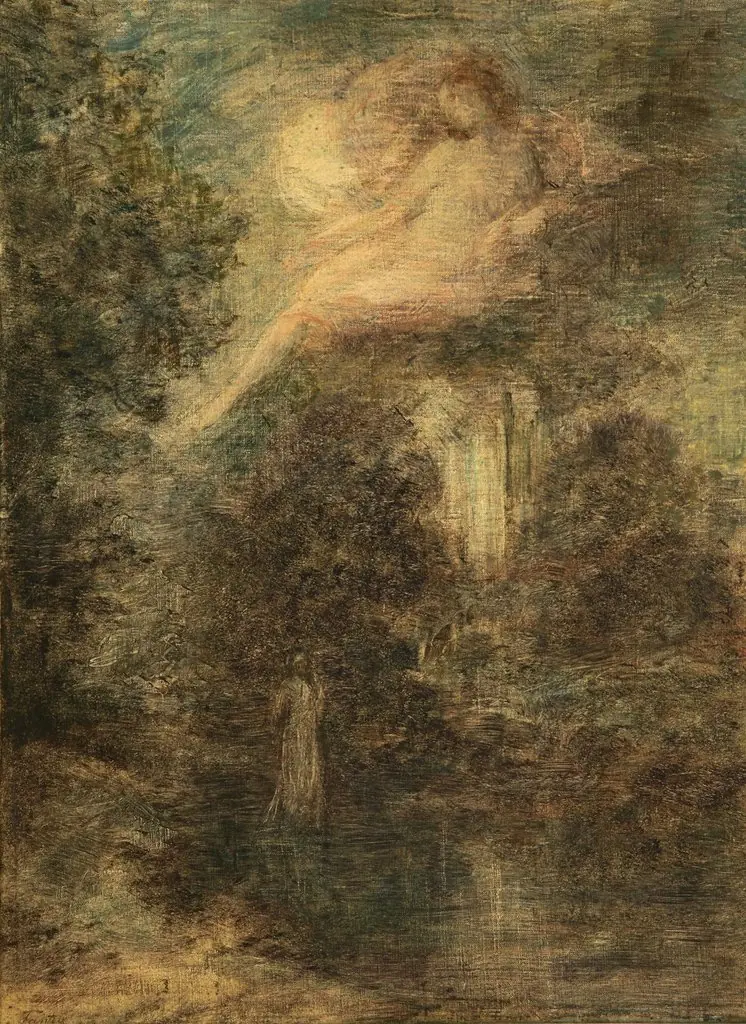
The Palace of Aurora is an oil painting by the Symbolist artist Henri Fantin-Latour. It dates from 1902 and is held in the collection of the Metropolitan Museum of Art.
About this work
Technique & Style
The work titled The Palace of Aurora, painted by Henri Fantin‑Latour in 1902, is executed in oil on canvas, measuring approximately 46 cm by 38.
The work titled The Palace of Aurora, painted by Henri Fantin‑Latour in 1902, is executed in oil on canvas, measuring approximately 46 cm by 38.1 cm. The painting’s support is a linen canvas, typical of the artist’s mature practice, and the oil medium allows layered, translucent modeling of the nude female figure and accompanying putto. Brushwork reveals a delicate handling of light, with soft tonal transitions that emphasize the sensual contours of the body. Compositionally, the figures occupy a shallow spatial setting, reflecting Symbolist interest in mythic narrative. No documented conservation issues are recorded, suggesting the piece remains in its original condition.
History & Provenance
Created in 1902, The Palace of Aurora is an oil-on-canvas painting by the French artist Henri Fantin-Latour (1836–1904). The work, measuring 46 by 38.1 centimeters, depicts a nude woman accompanied by putti. It is currently held in the collection of the Metropolitan Museum of Art.
While the specific commission details and the full chain of ownership prior to its museum acquisition are not detailed in the provided records, the inception date is firmly established as January 1, 1902. The painting remains a significant example of Fantin-Latour's late career output in oil paint.
Henri Fantin-Latour's 1902 oil painting, The Palace of Aurora, is held in the collection of the Metropolitan Museum of Art. The work, executed on canvas and measuring 46 by 38.1 centimeters, depicts a nude woman accompanied by a putto. While the specific inventory or accession number is not detailed in the provided records, the museum's location is confirmed as the holding institution for this piece.
The available sources establish the painting's creation date as January 1, 1902, and its current residence within the museum's collection, though no specific past or future exhibition history is documented in the given materials.
Overview
Henri Fantin-Latour's The Palace of Aurora, completed in 1902, is an oil painting emblematic of the Symbolist movement. This work diverges from the artist's earlier, more conventional subjects, presenting a mythological or allegorical scene. It features a nude female figure with a small child, reflecting the dreamlike and evocative qualities characteristic of Symbolism. The piece is part of The Metropolitan Museum of Art's collection.
Subject & Meaning
The painting depicts a pale-skinned nude woman, seated upon a rock, cradling a small child. Her long, flowing hair suggests a naturalistic or classical portrayal, while the child, often referred to as a putto, hints at mythological or allegorical narratives. The title, The Palace of Aurora, further connects the scene to classical mythology, specifically the Roman goddess of dawn, inviting viewers to interpret the symbolic resonance of the figures within this evocative setting.
Context
Fantin-Latour, primarily recognized for his meticulous still-life compositions and insightful group portraits of his contemporaries, explored a different artistic direction in his later years. The Palace of Aurora exemplifies this shift, moving away from the tangible reality of his earlier subjects towards a more imaginative and allegorical realm. This embrace of Symbolist themes showcases the artist's versatility and his engagement with the prevailing artistic currents of the turn of the century.
Own this work as a print
Artist & collection
Artist
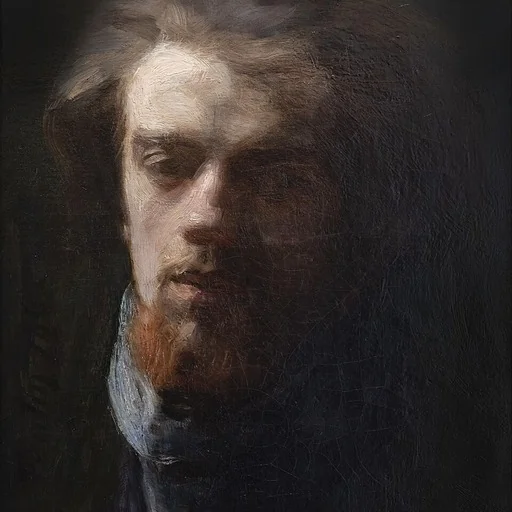
Ignace Henri Jean Theodore Fantin-Latour (French pronunciation:; 14 January 1836 – 25 August 1904) was a French painter and lithographer best known for his flower paintings and group portraits of Parisian artists and writers.