Artwork
Self-Portrait
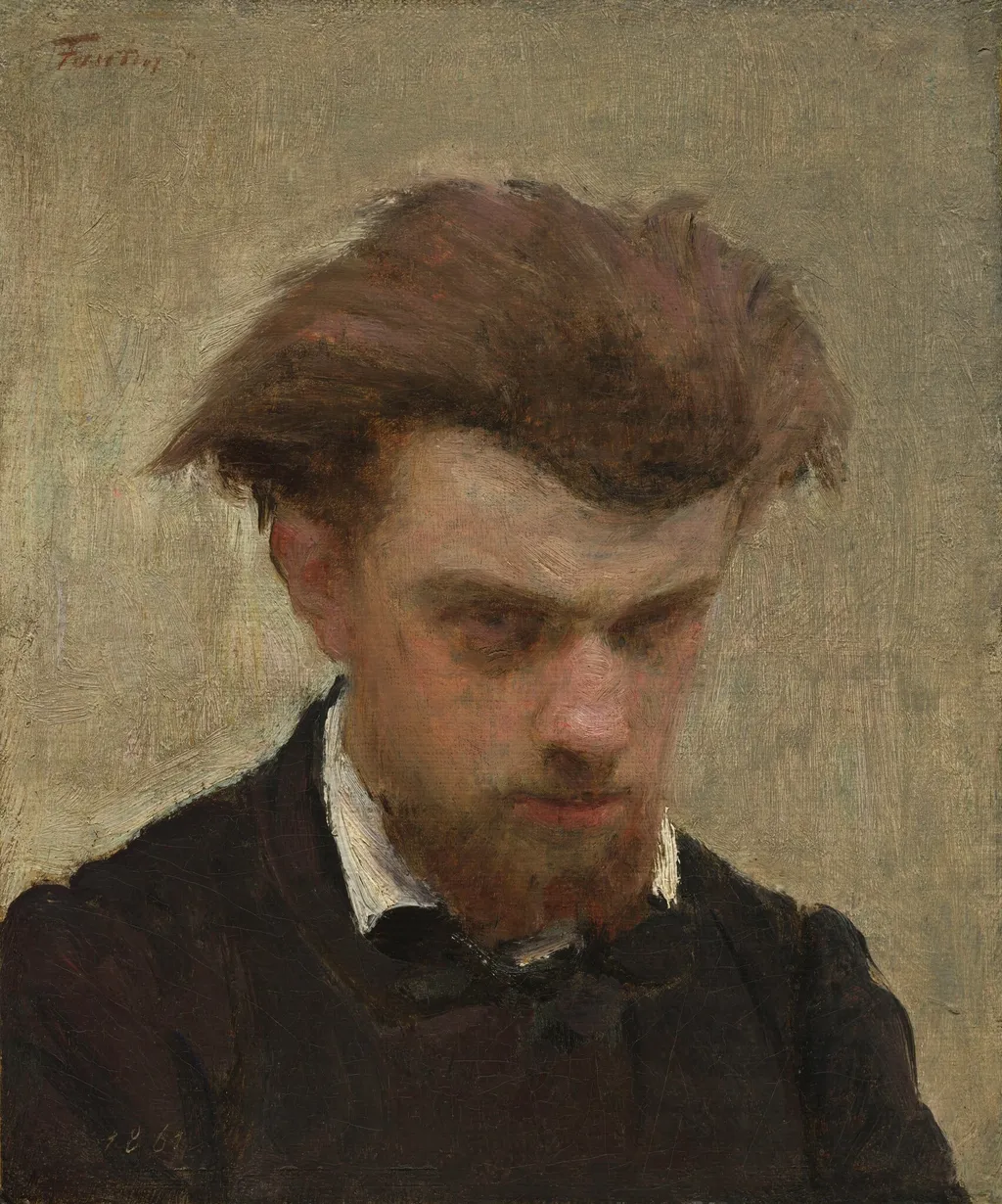
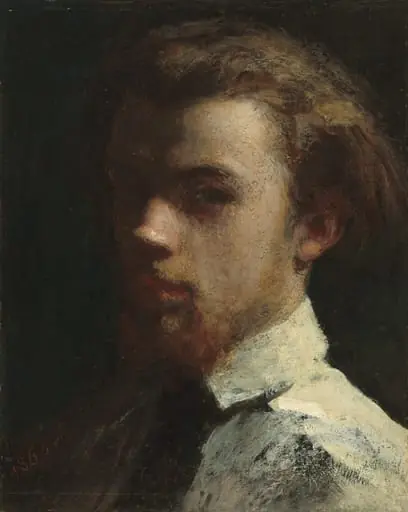
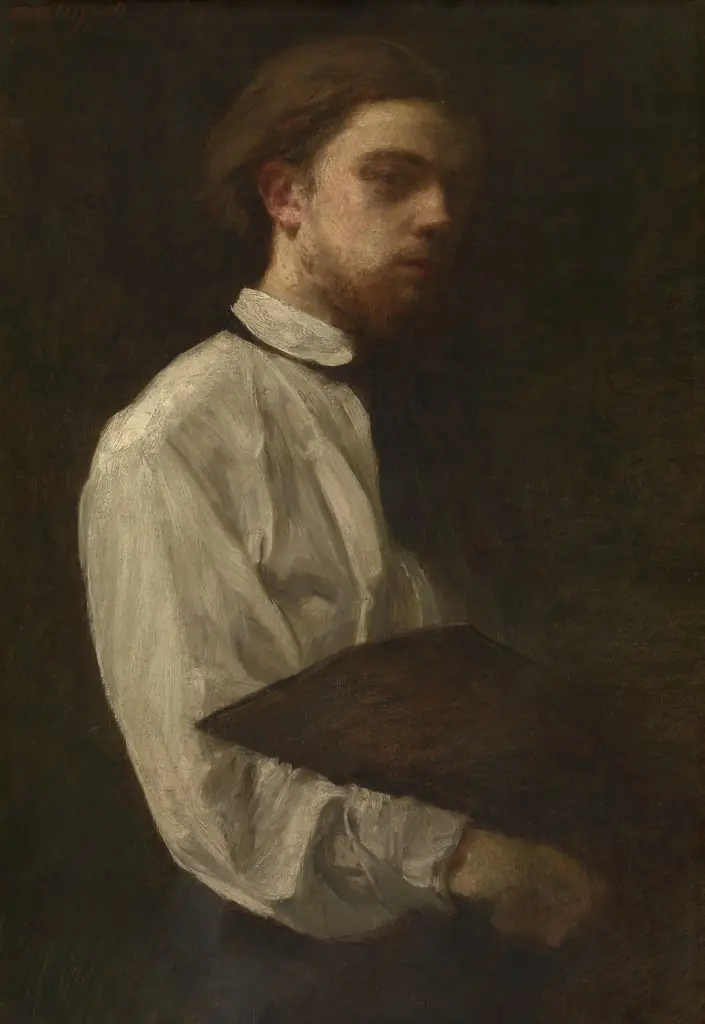
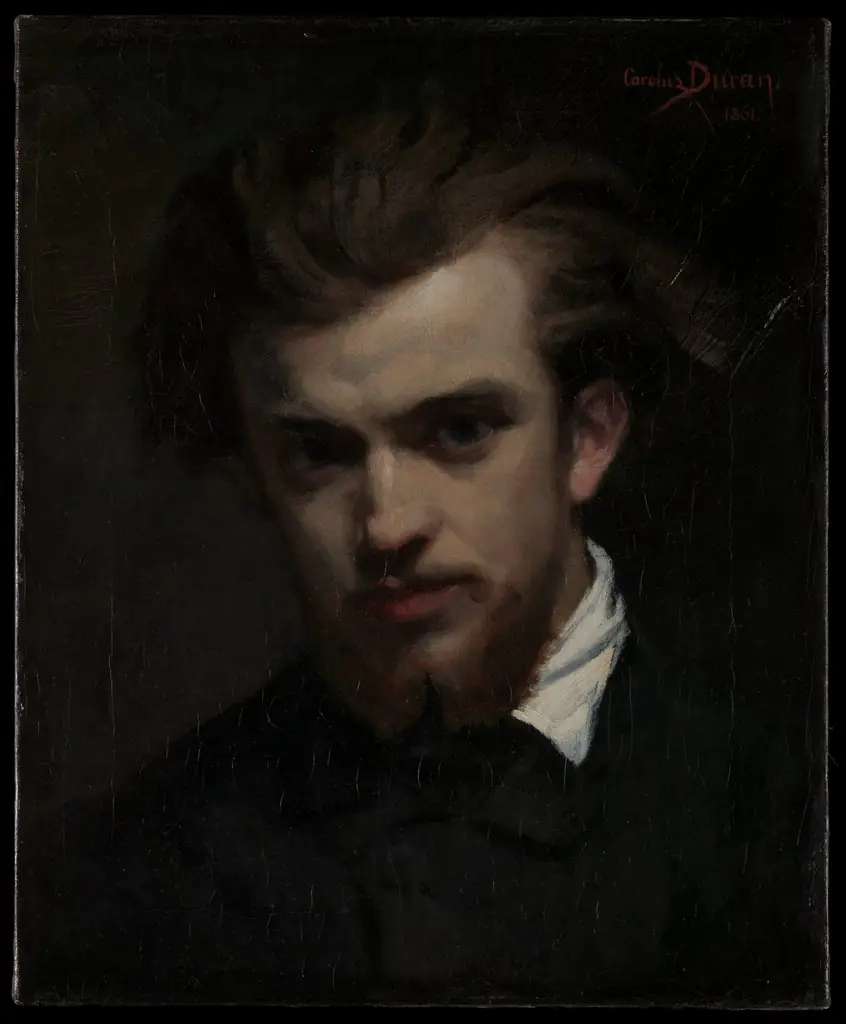
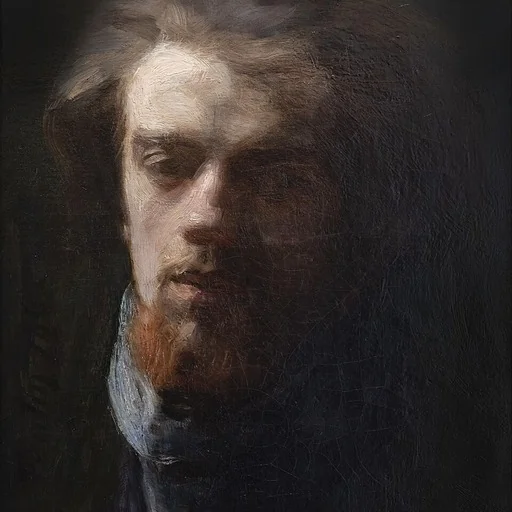
Self-Portrait is an oil painting by the Impressionist artist Henri Fantin-Latour. It dates from 1861 and is held in the collection of the National Gallery of Art.
- Inscription
- Inscribed:upper left: Fantin 61; lower left: 1861
About this work
Technique & Style
The provenance record does not document specific condition issues, conservation interventions, or stylistic descriptors beyond the basic medium and dimensions.
Painted in 1861, this Self-Portrait by Henri Fantin-Latour is executed in oil on canvas, a conventional support for mid-nineteenth-century French portraiture. The work is relatively modest in scale, measuring 25.1 by 21.4 centimeters, an intimate format suited to direct, close-up self-scrutiny. The painting belongs to the genre of self-portraiture, with the artist himself as both creator and subject.
Its classification as a painting within the National Gallery of Art collection reflects traditional easel practice rather than any experimental or mixed-media approach. The provenance record does not document specific condition issues, conservation interventions, or stylistic descriptors beyond the basic medium and dimensions.
History & Provenance
Henri Fantin-Latour’s Self-Portrait of 1861 was initially retained by the artist’s wife, Madame Fantin-Latour, before entering the Parisian art market by 1929 through dealer Tempelaere. By 1936, it belonged to collector David David-Weill, who lent it to the 1936 Fantin-Latour retrospective in Grenoble. During World War II, the painting was confiscated by the Nazi Einsatzstab Reichsleiter Rosenberg (ERR) from David-Weill’s collection but was recovered at Alt Aussee and restituted to France on 11 July 1946, ultimately returned to the David-Weill family in September 1946.
In June 1971, it was acquired by Mr. and Mrs. Paul Mellon via dealer Robert Schmidt, who subsequently donated it to the National Gallery of Art in 1995.
Following ownership by the artist's widow and dealer Robert Schmidt, the work entered the collection of David David-Weill by 1936. It was lent to a 1936 exhibition in Grenoble before being confiscated by Nazi authorities during World War II. Recovered at Alt Aussee, the painting was restituted to France in July 1946 and returned to the David-Weill family that September.
Paul and Bunny Mellon acquired the piece in June 1971, subsequently donating it to the National Gallery of Art in Washington, D.C., in 1995. The museum currently holds the painting under accession number 1995.47.9.
Context
Henri Fantin‑Latour’s 1861 Self‑Portrait, an oil on canvas (25.1 × 21.4 cm), entered the National Gallery of Art in 1995 as part of the Paul Mellon gift (accession 1995.47.9). The work was originally owned by collector David David‑Weill, who showed it at the 1936 Grenoble retrospective of the artist and later saw it confiscated by the ERR during World II; it was restituted to France in 1946 and returned to the David‑Weill family. Its exhibition history and documented wartime trajectory have been cited in scholarship on Fantin‑Latour’s self‑portraiture and on the broader discourse of 19th‑century French portraiture.
Legacy
Although primarily known as a genre painter, Fantin‑Latour’s Self‑Portrait (1861) has acquired a distinctive reputation through its eventful provenance and post‑war recovery. The canvas entered the collection of David David‑Weill, was featured in the 1936 Grenoble retrospective, seized by the ERR during World II, and later restituted to the family after documented recovery at Alt Aussee. Its subsequent donation to the National Gallery of Art in 1995 placed the work in a public context that has shaped scholarly discussions of Fantin‑Latour’s self‑representation and of the complex histories of European artworks.
Overview
Henri Fantin-Latour's Self-Portrait, painted in 1861, is an oil on canvas work that captures the artist in his youth. This early piece demonstrates his developing skill in portraiture and aligns with the Realist movement's focus on unvarnished depiction. It offers insight into his artistic practice during a formative period in 19th-century France, where he would later become recognized for his intimate figure studies and still lifes.
Subject & Meaning
In this self-representation, Fantin-Latour presents himself seated, gazing directly at the viewer with a serious demeanor, dressed in a suit. This directness and lack of idealization are hallmarks of Realism, a movement that prioritized objective observation over romanticized portrayal. The artist's unadorned depiction of himself reflects a commitment to capturing reality without embellishment, a principle central to his artistic approach.
Own this work as a print
Artist & collection
Artist
Ignace Henri Jean Theodore Fantin-Latour (French pronunciation:; 14 January 1836 – 25 August 1904) was a French painter and lithographer best known for his flower paintings and group portraits of Parisian artists and writers.