Artwork
Two Dolls or Puppets Sitting on Cushions
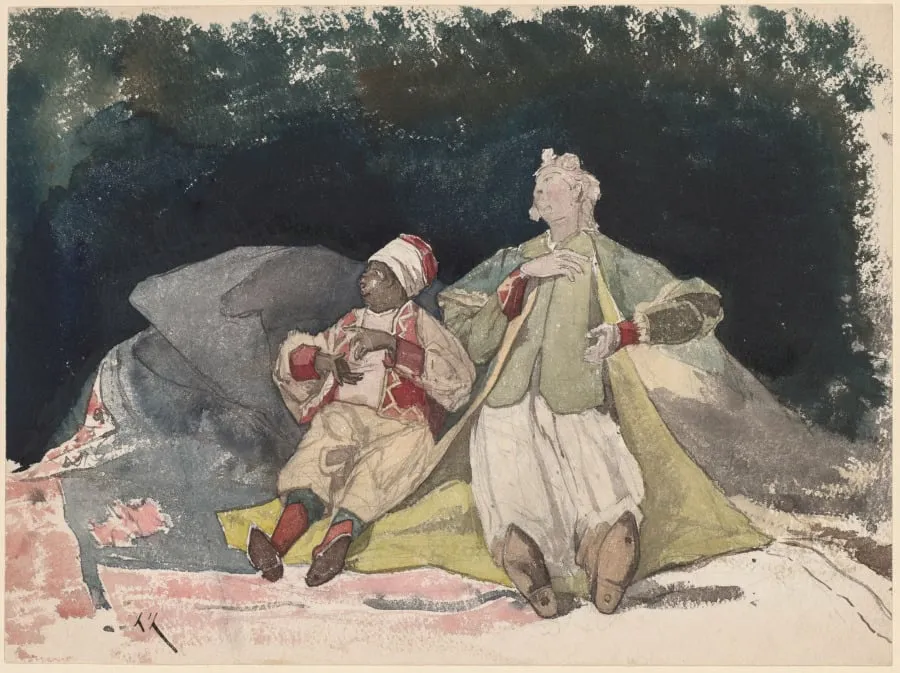
Two Dolls or Puppets Sitting on Cushions is a drawing by the Impressionist artist Henri Harpignies. It dates from 1875 and is held in the collection of the Cleveland Museum of Art.
- Accession no.
- 2018.1061
- Credit line
- Bequest of Muriel Butkin
About this work
He made this drawing to teach a student how to paint folds in fabric and the way light falls on objects.
You see two old dolls sitting side by side on a cushion. Their clothes are rumpled, and their faces look worn.
Harpignies usually painted trees and rivers, so these dolls are a surprise. He made this drawing to teach a student how to paint folds in fabric and the way light falls on objects. The dolls feel almost like real people, quietly waiting.
Look up more works in the subject: france, 19th century to see how other artists showed everyday things.
Overview
Henri Harpignies’ drawing titled Two Dolls or Puppets Sitting on Cushions presents a modest still‑life scene: two aged dolls rest side by side on a plush cushion, their garments rumpled and faces weathered. Rendered in pencil with watercolor washes, the work measures a modest sheet and diverges from the artist’s usual focus on natural landscapes, offering a quiet study of fabric and form.
Subject & Meaning
The composition features two wooden or cloth dolls, positioned as if awaiting play. Their clothing, folded and creased, creates a study in texture, while the subtle shadows cast on the cushion suggest a controlled light source. The tableau invites contemplation of inanimate objects rendered with a lifelike presence, emphasizing the tactile qualities of fabric and the passage of time evident in the worn faces.
Technique & Style
Executed as part of a watercolor instructional series, the drawing combines fine pencil outlines with delicate washes that model volume and surface sheen. Harpignies employs a restrained palette, allowing the tonal gradations to convey the softness of the cushion and the stiffness of the dolls’ attire. The handling of light and shadow demonstrates a pedagogical focus on rendering folds and the interplay of illumination on varied surfaces.
History & Provenance
Created for the Comtesse de Kermaingant, a pupil of Harpignies, the sheet formed part of a series of instructional drawings intended to teach watercolor techniques. The work remains a rare example of Harpignies’ still‑life output, which was otherwise dominated by riverine and arboreal subjects. Its provenance traces back to the private collection of the comtesse before entering the museum’s holdings.
Context
In 19th‑century French art, everyday objects and toys occasionally appeared in genre scenes, yet Harpignies’ choice to isolate dolls for a study is unusual. The drawing reflects the broader academic practice of using simple, domestic subjects to train artists in observation and rendering, aligning with contemporary pedagogical methods while standing apart from the more narrative‑driven works of his peers.
Artist & collection
Artist
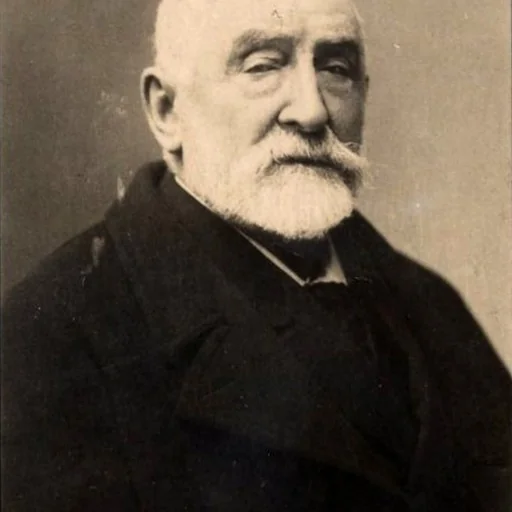
Henri-Joseph Harpignies (French pronunciation:; June 28, 1819 – August 28, 1916) was a French landscape painter of the Barbizon school.

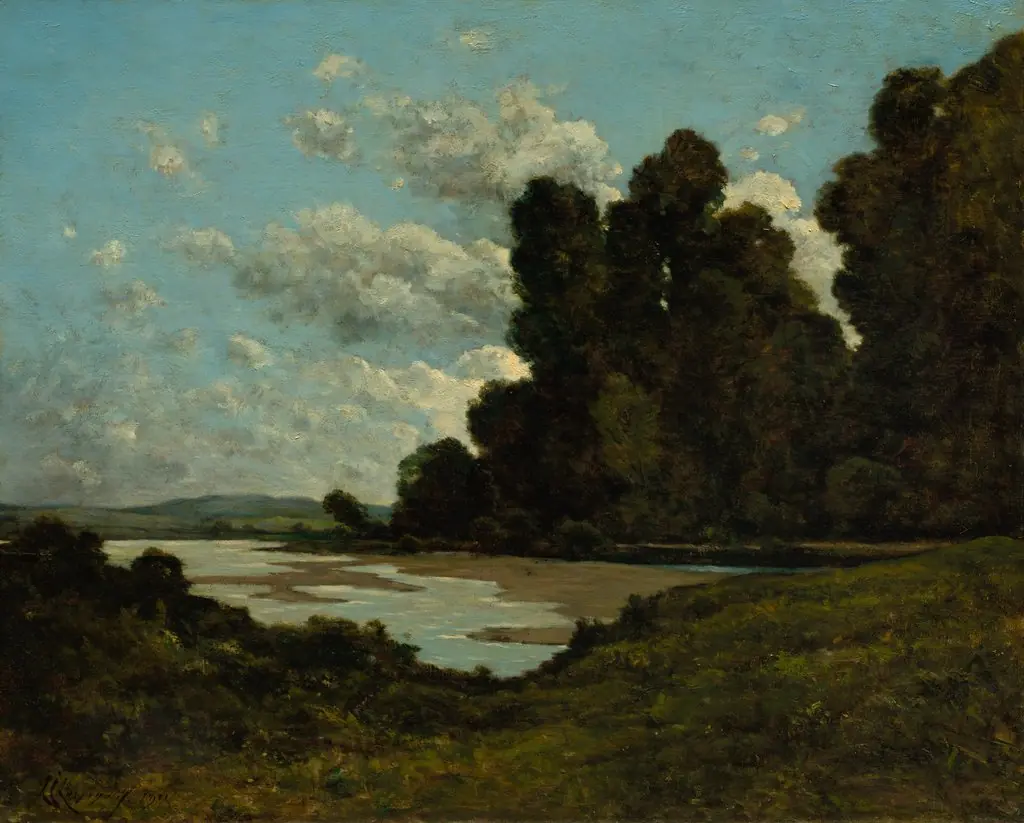
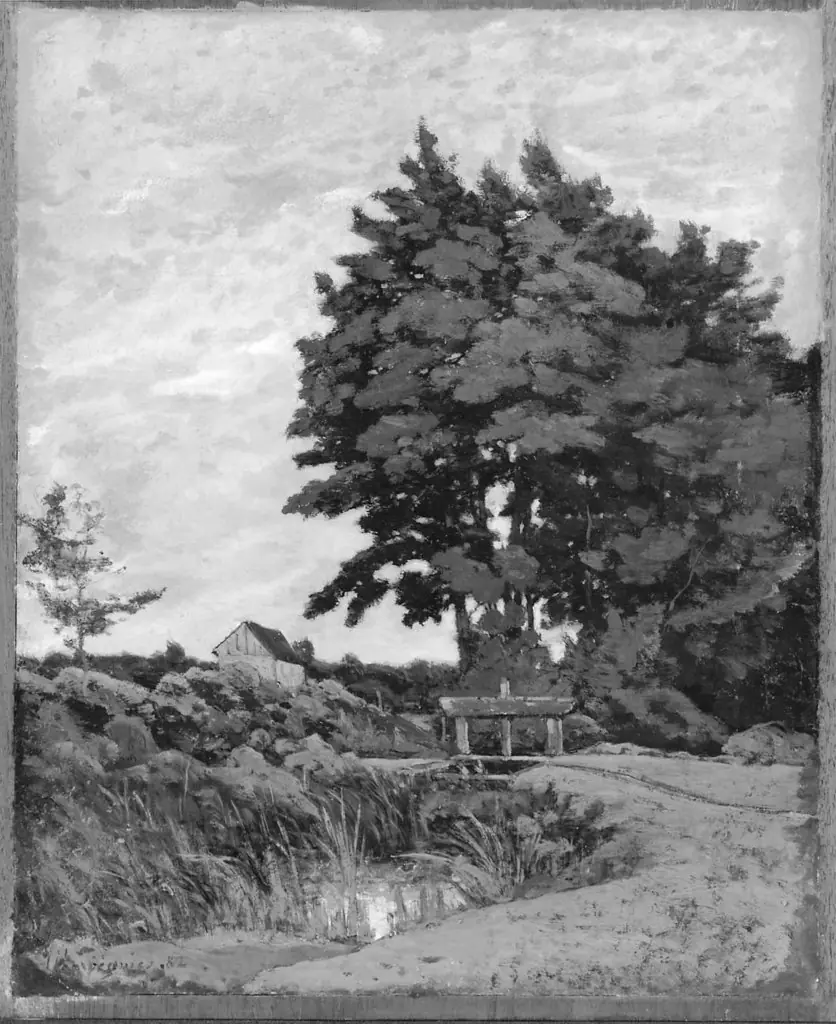
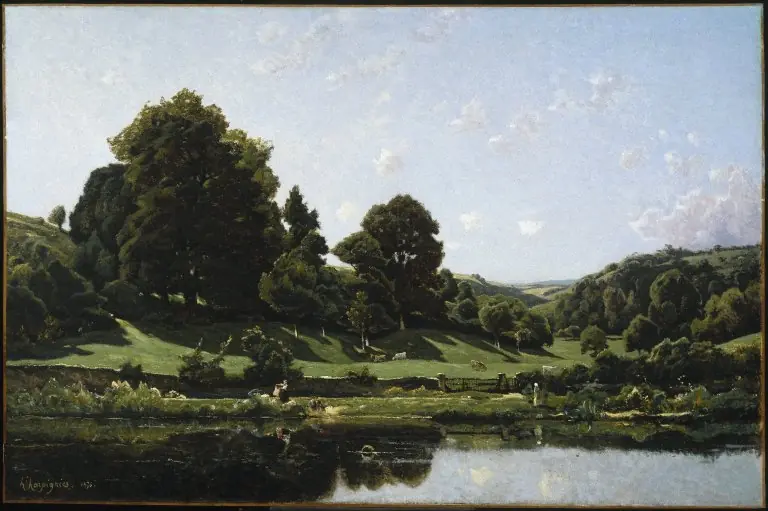
- A Group of Turks
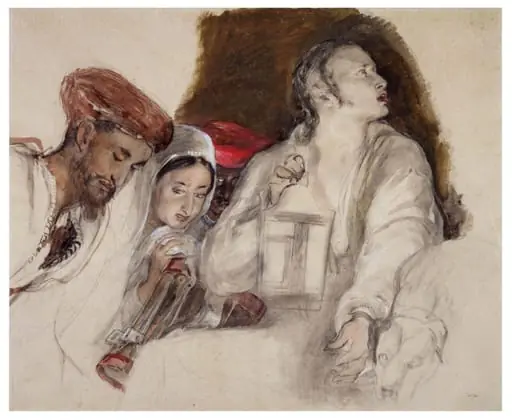 Finding the body of Tippoo Sahib
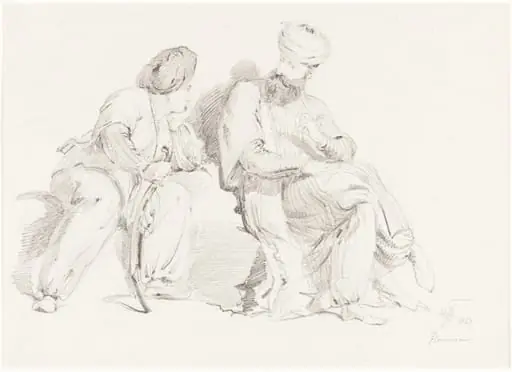 Two Men in Oriental Dress
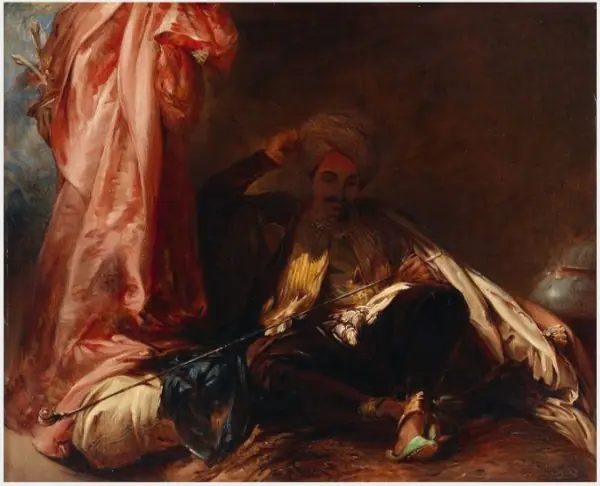 The Chibouk
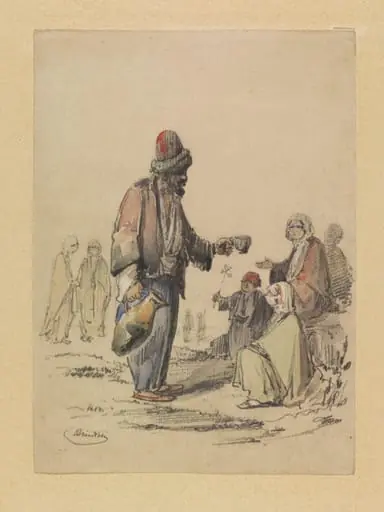 A Dervish offering water to resting women
![Advanced guard & Baggage of the Royal artillery landi[ng] a[t] Alexandria en route for India, by T. B. S.](https://artifactworldgallery.com/img/t-b-s--advanced-guard-baggage-of-the-royal-artillery-landi-ng-a-t-a--605f6f4d9d8dfe93-w320.webp) Advanced guard & Baggage of the Royal artillery landi[ng] a[t] Alexandria en route for India
Advanced guard & Baggage of the Royal artillery landi[ng] a[t] Alexandria en route for India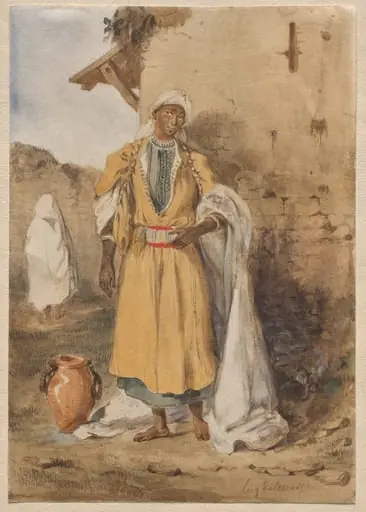 A Young Black Woman Fetching Water
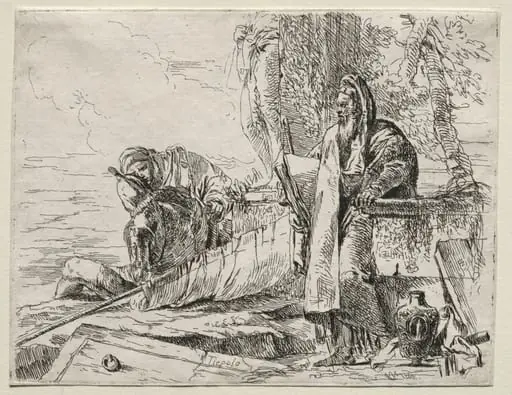 Various Caprices: The Philosopher Holding a Book
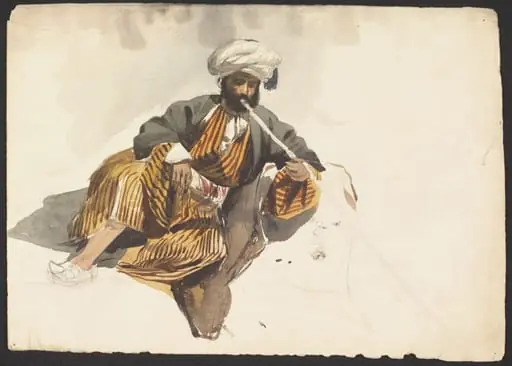 Figure of a Man in Arab dress, reclining, smoking a chibouk
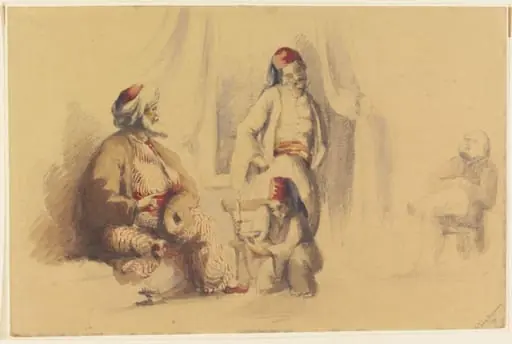 Cairo Magician
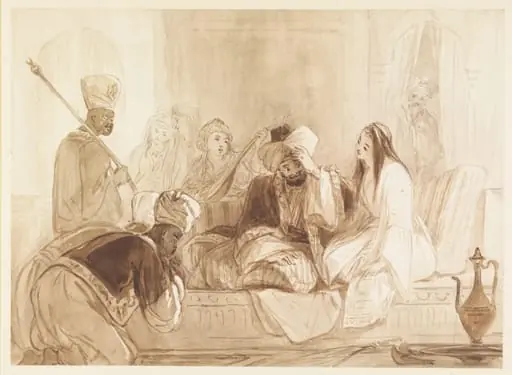 The Sleeper awakened
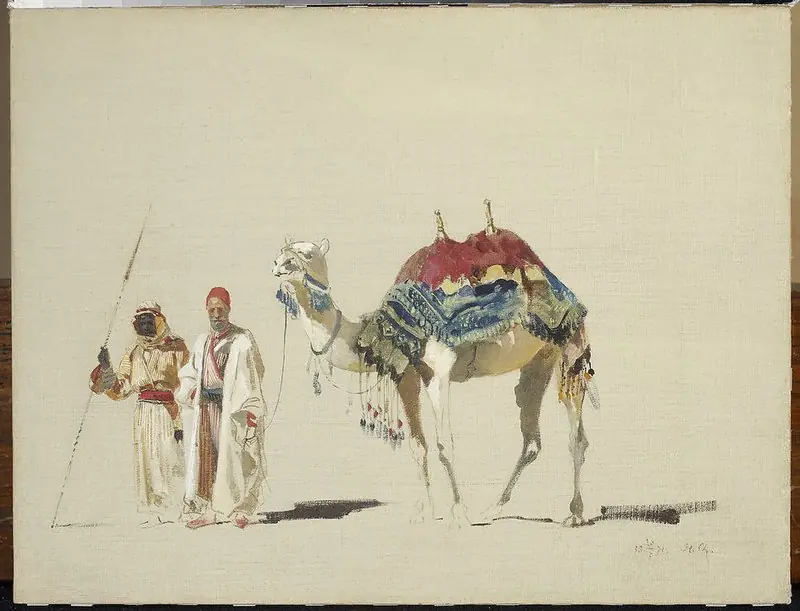 Sultan’s white camel, sketch