Artwork
Loch Lomond
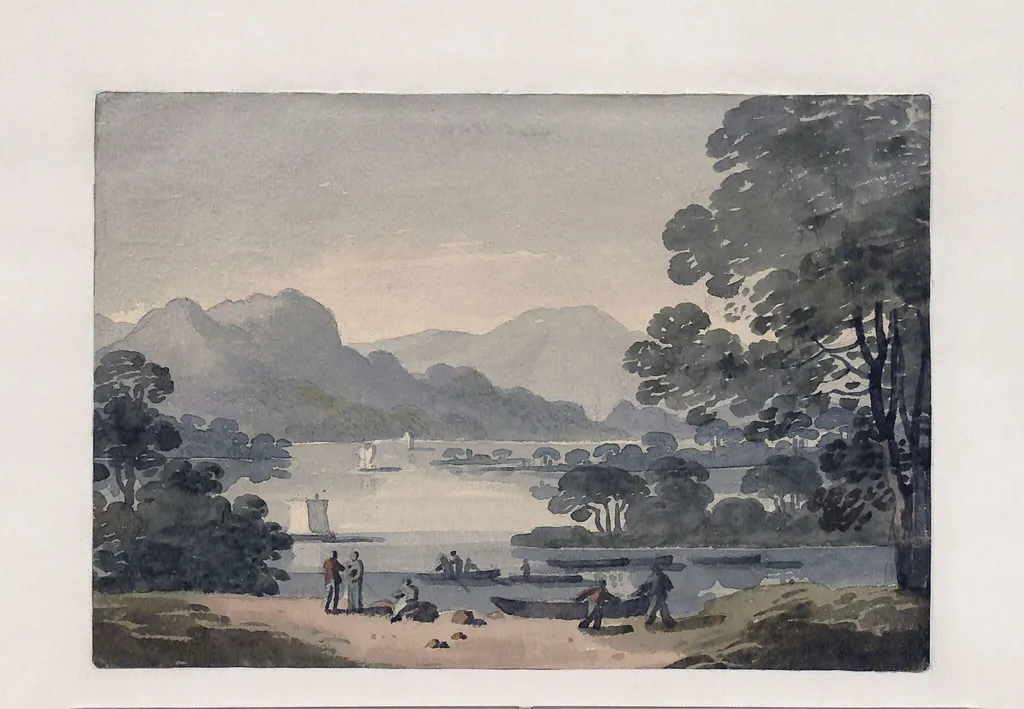
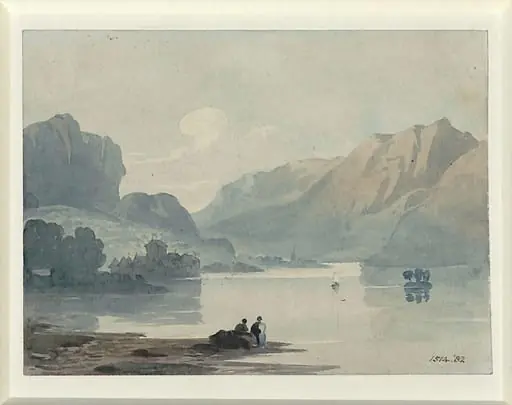
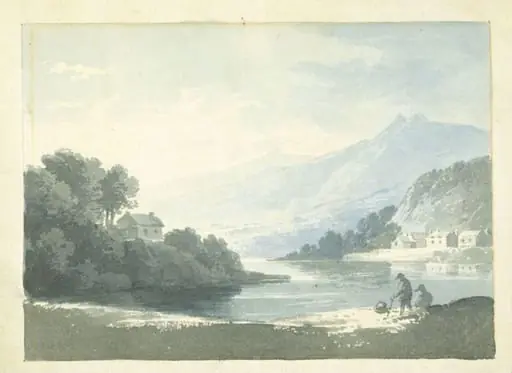
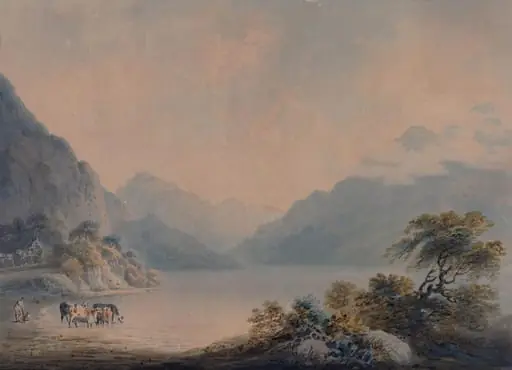
Loch Lomond is a watercolor work on paper by the British Romanticist artist George Heriot. It dates from 1790 and is held in the collection of the Victoria and Albert Museum.
About this work
Overview
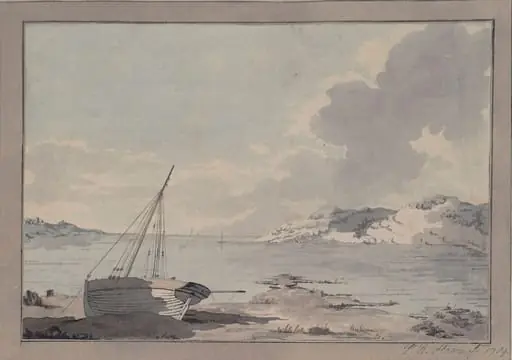
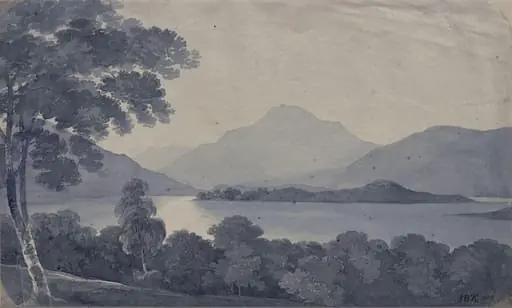
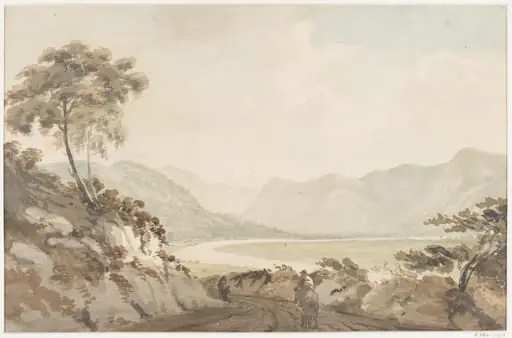
Loch Lomond is a watercolour painting created by George Heriot around 1790. It is a serene depiction of a Scottish lake, showcasing the artist's use of delicate technique to capture the natural atmosphere.
Subject & Meaning
The painting shows Loch Lomond, with figures on the shore near a small boat, set against misty mountains and a pale sky. The scene conveys a sense of calm and emphasizes the grandeur of the natural setting, reflecting Heriot's connection to his Scottish heritage.
Technique & Style
Heriot employed loose brushstrokes to suggest movement in the water and clouds, maintaining an airy feel. The colour palette is muted, featuring blues, grays, and earthy tones, which contributes to the overall sense of serenity and restraint characteristic of the work.
History & Provenance
The painting is part of the Victoria and Albert Museum's collection. George Heriot, a Scots-Canadian civil servant and artist, created the work while maintaining ties to his Scottish roots, later contributing to the development of early Canadian art.
Own this work as a print
Artist & collection
Artist
George Heriot (1759 – 22 July 1839) was a Scots-Canadian civil servant, author and artist. He is most notable as a major figure in early Canadian art.