Artwork
Plate 56: Two Heads of Cabbage
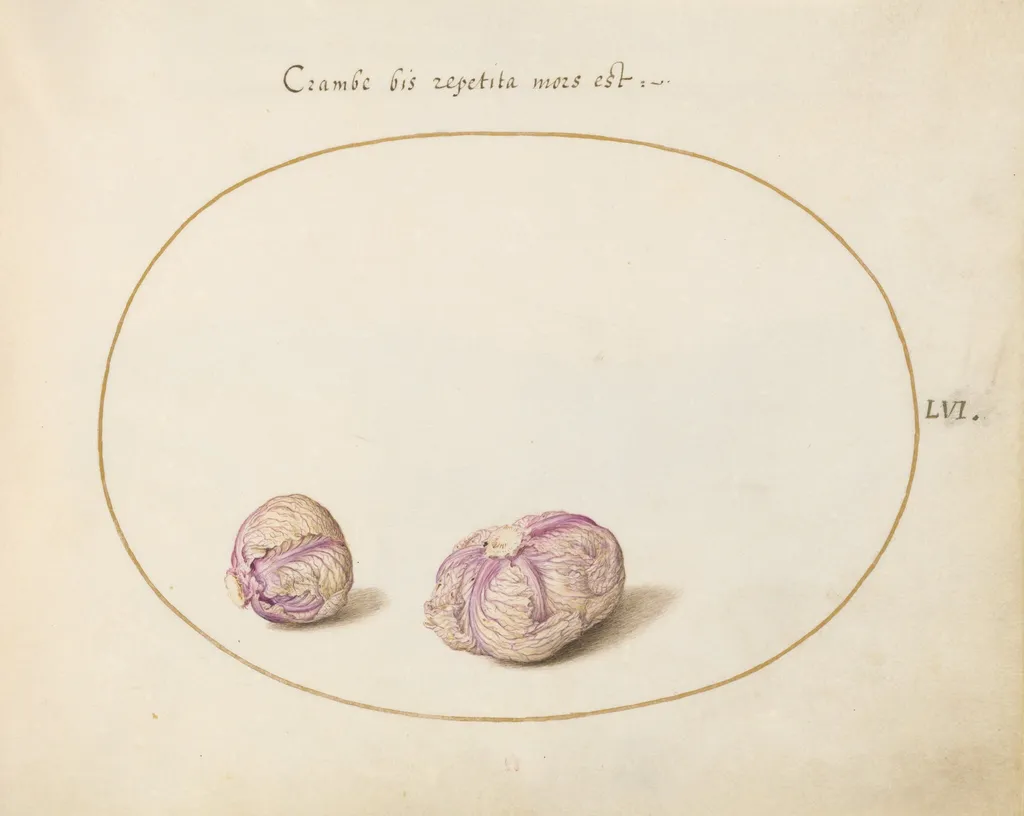
Plate 56: Two Heads of Cabbage is a gouache drawing by the Renaissance artist Joris Hoefnagel. It dates from 1594 and is held in the collection of the National Gallery of Art.
- Inscription
- Inscribed:upper center in brown ink: Crambe bis repetita mors est:; right center in brown ink: LVI. Facing page: upper center in black ink: Haec dicit Dominus, Caelum sedes mea: / TERRA autem scabellu[m] pedu[m] meoru[m] ps: 65: (“Thus said the Lord, the heaven is my throne; the earth is my footstool.” Isaiah 66:1) (Latin Vulgate Bible); lower center in red ink: Illuxerunt coruscationes tuae Orbi TERRAE: / Commota est, et co[n]tremuit Terra: ps:76. (“The lightnings lightened the world; the earth trembled and shook.” Psalms 76:19) (Latin Vulgate Bible)
About this work
Overview
Created circa 1594, Plate 56: Two Heads of Cabbage is a small-scale work executed in watercolor and gold on parchment. The composition presents a pair of cabbage heads, one noticeably larger than the other, set against a neutral beige ground that isolates the subjects and emphasizes their form.
Subject & Meaning
The image focuses on the naturalistic depiction of two Brassica oleracea specimens, rendered with careful attention to leaf curvature, vein structure, and stem detail. By isolating the vegetables, the work invites contemplation of botanical form and the quiet dignity of everyday produce.
Technique & Style
Hoefnagel employed layered watercolor washes to achieve subtle variations of green and brown, while touches of gold pigment highlight texture and lend a luminous quality. The delicate glazing technique creates depth in the foliage, and the parchment support contributes a smooth, matte surface.
History & Provenance
Joris Hoefnagel, a Flemish artist noted for his natural‑history illustrations and topographical drawings, produced this piece as part of his broader output in manuscript illumination. The drawing reflects his early contributions to the emergence of still‑life as an independent genre in northern Europe during the late sixteenth century.
Context
At a time when botanical studies were gaining scientific interest, Hoefnagel’s meticulous renderings served both decorative and documentary purposes. The work aligns with contemporary Renaissance interests in accurate plant representation, bridging artistic observation and emerging empirical inquiry.
Own this work as a print
Artist & collection

Artist
Joris Hoefnagel or Georg Hoefnagel (1542 – 24 July 1601) was a Flemish painter, printmaker, miniaturist, draftsman and merchant.

 Forum Vulcani: The Hot Springs at Pozzuoli
 Plate 76: Insects with a Pink and Cream Columbine
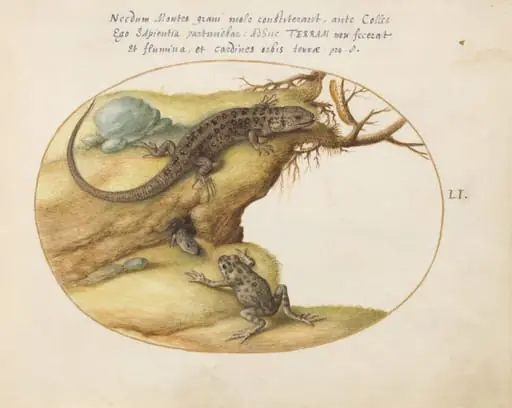 Plate 51: Two Sand Lizards, a Common Parsley Frog(?), and a Caterpillar
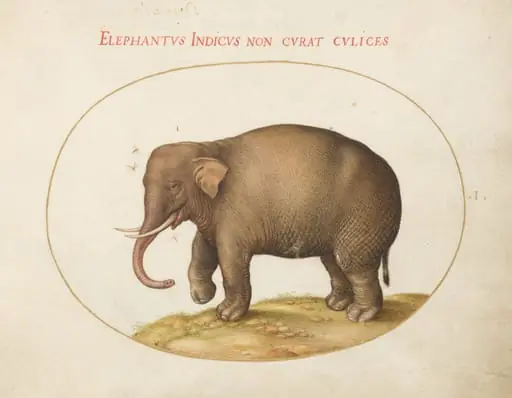 Plate 1: Elephant with Insects
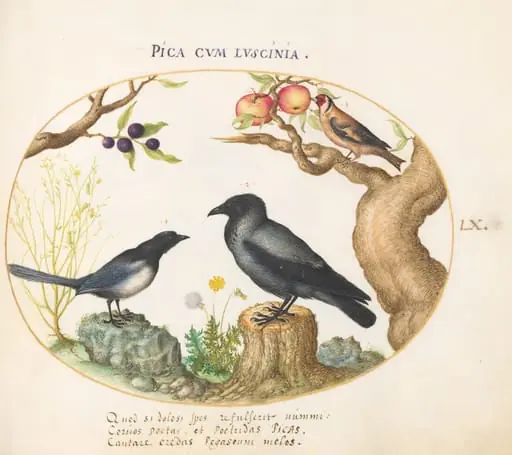 Plate 60: Magpie, Crow, and Goldfinch
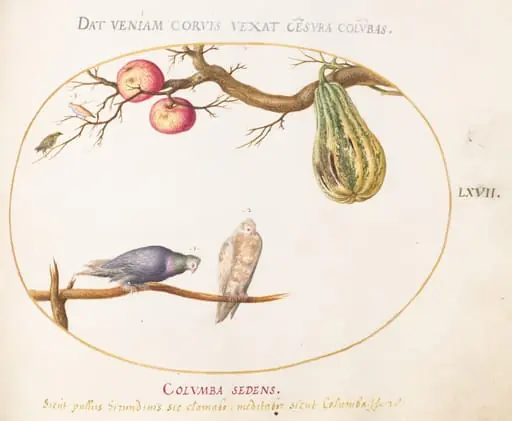 Plate 67: Two Doves beneath a Gourd and Apples
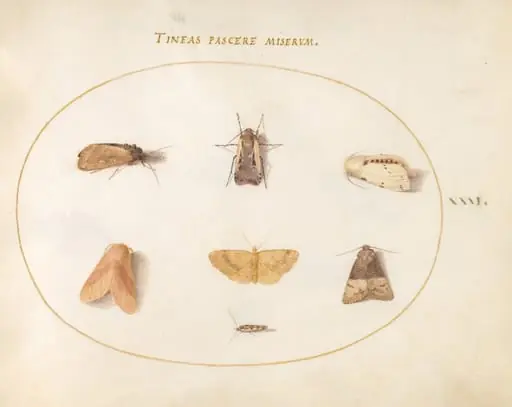 Plate 31: Seven Moths
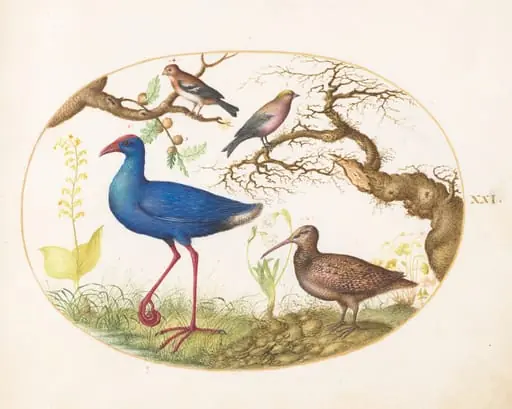 Plate 21: Swamp Hen and Woodcock with a Streaked Rosefinch, a Finch, and Oak Galls
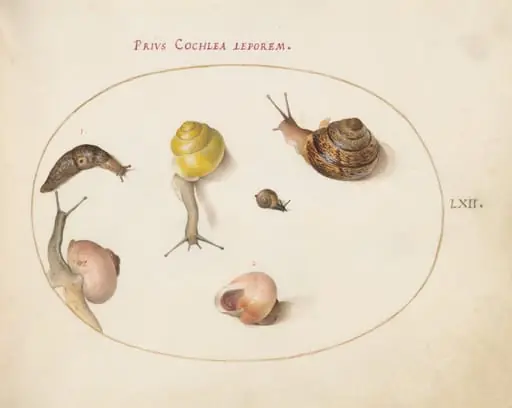 Plate 62: A Slug with Snails
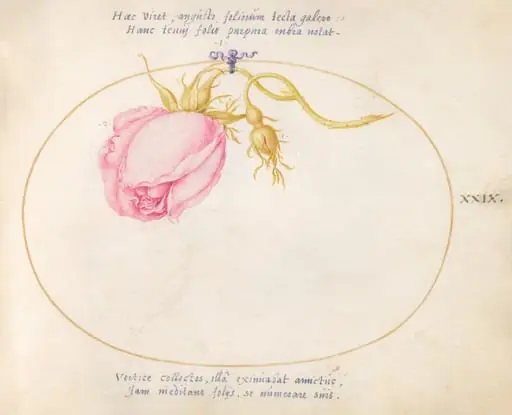 Plate 29: Pink Rose and Rosebud
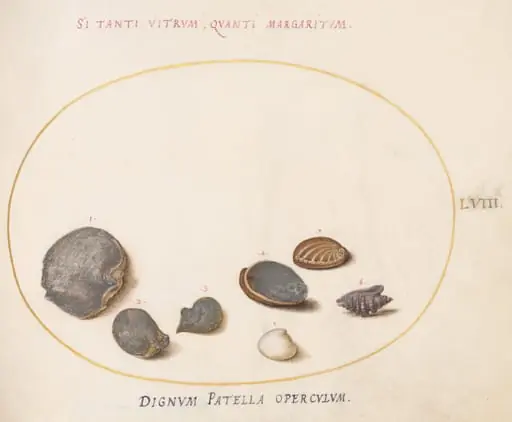 Plate 58: Shells, including Abalone(?)
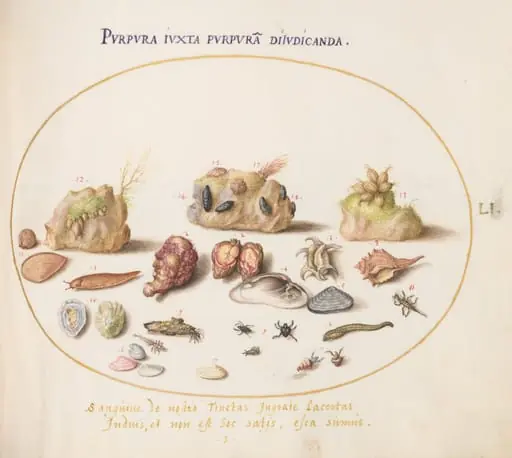 Plate 51: Murex Mollusks, Shells, Hermit Crabs, a Slug, Insects, and Other Sea Life
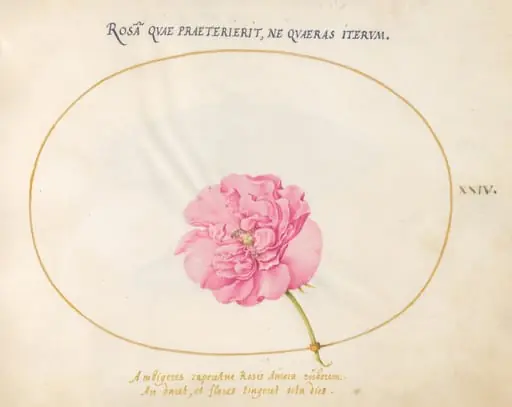 Plate 24: Pink Rose
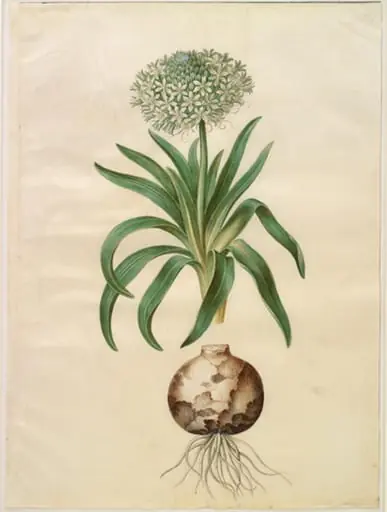 Scilla peruviana (kæmpe-skilla)
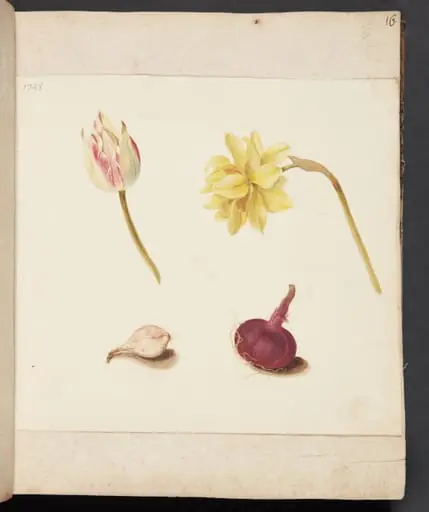 Studie af blomster og løg
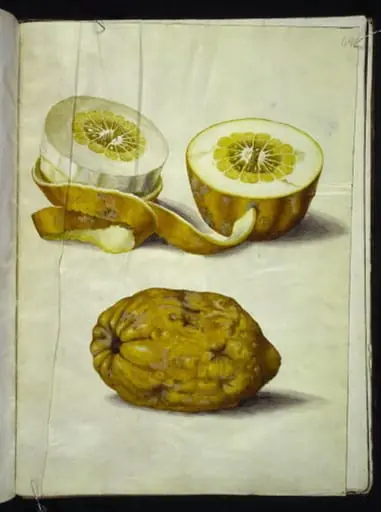 Citrus medica (cedrat)
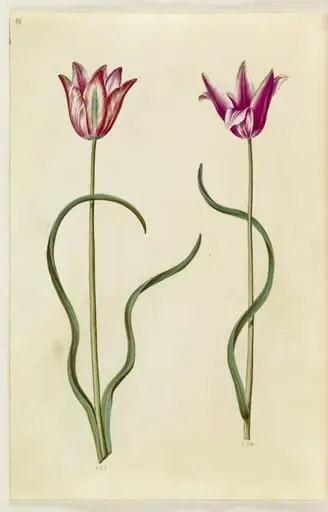 Tulipa clusiana (clusius-tulipan)