Artwork
The Battle of the Pictures
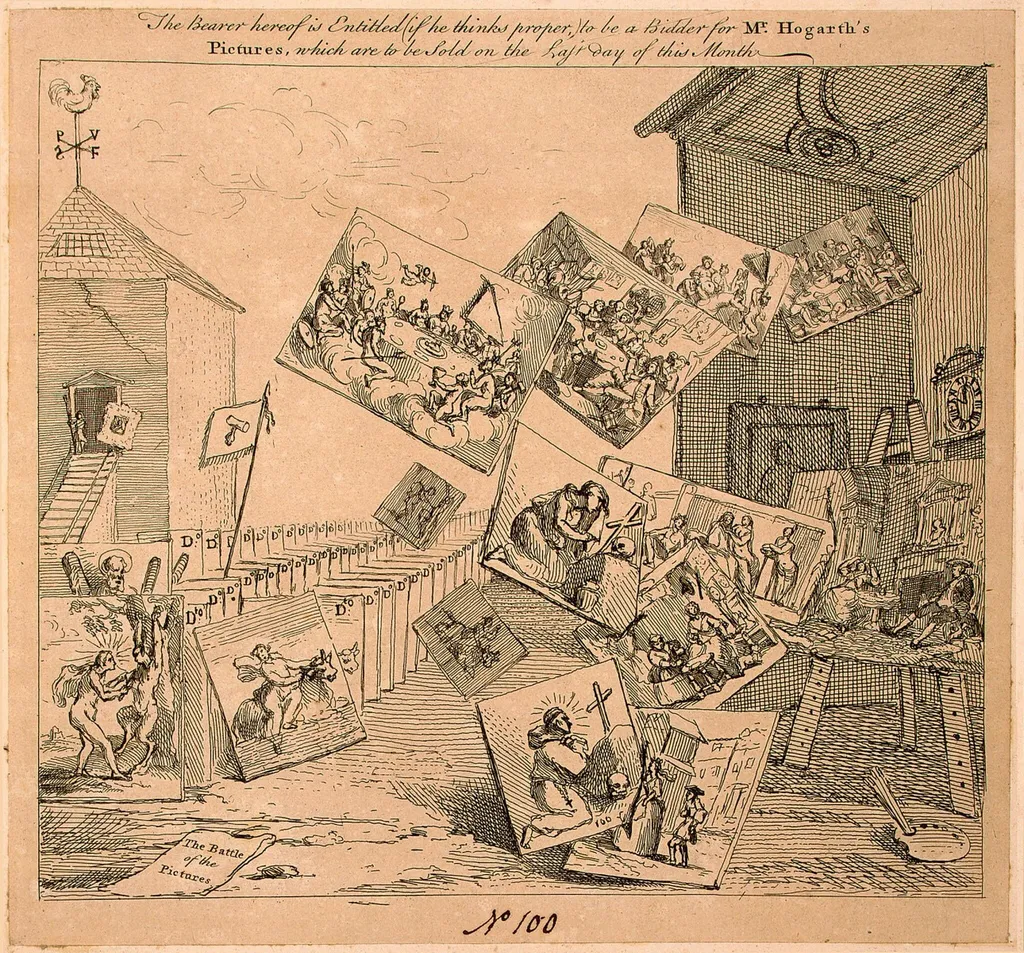
The Battle of the Pictures is an ink print by the Baroque artist William Hogarth. It dates from 1744 and is held in the collection of the National Gallery of Art.
About this work
Overview
Created in 1744, The Battle of the Pictures is an etching by William Hogarth that uses visual satire to comment on the art market of 18th-century London.
Created in 1744, The Battle of the Pictures is an etching by William Hogarth that uses visual satire to comment on the art market of 18th-century London. Unlike traditional history paintings, it portrays no historical event but instead imagines artworks themselves as combatants in a chaotic brawl. The work belongs to Hogarth’s broader body of satirical prints, which often mocked societal pretensions through layered, narrative-driven imagery.
Subject & Meaning
The print depicts a frenzy of floating paintings, depicting battles, religious scenes, and mythological subjects, engaged in violent collision. Figures scramble among them, some clinging to canvases, others being crushed underfoot. The scene parodies the commercial and critical battles among artists and collectors, suggesting that the value of art is often determined by spectacle rather than merit.
The title and accompanying text explicitly frame the chaos as a joke about the absurdity of art commerce.
Technique & Style
Hogarth employed fine, incised lines typical of etching to render dense, energetic detail. The composition is tightly packed, with sharp, angular strokes defining the tumbling figures and crumbling architecture. The scratchy texture enhances the sense of disorder, while the small scale of human figures against towering canvases emphasizes their insignificance amid the artistic chaos. His technique mirrors the frenetic energy of the subject, reinforcing the satire through visual rhythm.
History & Provenance
Produced during Hogarth’s peak years as a printmaker, the etching was part of his effort to reach a broad public through affordable, widely distributed imagery. It was likely issued as a standalone print, not part of a numbered series like A Harlot’s Progress. Though not as widely collected as his narrative sequences, it circulated among London’s literate middle class and reflects his ongoing critique of artistic pretension in the decades before his death in 1764.
Context
In mid-18th-century England, the art world was expanding rapidly, with growing numbers of dealers, collectors, and academies vying for influence. Hogarth, self-taught and skeptical of elite artistic institutions, used satire to challenge the notion that art’s worth lay in its subject matter or pedigree. The Battle of the Pictures responds to this climate, mocking the inflated egos and commercialism that surrounded the display and sale of art.
Legacy
The print remains a sharp example of Hogarth’s ability to fuse social commentary with visual wit. While not as celebrated as his narrative series, it influenced later satirical printmakers who sought to expose cultural absurdities through invented scenes. Its enduring relevance lies in its prescient critique of how art is valued, not for its content, but for the conflicts it provokes among those who claim to understand it.
Own this work as a print
Artist & collection
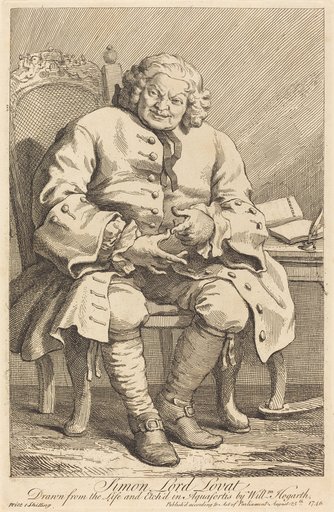
Artist
William Hogarth (; 10 November 1697 – 26 October 1764) was an English painter, engraver, satirist, cartoonist and writer.

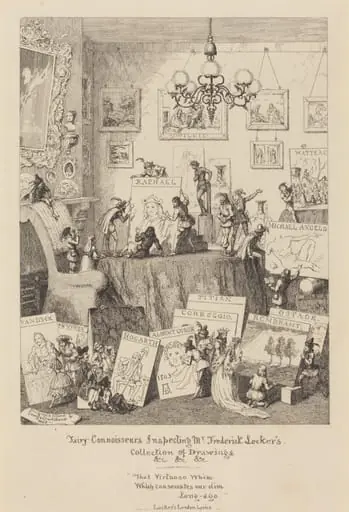
- Fairy Connoisseurs Inspecting Mr. Frederick Locker's Collection of Drawings
 H Beard Print Collection
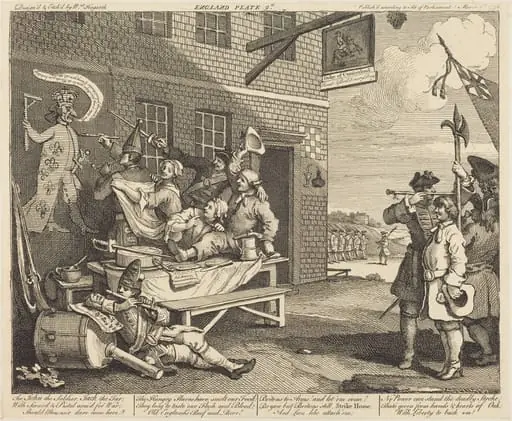 England
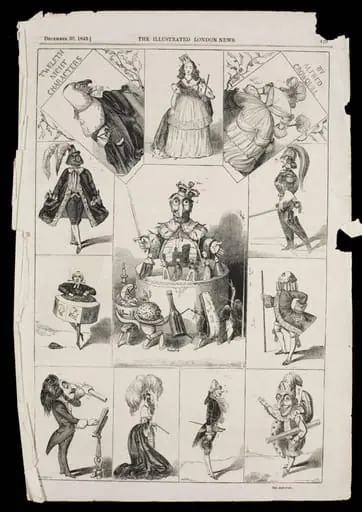 George Speaight Punch & Judy Collection
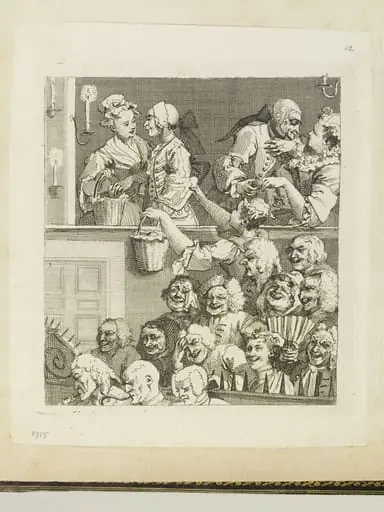 The Laughing Audience
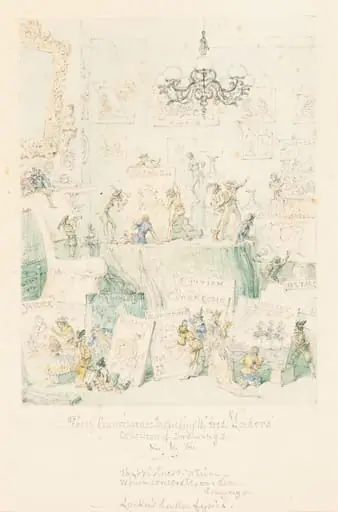 Fairy Connoisseurs Inspecting Mr. Frederick Locker's Collection of Drawings
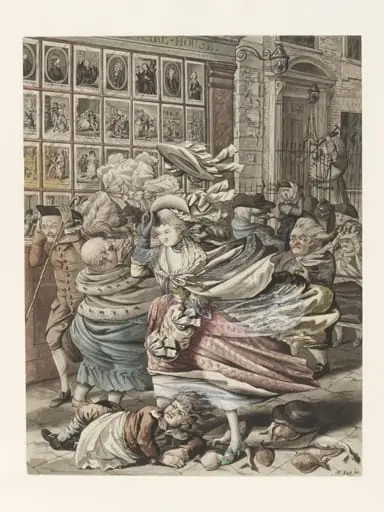 A Windy Day - scene outside the shop of Bowles, the printseller, in St. Paul's Churchyard
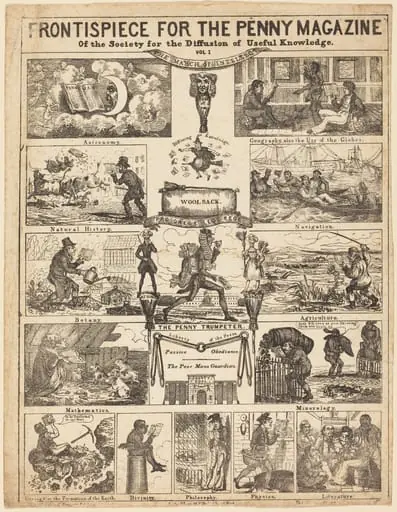 Frontispiece for the Penny Magazine of the Society for the Diffusion of Knowledge: Vo
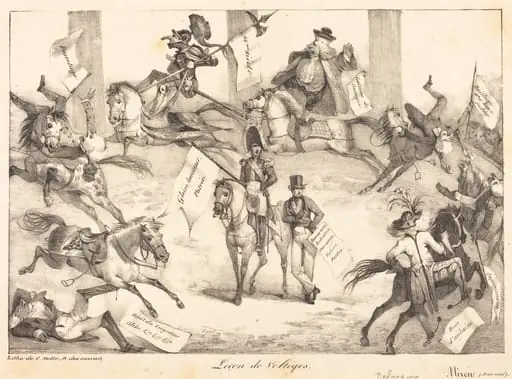 Leçon de Voltiges (Trick Riding)
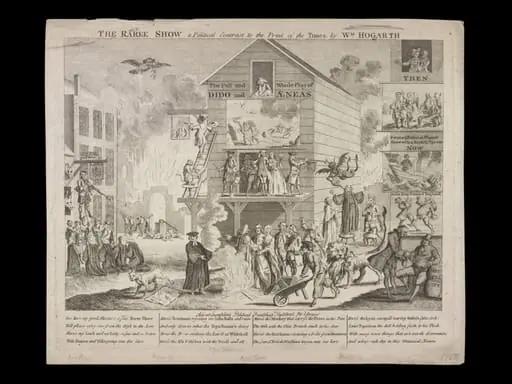 H Beard Print Collection
 H Beard Print Collection
 H Beard Print Collection