Artwork
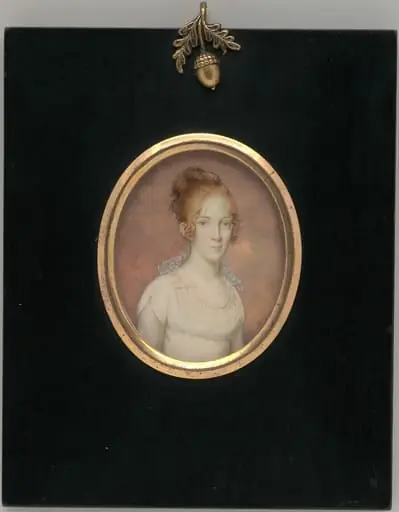
Framed Miniature of Tsarina Alexandra Feodorovna
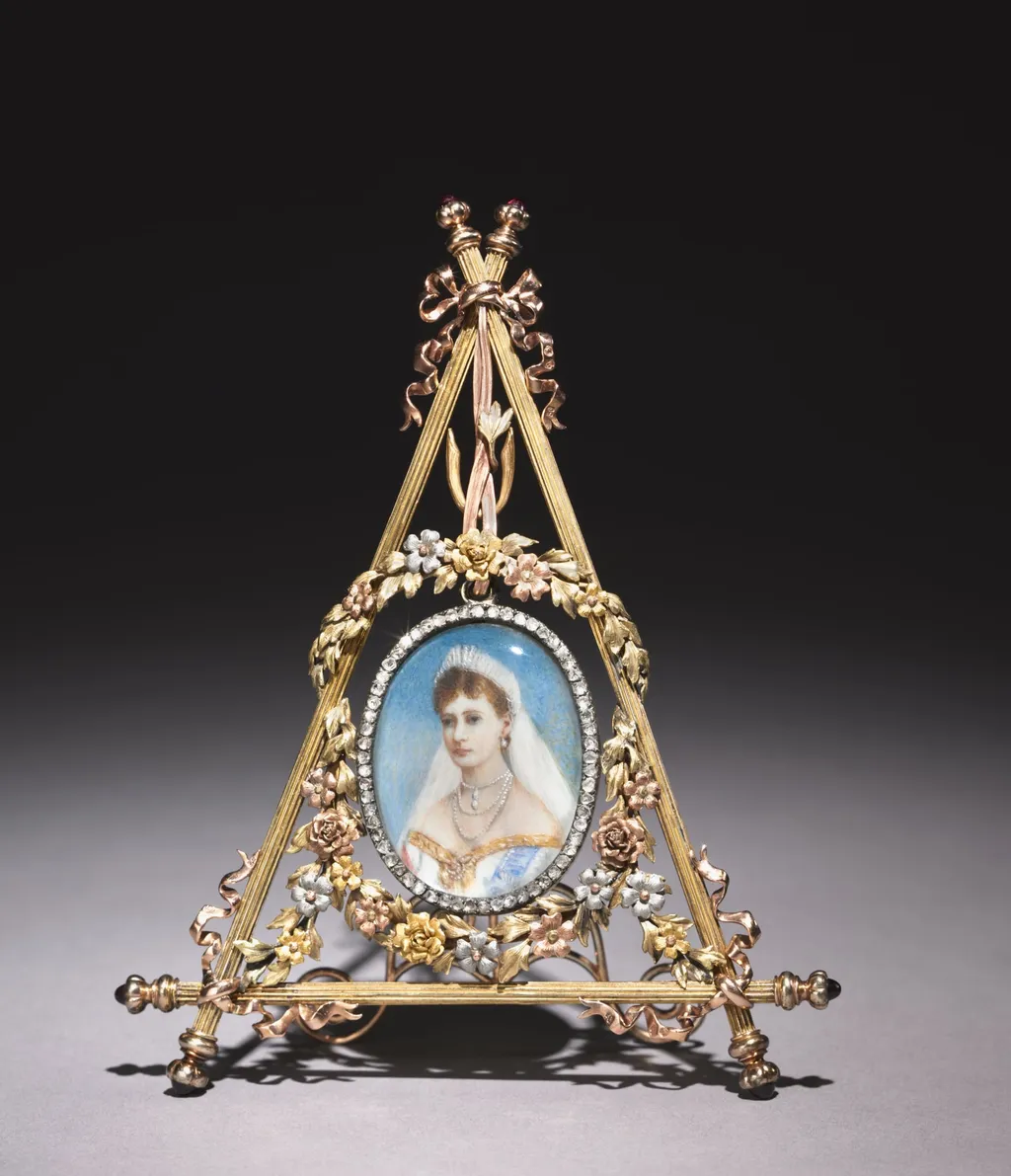
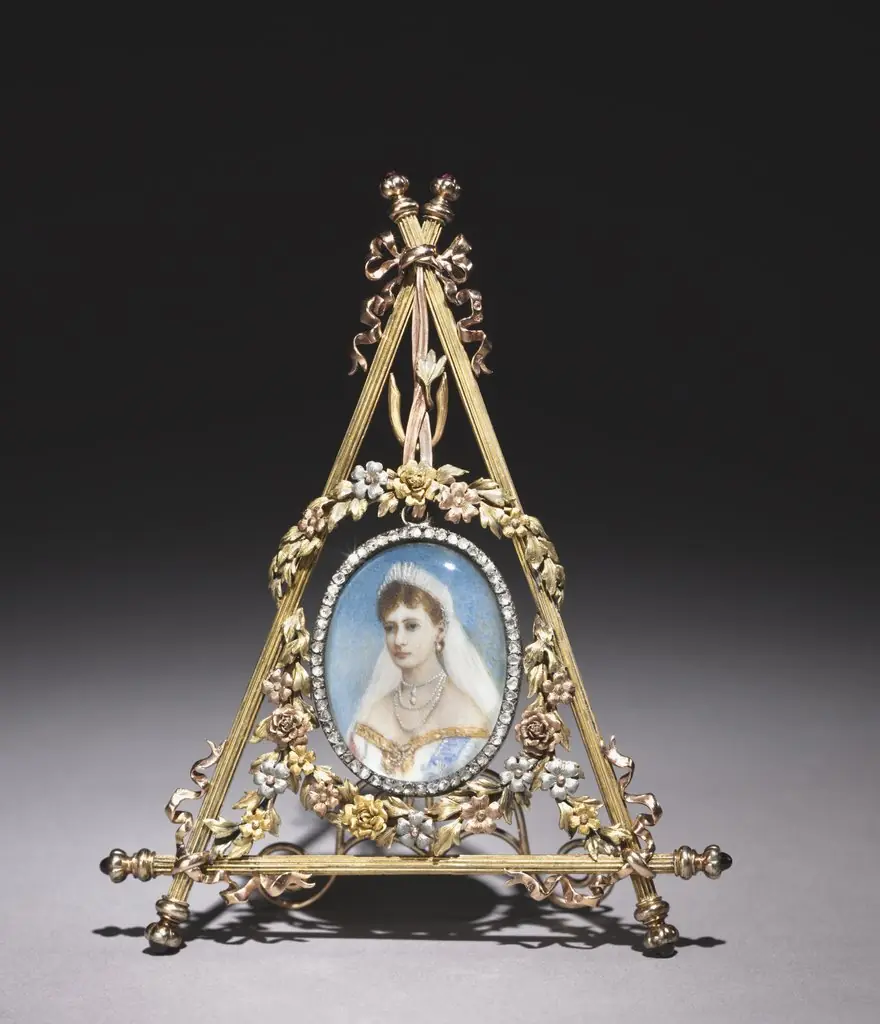
Framed Miniature of Tsarina Alexandra Feodorovna is an unspecified portrait miniature by the Impressionist artist House of Fabergé. It dates from 1902 and is held in the collection of the Cleveland Museum of Art.
- Accession no.
- 1966.456
- Credit line
- The India Early Minshall Collection
About this work
Inside, a woman wears a white dress and a pearl necklace, with her hair up and a blue background behind her.
This is a small, fancy gold frame holding a painted portrait. The frame looks like a crown with flowers and jewels wrapped around it. Inside, a woman wears a white dress and a pearl necklace, with her hair up and a blue background behind her.
The frame is so detailed it looks like a piece of jewelry. The artist made it to look like a real crown, with tiny flowers and gems all around the portrait.
Next, look up the House of Fabergé (Russian, 1842–1918) to see more of their work.
Overview
This small portrait miniature, crafted in 1902 by the House of Fabergé, depicts Tsarina Alexandra Feodorovna. Housed in an ornate gold frame resembling a jeweled crown, the work blends fine painting with intricate metalwork. The frame is adorned with floral motifs and miniature gemstones, elevating the portrait beyond mere likeness into a ceremonial object.
It resides in The Cleveland Museum of Art, where its craftsmanship draws attention to the convergence of art and imperial symbolism in late Tsarist Russia.
Subject & Meaning
The portrait captures Tsarina Alexandra Feodorovna in a simple white gown, her hair styled neatly and adorned with a string of pearls. Against a soft blue backdrop, her composed expression conveys dignity rather than grandeur. The surrounding crown-like frame, rich with floral engravings and faux gemstones, symbolizes her role as empress, merging personal identity with imperial authority.
The object functions as both a private keepsake and a public emblem of the Romanov dynasty’s refined aesthetic.
Technique & Style
The miniature is painted on a delicate surface, likely ivory, using fine brushwork to render subtle skin tones and fabric textures. The gold frame, executed in repoussé and engraving, features meticulously detailed floral sprays and tiny enamel accents mimicking jewels. Fabergé’s artisans combined traditional Russian decorative techniques with European miniature painting traditions, resulting in a hybrid object that balances intimacy with opulence, where every element serves both aesthetic and symbolic purposes.
History & Provenance
Commissioned in 1902, the miniature likely originated as a gift within the Romanov court, possibly to mark a royal occasion. After the fall of the monarchy, it entered private collections before being acquired by The Cleveland Museum of Art. Its survival through revolution and exile reflects its status as a portable treasure, valued for its artistry as much as its association with imperial Russia. The museum’s records confirm its attribution to Fabergé’s workshop, though the specific painter remains unrecorded.
Context
During the early 20th century, the House of Fabergé produced luxury objects for the Russian elite, blending craftsmanship with imperial iconography. This miniature aligns with a broader tradition of portrait jewelry favored by aristocrats, where personal imagery was encased in elaborate settings. Unlike grand state portraits, such works emphasized exclusivity and intimacy, serving as tokens of loyalty or affection within the court’s private sphere, reflecting the dynasty’s reliance on art to reinforce its cultural authority.
Legacy
The miniature exemplifies the final flourishing of Russian imperial art before the revolution. Its survival offers insight into how the Romanovs used material culture to project identity beyond the public stage. Today, it stands as a testament to Fabergé’s mastery in merging fine art with decorative object-making.
While the dynasty collapsed, such objects endure as quiet witnesses to a world where art, power, and personal symbolism were inextricably linked.
Artist & collection

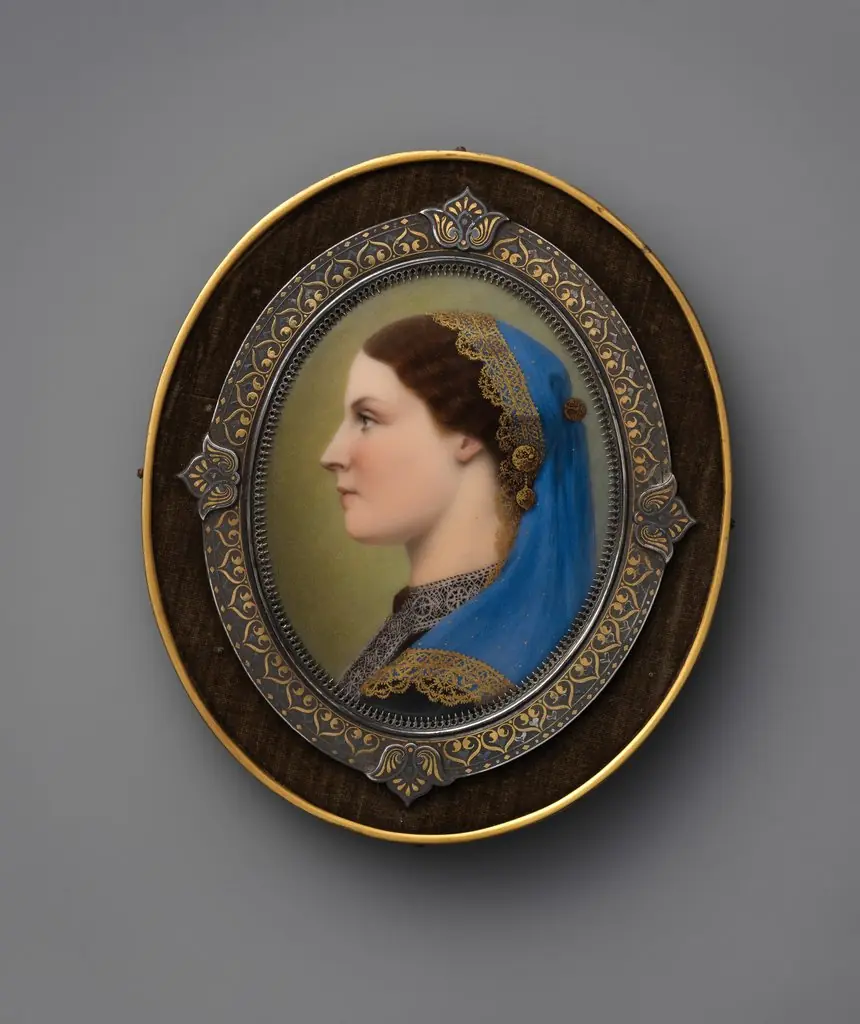 Miniature of Mabel Morrison
 Portrait of Joséphine de Beauharnais, Empress of the French
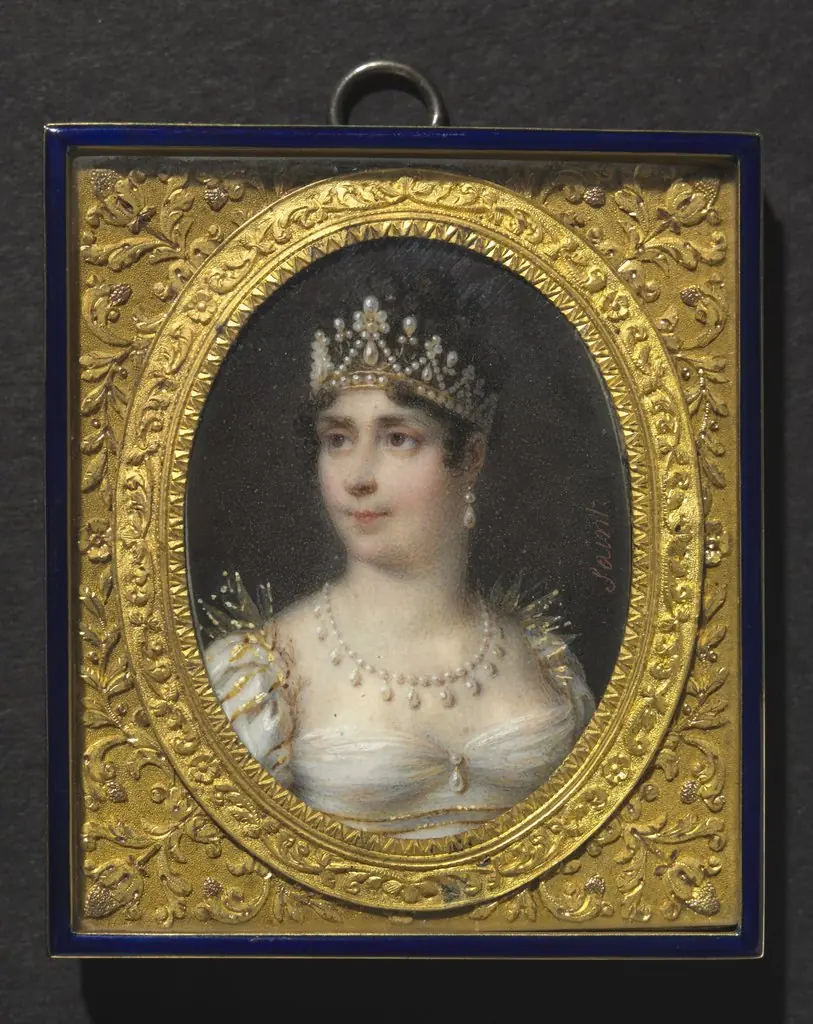 Portrait of Joséphine de Beauharnais, Empress of the French
 Portrait of a Lady
 Snuffbox with portrait of Catherine II (1729–1796), Empress of Russia
 Eugenie Simon
 Portrait of a Woman in a White Dress
 Portrait of a Woman in a White Dress
 Mrs. Nathaniel Bowen (Margaret Blake)