Artwork
Two coats of arms with three-towered castles
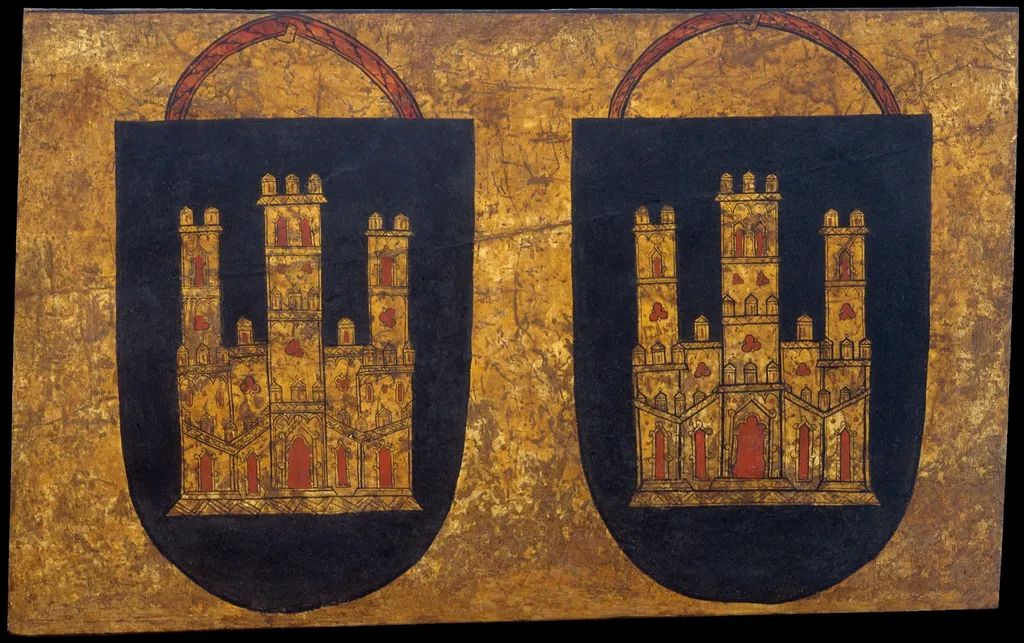
Two coats of arms with three-towered castles is an unspecified painting by the Byzantine icon painting artist Unknown. It dates from 1298 and is held in the collection of the Museu Nacional d'Art de Catalunya.
About this work
Overview
This painting presents two heraldic shields, each centered on a black field, displaying identical three-towered castles rendered in yellow and red.
This painting presents two heraldic shields, each centered on a black field, displaying identical three-towered castles rendered in yellow and red. The shields are enclosed by gold borders and crowned with red arches, reinforcing their formal, symbolic character. The composition is symmetrical and restrained, emphasizing structure over narrative. The visual language aligns with medieval heraldic traditions, prioritizing clarity and emblematic repetition over naturalism.
Subject & Meaning
The repeated motif of the three-towered castle likely signifies a noble lineage or territorial claim, as castles were standard heraldic symbols of authority and defense. The uniformity of the two shields suggests a familial or dynastic connection—perhaps representing two branches of the same house or allied lineages. The absence of additional charges or text implies a focus on the castle as the sole identifier, underscoring its importance in the heraldic system.
Technique & Style
The painting employs flat, unmodulated colors and sharp outlines, characteristic of medieval heraldic art. Details such as window openings and tower crenellations are rendered with precision but without shading or perspective. The gold border and red arches provide structural framing, enhancing the emblem’s legibility. The black background intensifies the contrast, ensuring the symbols remain distinct and readable at a distance, as required for banners or seals.
History & Provenance
The work’s origins are undocumented, but its stylistic features suggest it was produced in late medieval Europe, possibly between the 13th and 15th centuries. It may have served as a panel for a private chapel, a family record, or a decorative element in a noble residence. Its survival indicates it was valued as a record of lineage, though its specific commissioning family or region remains unknown.
Context
During the medieval period, heraldic imagery was integral to social and political identity. Coats of arms were displayed on shields, seals, and architecture to assert status and lineage. This painting reflects the standardized visual codes used across Europe, where symbols like the three-towered castle conveyed territorial or familial authority. Its simplicity aligns with the functional purpose of heraldry: immediate recognition and enduring representation.
Legacy
Though not attributed to a known artist or dynasty, the painting exemplifies the enduring principles of heraldic design—clarity, repetition, and symbolic economy. It contributes to the broader understanding of how medieval societies encoded identity in visual form. Its preservation offers insight into the continuity of heraldic traditions beyond grander, more celebrated works, highlighting the quiet persistence of symbolic language in everyday noble life.
Artist & collection

 Domestic Scene
 Giacomo and Cardinal Marco, investing Andrea, Abbot of San Zeno, with his Benefice
 The Nymph of Fontainebleau
 Portrait of a Woman
 Madonna and Child with Saints in the Enclosed Garden
 Venus and Minerva
 Family Group of Four on Sofa
 Wall painting from Room H of the Villa of P. Fannius Synistor at Boscoreale
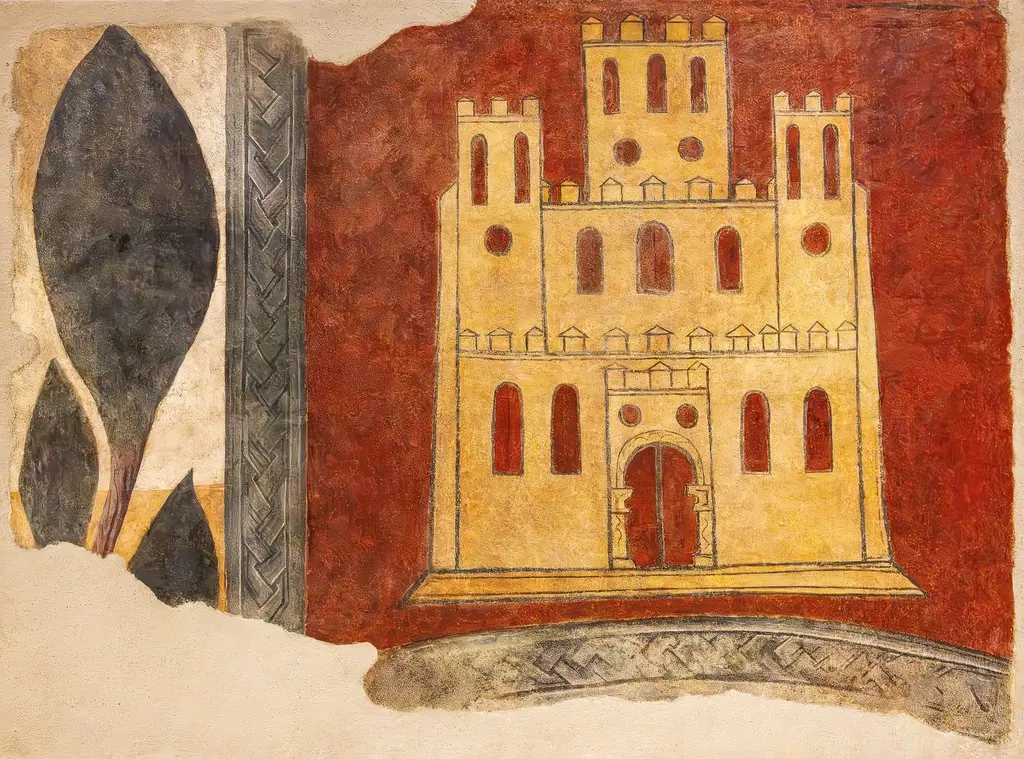 Architectural motif of San Pedro de Arlanza
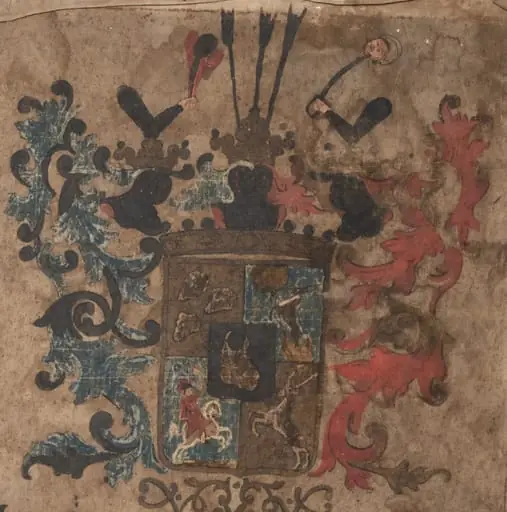 Blazonul funerar al contelul Miklós Wass din Țaga
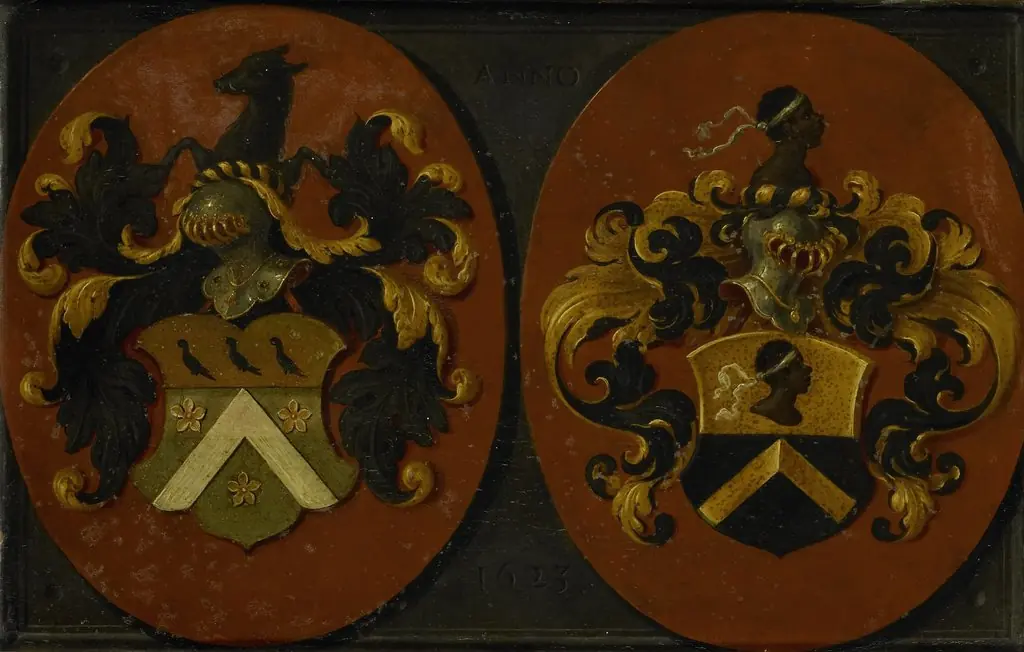 Wapenbord met de wapens van Boudaen en Fourmenois, 1623 (het wapen van Fourmenois omgewend)
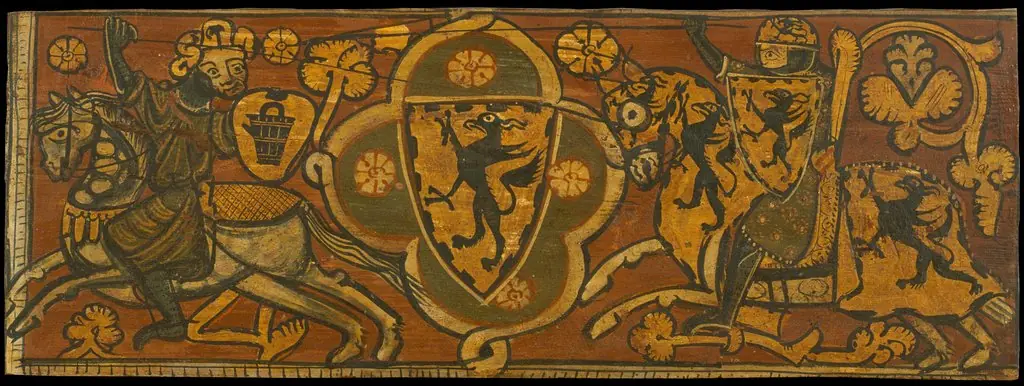 Coffered ceiling panel with a fight between a Christian knight and a Muslim
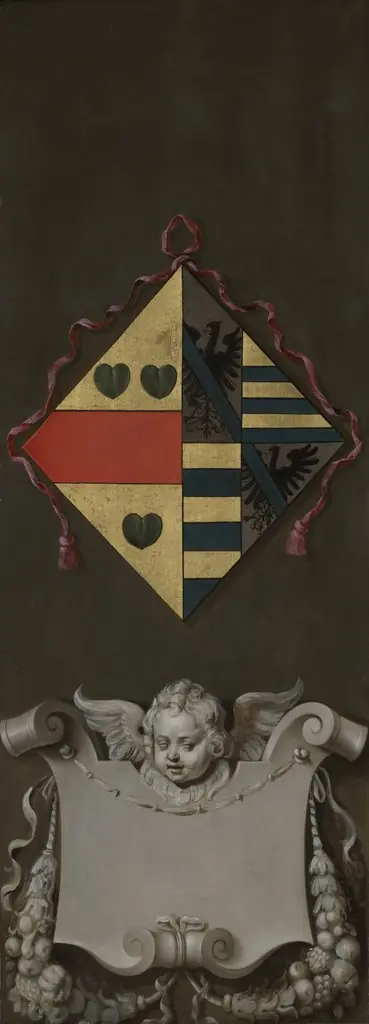 Coat of Arms of Adriana Perez
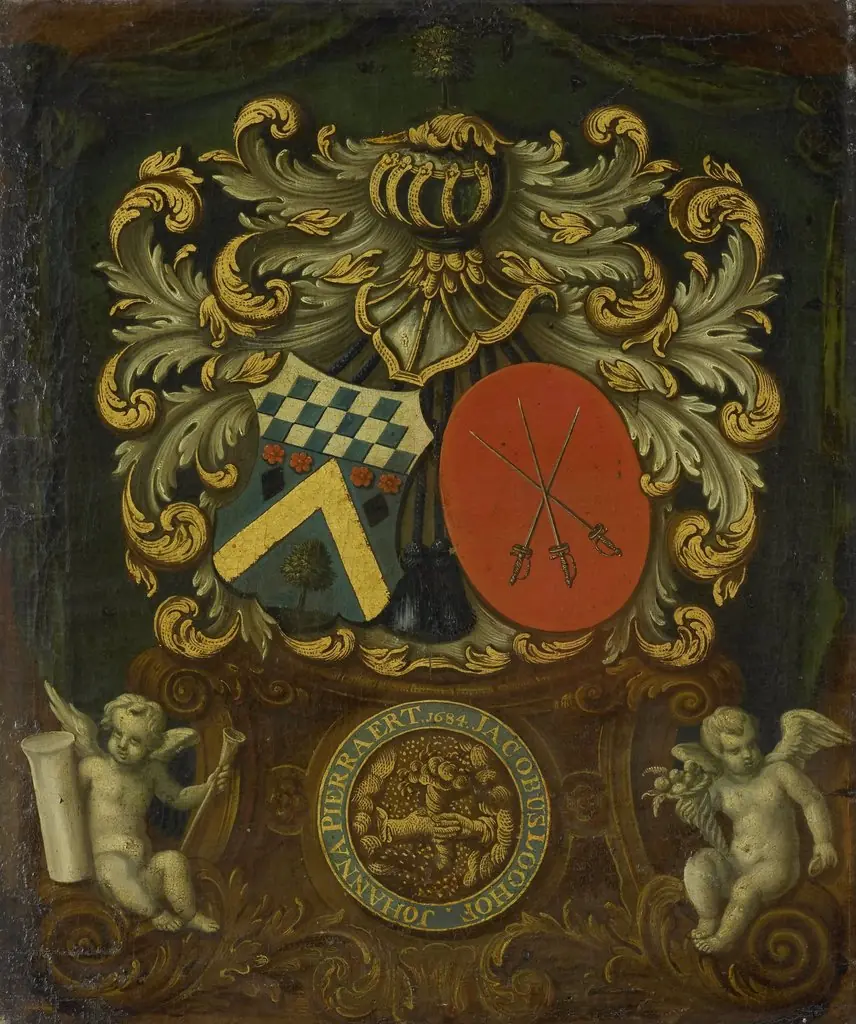 The family shields of Jacobus Loohoff and Johanna Pierraert, 1684
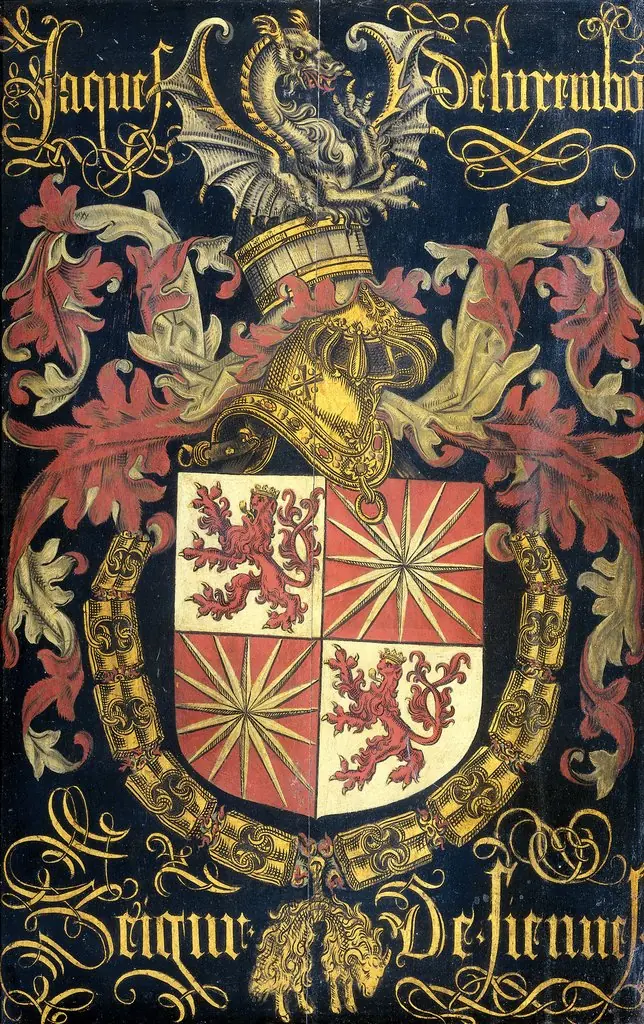 Shield of Jacob of Luxemburg (after 1441-1488), Lord of Fiennes, in his capacity as knight of the Order of the Golden Fleece
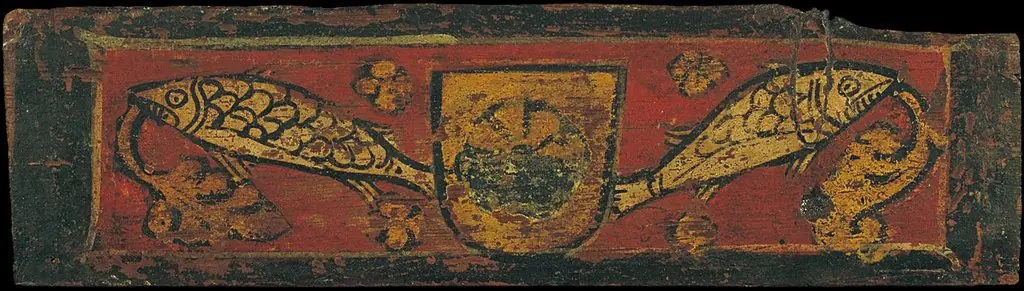 Small coffered ceiling panel with coat of arms and fishes devouring plant motifs
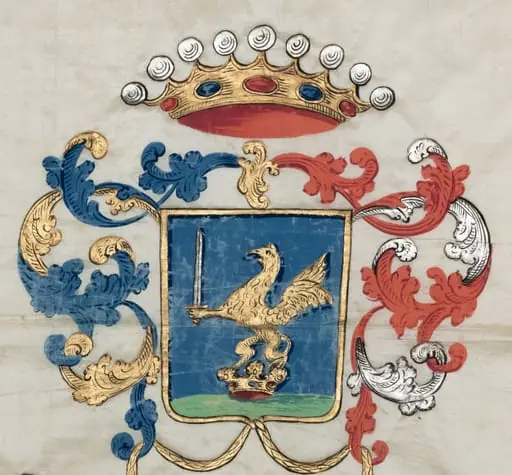 Blazonul funerar a baronesei Terézia Bánffy
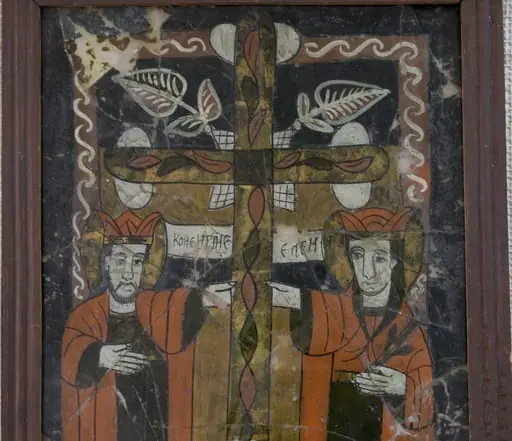 Pictură în oglindă, pe spatele unei bucăți de glajă, ax vertical.Sfinții Împărați Constantin și Elena, 3/4 , în picioare, semiprofil, sub brațele crucii pe care a fost răstignit Isus( găsită de Împărăteasa Elena la Ierusalim) Amândoi au plete castanii, lăsate pe umeri, coroane înalte, veșminte identice, simple, lungi, cămăși verzi și mantii roșii. Plasarea personajelor sub brațele crucii, în jumătatea inferioară, pe fond ocru sugerează complementaritatea celor două planuri(terestru și ceresc). Împărăteasa ține în mână o ramură verde, element ce o însoțește în majoritatea reprezentărilor populare. Fețele sunt ușor diforme, ochii negri. Crucea dreaptă, plasată în centrul compoziției, decorată cu frunze și o spirală în partea de jos, creează simetrie. La întretăierea brațelor crucii elemente vegetale cu contur alb. Chenarul specific icoanelor de Nicula, linia albă(zăluțe, funie) pe fond roșcat. Icoana este caracteristică perioadei de înflorire a picturi pe sticlă de la Nicula. Rama profilată, din lemn de brad, pictată cu o culoare roșcată. Dosul subțire. Sticla spartă în mai multe fragmente.