Artwork
Daily life in a village
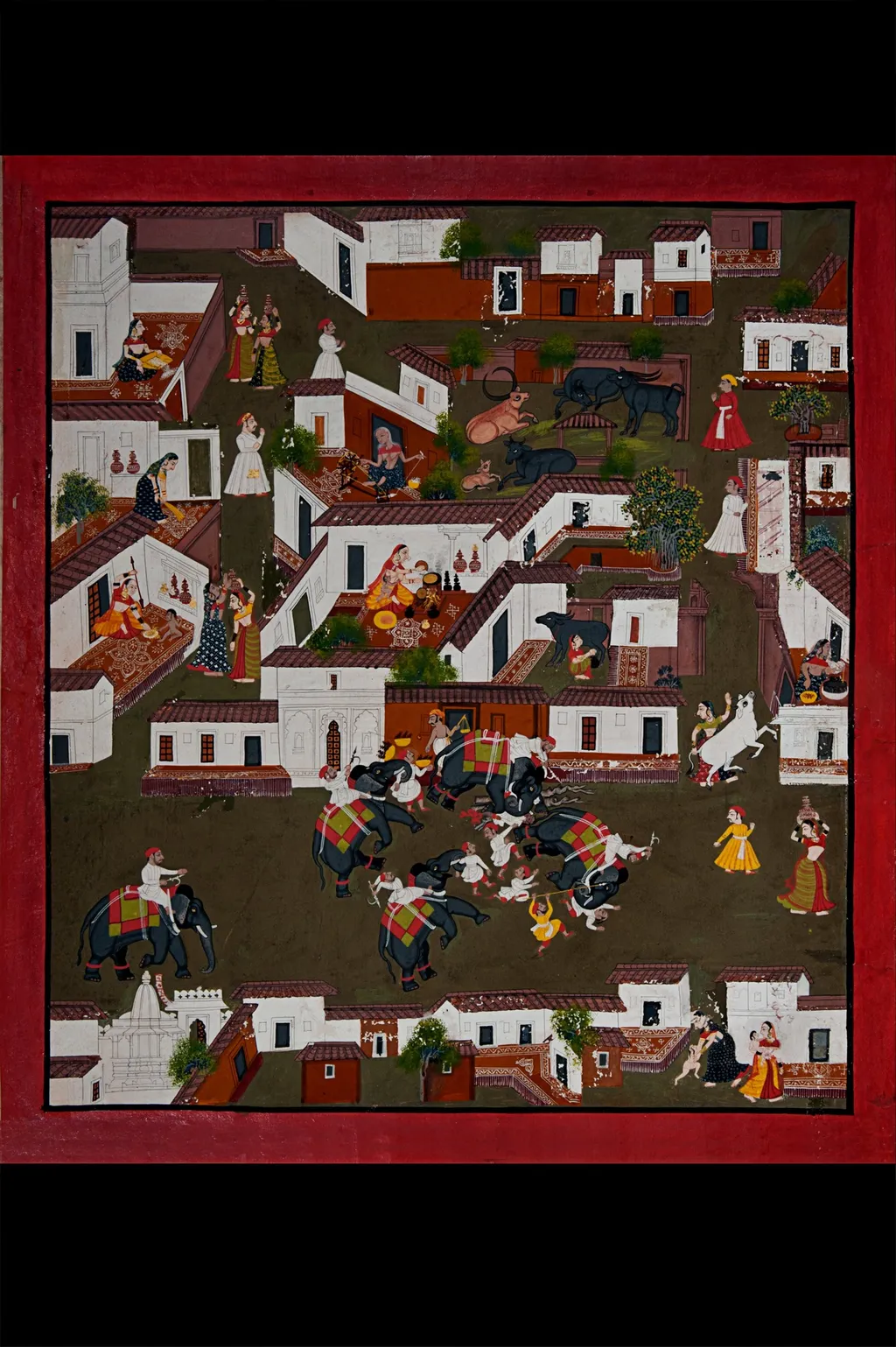
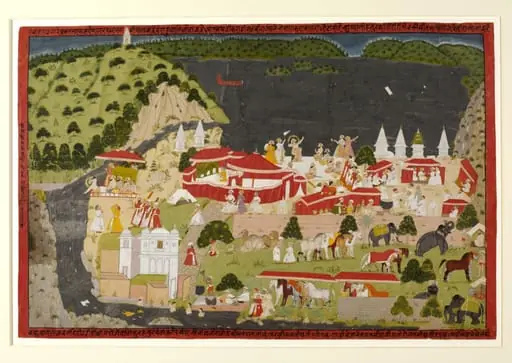
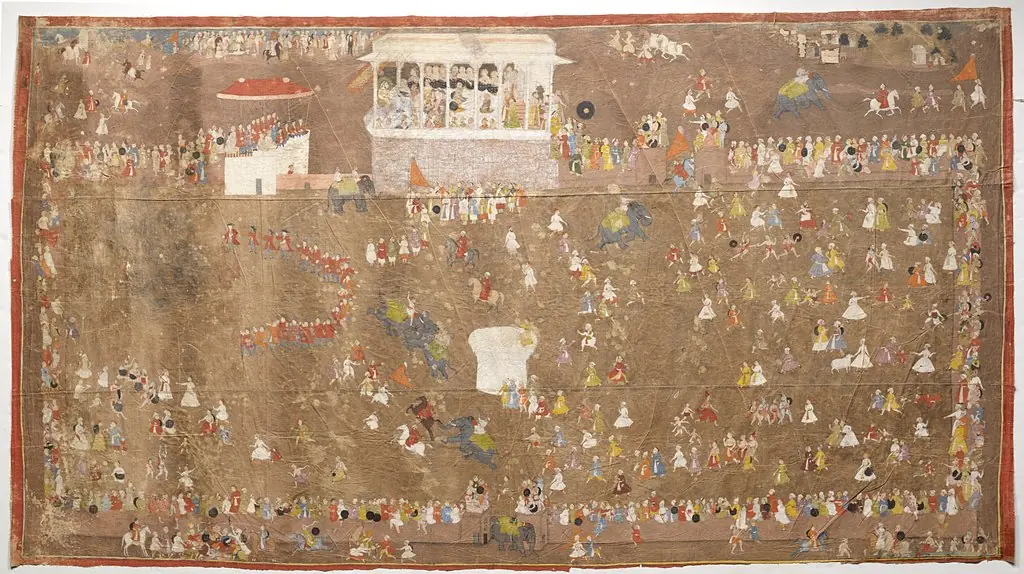
Daily life in a village is an unspecified painting by the Rococo painting artist Unknown. It dates from 1750 and is held in the collection of the National Museum. The canvas presents a bustling village tableau populated by numerous figures, domestic animals and modest dwellings.
About this work
Overview
White structures topped with brown thatched roofs line the composition, while villagers in bright garments animate the scene.
The canvas presents a bustling village tableau populated by numerous figures, domestic animals and modest dwellings. White structures topped with brown thatched roofs line the composition, while villagers in bright garments animate the scene. Elephants bearing vividly patterned blankets occupy the foreground, accompanied by water buffalo and other livestock, creating a vivid snapshot of communal activity.
Subject & Meaning
The work captures everyday routines: musicians perform, dancers whirl, and residents attend to their animals. By juxtaposing human celebration with the presence of working beasts, the painting underscores the interdependence of people and livestock in rural life, reflecting cultural practices that blend labor, festivity and communal bonds.
Technique & Style
The artist employs a balanced arrangement of figures and architecture, using a palette of saturated hues to differentiate clothing, animal blankets and building tones. Light and shadow are rendered to give volume to forms, echoing chiaroscuro principles without dramatic contrast, thereby enhancing depth while maintaining a lively, approachable atmosphere.
Context
Set within a South‑Asian rural environment, the scene reflects traditional village architecture and the central role of elephants and water buffalo in daily tasks and ceremonial occasions. The inclusion of musical and dance elements points to cultural festivities that often accompany agricultural cycles and communal gatherings.
Legacy
As a visual record, the painting offers scholars insight into historical dress, animal husbandry and village organization. Its vivid representation continues to inform studies of regional folk customs and the visual language used to portray collective rural experiences.
Artist & collection

 Domestic Scene
 Giacomo and Cardinal Marco, investing Andrea, Abbot of San Zeno, with his Benefice
 The Nymph of Fontainebleau
 Portrait of a Woman
 Madonna and Child with Saints in the Enclosed Garden
 Venus and Minerva
 Family Group of Four on Sofa
 Wall painting from Room H of the Villa of P. Fannius Synistor at Boscoreale
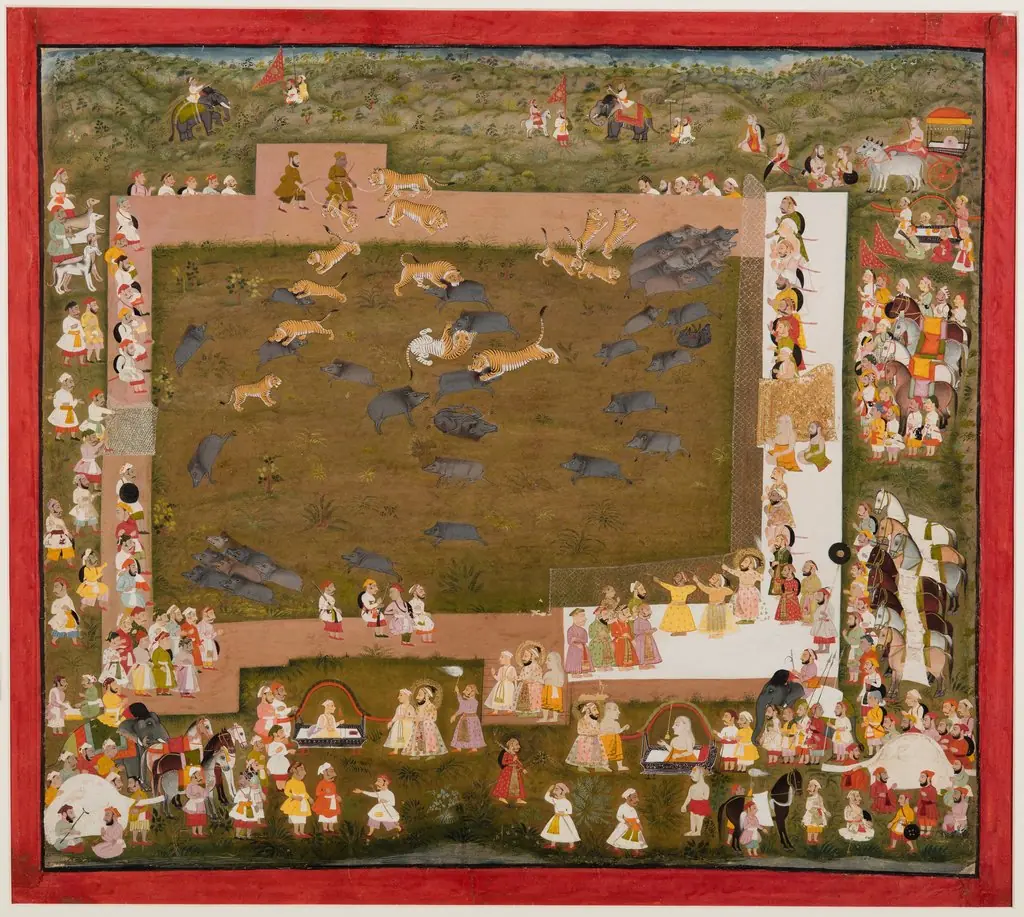 Maharana Sangram Singh II of Mewar (r. 1710–34) and Stages a Boar Hunt with Tigers at Sadri
 Maharana Sangram Singh II of Mewar (r. 1710–34) and Stages a Boar Hunt with Tigers at Sadri
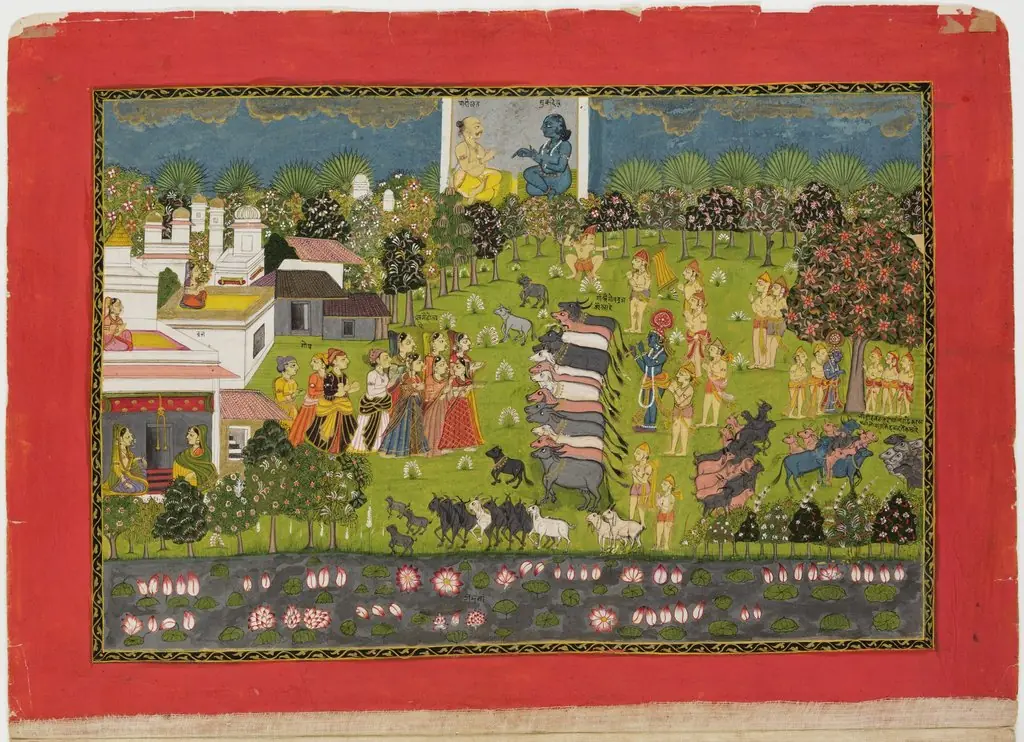 Cow Worship
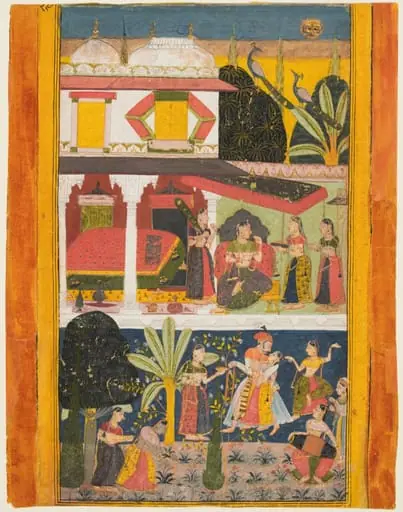 A Heroine and Her Paramour: Malavi Ragini, from a Ragamala
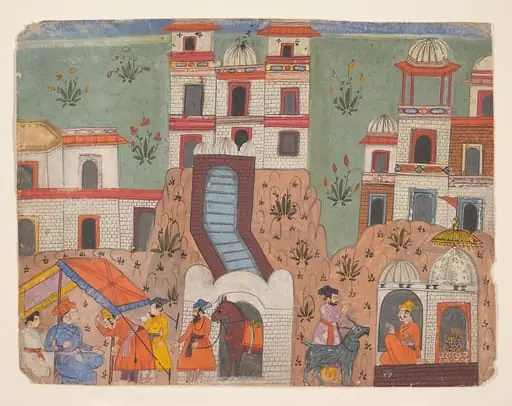 Untitled
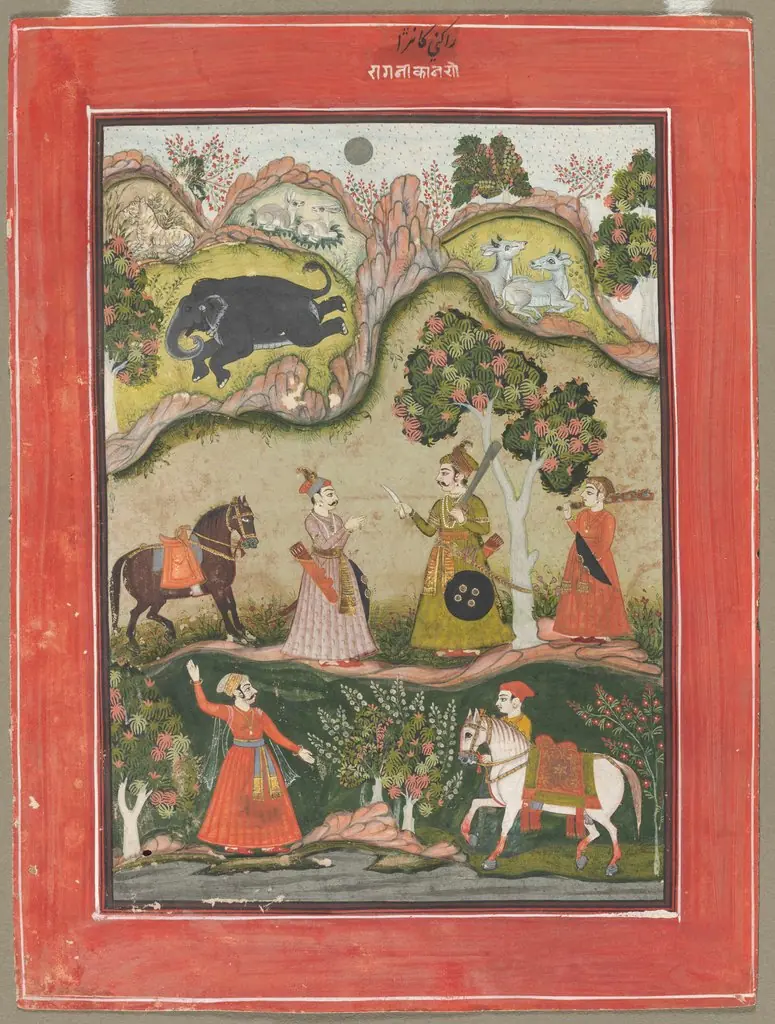 Kanhara Ragini: Song of Inspiration to Krishna for Killing the Elephant Demon, from the Ragamala Series
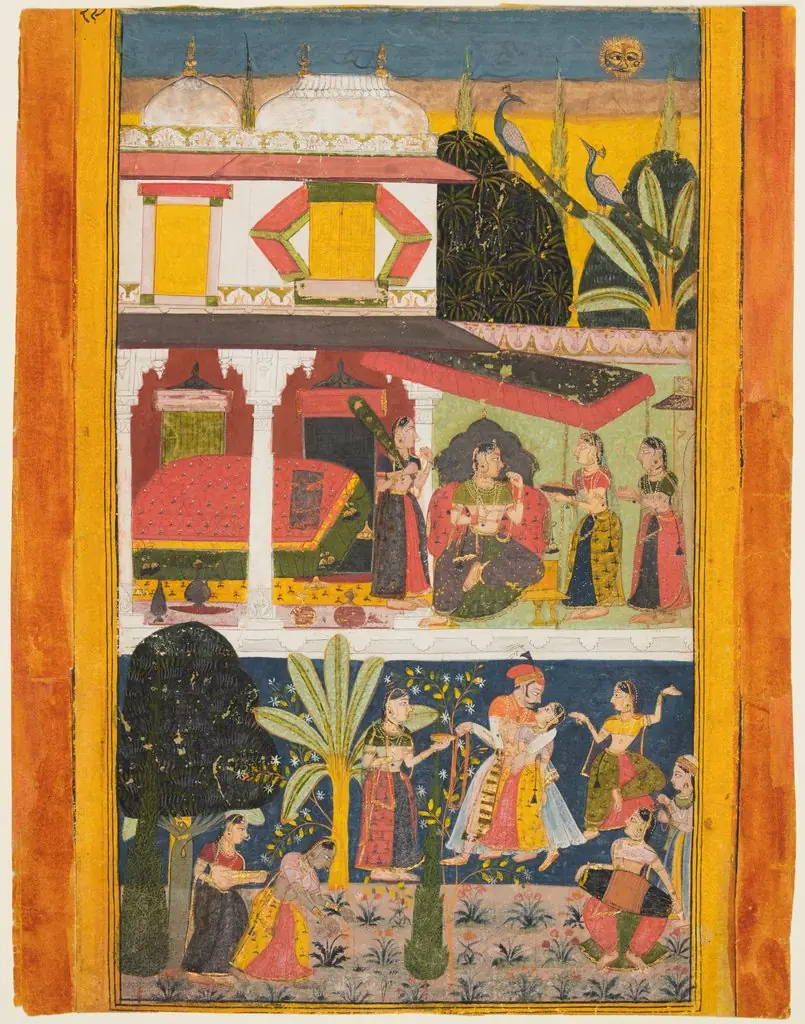 A Heroine and Her Paramour: Malavi Ragini, from a Ragamala
 Maharana Sangram Singh
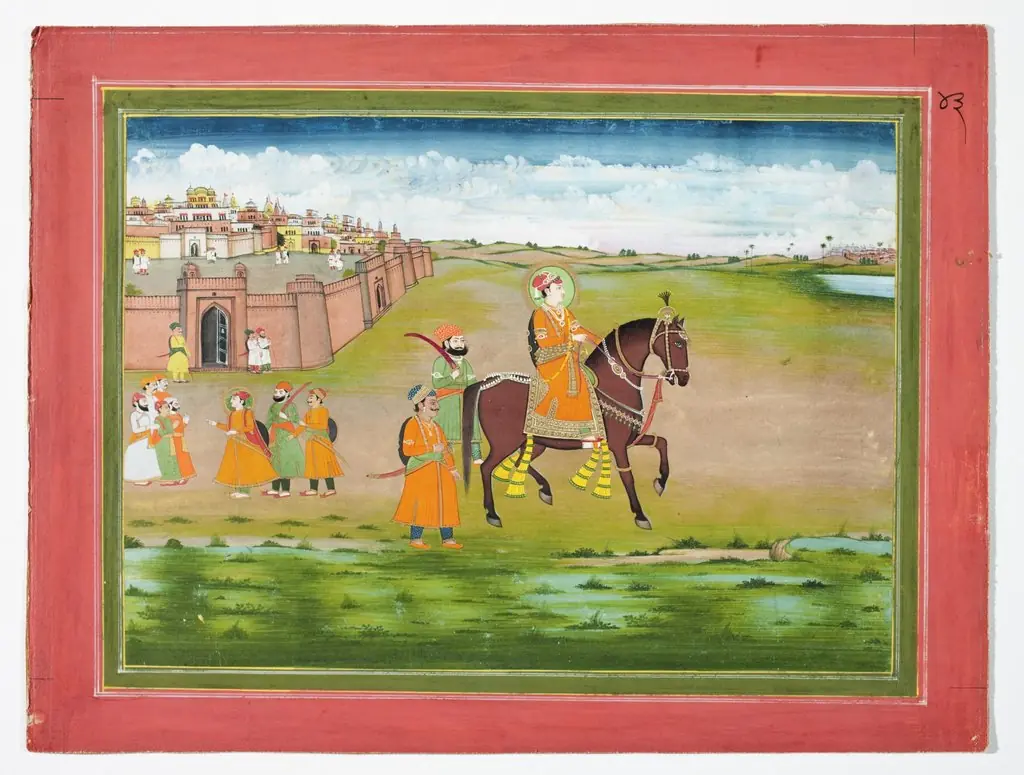 Portrait of Raja on Horseback
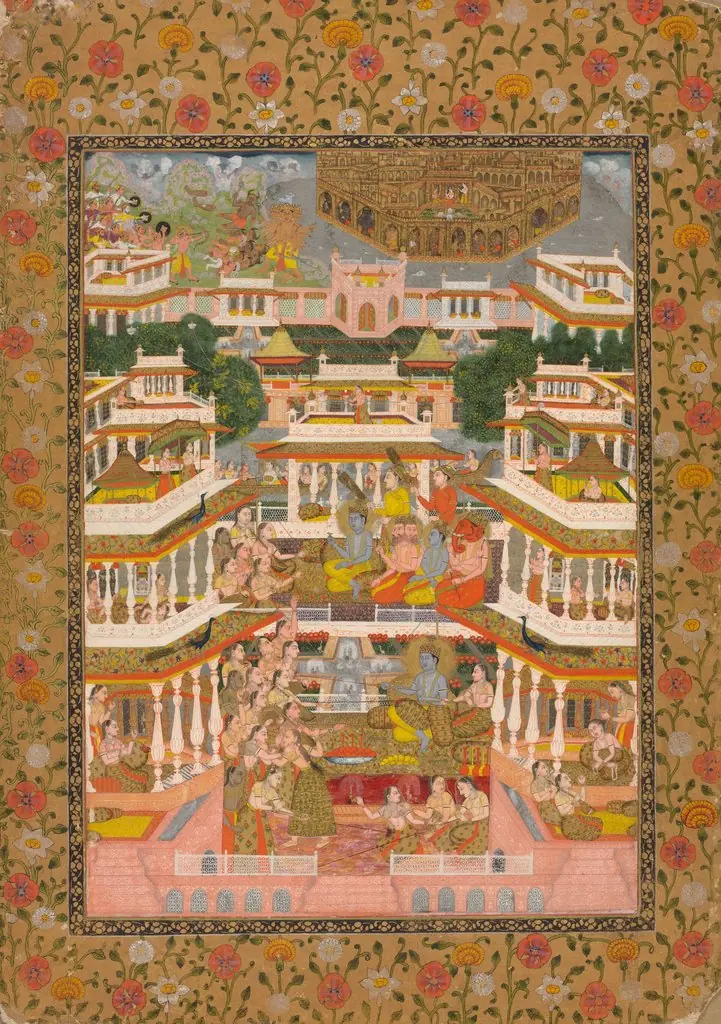 Tiered Court Scene
 Maharana Sangram Singh of Udaipur Entertaining Members of the Dutch East India Company led by Johan Josua Ketelaar in 1711
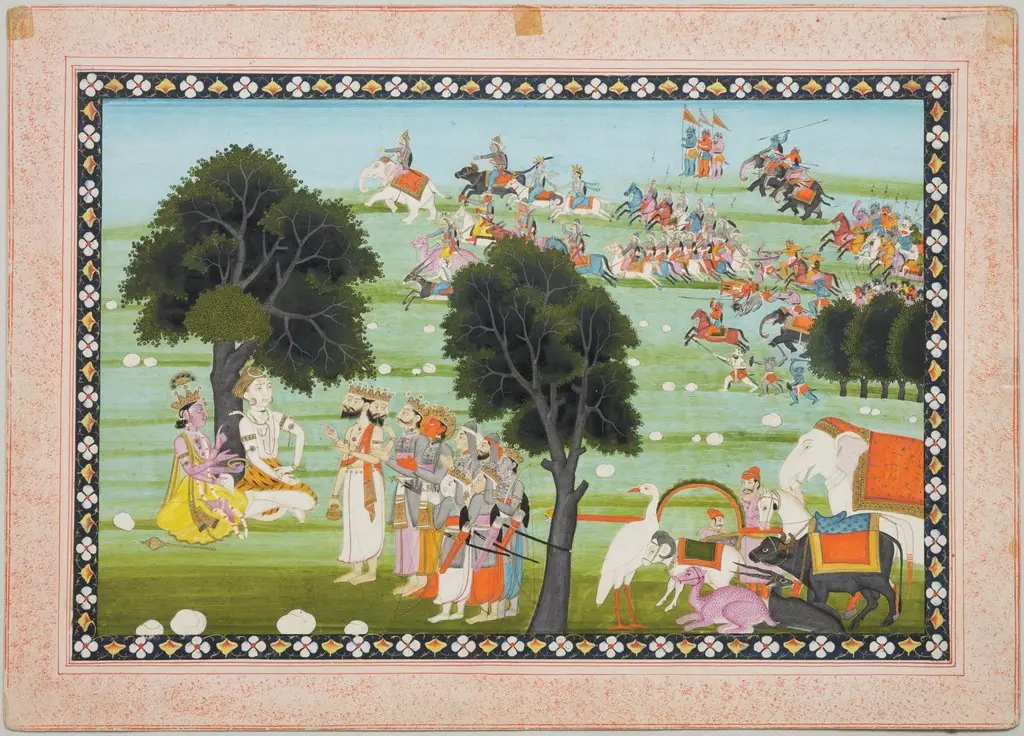 Gods Discussing Their Defeat by Demons, led by Mahishasura in Background