Artwork
Maharana Sangram Singh II of Mewar (r. 1710–34) and Stages a Boar Hunt with Tigers at Sadri
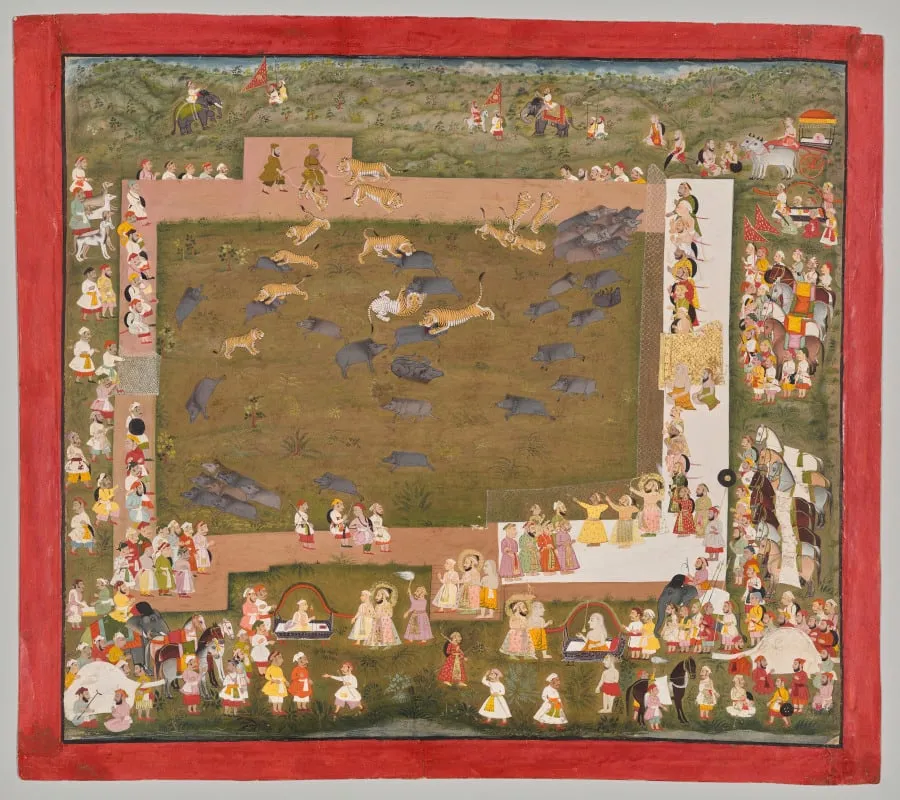
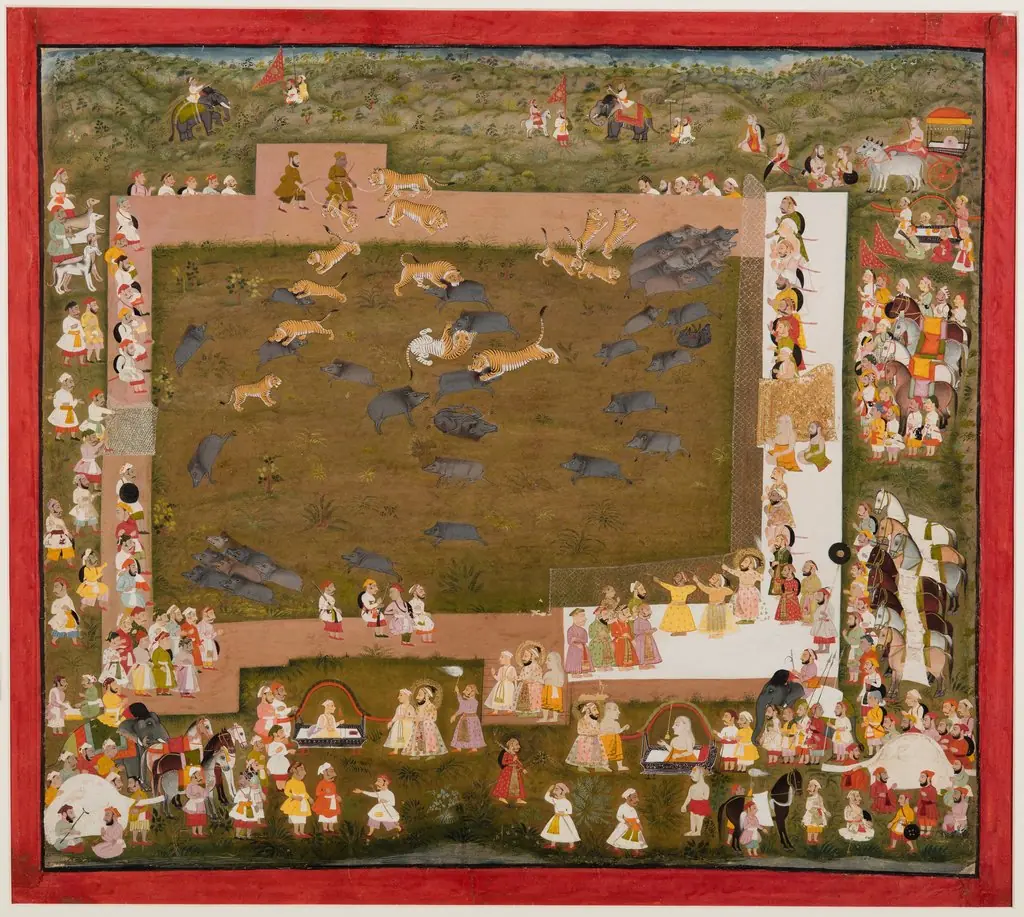
Maharana Sangram Singh II of Mewar (r. 1710–34) and Stages a Boar Hunt with Tigers at Sadri is an unspecified painting by the Baroque artist Unknown. It dates from 1720 and is held in the collection of the Cleveland Museum of Art. This painting depicts Maharana Sangram Singh II of Mewar, ruling from 1710 to 1734, overseeing a staged boar hunt.
- Accession no.
- 2018.145
- Credit line
- Purchase and partial gift from the Catherine and Ralph Benkaim Collection; Severance and Greta Millikin Purchase Fund
About this work
Overview
The ruler appears repeatedly, each instance capturing a different phase of the event: greeting dignitaries, preparing to shoot, and observing the climax.
This painting depicts Maharana Sangram Singh II of Mewar, ruling from 1710 to 1734, overseeing a staged boar hunt. The scene unfolds across multiple moments within a single composition, a common feature in Rajput court art. The ruler appears repeatedly, each instance capturing a different phase of the event: greeting dignitaries, preparing to shoot, and observing the climax. The setting is an enclosed arena, designed not for survival but for display.
Subject & Meaning
The hunt is a symbolic performance, not a real pursuit of game. The king’s repeated presence emphasizes his authority and control over nature and spectacle. Tigers, restrained by leashes and released deliberately, serve as props to heighten drama without risk.
The boar, cornered and overwhelmed, becomes a symbol of conquered wildness. The halo around the ruler’s head reinforces his divine legitimacy, framing the event as a ritual of sovereignty.
Technique & Style
Executed in the Mewar style, the painting employs flat planes of color, intricate detail in textiles and architecture, and a lack of linear perspective. Figures are arranged hierarchically, with the maharana consistently larger and centrally positioned. Multiple temporal moments are compressed into one frame, allowing the viewer to follow the sequence of the hunt.
The use of white for the platform and the ruler’s robe draws attention to his stillness amid chaotic motion.
History & Provenance
Created during the early 18th century in the court of Mewar, this work likely originated as part of a larger illustrated manuscript or album commissioned by the royal household. Such paintings were kept in palace collections and viewed by nobles and foreign envoys. Its survival suggests it was valued as a record of royal ritual, possibly displayed during ceremonies or used to affirm lineage and power to visiting dignitaries.
Context
Staged hunts were a longstanding tradition among Rajput rulers, blending martial ideals with courtly spectacle. In an era of political fragmentation, such performances reinforced the maharana’s role as protector and master of his domain. Similar scenes appear across Mewar’s artistic output, reflecting a shared visual language where control over nature mirrored control over territory and subjects. The inclusion of palanquins signals diplomatic visits, linking the hunt to broader political rituals.
Legacy
This painting exemplifies how Rajput courts used art to encode political narratives through controlled imagery. The deliberate absence of real danger in the hunt underscores a shift from battlefield valor to ceremonial authority. Later collectors and scholars recognized such works as key to understanding the performative nature of power in pre-colonial India. The style influenced regional painting traditions well into the 19th century.
Artist & collection









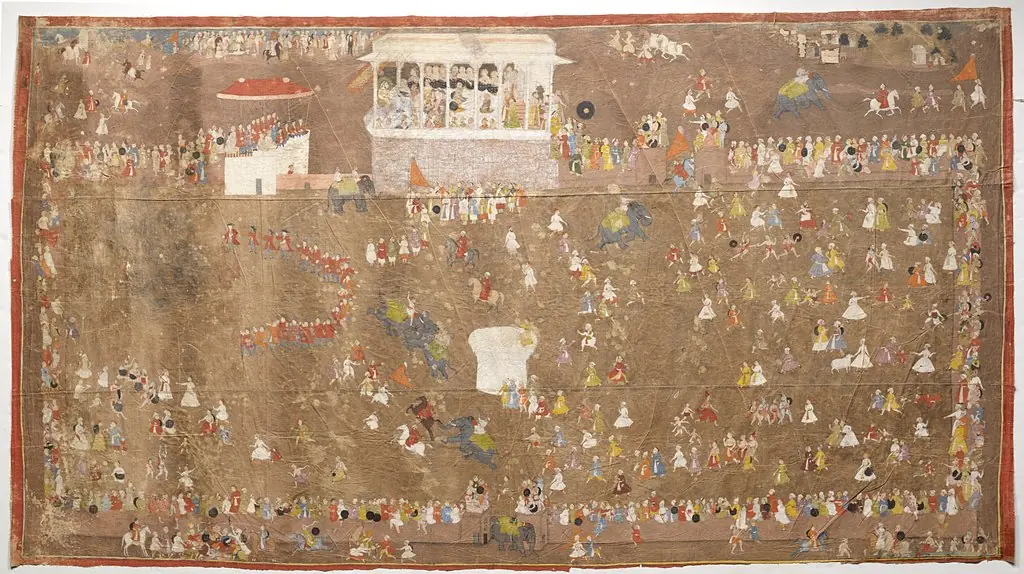 Maharana Sangram Singh of Udaipur Entertaining Members of the Dutch East India Company led by Johan Josua Ketelaar in 1711
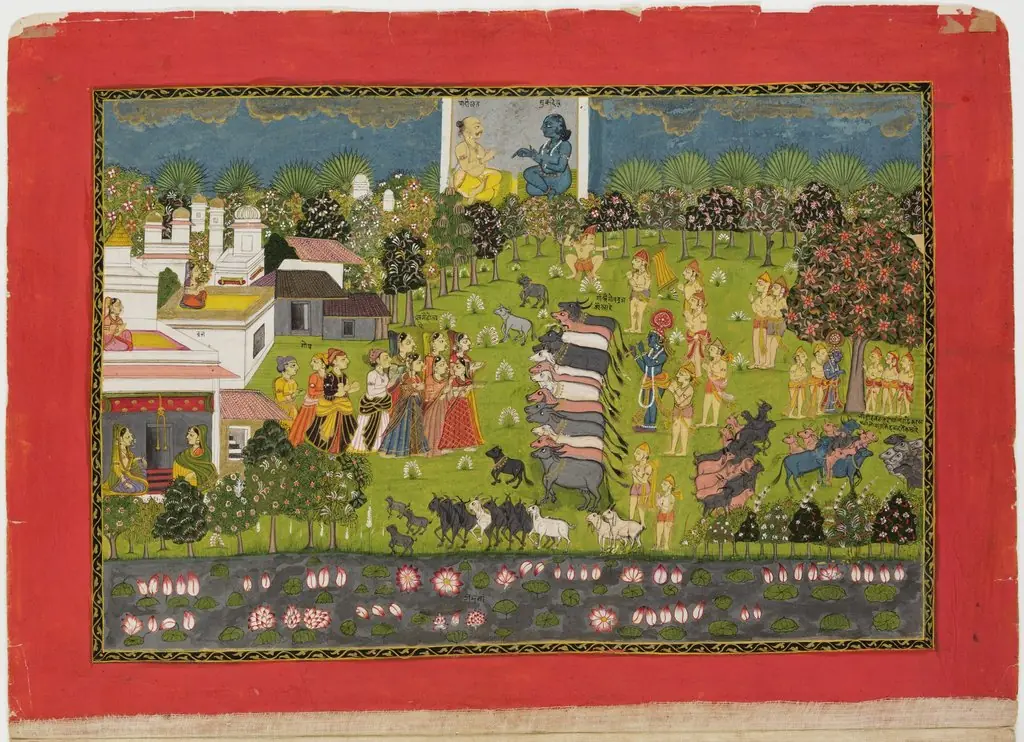 Cow Worship
 Untitled
 Daily life in a village
 Durga, Having Decapitated Bull and Mahishasura Within, Drives off Remaining Demons while Gods in Clouds Applaud
 Chand Bibi, with two court ladies
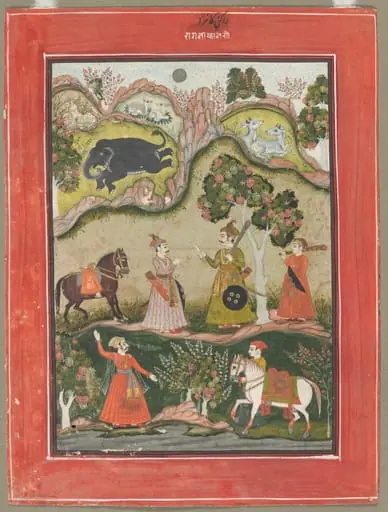 Kanhara Ragini: Song of Inspiration to Krishna for Killing the Elephant Demon, from the Ragamala Series