Artwork
Putto Holding Two Shields of Arms (birth tray, back)
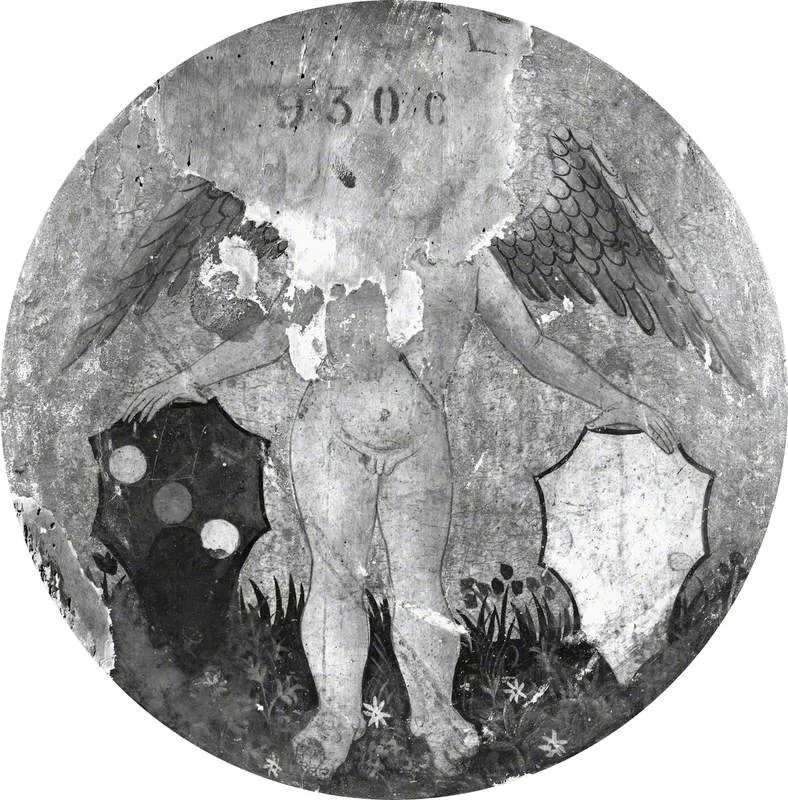
Putto Holding Two Shields of Arms (birth tray, back) is a tempera painting by the Early Renaissance artist Unknown. It dates from 1462 and is held in the collection of the Victoria and Albert Museum. The work is a circular tempera painting that portrays a winged, nude figure—commonly identified as a putto—grasping a shield in each hand.
About this work
Overview
The work is a circular tempera painting that portrays a winged, nude figure—commonly identified as a putto—grasping a shield in each hand. One shield is rendered in black, the other in white, creating a stark visual contrast. The composition reflects the balanced symmetry typical of Renaissance decorative panels and is part of the Victoria and Albert Museum’s collection.
Subject & Meaning
The central figure, a classical putto, serves as an allegorical presence, often associated with innocence or divine messenger roles in Renaissance iconography. The juxtaposition of black and white shields may symbolize opposing forces such as night and day, good and evil, or the duality of human experience, though the exact narrative intent remains ambiguous.
Technique & Style
Executed in tempera, the painting employs pigment mixed with a water‑soluble binder, producing a luminous surface and fine detail. The medium, favored before the widespread adoption of oil, allows for crisp outlines and vibrant coloration. The figure’s anatomy and drapery echo the idealized forms of classical sculpture, while the circular format aligns with the period’s decorative motifs.
History & Provenance
The piece is currently housed in the Victoria and Albert Museum in London, a repository known for its extensive holdings of decorative arts. Its acquisition details are not widely publicized, but the work’s material and stylistic attributes place it firmly within the Renaissance tradition, suggesting an origin in a workshop that adhered to classical ideals.
Artist & collection

 Domestic Scene
 Giacomo and Cardinal Marco, investing Andrea, Abbot of San Zeno, with his Benefice
 The Nymph of Fontainebleau
 Portrait of a Woman
 Madonna and Child with Saints in the Enclosed Garden
 Venus and Minerva
 Family Group of Four on Sofa
 Wall painting from Room H of the Villa of P. Fannius Synistor at Boscoreale