Artwork
A View of Falmouth
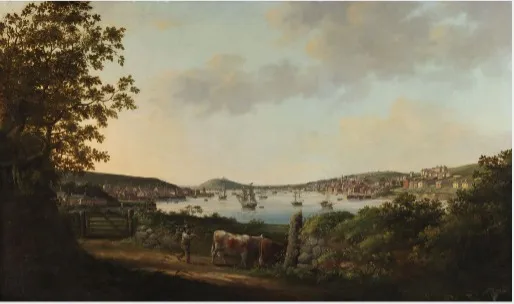
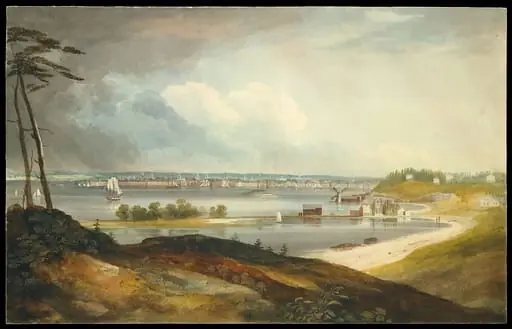
A View of Falmouth is an oil painting by Unknown. It is held in the collection of the National Gallery of Ireland. This oil painting depicts a quiet coastal landscape of Falmouth, capturing the calm interplay of land, water, and sky.
About this work
Overview
A narrow dirt path leads the eye from the foreground toward a wooden gate, where a solitary figure stands with two cattle.
This oil painting depicts a quiet coastal landscape of Falmouth, capturing the calm interplay of land, water, and sky. The composition centers on a still body of water, framed by gently rolling hills and scattered trees. A narrow dirt path leads the eye from the foreground toward a wooden gate, where a solitary figure stands with two cattle. The muted blue and gray sky enhances the scene’s stillness, reinforcing a mood of quiet observation.
Subject & Meaning
The scene presents an uneventful moment in rural coastal life: a man near a gate, accompanied by grazing cows, suggests daily routine rather than drama. The boats on the water imply local activity, but none are in motion, contributing to the painting’s sense of suspension. There is no narrative climax—only the quiet persistence of nature and human presence, offering a contemplative view of ordinary existence.
Technique & Style
The artist employs soft brushwork and subtle tonal transitions to render the landscape with quiet realism. Colors are restrained, with earthy greens, pale blues, and muted grays dominating the palette. Details in the foliage, water reflections, and the texture of the path are rendered with care but without flourish. The composition is balanced and deliberate, guiding the viewer’s gaze through the scene without force or distraction.
History & Provenance
The painting’s origins are tied to 19th-century British landscape traditions, likely created during a period when coastal towns like Falmouth attracted artists seeking tranquil subjects. While its exact date and early ownership are undocumented, its style aligns with regional works from the era. It has remained in private collections until entering institutional care, preserving its modest, unadorned character.
Context
During the early to mid-1800s, British artists increasingly turned to local scenery as subjects, moving away from grand historical or mythological themes. Falmouth, a working port with pastoral surroundings, offered a blend of maritime and rural life. This painting reflects a broader trend of valuing everyday landscapes as worthy of artistic attention, grounded in observation rather than idealization.
Legacy
Though not widely exhibited or reproduced, the painting contributes to a quieter strand of British landscape art that prioritizes serenity over spectacle. Its enduring presence in collections underscores a continued appreciation for understated, observational works that capture the rhythm of place without embellishment. It remains a quiet testament to the value of stillness in visual art.
Artist & collection

 Domestic Scene
 Giacomo and Cardinal Marco, investing Andrea, Abbot of San Zeno, with his Benefice
 The Nymph of Fontainebleau
 Portrait of a Woman
 Madonna and Child with Saints in the Enclosed Garden
 Venus and Minerva
 Family Group of Four on Sofa
 Wall painting from Room H of the Villa of P. Fannius Synistor at Boscoreale
 Washington and Georgetown from the Alexandria Road
 Gloucester from Brookbank
 View from Staten Island
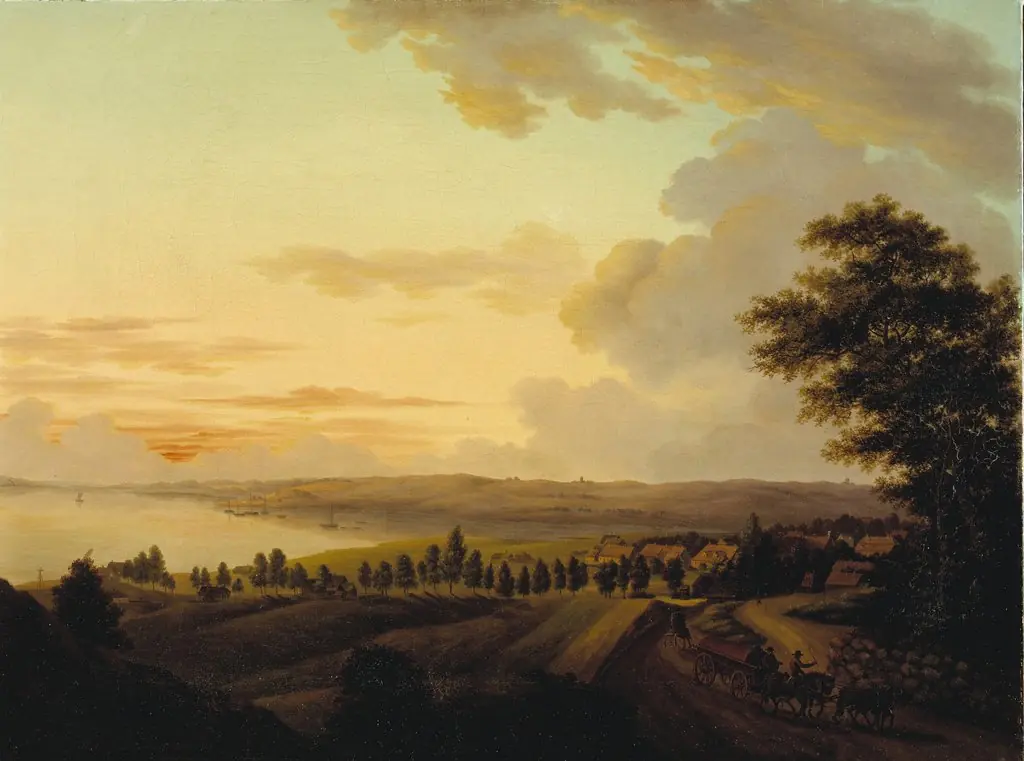 Sjællandsk landskab, aften
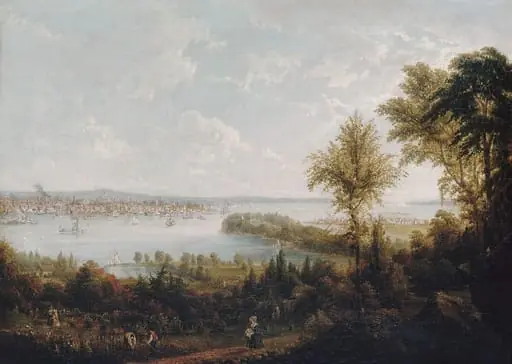 View of the Bay and City of New York from Weehawken
 Sjællandsk landskab, aften
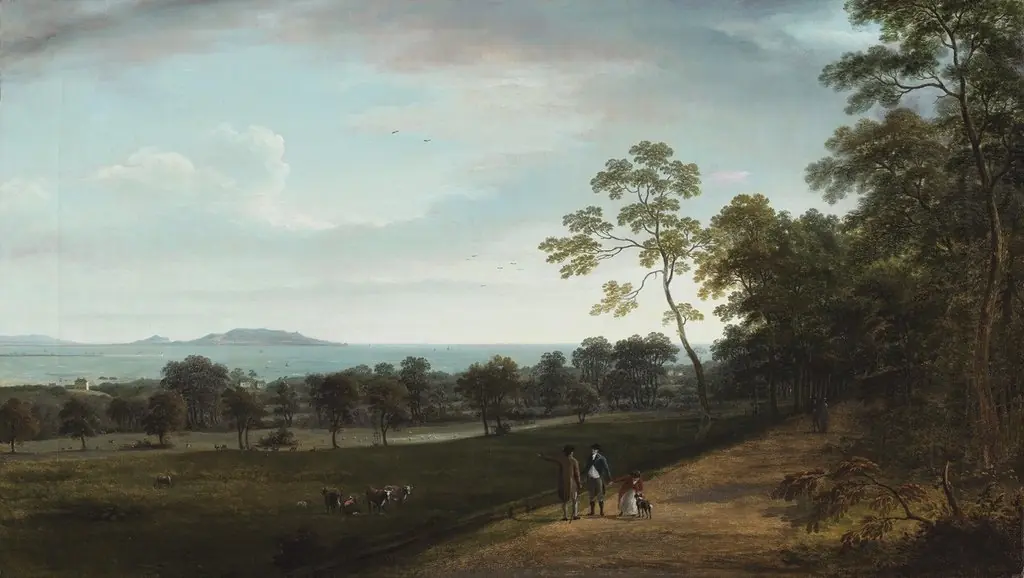 View in Mount Merrion Park
 View of Quebec City from Pointe De Lévy
 Udsigt over Frederikshald i Norge
 View of the Manor of Dronninggaard across Lake Fure, North Zealand.
 The City Outskirts
 New York from the Heights near Brooklyn