Artwork
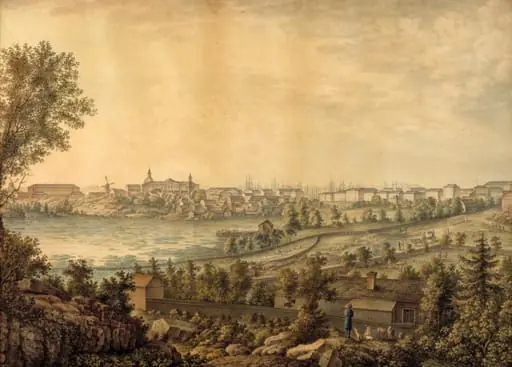
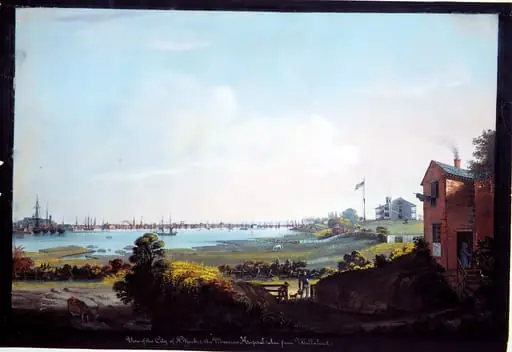
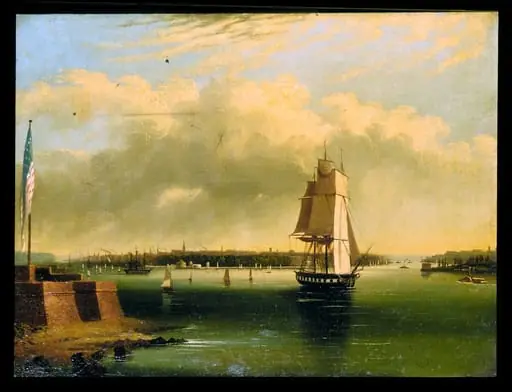
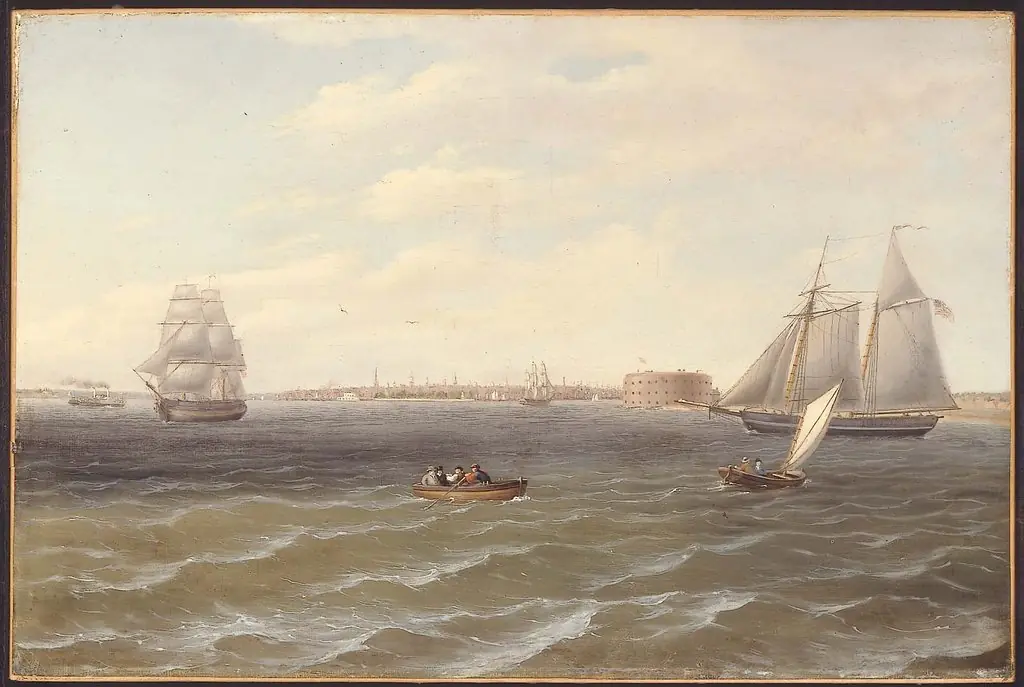
New York from the Heights near Brooklyn
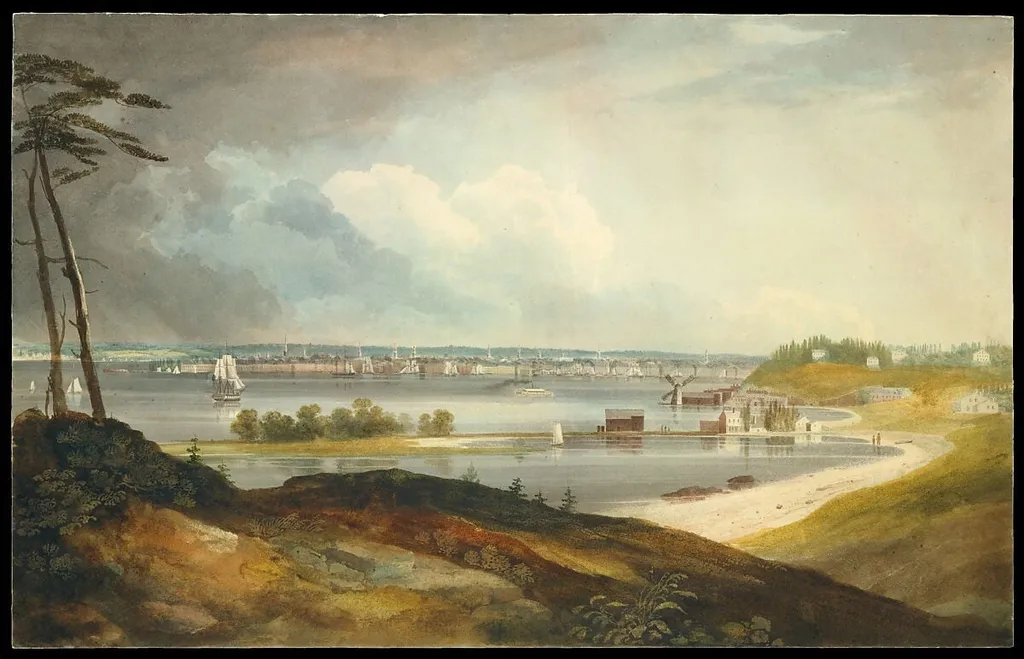
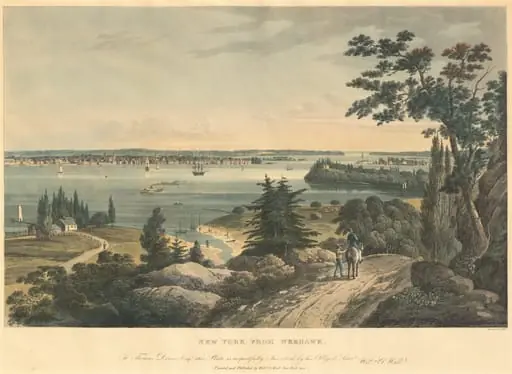
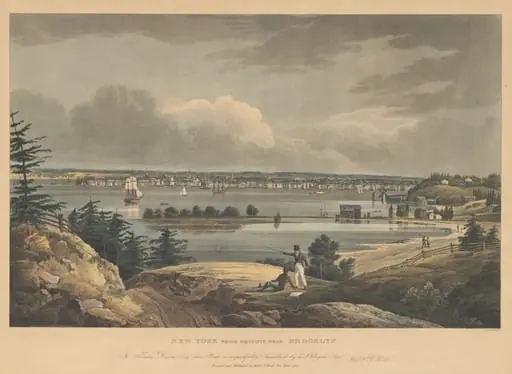
New York from the Heights near Brooklyn is a watercolor work on paper by the American Folk Art artist William Guy Wall. It dates from 1822 and is held in the collection of the Metropolitan Museum of Art.
About this work
Technique & Style
The delicate washes and fine linear detail create a crisp quality that emphasizes precise observation of the river scene while retaining a lyrical atmosphere.
The work is executed in watercolor with graphite accents on a sheet of white wove paper, a combination typical of early American landscape studies. Created in 1820, the piece belongs to the American Wing’s landscape collection at the Metropolitan Museum of Art. Wall’s handling renders a riverine vista in which a small boat emerges from a gently flowing stream, the composition organized around horizontal bands of sky, water and land.
The delicate washes and fine linear detail create a crisp quality that emphasizes precise observation of the river scene while retaining a lyrical atmosphere.
History & Provenance
William Guy Wall created New York from the Heights near Brooklyn in 1820 using watercolor and graphite on white wove paper to depict a river landscape. The work is classified as a landscape within The American Wing of the Metropolitan Museum of Art and is recorded with an inception date of 1820‑10‑20. It has remained in the Metropolitan Museum of Art’s collection since its acquisition, indicating a provenance that traces from the artist to the institution.
Overview
New York from the Heights near Brooklyn is a watercolor and graphite work created by Irish-American artist William Guy Wall around 1822. This piece offers an early, expansive vista of Manhattan Island, viewed from across the East River. It captures the nascent cityscape, complete with sailing vessels on the water and the natural topography of the surrounding area, reflecting a direct, observational style.
Subject & Meaning
The artwork presents a detailed panorama of early 19th-century New York City, seen from the elevated vantage point of Brooklyn. Tall ships navigate the river, while rolling hills frame a hazy skyline, suggesting the city's emerging presence within a largely natural setting. This perspective provides one of the earliest comprehensive visual records of Manhattan's development.
Context
William Guy Wall, an Irish immigrant who settled in New York after 1812, became recognized for his watercolor landscapes, particularly those of the Hudson River Valley. He often sketched on location, such as Brooklyn Heights, before completing his paintings in the studio. This practice of direct observation contributed to the authenticity of his depictions.
Legacy
Wall's watercolors, including views like this, played a role in popularizing American scenery. Some of his works were translated into engravings for the Hudson River Portfolio, an influential publication that showcased the region's picturesque qualities. This collection helped establish a visual vocabulary for the Hudson River School and fostered an appreciation for American landscapes.
Artist & collection

Artist
William Guy Wall (1792–1864) was an American painter of Irish birth. Wall was born in Dublin in 1792 and arrived in New York in 1812. He was already a well trained artist and soon became well known for his sensitive…