Artwork
Kunga Wangcuk (1424-1478) and Sonam Senge (1429-1489), The Fourth and Sixth Abbots of Ngor
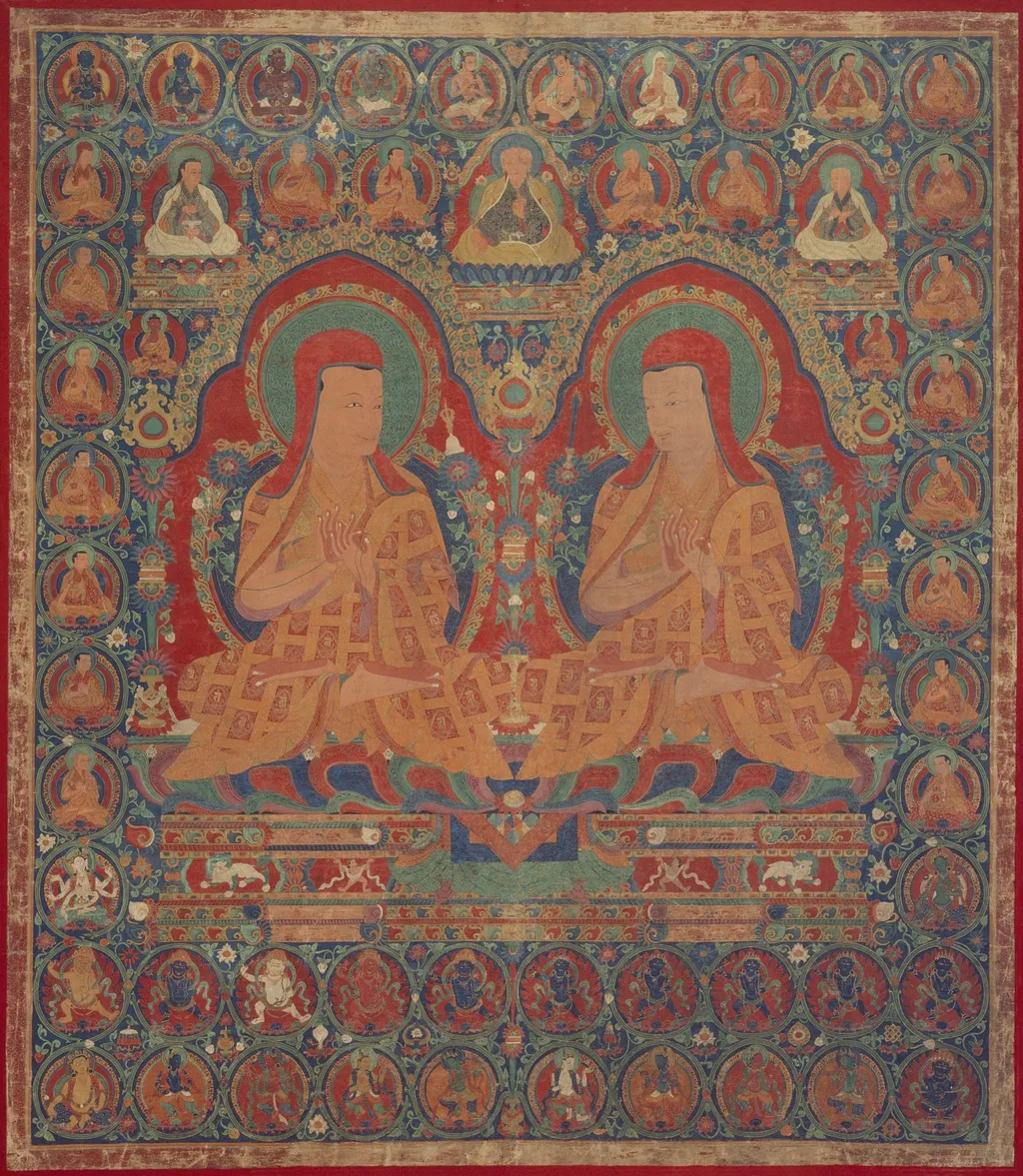
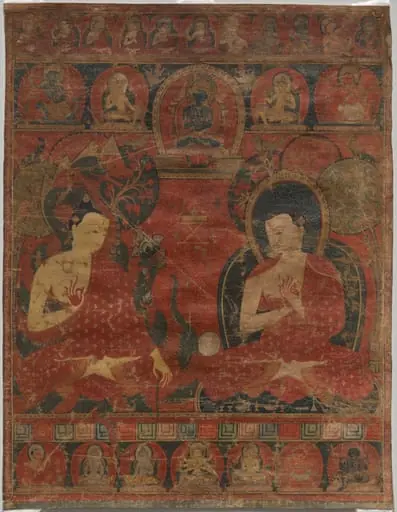
Kunga Wangcuk (1424-1478) and Sonam Senge (1429-1489), The Fourth and Sixth Abbots of Ngor is an unspecified painting by Unknown. It dates from 1500 and is held in the collection of the Los Angeles County Museum of Art. This painting depicts Kunga Wangcuk and Sonam Senge, the Fourth and Sixth Abbots of Ngor, seated together in a serene composition.
About this work
Overview
This painting depicts Kunga Wangcuk and Sonam Senge, the Fourth and Sixth Abbots of Ngor, seated together in a serene composition. The two central figures, distinguished by their red head coverings and intricately patterned long robes, are set against a vibrant multicolored background.
Subject & Meaning
The painting honors the spiritual lineage of Ngor monastic tradition through its portrayal of two esteemed abbots. Their side-by-side depiction may symbolize continuity, respect, or a specific doctrinal alignment, while the surrounding smaller figures could represent disciples, deities, or ancestral lineage, enhancing the scene’s spiritual depth.
Technique & Style
Executed with meticulous attention to detail, the painting blends traditional Tibetan artistic elements with a sense of depth achieved through the circular arrangement of smaller figures around the central subjects. The dominant red, blue, and green hues contribute to the overall calm yet vibrant ambiance.
History & Provenance
Created during the tenure of either Kunga Wangcuk (1424-1478) or Sonam Senge (1429-1489), or possibly shortly after, the painting’s exact date and artist remain unspecified. Its provenance is not detailed in the provided information.
Context
This work reflects the artistic and religious practices of 15th-century Tibet, particularly the Ngor tradition of Buddhism. The depiction of abbot lineage underscores the importance of spiritual hierarchy and heritage within this context.
Legacy
As a representation of Ngor’s abbot lineage, the painting serves as a historical and religious artifact, offering insights into 15th-century Tibetan Buddhist practices and artistic traditions. Its impact on later Tibetan art or its influence beyond its creation context is not specified.
Artist & collection

 Domestic Scene
 Giacomo and Cardinal Marco, investing Andrea, Abbot of San Zeno, with his Benefice
 The Nymph of Fontainebleau
 Portrait of a Woman
 Madonna and Child with Saints in the Enclosed Garden
 Venus and Minerva
 Family Group of Four on Sofa
 Wall painting from Room H of the Villa of P. Fannius Synistor at Boscoreale
 Painted Banner (Thangka) of Lineage Painting of Two Lamas in Debate
 The Supreme Physician (Bhaishajyaguru) and His Celestial Assembly
 Shakyamuni with the Thirty-Five Buddhas of the Confession of Sins and the Eighteen Arhats
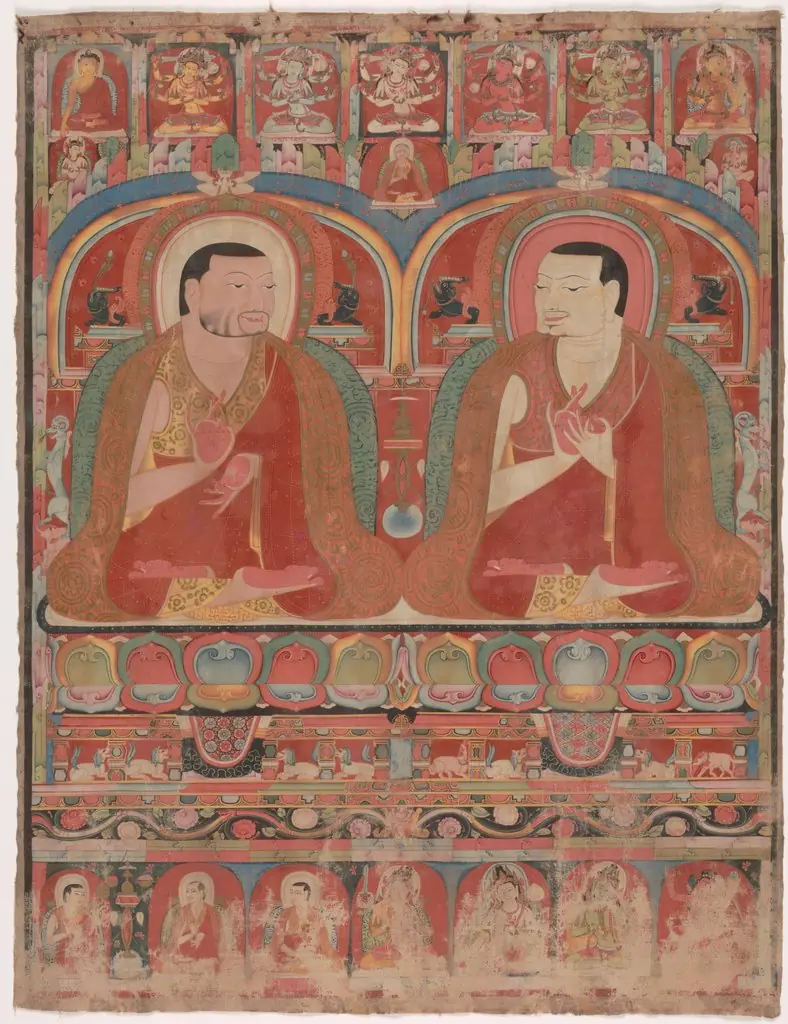 Portraits of Two Lineage Masters of the Kagyu Order: Phagmo Drupa (1110–1170) and Tashipel (1142–1210)
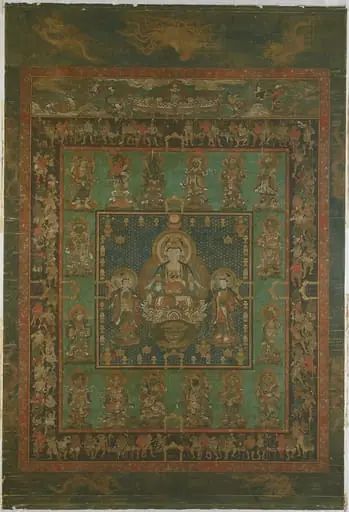 般若菩薩曼荼羅図|Mandala of the Bodhisattva Hannya (Prajnaparamita)
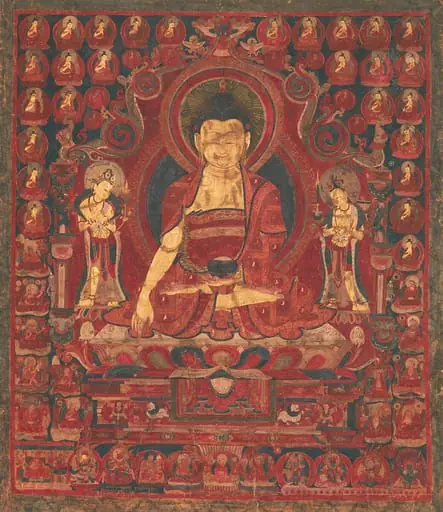 Untitled
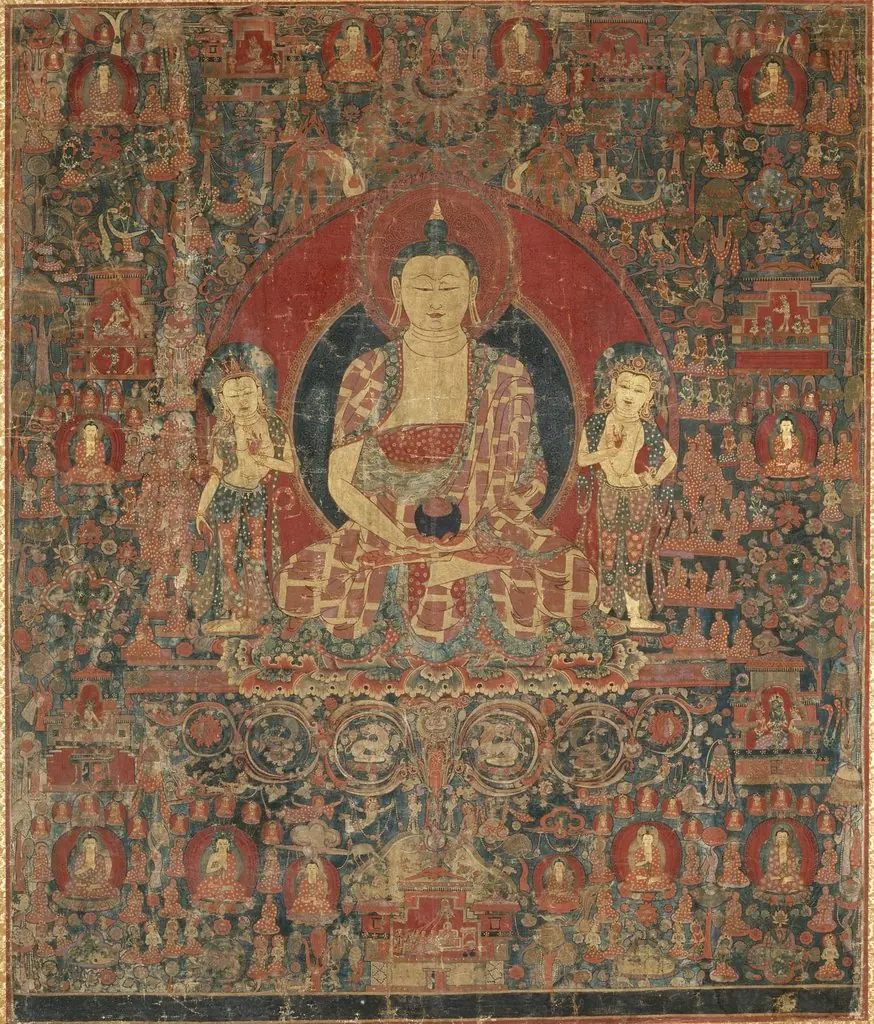 The Jina Buddha of Infinite Light (Amitabha) in His Pure Land Paradise (Sukhavati)
 Nagarjuna (c. 150–250 CE) with a Buddhist Master