Artwork
般若菩薩曼荼羅図|Mandala of the Bodhisattva Hannya (Prajnaparamita)
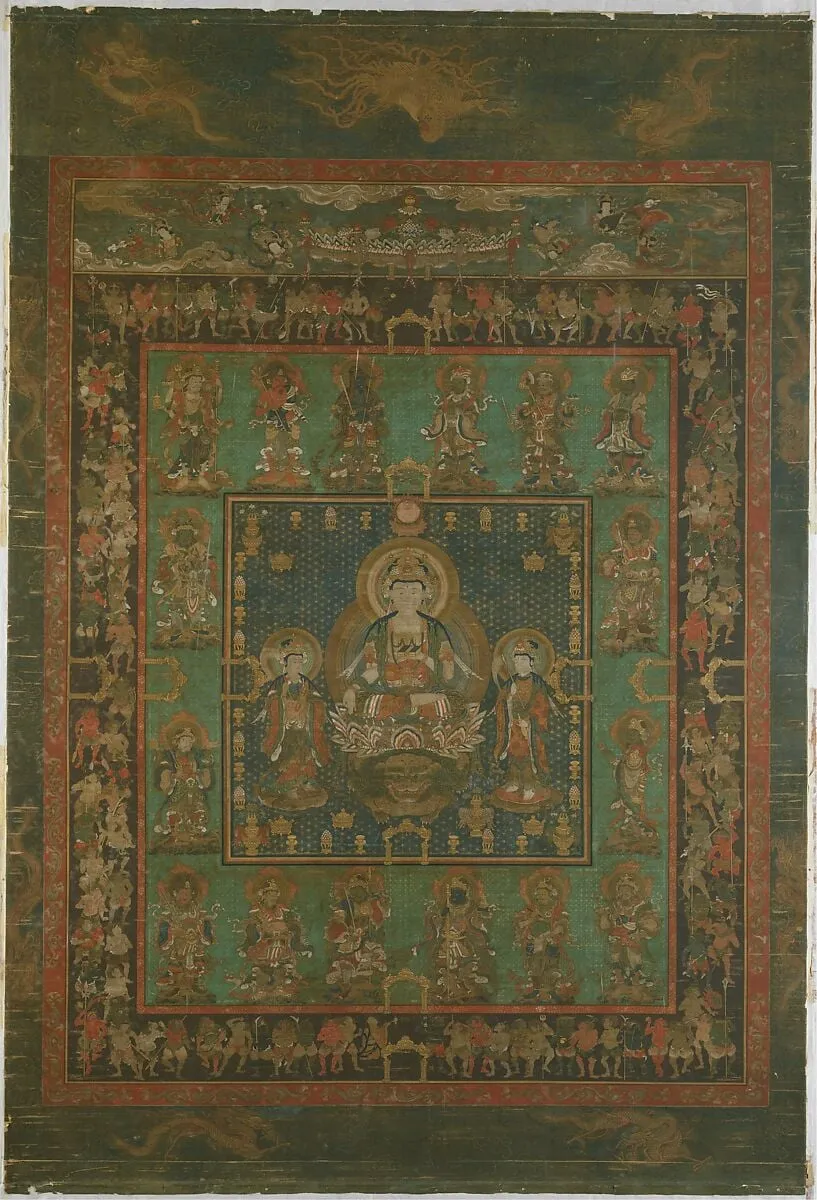
般若菩薩曼荼羅図|Mandala of the Bodhisattva Hannya (Prajnaparamita) is an oil painting. It dates from 1364 and is held in the collection of the Metropolitan Museum of Art.
About this work
Subject & Meaning
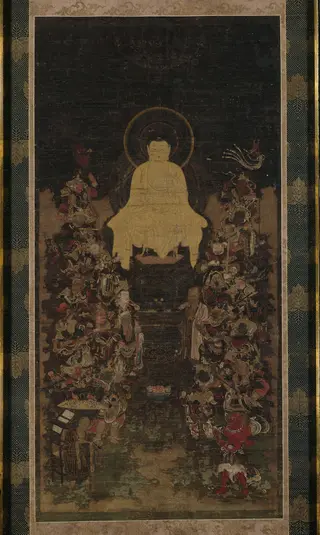
The composition integrates a complex hierarchy of supernatural beings, depicting the central deity alongside various other gods, demons, dragons, and musicians.
Created in 1364, this Japanese hanging scroll functions as a religious mandala centered on the Bodhisattva Hannya (Prajnaparamita). The composition integrates a complex hierarchy of supernatural beings, depicting the central deity alongside various other gods, demons, dragons, and musicians. As a mandala, the work serves as a visual map of the sacred realm, organizing these diverse figures to represent the cosmic order and the spiritual presence of the Bodhisattva of Transcendent Wisdom.
The inclusion of both protective and potentially malevolent entities, such as demons and dragons, alongside celestial musicians suggests a comprehensive depiction of the universe subject to the Bodhisattva's influence, characteristic of esoteric Buddhist iconography intended for ritual contemplation.
Technique & Style
Created in 1364 by an anonymous Japanese artist, this religious hanging scroll depicts the Bodhisattva Hannya alongside various deities, demons, dragons, and musicians. The work is executed on a silk support using ink and mineral colors. The artist employed gold and gold foil to enhance the composition, a technique characteristic of sacred imagery from this period.
As a painted mandala, the piece utilizes formal stylistic conventions appropriate for ritual devotion, integrating complex iconography within a vertical format designed for display. The combination of opaque pigments with reflective metallic elements creates a luminous surface intended to evoke the spiritual presence of the figures portrayed.
History & Provenance
The hanging scroll titled Mandala of the Bodhisattva Hannya (Prajnaparamita) was produced in Japan in 1364 by an anonymous painter. Executed in ink, color, gold and gold foil on silk, the work depicts a bodhisattva accompanied by demon, dragon and musician motifs. It is classified as a religious painting.
The piece entered the collection of the Metropolitan Museum of Art, where it remains on display. No record of a specific commission or earlier ownership chain is documented.
Context
The work titled 般若菩薩曼荼羅図|Mandala of the Bodhisattva Hannya (Prajnaparamita) is an anonymous 14th‑century Japanese hanging scroll painted in ink, color, gold and gold foil on silk. Executed in 1364, it belongs to the religious painting genre and depicts a bodhisattva alongside other Buddhist figures such as a deity, demon, dragon and musician. The piece is part of the Metropolitan Museum of Art’s collection and was created in Japan.
Its attribution to an unknown master reflects the collaborative nature of Buddhist visual culture in the Muromachi period, and its inclusion in a major museum has made it a reference point for scholars studying East Asian Buddhist iconography.
Overview
This hanging scroll, titled Mandala of the Bodhisattva Hannya (Prajnaparamita), is a Buddhist painting crafted with ink, color, gold, and gold foil on silk. It depicts a complex cosmic diagram intended as an aid for monastic meditation. The artwork features a central radiant circle populated by divine beings, mythical creatures, and musicians, all set against a luminous golden background. Its intricate composition and rich materials underscore its spiritual function.
Artist & collection

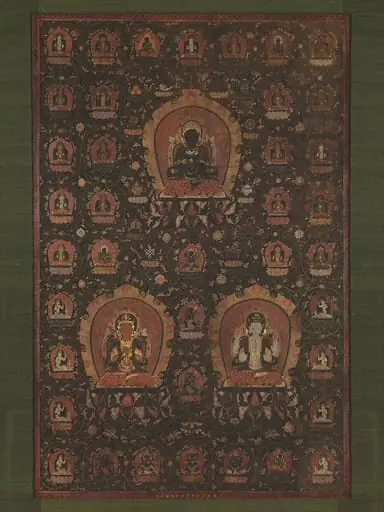
- 明 佚名 釋教三尊曼陀羅圖 軸|Mandala of Vajradhara, Manjushri and Sadakshari -Lokeshvara
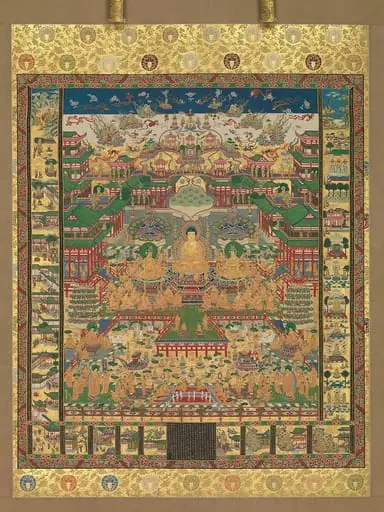 当麻曼荼羅|Taima Mandala
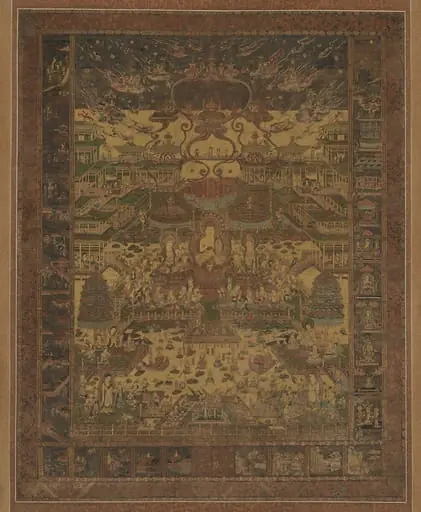 当麻曼荼羅図|Taima Mandala
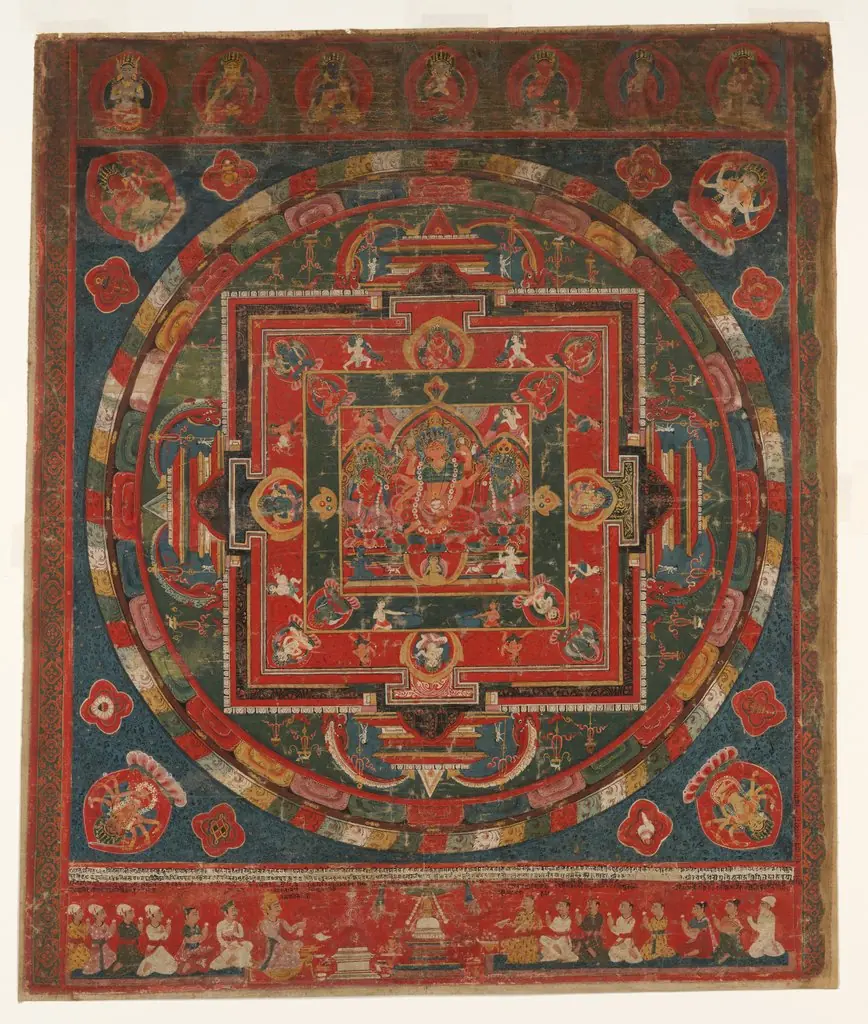 Vasudhara Mandala
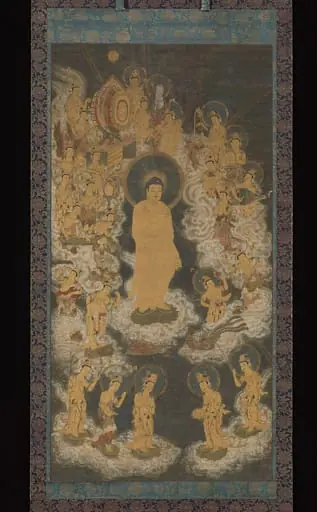 阿弥陀聖衆来迎図 |Welcoming Descent of Amida and Bodhisattvas
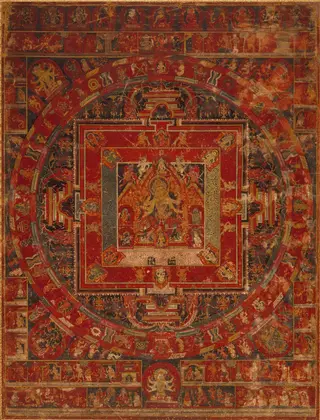 Mandala of Vasudhara
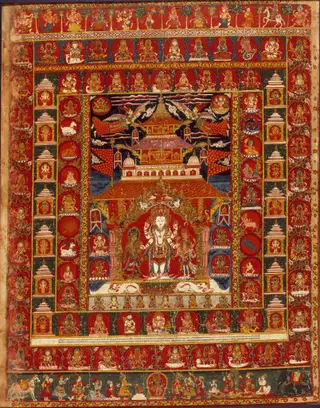 Mandala of Vishnu
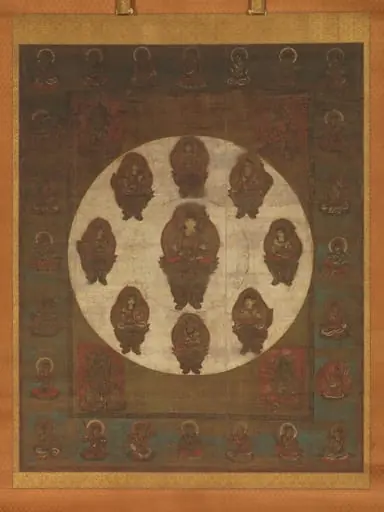 八字文殊曼荼羅図|Mandala of the Bodhisattva Monju (Manjushri) of the Eight Syllables
 The Buddha Preaching the “Perfection of Wisdom” (Prajnaparamita) Sutra