Artwork
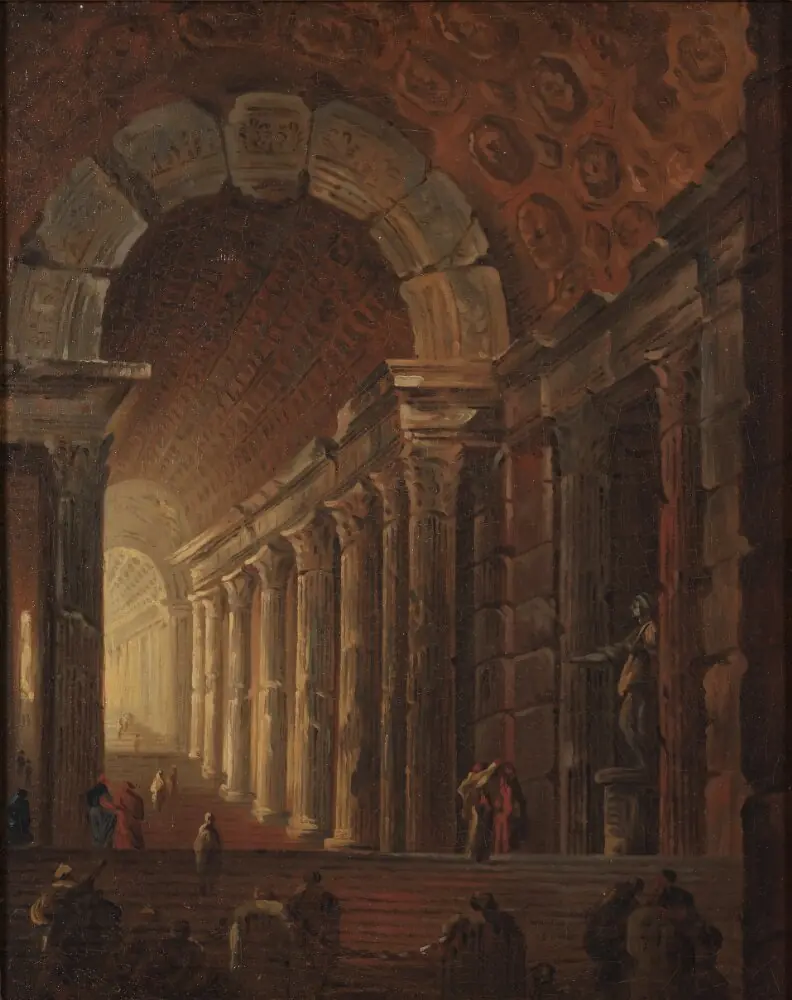
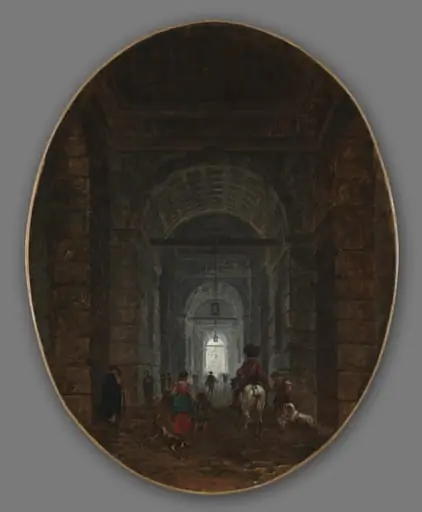
The Colonnade of St. Peter's, Rome, during the Conclave
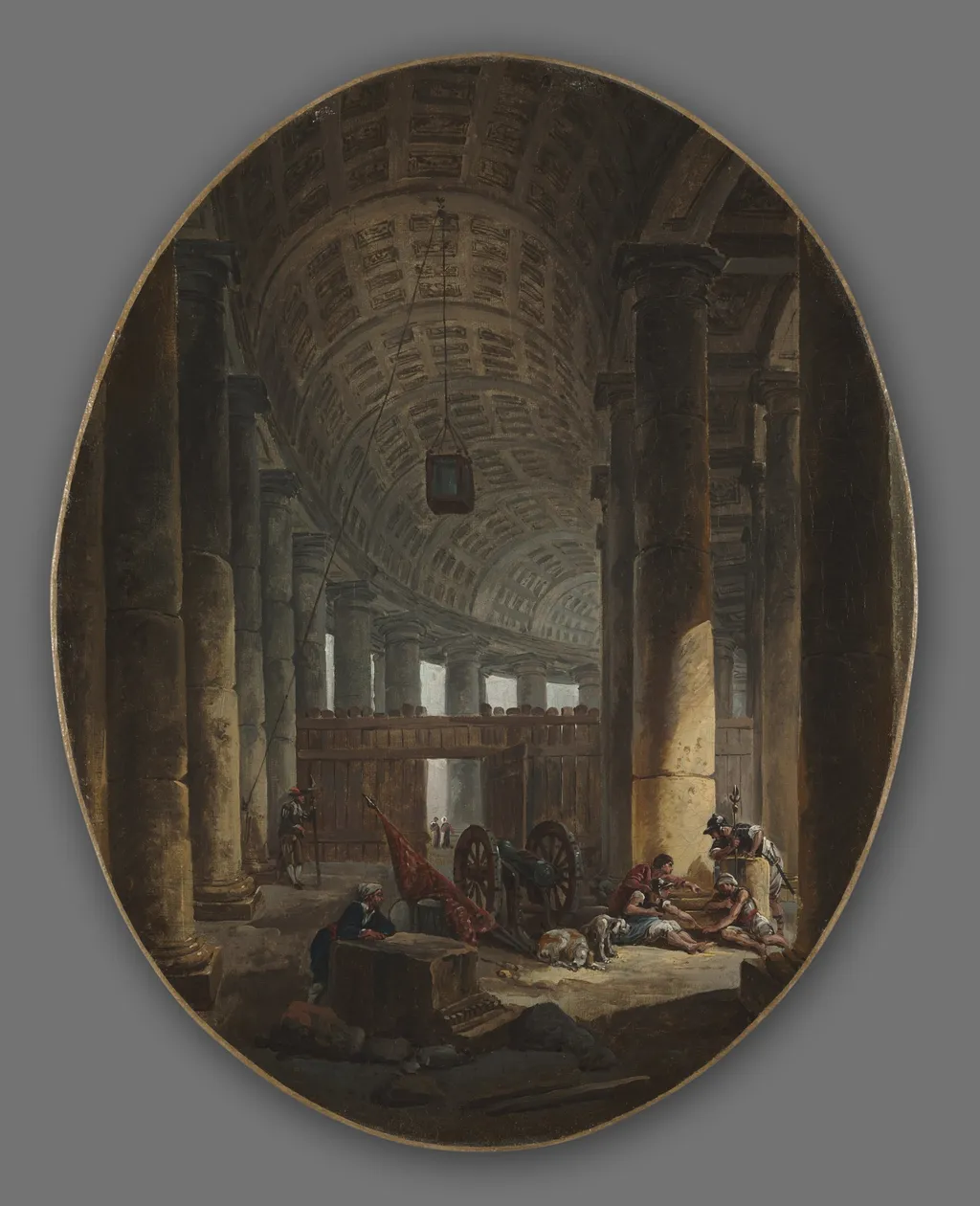
The Colonnade of St. Peter's, Rome, during the Conclave is an oil painting by the Rococo painting artist Hubert Robert. It dates from 1769 and is held in the collection of the Cleveland Museum of Art.
About this work
Subject & Meaning
The composition emphasizes the architectural grandeur of the church and the solemnity of the electoral process.
Depicts the colonnade of St. Peter's Basilica in Rome during a papal conclave, showing cardinals gathered beneath the arcade. The composition emphasizes the architectural grandeur of the church and the solemnity of the electoral process. Hubert Robert's 1769 painting captures the moment with a focus on light filtering through the arches.
The work uses the colonnade as a setting for the ceremony of selecting a new pope. The painting is part of the Cleveland Museum of Art collection.
Technique & Style
The Colonnade of St. Peter's, Rome, during the Conclave is executed in oil paint on canvas. The work is relatively modest in scale, measuring 42.6 cm in height by 33.4 cm in width, a cabinet-picture format suited to detailed architectural observation. Classified as an interior view, the painting focuses on the curving colonnade of St. Peter's Basilica as a setting for human activity during a papal conclave, a subject that allowed the artist to combine topographical accuracy with anecdotal figures.
The oil medium permitted careful rendering of stone surfaces, shadowed arcades, and the play of light across Bernini's columns, consistent with Hubert Robert's known handling of architectural subjects.
History & Provenance
Hubert Robert executed The Colonnade of St. Peter's, Rome, during the Conclave in 1769. Although the subject is a Roman architectural feature, the work was produced in France as an oil painting on canvas measuring 42.6 by 33.4 cm. The artwork entered the collection of the Cleveland Museum of Art, where it is catalogued under accession number 1976.97.1. No details regarding the original commissioner or the chain of ownership between its creation and its acquisition are provided in the available records, and no specific exhibition history is documented.
Overview
Hubert Robert, a French artist, completed The Colonnade of St. Peter's, Rome, during the Conclave in 1769. This oil painting exemplifies his characteristic blend of architectural representation and imaginative composition. The work depicts a grand, yet somewhat altered, view of the famous Roman landmark, rendered with the delicate brushwork and atmospheric qualities typical of the Rococo period. It is currently part of The Cleveland Museum of Art's collection.
Context
Hubert Robert was a prominent figure in 18th-century French art, often associated with the emerging Romantic movement. He gained renown for his landscape paintings and his distinctive capricci, which presented picturesque visions of ancient ruins and grand architectural settings. His works frequently explored the interplay between human presence and monumental structures, imbuing historical sites with a sense of both grandeur and transient human activity.
Own this work as a print
Artist & collection
Artist
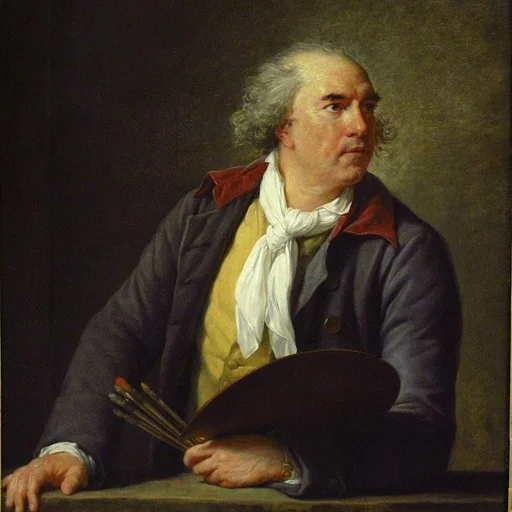
Hubert Robert (French pronunciation:; 22 May 1733 – 15 April 1808) was a French painter in the school of Romanticism, noted especially for his landscape paintings and capricci, or semi-fictitious picturesque depictions of ruins in Italy…