Artwork
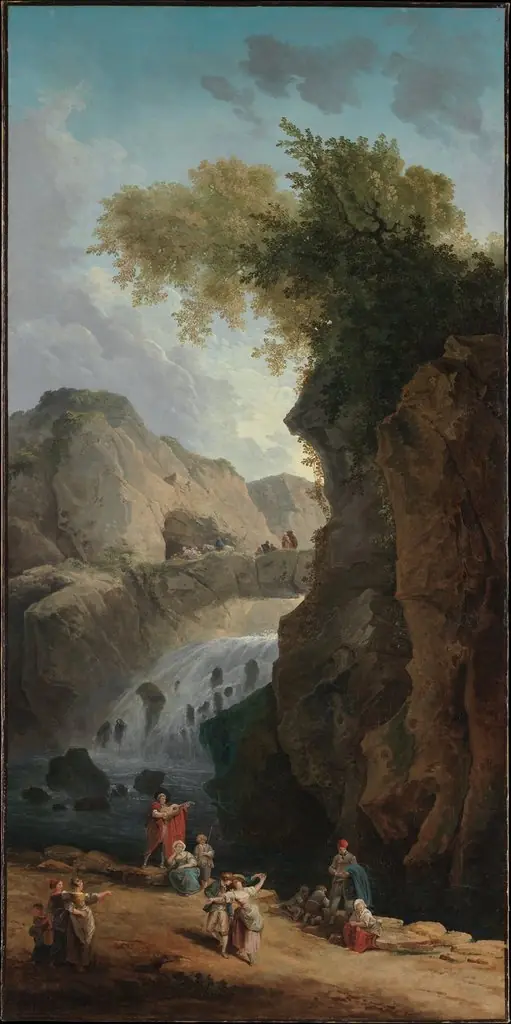
The Grotto of Posillipo
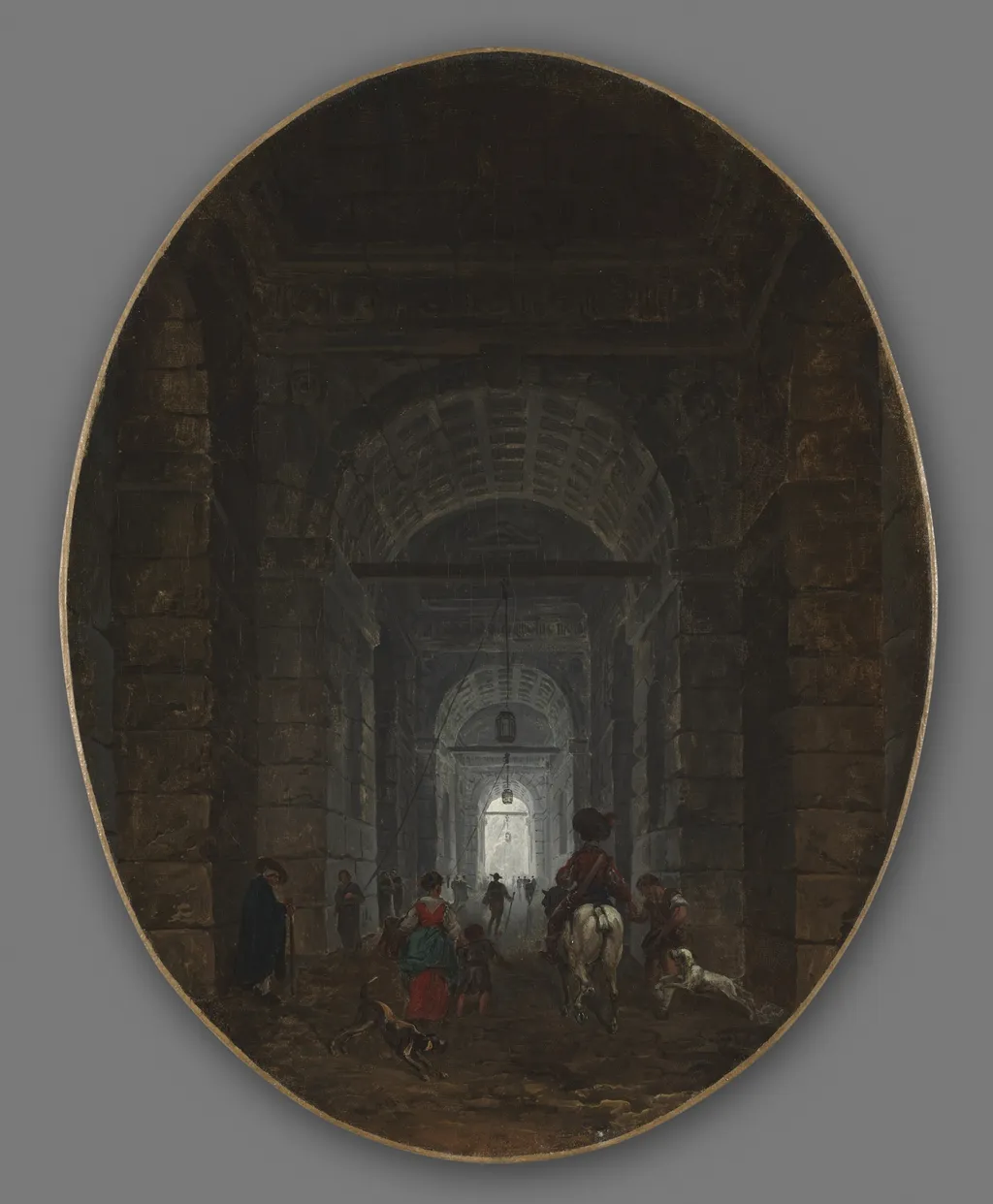
The Grotto of Posillipo is an oil painting by the Rococo painting artist Hubert Robert. It dates from 1769 and is held in the collection of the Cleveland Museum of Art.
About this work
Technique & Style
The painting exemplifies Robert's characteristic approach to landscape, blending architectural elements with natural scenery in a manner typical of his vedute.
The Grotto of Posillipo is an oil painting on canvas measuring 42.6 by 33.4 cm. Hubert Robert executed the work in 1769, employing oil paint as his medium with canvas as the support. The painting exemplifies Robert's characteristic approach to landscape, blending architectural elements with natural scenery in a manner typical of his vedute. The relatively modest dimensions suggest an intimate format that concentrates the viewer's attention on the dramatic interplay of light and shadow within the grotto space, a compositional strategy consistent with his broader body of work.
History & Provenance
Hubert Robert painted The Grotto of Posillipo in France in 1769, creating an oil on canvas work measuring 42.6 by 33.4 centimeters. The painting entered the collection of the Cleveland Museum of Art, where it remains held today.
Hubert Robert painted The Grotto of Posillipo in 1769. The work is part of the Cleveland Museum of Art's collection, cataloged under inventory number 1976.97.2. It was created in France using oil paint on canvas, measuring 42.6 cm in height and 33.4 cm in width.
The painting was accessioned on January 17, 1769, and has remained in the museum's holdings since its acquisition.
The work is documented in the Cleveland Museum of Art's records as part of their permanent collection, with no further exhibition history noted in the provided sources.
Context
Hubert Robert (1733-1808) painted The Grotto of Posillipo in 1769, a work exemplifying his fascination with picturesque landscapes and antiquarian subjects. Executed in oil on canvas, the painting measures 42.6 cm in height by 33.4 cm in width and was created in France, reflecting the artist's engagement with French artistic traditions during the late 18th century. The work is held by the Cleveland Museum of Art, which contextualizes it within Robert's broader oeuvre focused on evocative natural and archaeological scenes.
Overview
Hubert Robert’s The Grotto of Posillago, executed in oil in 1769, presents a dimly lit, vaulted stone passage populated by figures, a horse, and scattered dogs and children. The composition draws the viewer’s eye toward a luminous aperture at the far end, creating a sense of depth within the confined space. The work is part of the Cleveland Museum of Art’s collection.
Subject & Meaning
The painting depicts a semi‑fictional grotto, a common Romantic motif that blends natural ruin with human activity. A crowd gathers near the entrance and around a mounted rider, suggesting a moment of travel or pilgrimage within an ancient, weathered setting. The juxtaposition of lively figures against the austere architecture evokes the tension between civilization and the sublime forces of nature.
Own this work as a print
Artist & collection
Artist
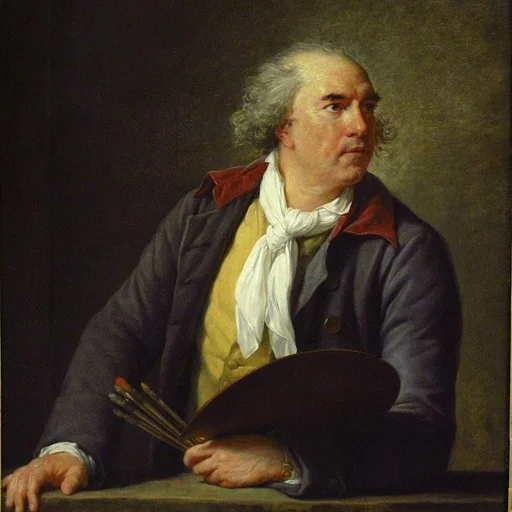
Hubert Robert (French pronunciation:; 22 May 1733 – 15 April 1808) was a French painter in the school of Romanticism, noted especially for his landscape paintings and capricci, or semi-fictitious picturesque depictions of ruins in Italy…

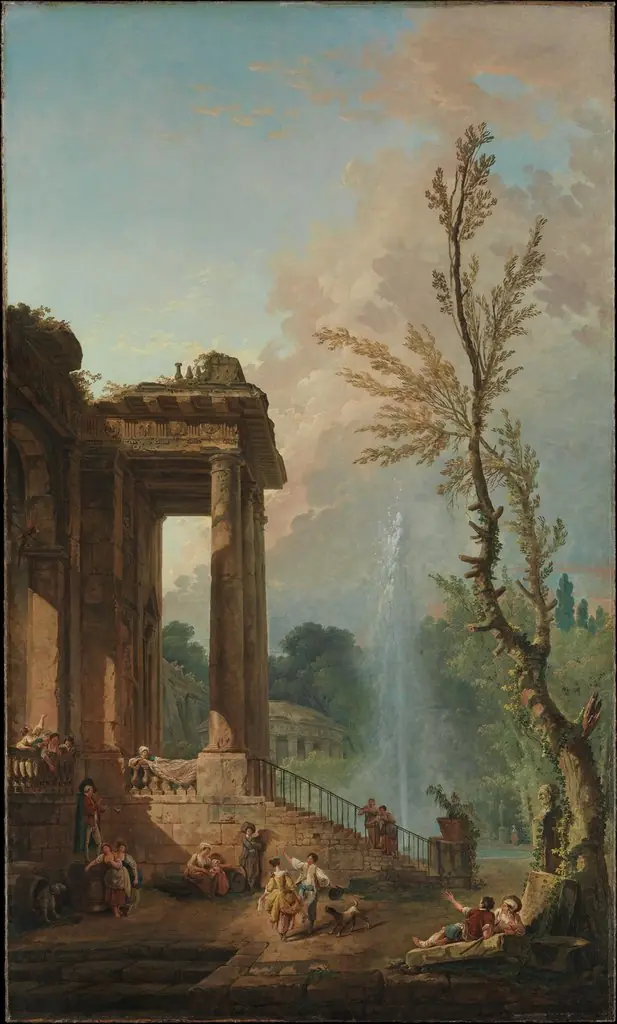
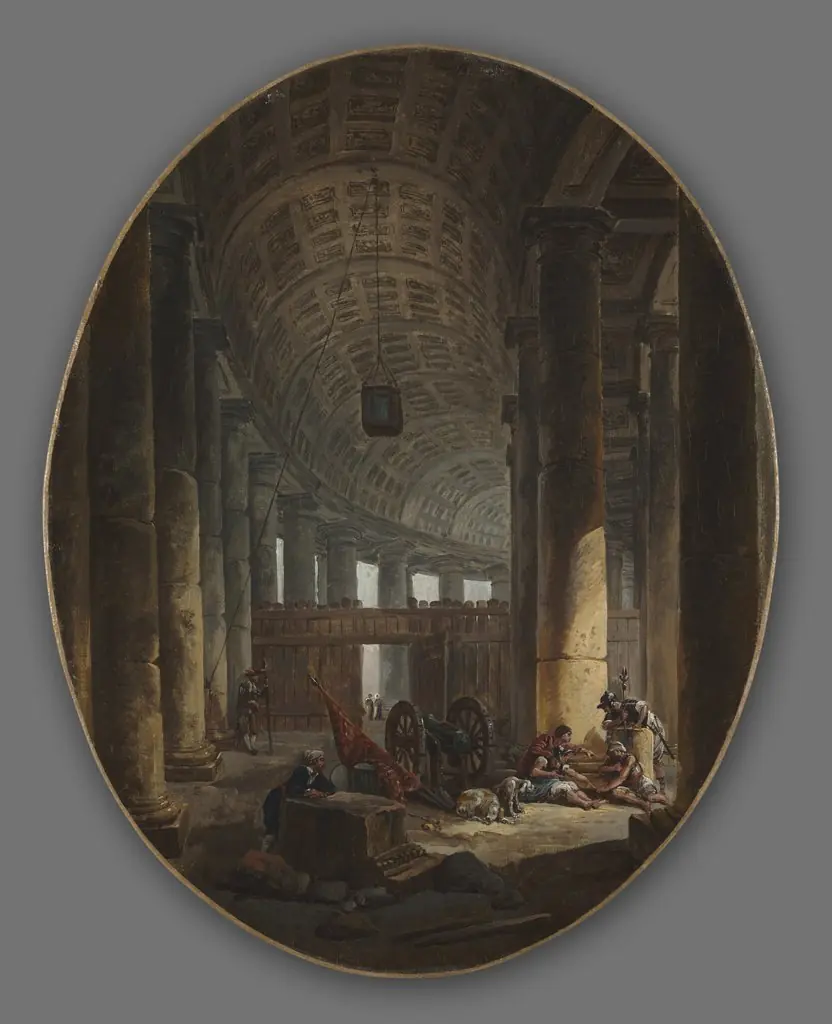
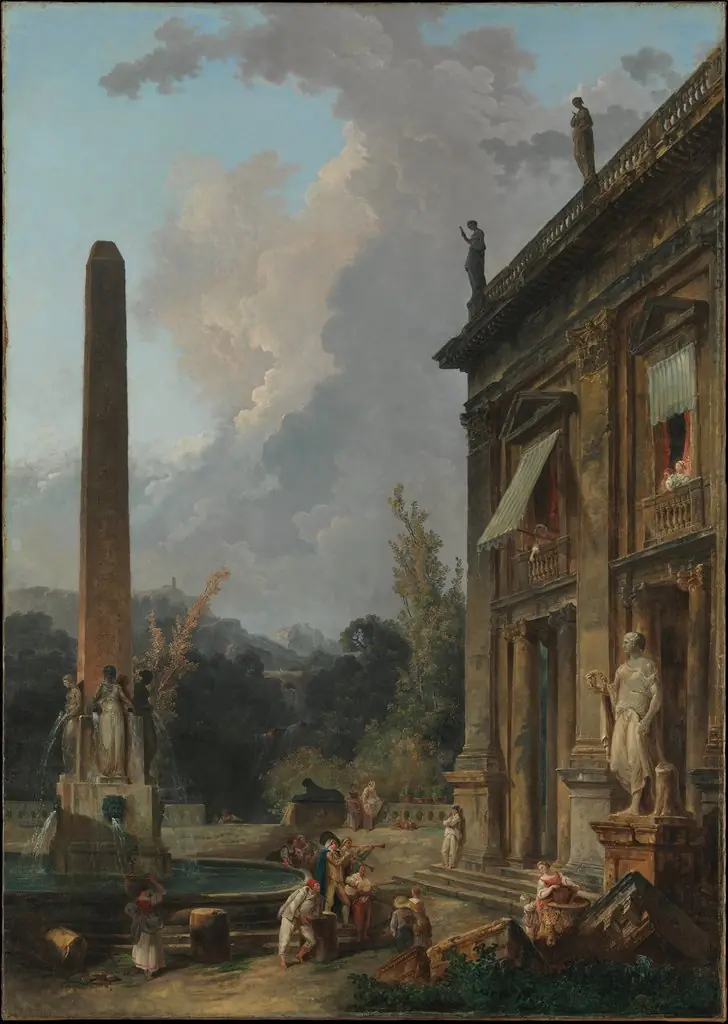
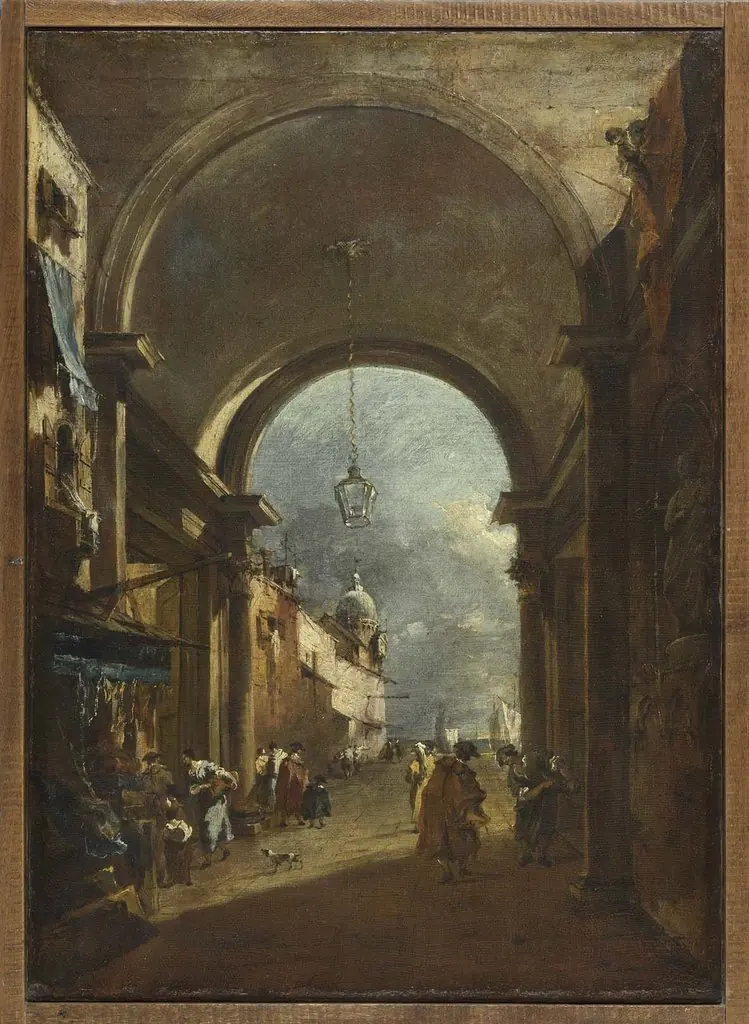 Tordurchblick
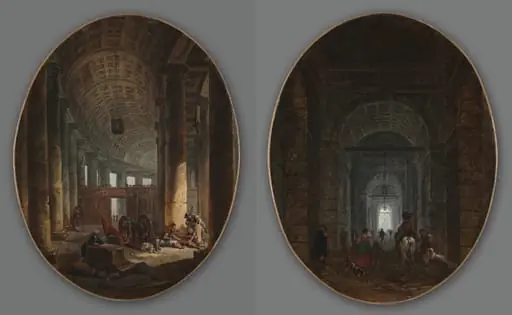 Pair of Paintings: The Colonnade of St. Peter's, Rome, during the Conclave and The Grotto of Posillipo
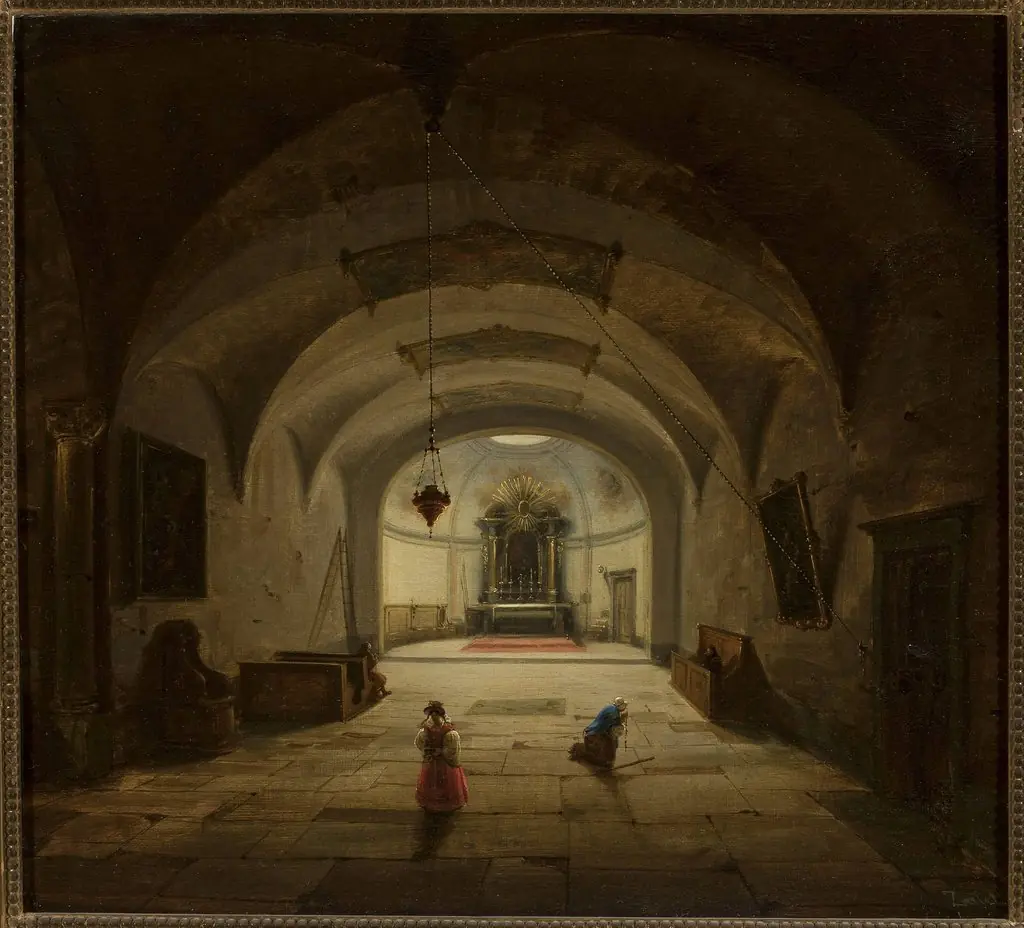 Interior of the subterranean chapel
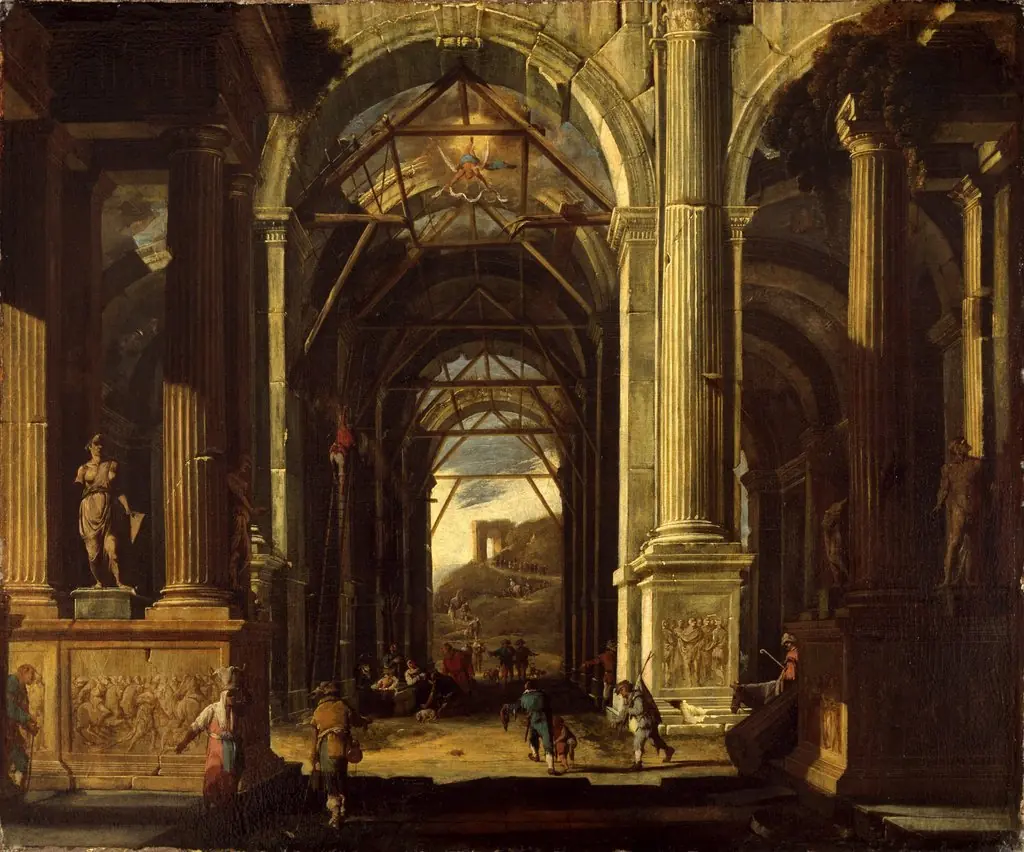 The Adoration of the Shepherds
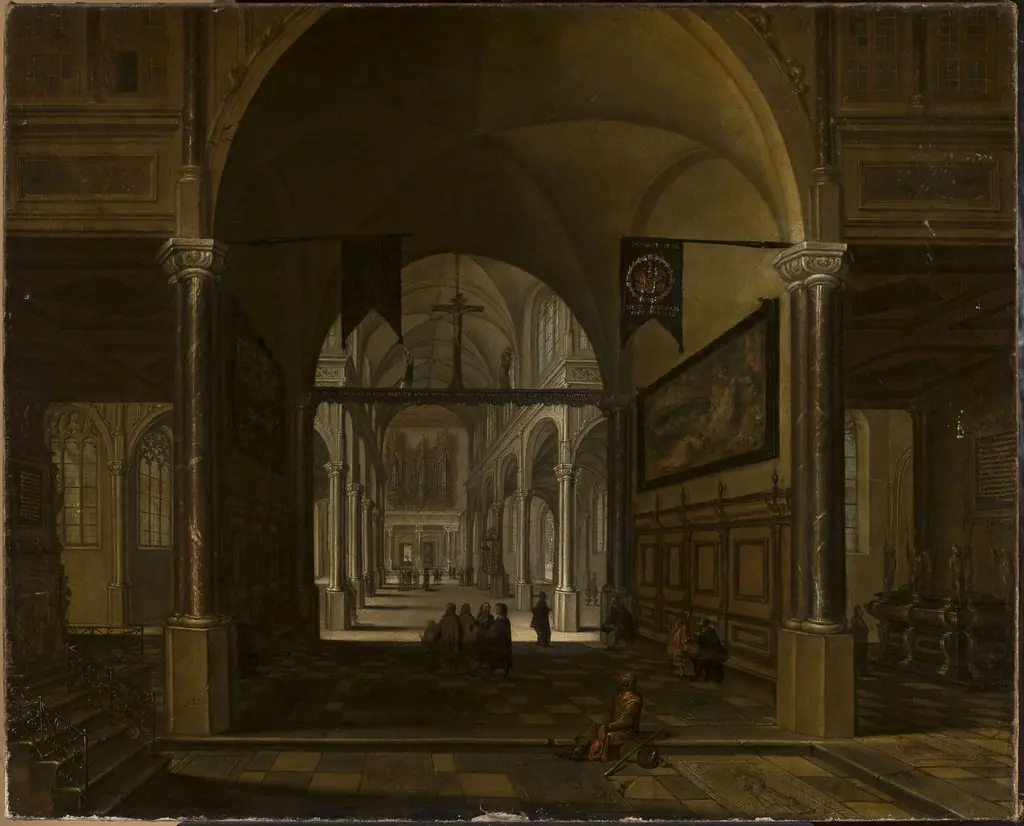 Church interior
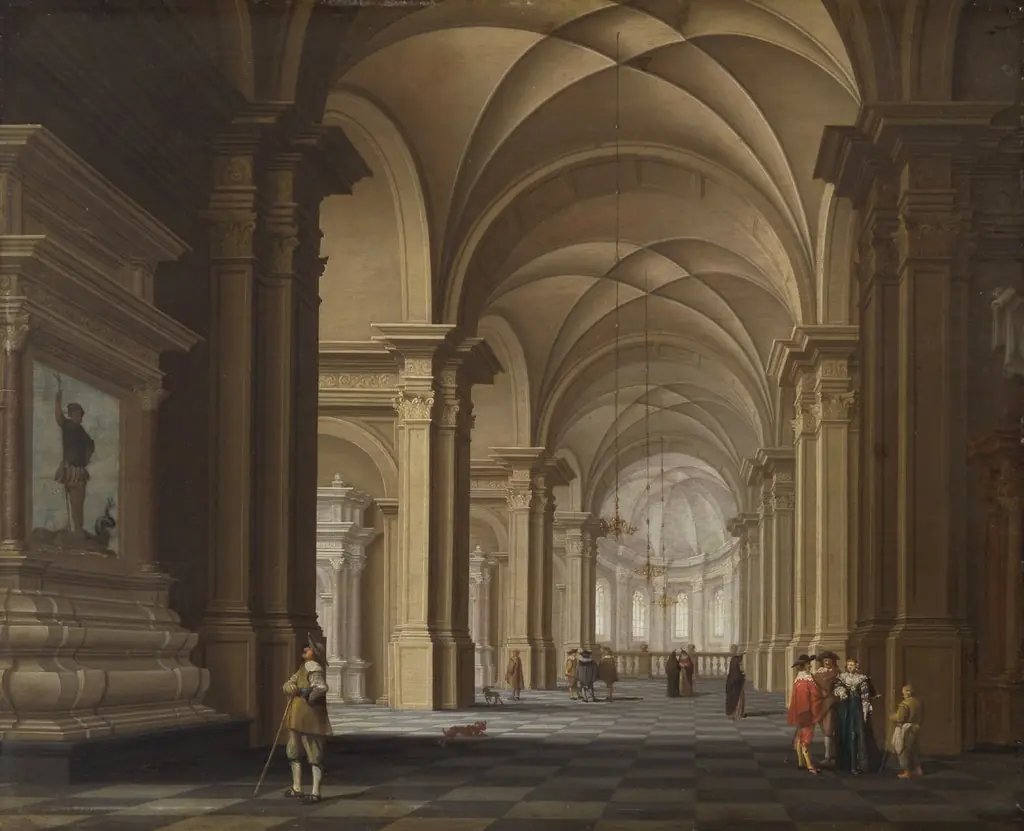 Inneres einer gotischen Kirche
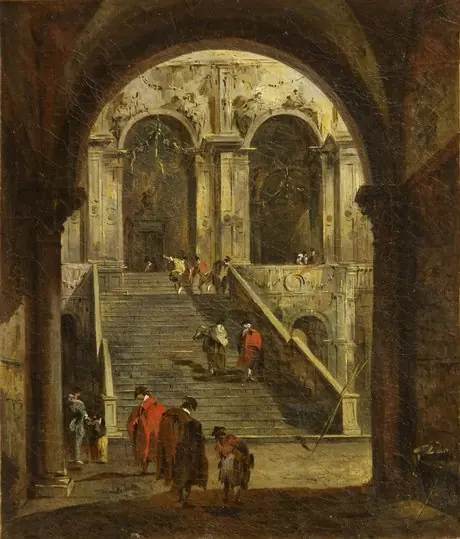 Yard
Yard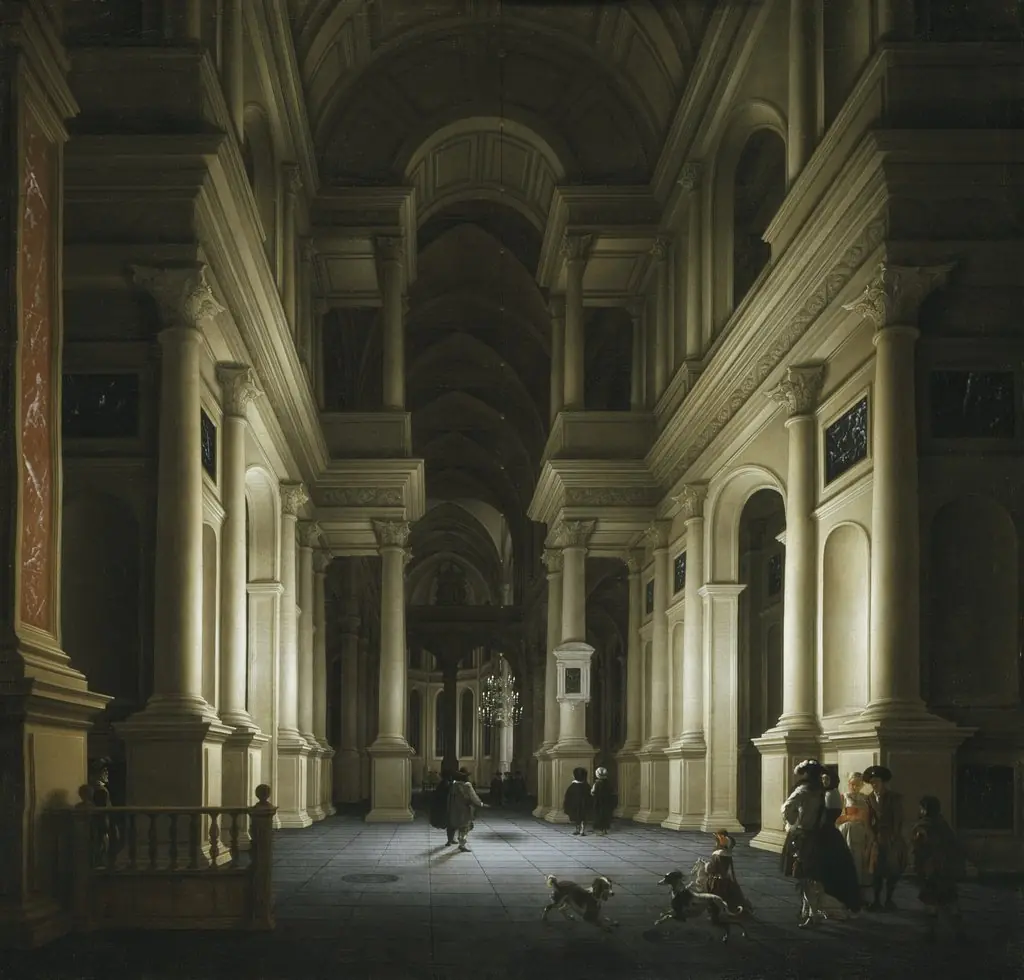 Interior of a Church at Night
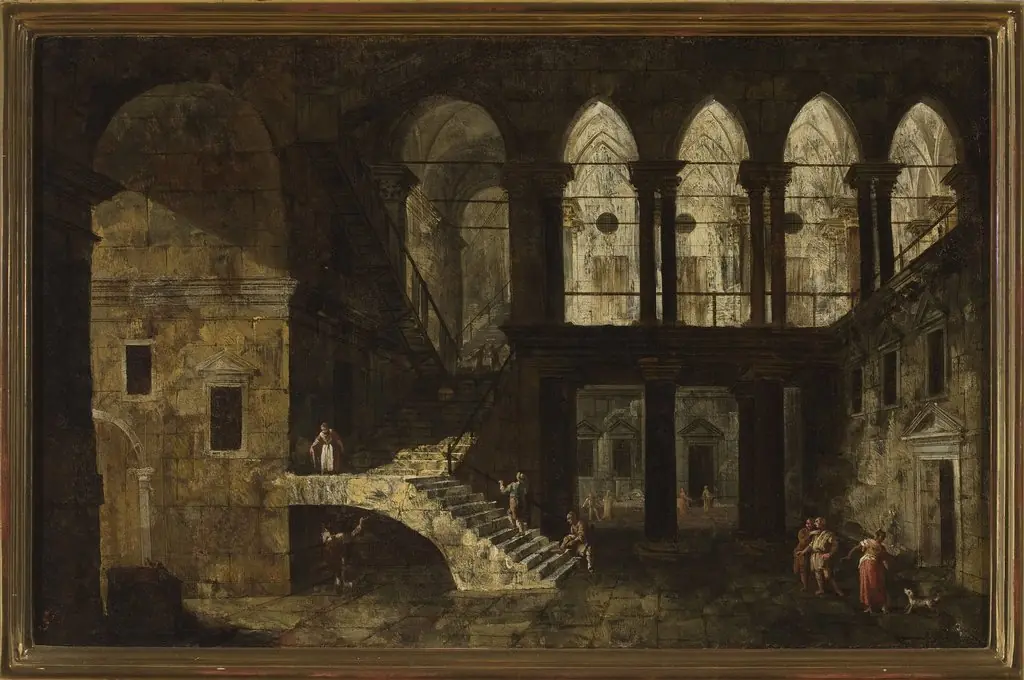 Architectural fantasy featuring a palace courtyard
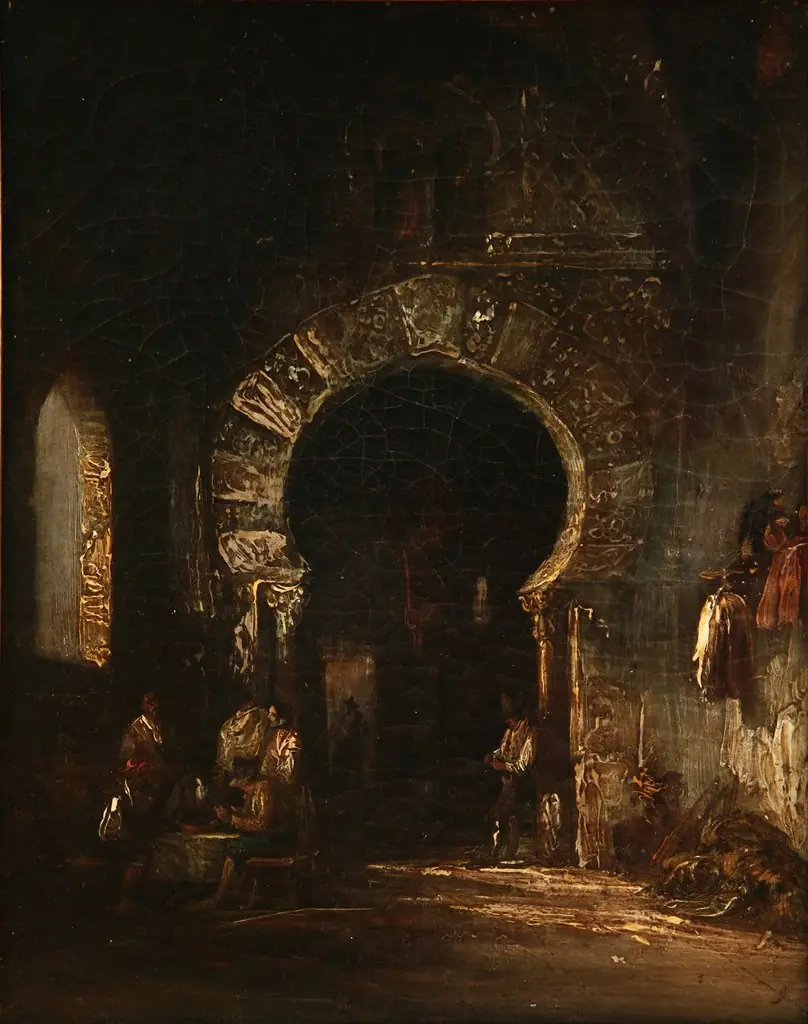 Puerta arabe (Fantasía sobre la Puerta de del Sol en Toledo)
- The Grotto of Posillipo