Artwork
Salmon netting in Wales
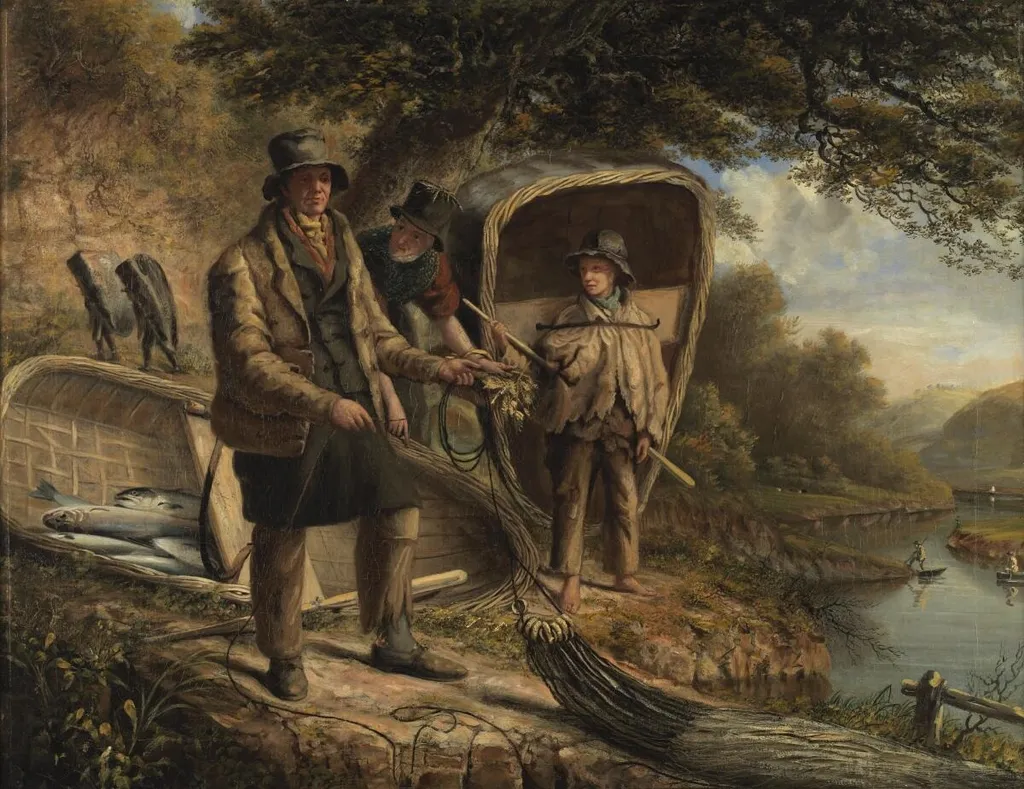
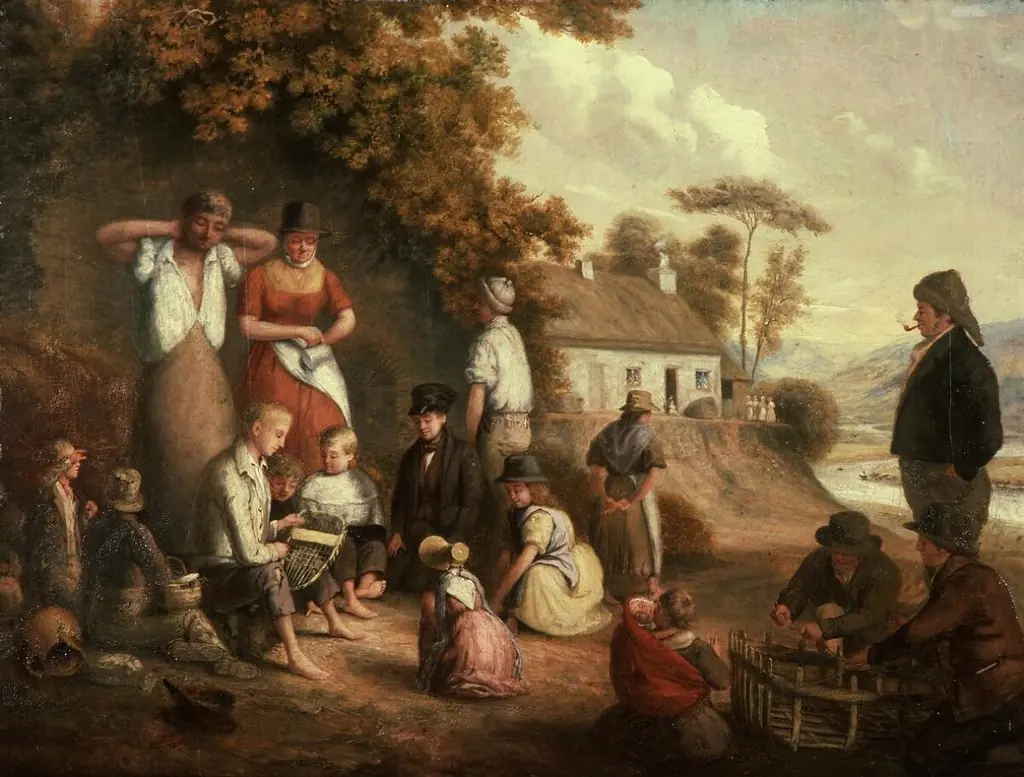
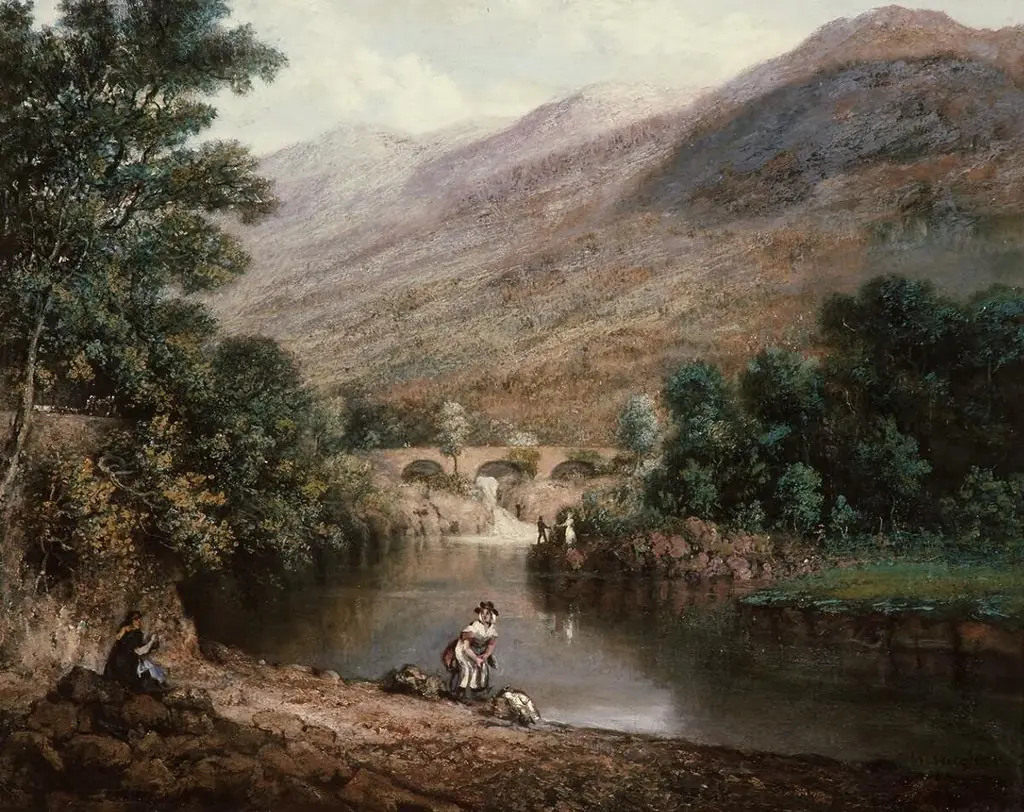
Salmon netting in Wales is an oil painting by the British Romanticist artist Hugh Hughes. It dates from 1840 and is held in the collection of the National Library of Wales.
About this work
Subject & Meaning
As a landscape genre work, it represents the traditional methods of harvesting fish in Wales during the early nineteenth century.
The painting depicts the practical activity of salmon fishing in a Welsh river setting. The composition centers on the main subject of fishing, illustrating the use of a coracle and nets to catch salmon. Visual elements include the river, fish, and the fisher engaged in the work.
As a landscape genre work, it represents the traditional methods of harvesting fish in Wales during the early nineteenth century.
Technique & Style
The work is executed in oil paint on a canvas support, a medium typical of 19th‑century British landscape painting. Measuring 69.5 cm in height and 88.5 cm in width, it presents a detailed depiction of a fishing scene on a river, showing salmon, a coracle, and a fisherman. The landscape genre and the specific subject matter indicate a straightforward, representational approach characteristic of Hughes’s oil technique.
History & Provenance
The painting Salmon netting in Wales was created by Hugh Hughes in 1840, as indicated by both the artist’s record and the work’s cataloguing.
It entered the collection of the National Library of Wales as part of its framed works of art holdings. The painting was purchased by the library in 1990 at Christie’s, where it was accessioned under number PG01765.
The painting is held in the collection of the National Library of Wales, specifically within its Framed works of art collection. It was acquired by the institution in 1990 through a purchase at Christie's auction house. The work is cataloged under the accession number PG01765.
No specific exhibition history for this artwork is provided in the available sources.
Legacy
Salmon netting in Wales by Hugh Hughes exerted quiet influence on British landscape painting through its precise depiction of riverine fishing life. The work shaped later artists' approaches to coastal subjects, particularly in Wales, where its focus on traditional salmon weirs became a reference point for documenting vanishing rural practices. Its legacy persists in regional art education, where the painting is cited as an early example of socially conscious landscape representation that prioritized working-class maritime economies.
The National Library of Wales' acquisition cemented its status as a key document of 19th-century Welsh material culture, though its technical innovation in rendering water movement influenced only a small circle of contemporaries.
Overview
Hugh Hughes’s oil painting, Salmon netting in Wales, was completed in 1840. The work portrays a riverside scene where three figures in heavy outerwear attend to a fishing operation using a coracle, a traditional round boat. The composition includes a muddy riverbank, distant hills, and vegetation, all rendered in a muted palette that emphasizes the laborious atmosphere of the activity.
Context
In the early Victorian period, depictions of rural labor were common in British art, reflecting both romantic interest in the countryside and a growing awareness of social conditions. Hughes’s focus on a coracle, a uniquely Welsh vessel, situates the work within a broader narrative of national identity and the documentation of local customs.

Artist & collection