Artwork
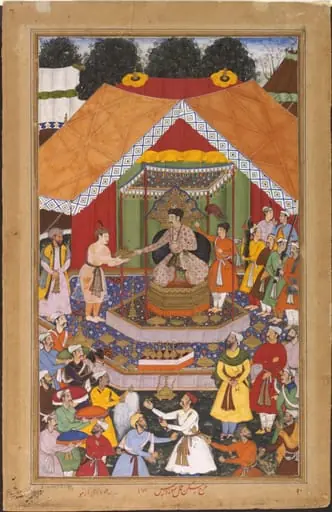
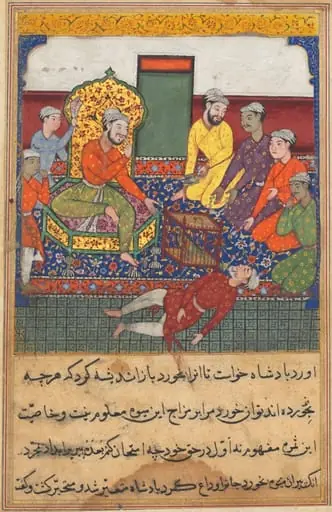
Hulagu Khan giving a feast and dispensing favor upon the amirs and princes, from a Chingiz-nama (Book of Chingiz Khan) of the Jami al-tavarikh (Compendium of Chronicles)
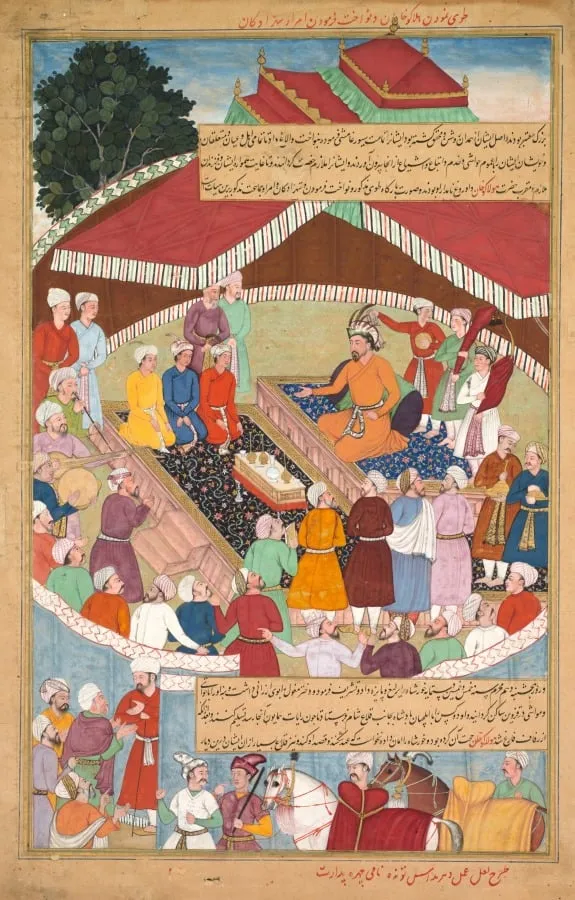
Hulagu Khan giving a feast and dispensing favor upon the amirs and princes, from a Chingiz-nama (Book of Chingiz Khan) of the Jami al-tavarikh (Compendium of Chronicles) is an unspecified painting by the Mughal Painting artist Lal. It dates from 1598 and is held in the collection of the Cleveland Museum of Art.
- Accession no.
- 2013.304
- Credit line
- Gift in honor of Madeline Neves Clapp; Gift of Mrs. Henry White Cannon by exchange; Bequest of Louise T. Cooper; Leonard C. Hanna Jr. Fund; From the Catherine and Ralph Benkaim Collection
About this work
Overview
This painting depicts Hulagu Khan, grandson of Genghis Khan, hosting a feast for amirs and princes, set amidst the portable luxury of a Mongol court. It originates from an illustrated Jami al-tavarikh (Compendium of Chronicles), specifically a Chingiz-nama (Book of Chingiz Khan), commissioned by Mughal Emperor Akbar.
Subject & Meaning
The scene showcases Hulagu Khan’s authority as he dispenses gifts to nobles, underscored by his seating on a lapis-blue floral carpet and the imperial crimson canopies above. The painting highlights the Mongol tradition of creating opulent, portable court settings, blending mobility with regal presence.
Technique & Style
The artwork blends Persian and Indian artistic influences, characteristic of Mughal-era illustrations. Vibrant colors, such as the lapis-blue carpet and crimson canopies, define the composition, while the crowded yet orderly depiction of the feast reflects the meticulous detail common in Mughal miniatures.
History & Provenance
Commissioned by Emperor Akbar in the late 16th century, this painting is part of a larger historical text tracing the lineage of Chingiz Khan, from whom Akbar claimed maternal descent. The work is thus both a historical record and a testament to Akbar’s genealogical pride.
Context
Created for Akbar’s court, the painting reflects the Mughal Empire’s cultural synthesis, where Mongol heritage (via the term ‘Mughal’, meaning ‘Mongol’) merged with Persian and Indian artistic traditions. The portable court setting depicted also alludes to the nomadic roots of Mongol rulers.
Legacy
As part of Akbar’s commissioned histories, this painting contributes to the visual and historical legacy of the Mughal Empire, illustrating both the empire’s artistic achievements and its claimed lineage to the Mongol conquerors. It remains a significant example of Mughal illustrated manuscripts.
Artist & collection

 Untitled
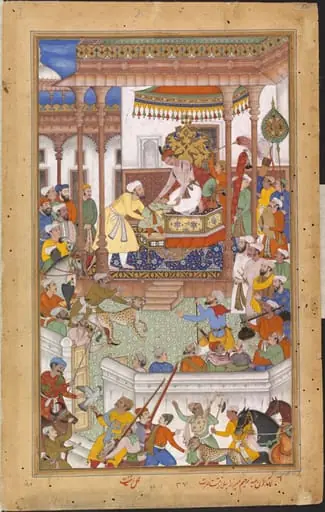
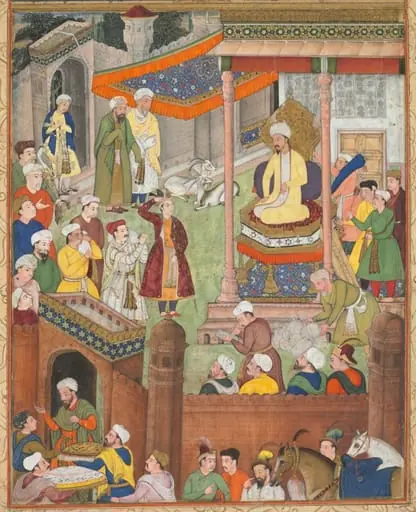 Babur receives booty and Humayun’s salute after the victory over Sultan Ibrahim in 1526, from an Akbar-nama (Book of Akbar) of Abu’l Fazl (Indian, 1551–1602)
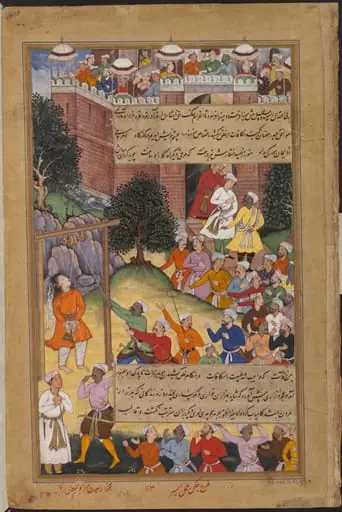
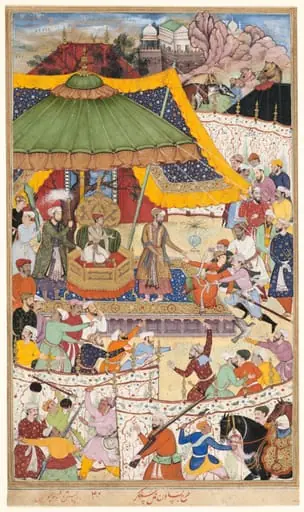 The Young Emperor Akbar Arrests the Insolent Shah Abu’l-Maali, Page from a Manuscript of the Akbarnama
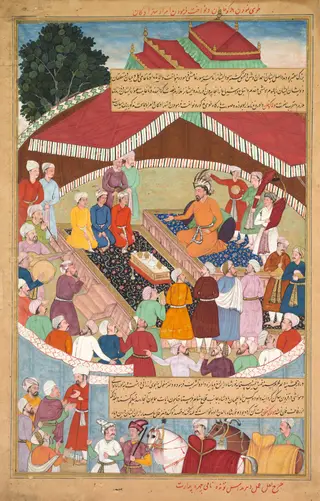 Hulagu Khan giving a feast and dispensing favor upon the amirs and princes, from a Chingiz-nama (Book of Chingiz Khan) of the Jami al-tavarikh (Compendium of Chronicles)
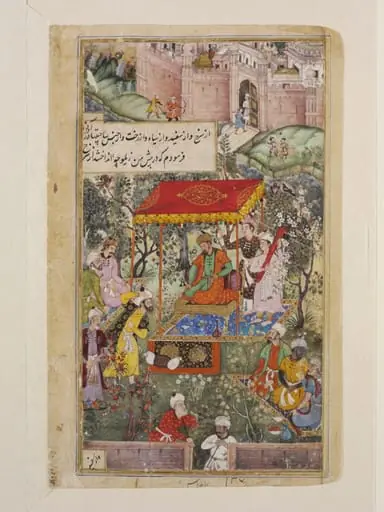
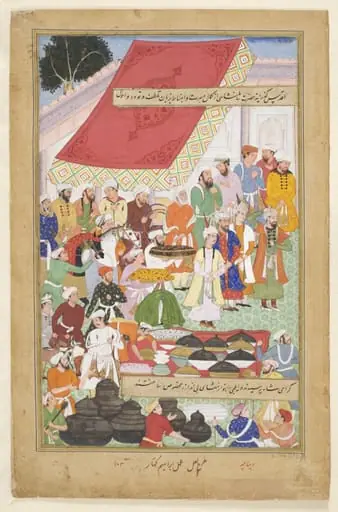 Akbar Receives the Iranian Ambassador Sayyid Beg in 1562
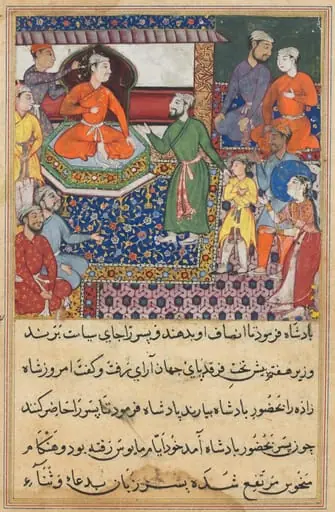 The handmaiden again pleads for the death of the prince, from a Tuti-nama (Tales of a Parrot): Eighth Night
 The old man eats of the fruit of the Tree of Life, but drops dead, from a Tuti-nama (Tales of a Parrot): Ninth Night