Artwork
The Temple of Hera at Paestum, Italy
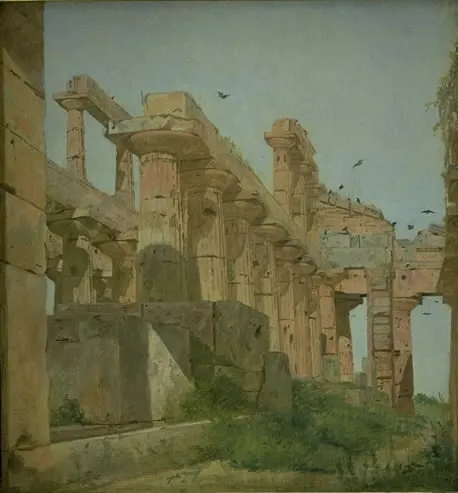
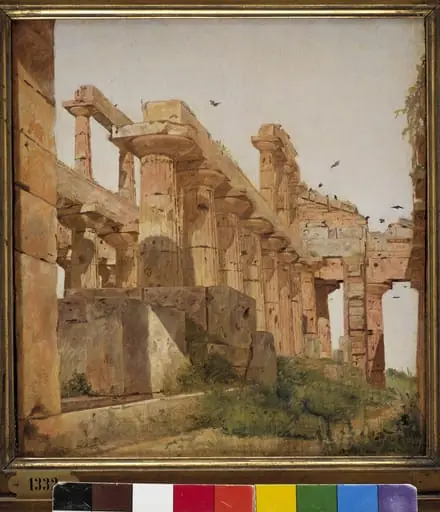
The Temple of Hera at Paestum, Italy is an unspecified painting by the German Romanticist artist Jørgen Roed. It dates from 1838 and is held in the collection of the Statens Museum for Kunst.
About this work
The way the light hits the stones makes some parts look worn and others slightly brighter.
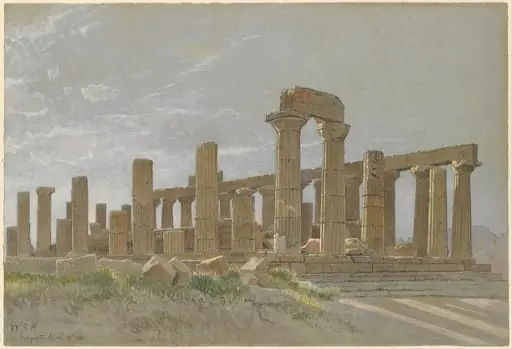
This painting shows broken stone columns and crumbling walls. The ruins are in earthy browns and grays, with patches of green grass at the base. A few birds fly above the scattered pieces, and the sky is a soft, pale blue.
The artist painted these ruins in 1838, long after they were abandoned. The way the light hits the stones makes some parts look worn and others slightly brighter.
Look up ruins to see how they’ve inspired other artists over time.
Overview
Painted in 1838 by Danish artist Jørgen Roed, this work captures the ancient Temple of Hera in Paestum, southern Italy. Though Roed was primarily known for portraiture and domestic scenes, this landscape reflects his engagement with classical ruins during a period of heightened interest in antiquity. The painting is part of the Statens Museum for Kunst collection in Copenhagen, representing a moment when Nordic artists traveled to Mediterranean sites to study and record historical remains.
Subject & Meaning
The painting presents the temple not as a grand monument but as a quiet, weathered relic. Crumbling columns and fragmented walls suggest the passage of time and the inevitability of decay. The absence of human figures emphasizes solitude and contemplation.
The scene evokes a sense of historical memory, inviting viewers to reflect on the endurance and erosion of civilization, themes central to Romantic sensibilities of the era.
Technique & Style
Roed employed muted earth tones, browns, grays, and soft greens, to convey the texture of aged stone and overgrown vegetation. Light falls gently across the ruins, highlighting surface irregularities and casting subtle shadows that enhance the sense of depth and material wear. The sky, rendered in pale blue, provides a calm contrast to the textured foreground. Brushwork is restrained, avoiding dramatic flourish in favor of quiet observation.
History & Provenance
Created during Roed’s travels in Italy, the painting emerged from a broader 19th-century European trend of documenting classical ruins. It entered the collection of Statens Museum for Kunst shortly after its completion, likely through direct acquisition or donation. The work remained relatively obscure compared to his portraits but is now recognized as a significant example of Danish engagement with Mediterranean archaeology.
Context
In the 1830s, European artists and intellectuals increasingly turned to ancient sites as sources of aesthetic and philosophical reflection. Paestum, with its well-preserved Greek temples, attracted travelers seeking connection to a lost classical world. Roed’s depiction aligns with German Romanticism’s emphasis on nature reclaiming human structures, contrasting with earlier neoclassical idealizations of antiquity.
Legacy
While not widely reproduced, the painting contributes to a corpus of 19th-century Nordic works that reimagined Mediterranean ruins through a contemplative, non-heroic lens. It reflects a shift in artistic priorities, from glorifying antiquity to meditating on its quiet dissolution. Today, it stands as a quiet testament to how artists outside Italy interpreted classical heritage through personal, atmospheric observation.
Artist & collection
Artist
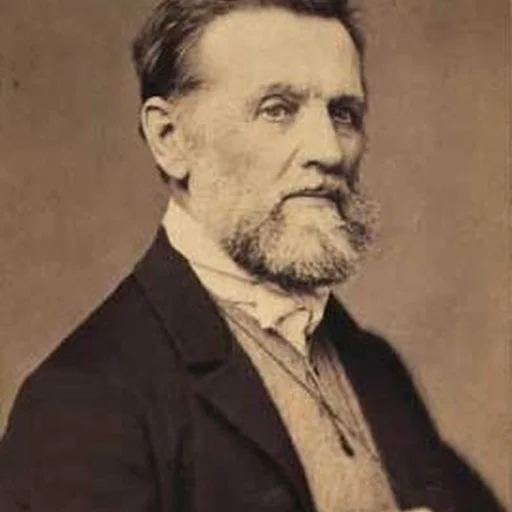
Jørgen Roed (13 January 1808 – 8 August 1888), Danish portrait and genre painter associated with the Golden Age of Danish Painting, was born in Ringsted to Peder Jørgensen Roed and wife, Ellen Hansdatter.