Artwork
Winter night in Ukraine
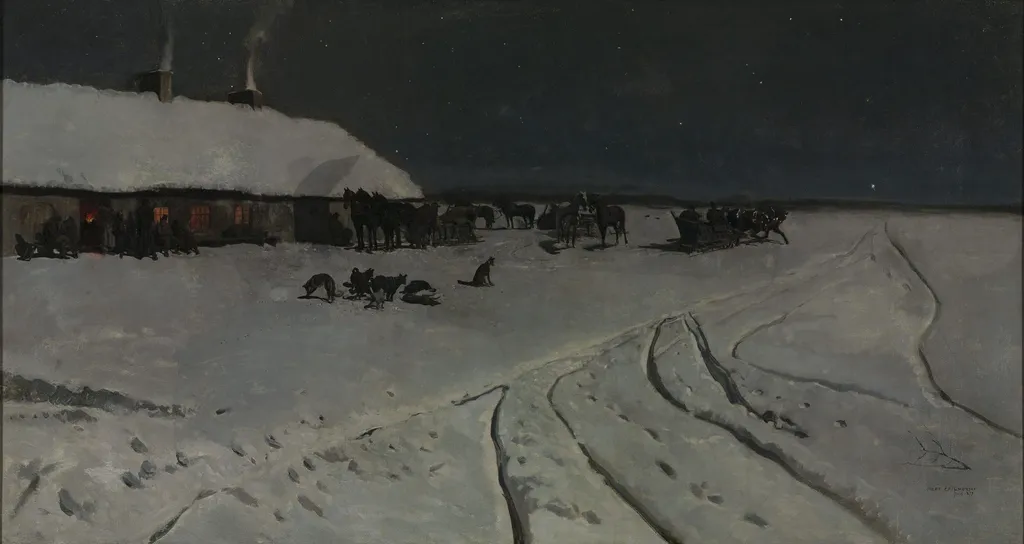
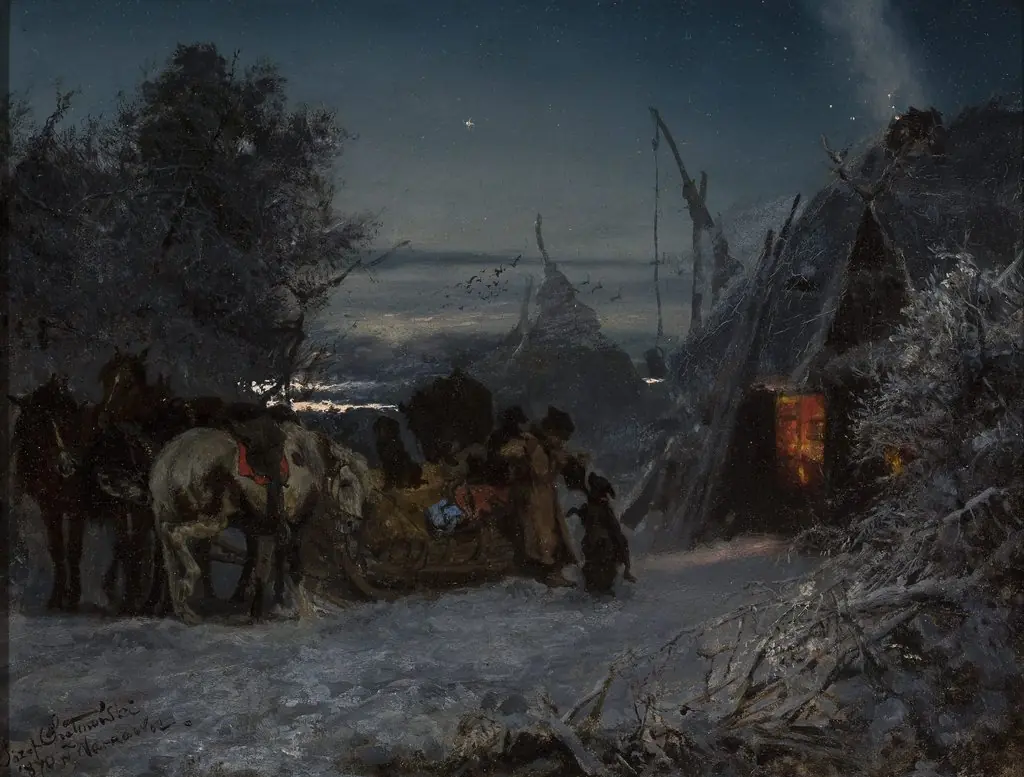
Winter night in Ukraine is an oil painting by the Realist artist Józef Chełmoński. It dates from 1889 and is held in the collection of the National Museum in Warsaw.
About this work
Technique & Style
Winter night in Ukraine is an oil painting on canvas measuring 68 cm by 127 cm, depicting a rural road, a building, and figures under winter conditions.
Winter night in Ukraine is an oil painting on canvas measuring 68 cm by 127 cm, depicting a rural road, a building, and figures under winter conditions. The work was created in 1877 by Józef Chełmoński and is classified as a painting. It is held in the collection of the National Museum in Warsaw.
The painting employs oil paint as its medium, with brushwork and compositional elements reflecting Realist stylistic tendencies, particularly in its atmospheric rendering of light and texture. The depiction of human figures within a landscape setting aligns with regional genre traditions of 19th-century Polish art.
The artwork has been part of the National Museum in Warsaw's holdings since its creation, maintaining its formal and material integrity through careful preservation.
History & Provenance
Winter night in Ukraine is an 1877 oil painting by Józef Chełmoński, created as an independent artwork rather than a commissioned piece. The work measures 68 cm by 127 cm and depicts a winter scene featuring a road, a building, and a group of people. It has been part of the National Museum in Warsaw's collection since its creation, remaining in the museum's possession without documented changes in ownership.
The painting was first exhibited in Warsaw in 1877 and has been cataloged in the museum's records as part of their permanent holdings.
The artwork's provenance is straightforward, with no evidence of private sales or transfers, indicating it was likely produced for exhibition or personal collection and directly acquired by the museum. Its creation history is tied to Chełmoński's broader series of Ukrainian winter landscapes painted during his travels in the 1870s, reflecting his interest in rural life and seasonal atmospheres. The piece was completed in oil on canvas, consistent with the artist's technique during this period.
Józef Chełmoński's 1877 oil painting, Winter night in Ukraine, is held in the collection of the National Museum in Warsaw. The work is executed on canvas and depicts a winter scene featuring a road, a building, and a group of humans. Specific inventory or accession numbers for the piece are not provided in the available records.
The painting measures 68 cm in height and 127 cm in width. No exhibition history is documented in the provided sources.
Context
The painting depicts a snow-covered landscape with figures traversing a frozen road near a village building under a night sky, reflecting Chełmoński's focus on rural realism and national identity during Poland's partition era. Art historians situate it within his realist oeuvre and the broader Young Poland movement, noting its technical mastery in rendering light and atmosphere while contributing to 19th-century European landscape traditions. The work is part of the National Museum in Warsaw's collection, affirming its significance in Polish cultural heritage.
Overview
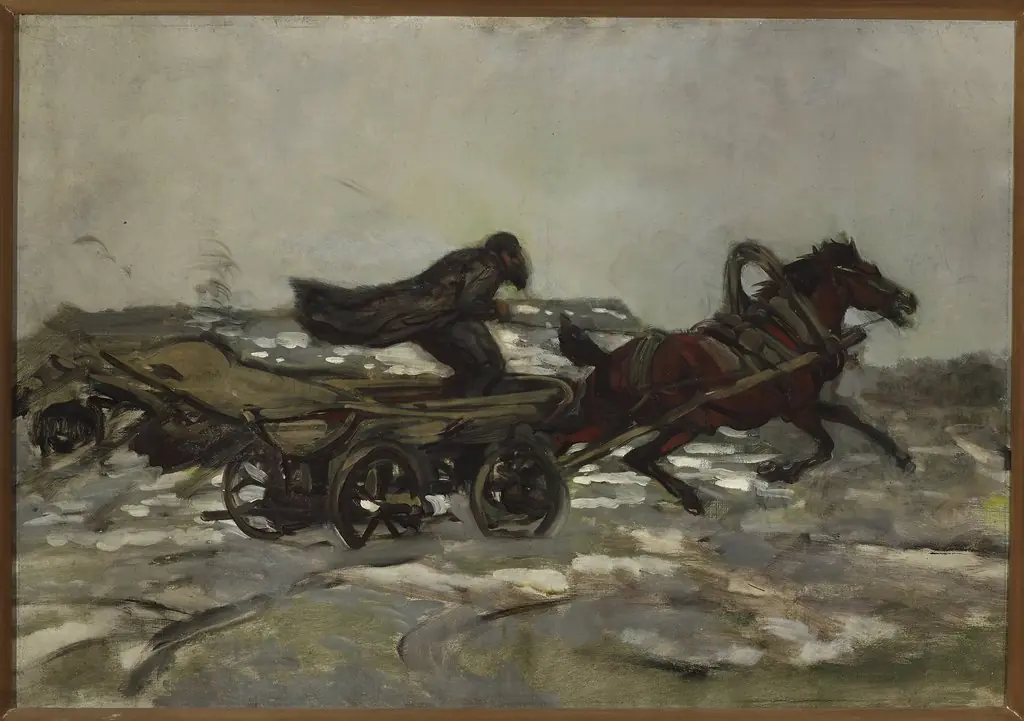
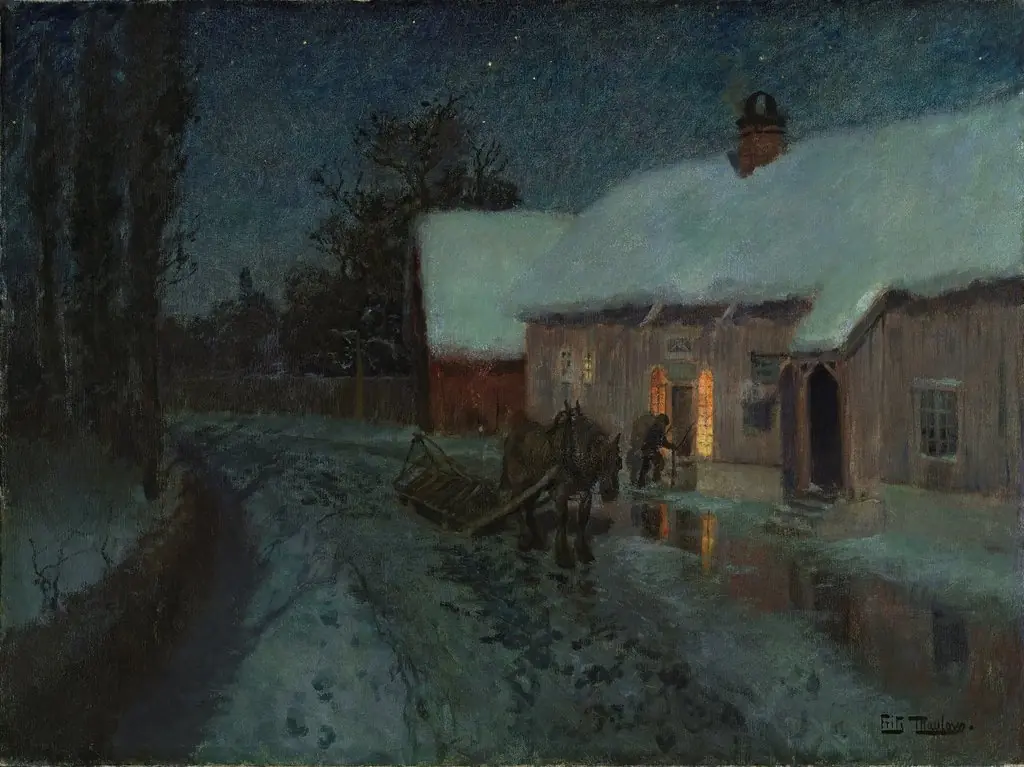
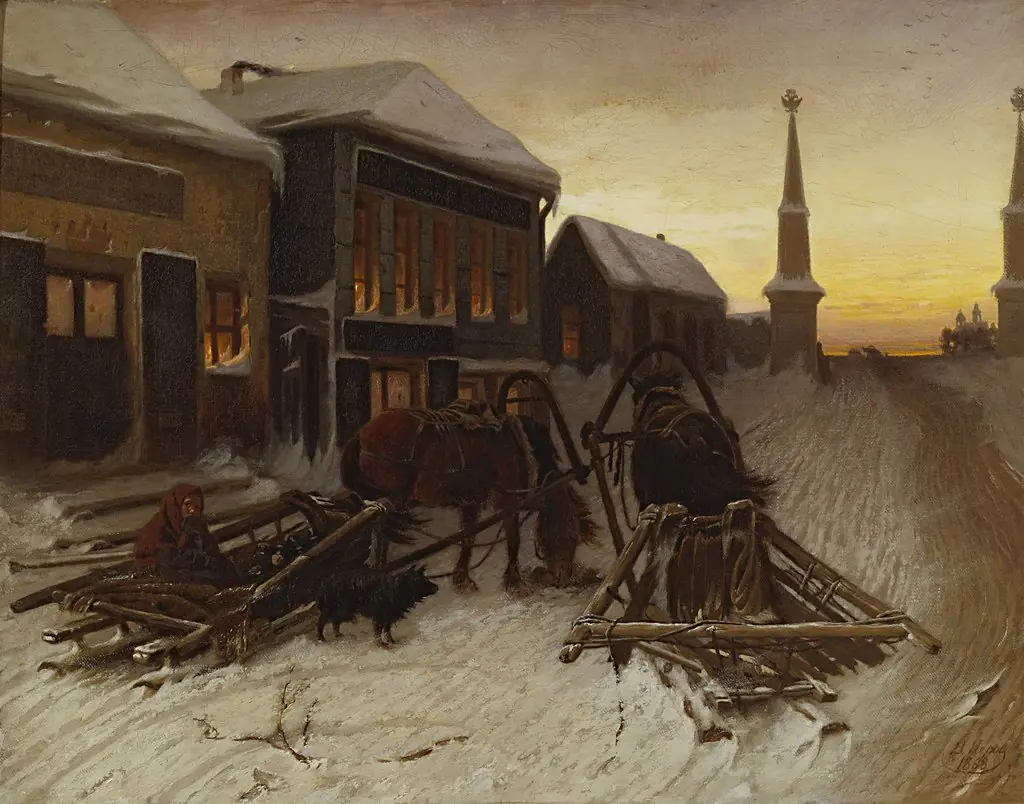
Winter Night in Ukraine is an 1889 oil painting by Józef Chełmoński, a Polish Realist painter known for depicting rural life and landscapes during Poland's partition. The work captures a serene, snow-covered night scene, featuring a lit wooden building, horses, carriages, people, and dogs, set against a backdrop of crisscrossing tracks in the deep snow.
Subject & Meaning
The painting portrays a tranquil winter evening in a Ukrainian setting, emphasizing everyday rural life. The contrast between the warm, golden light emanating from the building and the cold, dark exterior highlights the comfort of indoor refuge from harsh winter conditions.
Artist & collection
Artist
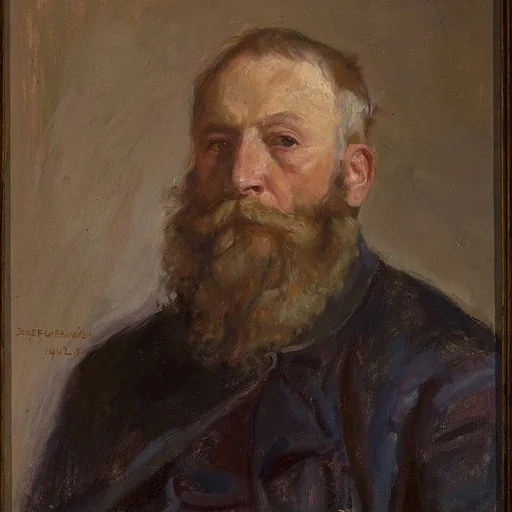
Józef Marian Chełmoński (7 November 1849 – 6 April 1914) was a Polish painter, known for his realistic paintings of landscapes, rural scenes and genre scenes presenting historical and social contexts of the late Romantic period in…