Artwork
Winter Landscape
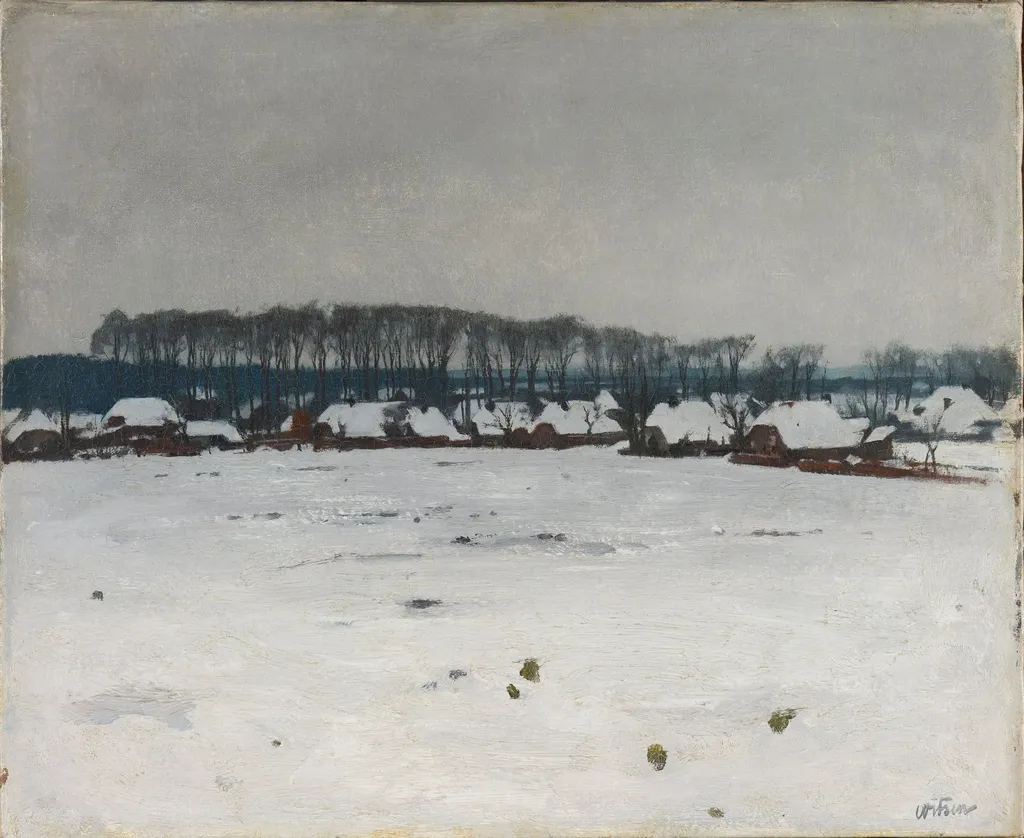
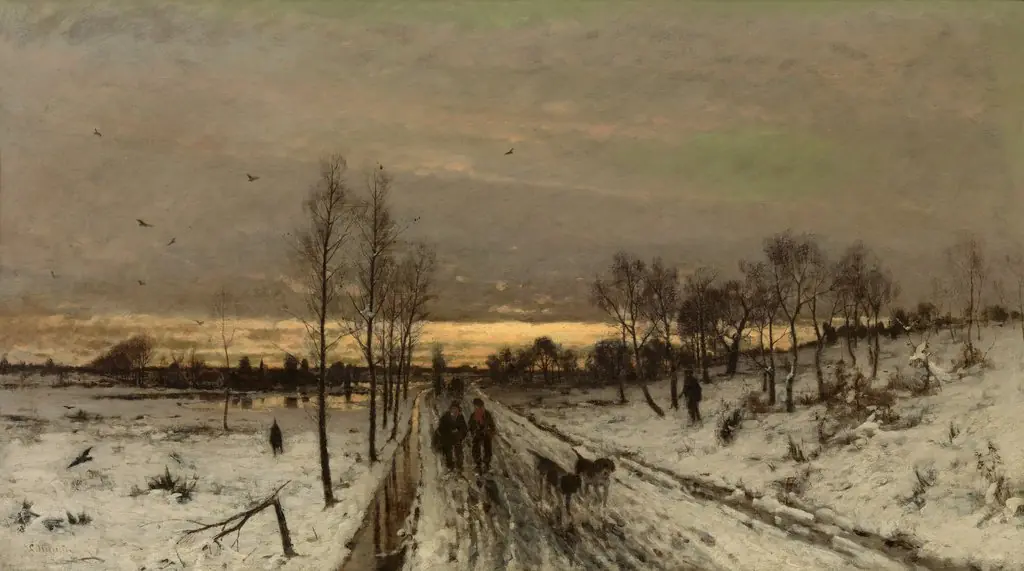
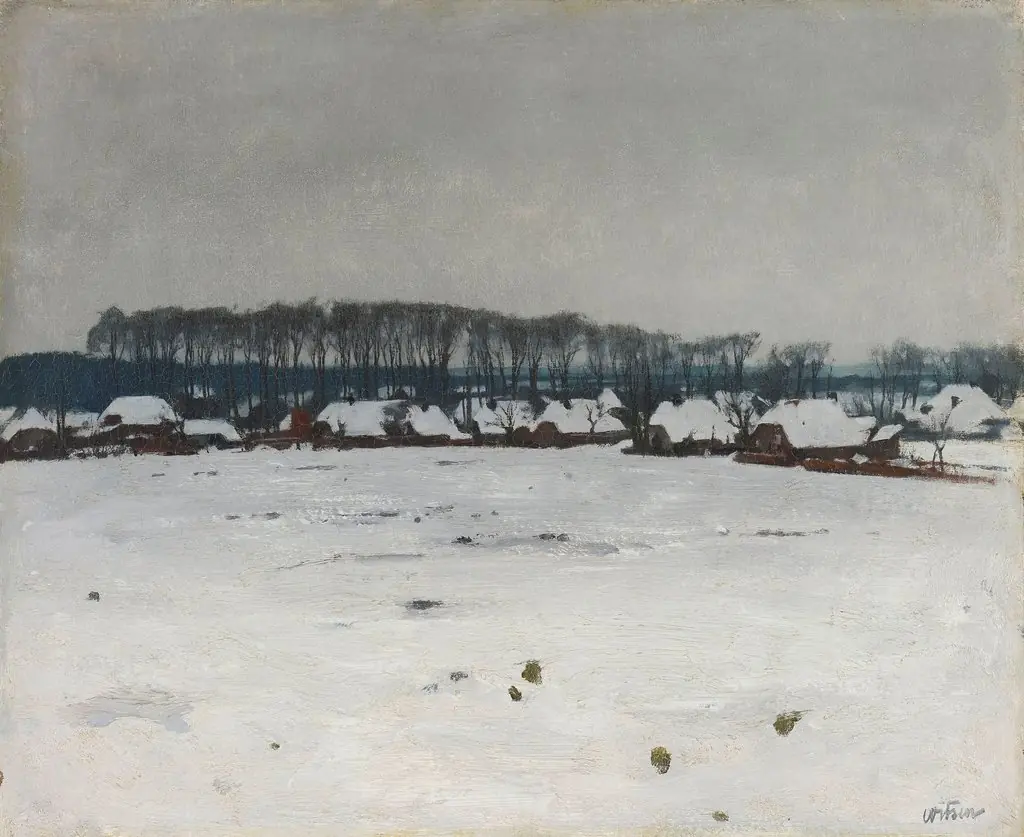
Winter Landscape is an unspecified painting by the Dutch Golden Age artist Willem Witsen. It dates from 1885 and is held in the collection of the Rijksmuseum.
About this work
Subject & Meaning
The work reflects Witsen's characteristic melancholy atmosphere, where austere winter conditions underscore themes of transience and the passage of time.
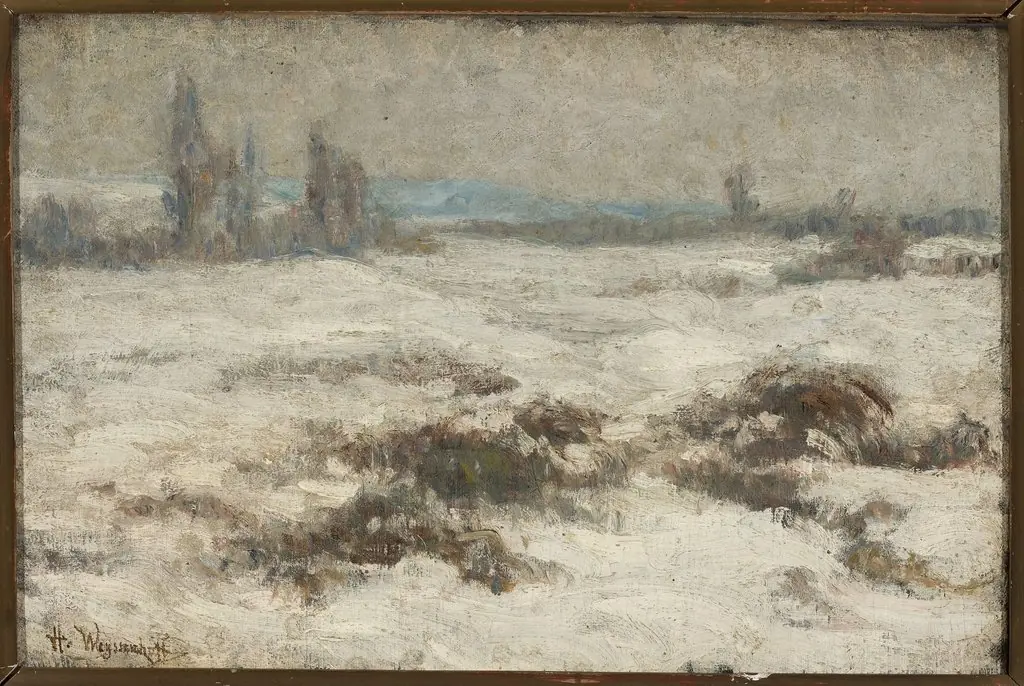
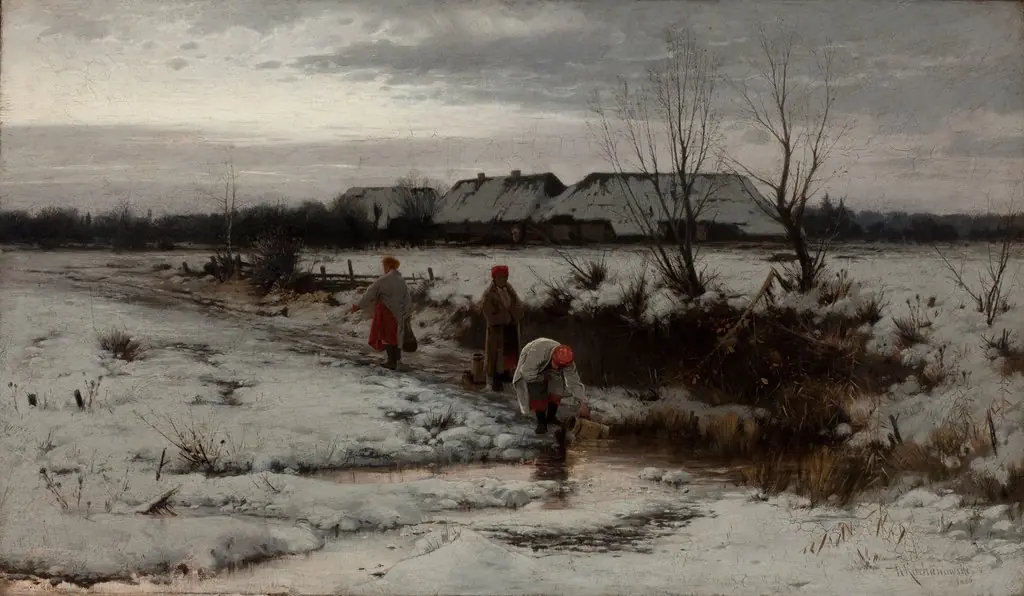
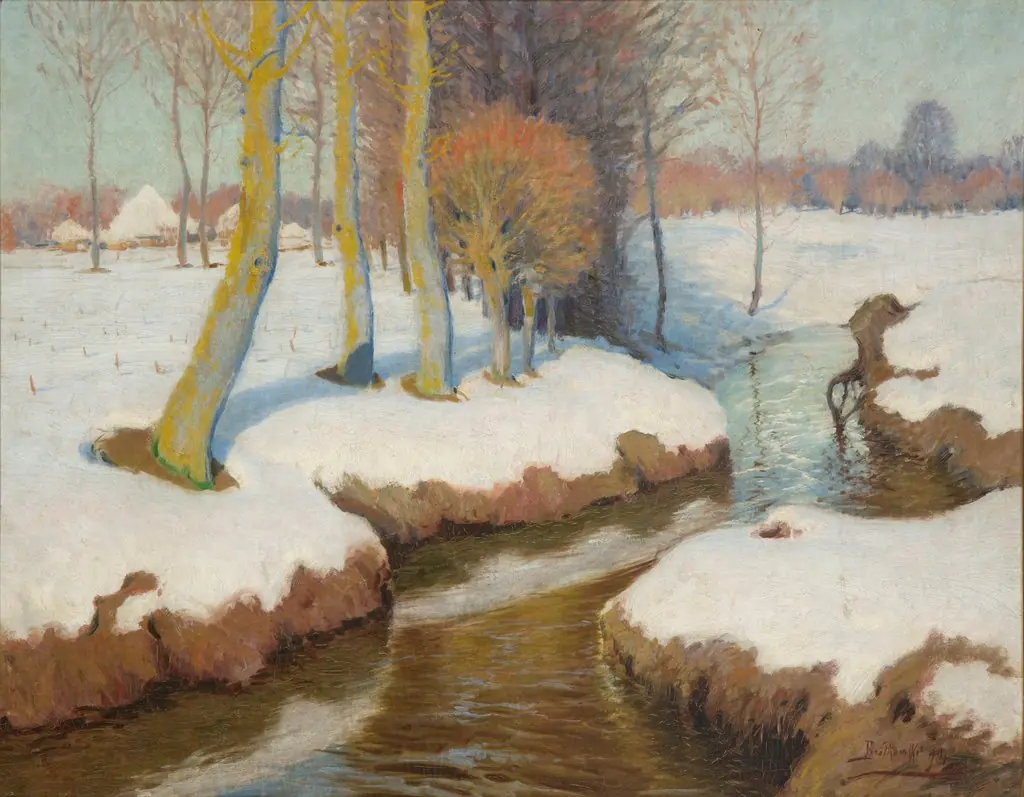
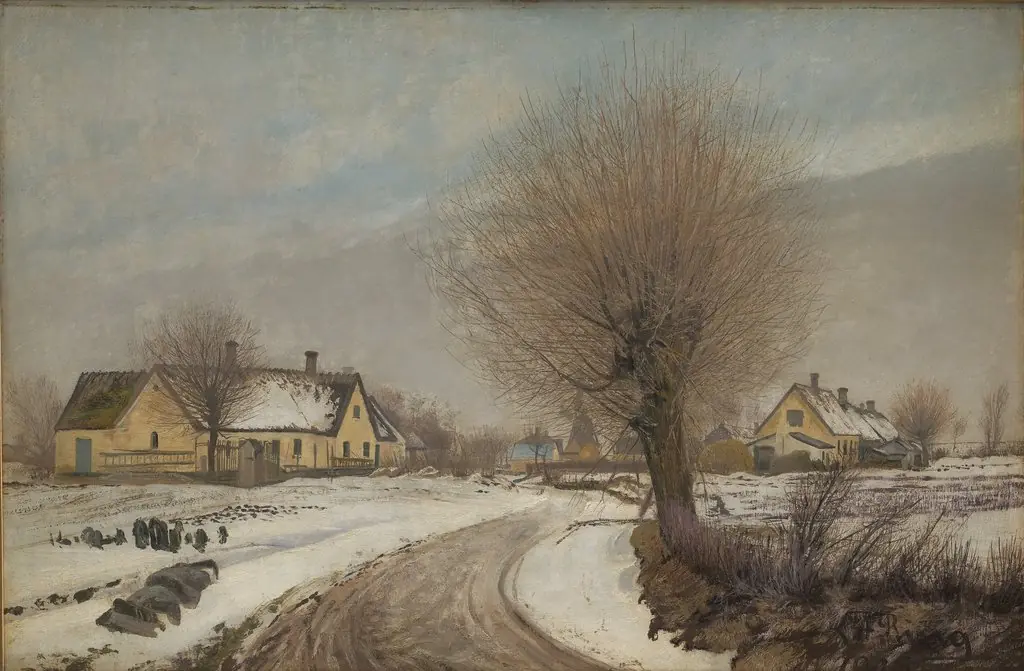
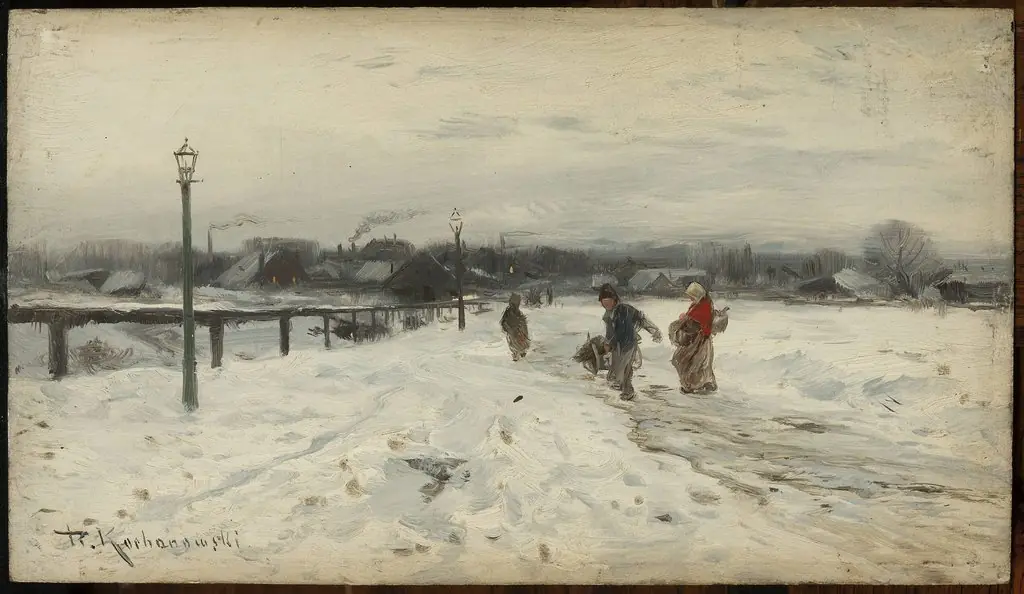
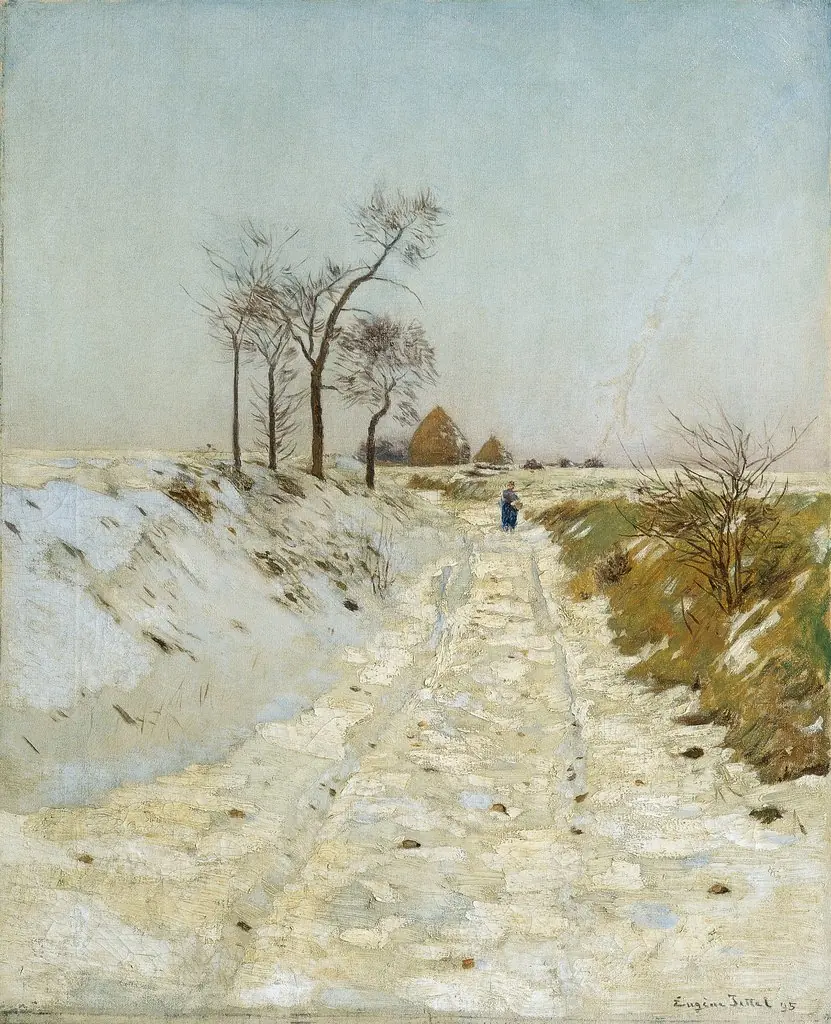
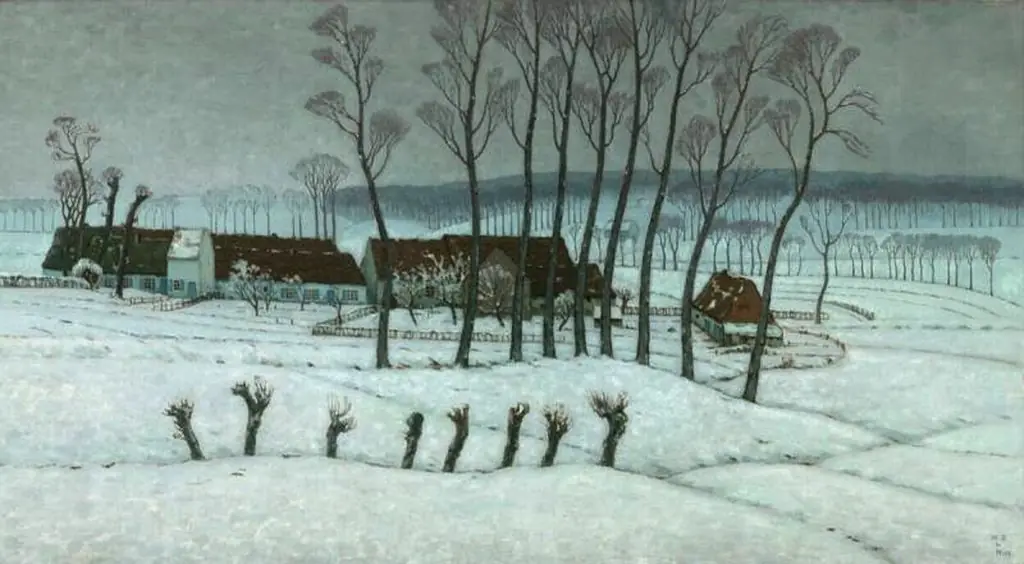
Winter Landscape depicts a quiet, snow-covered scene emphasizing muted tones and stillness that convey the hush and solitude of winter. The work reflects Witsen's characteristic melancholy atmosphere, where austere winter conditions underscore themes of transience and the passage of time. This subject aligns with his broader focus on wintery, dark scenes that differ from Impressionist sensibilities, using stark forms and monumental composition to evoke a sense of ethereal impermanence.
Technique & Style
Willem Witsen's Winter Landscape demonstrates a technique rooted in etching and watercolor, characterized by austere winter scenes and controlled tonal contrasts. He employed a limited palette of muted grays and whites to render snow-laden trees and frozen canals, achieving a sense of stillness through precise line work and subtle gradations of tone. The support is typically paper or board for drawings, while oil paintings utilize canvas with a smooth finish to emphasize clarity of form. His handling of perspective, often from a low vantage point observed from a boat, contributes to the flattened spatial depth and graphic quality of the composition. Formal qualities include flattened spatial depth, stark contrasts, and a focus on atmospheric mood over naturalistic detail, aligning with Amsterdam Impressionism while diverging from its brighter palette.
History & Provenance
Winter Landscape is attributed to Dutch artist Willem Witsen and is classified as a painting within the portrait genre. It was created during the period circa 1885 to circa 1922, aligning with Witsen's active years as a painter and etcher associated with Amsterdam Impressionism. The work reflects his characteristic winter scenes and melancholic atmosphere, consistent with his broader oeuvre of landscapes and urban views. Witsen, born in 1860 and active until his death in 1923, developed his style through associations with the Tachtigers group and influences such as James McNeill Whistler, particularly evident in his London studies. His paintings were initially met with limited commercial success, notably at his 1895 solo exhibition, but gained recognition through subsequent exhibitions and international exposures, including participation in world fairs. The work's provenance and creation history are tied to Witsen's personal artistic development and family connections in Amsterdam, where he maintained his studio until his death in 1923.
Context
Willem Witsen (1860-1923) was a central figure of the Amsterdam Impressionism movement, though his austere winter and townscapes set him apart from mainstream European Impressionism. A member of the Tachtigers, he championed l'art pour l'art and contributed writings and financial support to the literary journal De Nieuwe Gids. His close circle included painters George Hendrik Breitner, Isaac Israëls, and Jan Veth, as well as writers Willem Kloos and Herman Gorter. Witsen founded the Nederlandse Etsclub and trained at the Rijksakademie van beeldende kunsten in Amsterdam and in Antwerp. Exposure to James McNeill Whistler's nocturnes during a London stay shaped his tonal sensibility. His dark, melancholy canvases sold poorly at his 1895 solo exhibition at Van Wisselingh & Co., but subsequent shows of his Rotterdam and Amsterdam prints, along with watercolours, brought him wider success. Prizes at the Paris and St. Louis World's Fairs extended his international reach.
Own this work as a print
Artist & collection
Artist
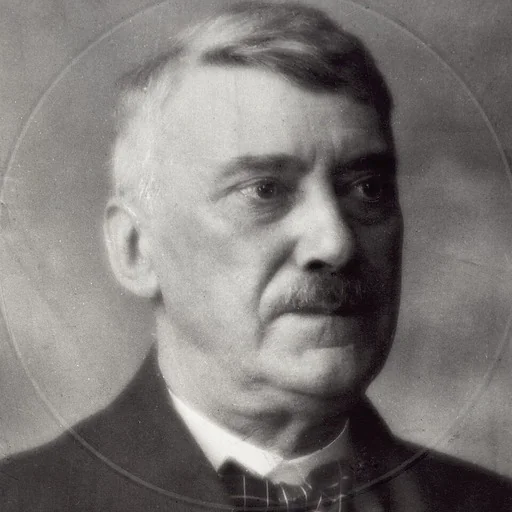
Willem Arnoldus Witsen (13 August 1860 – 13 April 1923, Amsterdam) was a Dutch painter and photographer associated with the Amsterdam Impressionism movement.

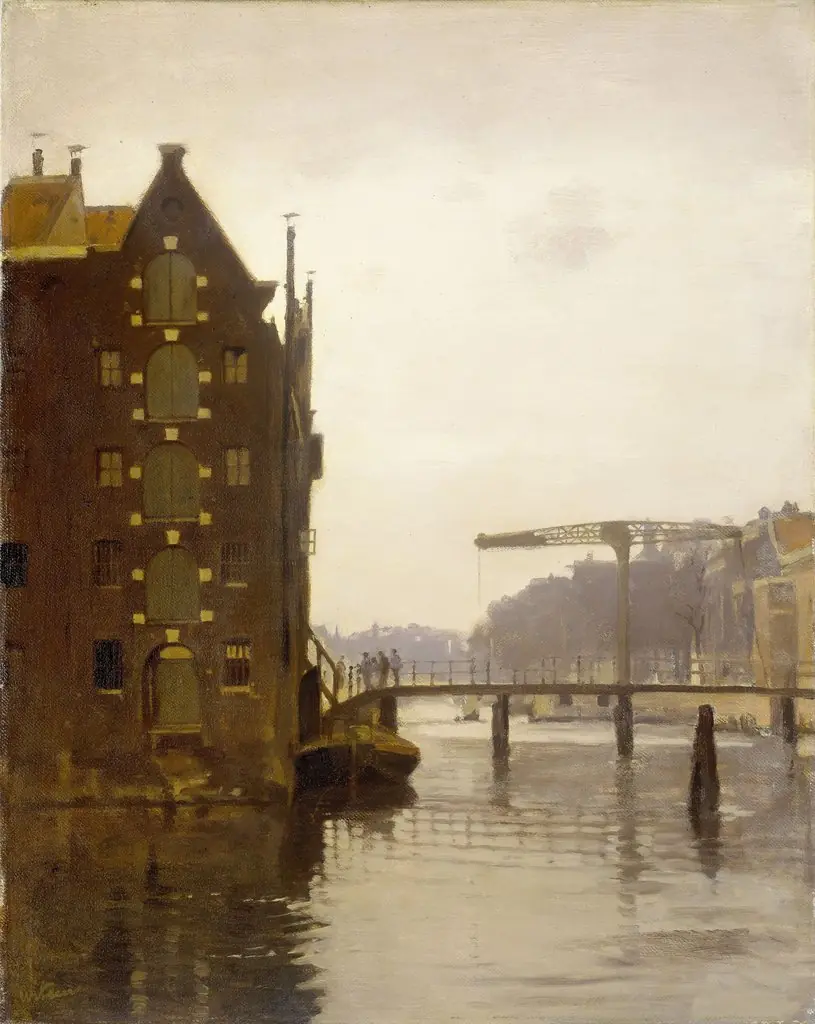 Pakhuizen aan een Amsterdamse gracht op Uilenburg
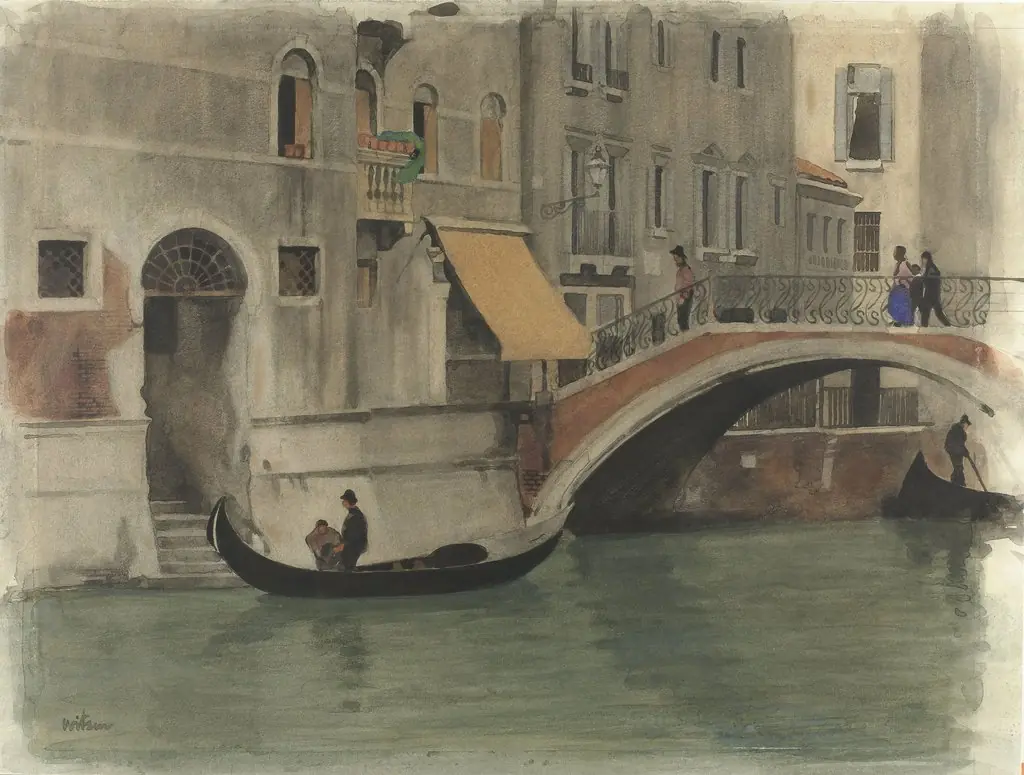 Bridge over a canal in Venice
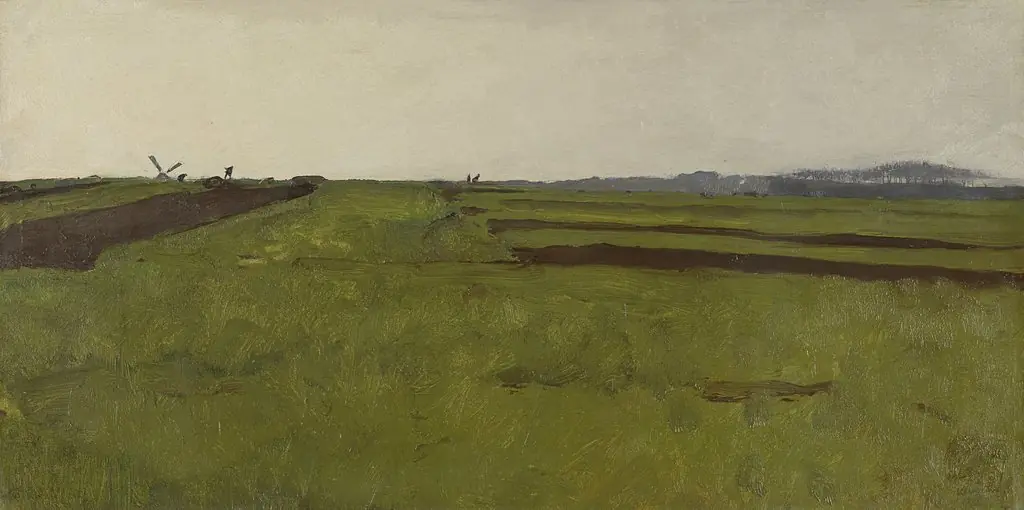 Landscape with fields
- Winter Landscape
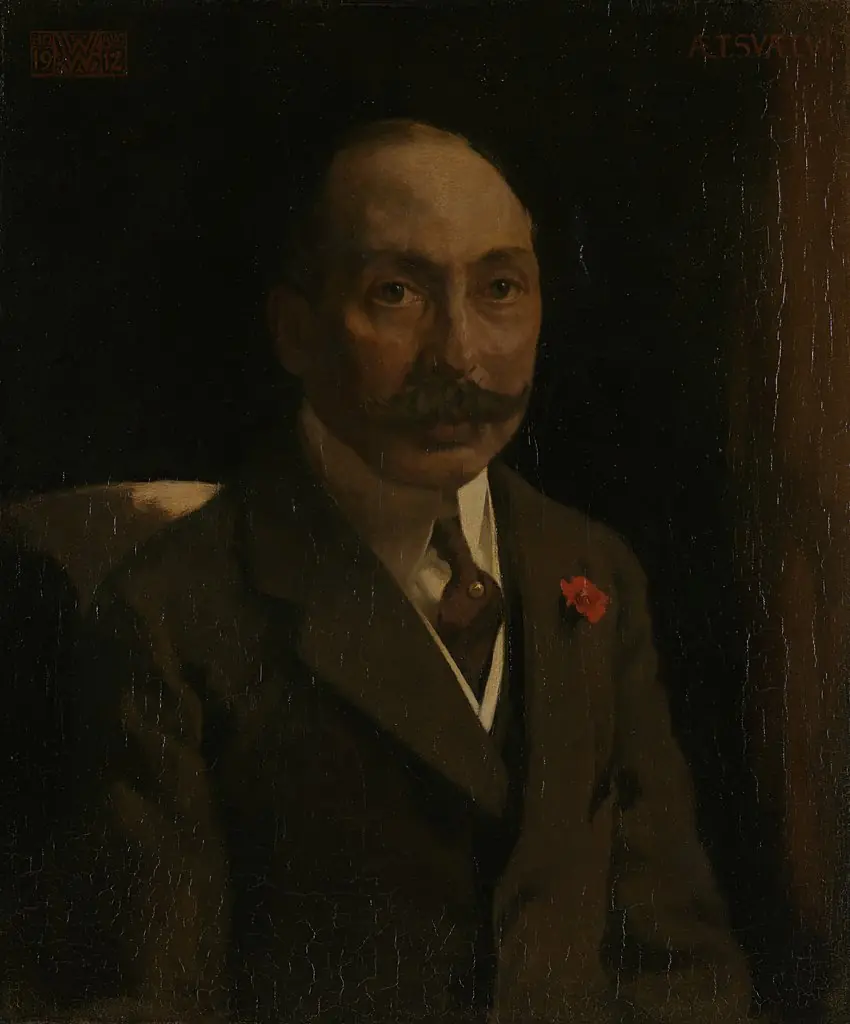 Andries van Wezel (1856–1922). Koopman te Antwerpen, legateerde in 1922 zijn schilderijenverzameling aan het Rijksmuseum
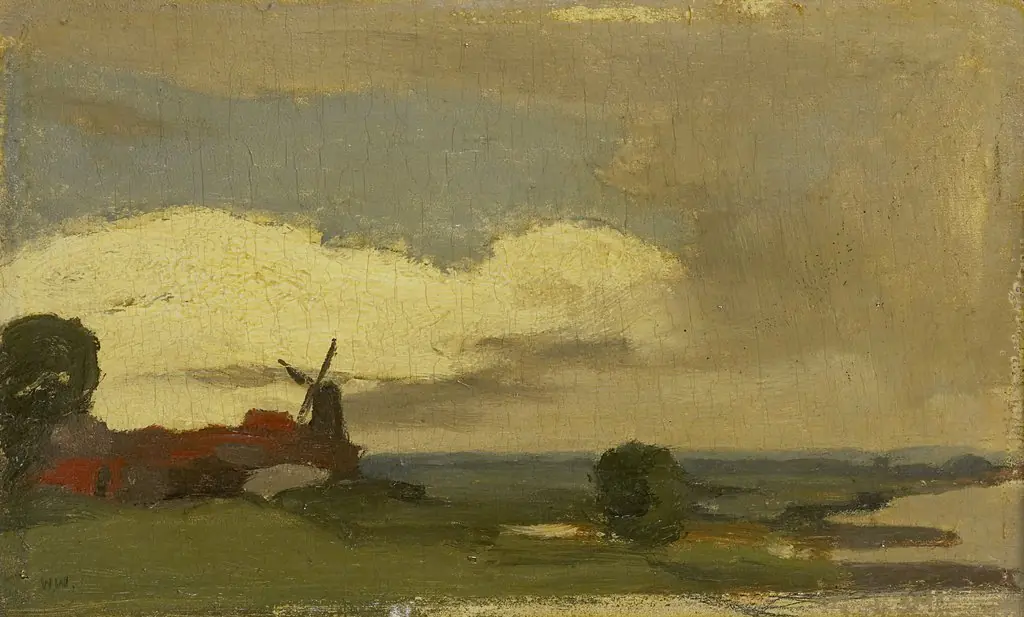 Landschap met de molen van Wijk bij Duurstede
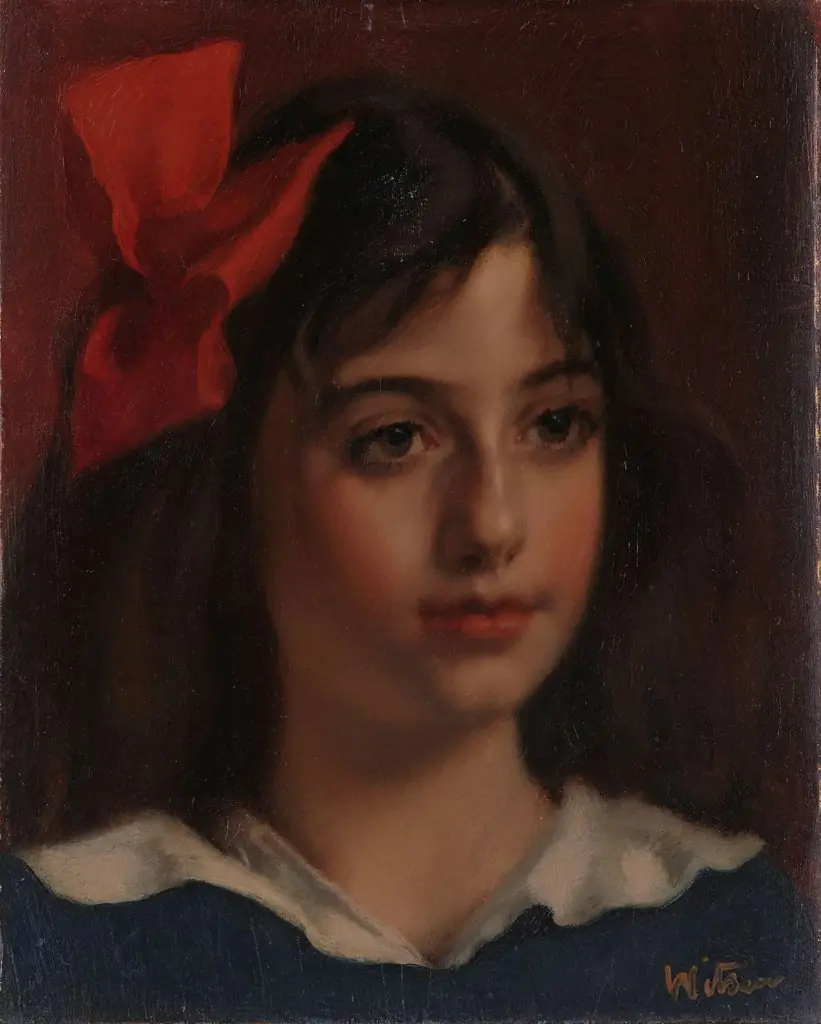 Portret van een meisje
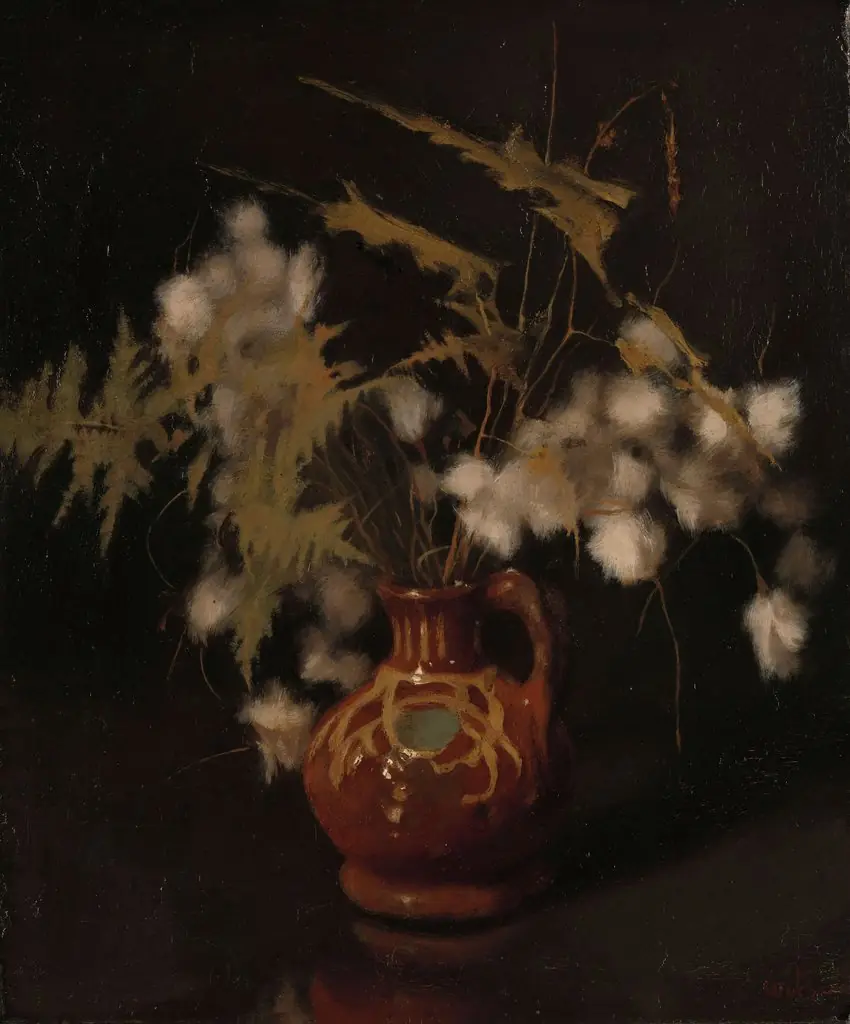 Fluffy Flowers in a Jug