Artwork
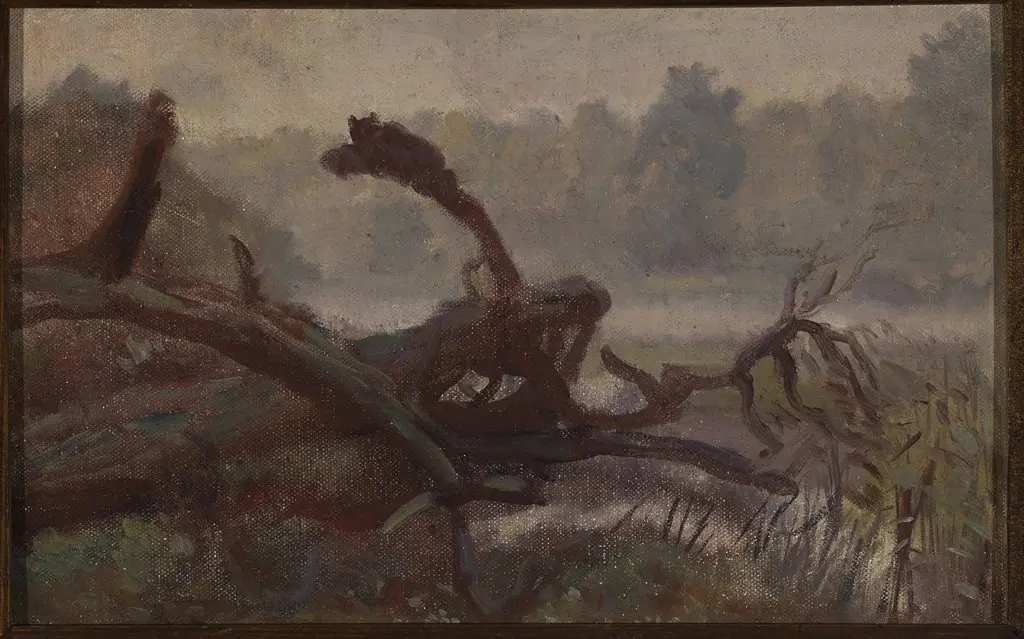
Wood grouse, sketch for “Hunting for wood grouses”
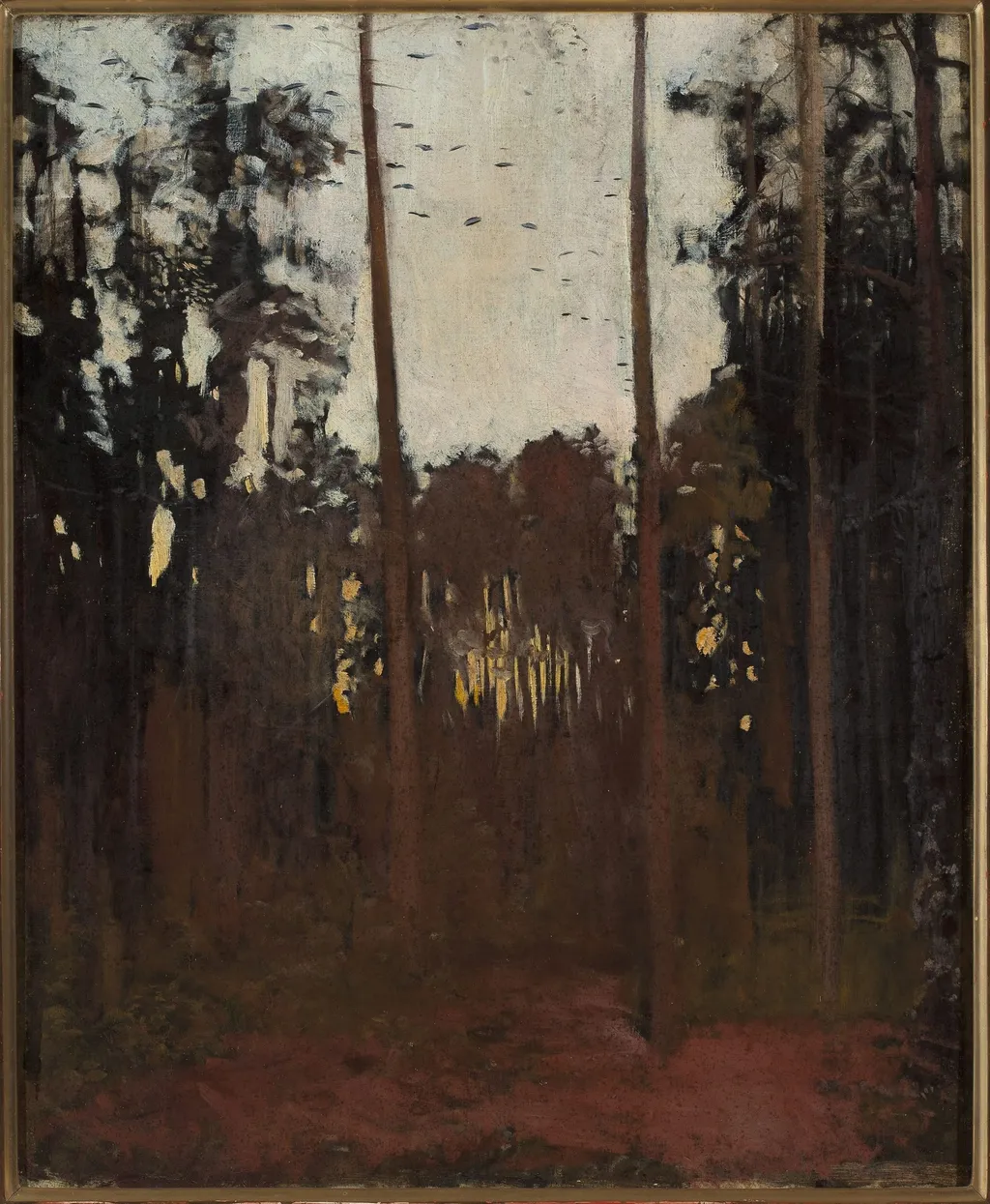
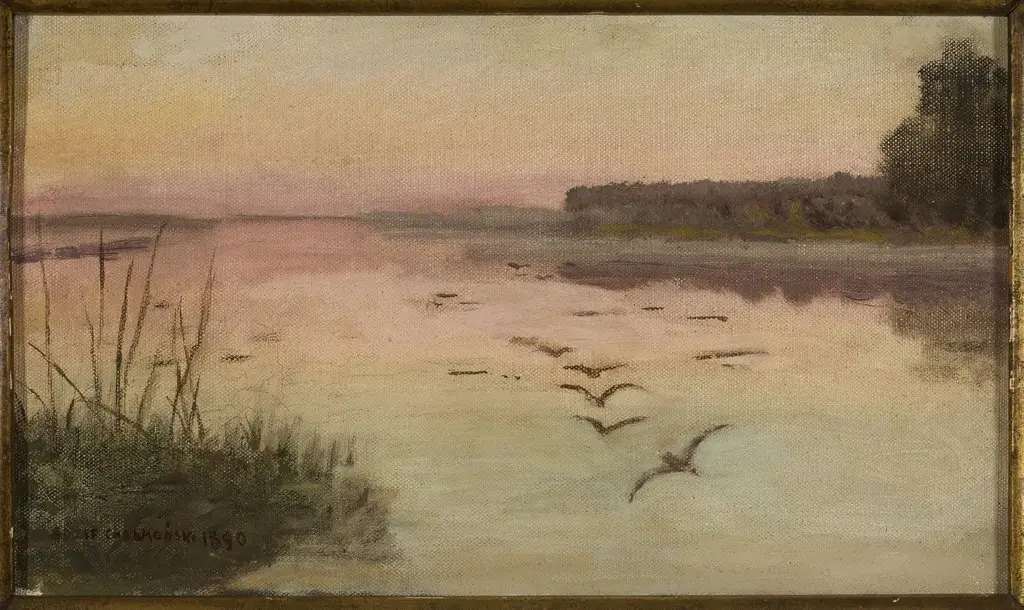
Wood grouse, sketch for “Hunting for wood grouses” is an oil painting by the Post-Impressionist artist Józef Chełmoński. It dates from 1896 and is held in the collection of the National Museum in Warsaw.
About this work
Overview
Wood grouse, sketch for "Hunting for wood grouses" is an 1890 oil on canvas landscape by the Polish realist painter Józef Chełmoński.
Wood grouse, sketch for "Hunting for wood grouses" is an 1890 oil on canvas landscape by the Polish realist painter Józef Chełmoński. Measuring 78 by 64 centimeters, the work functions as a preparatory study for a larger composition. It is classified as a landscape painting and is currently held in the collection of the National Museum in Warsaw, where it is accessioned under the inventory number MP 426 MNW.
Subject & Meaning
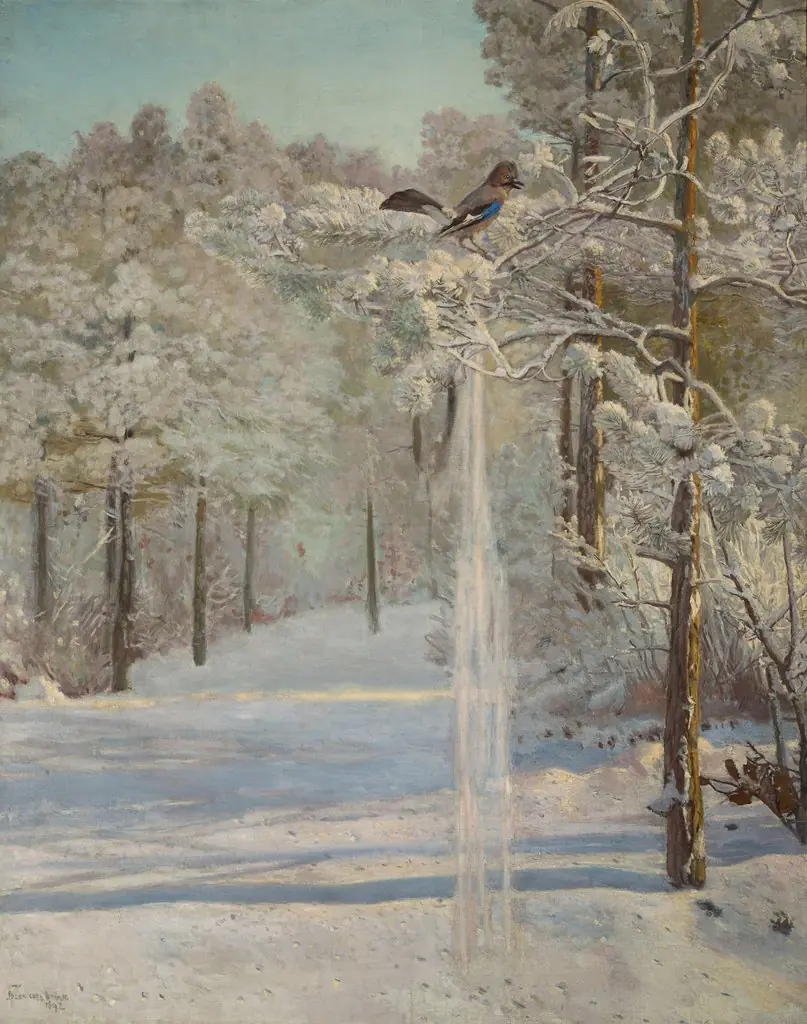
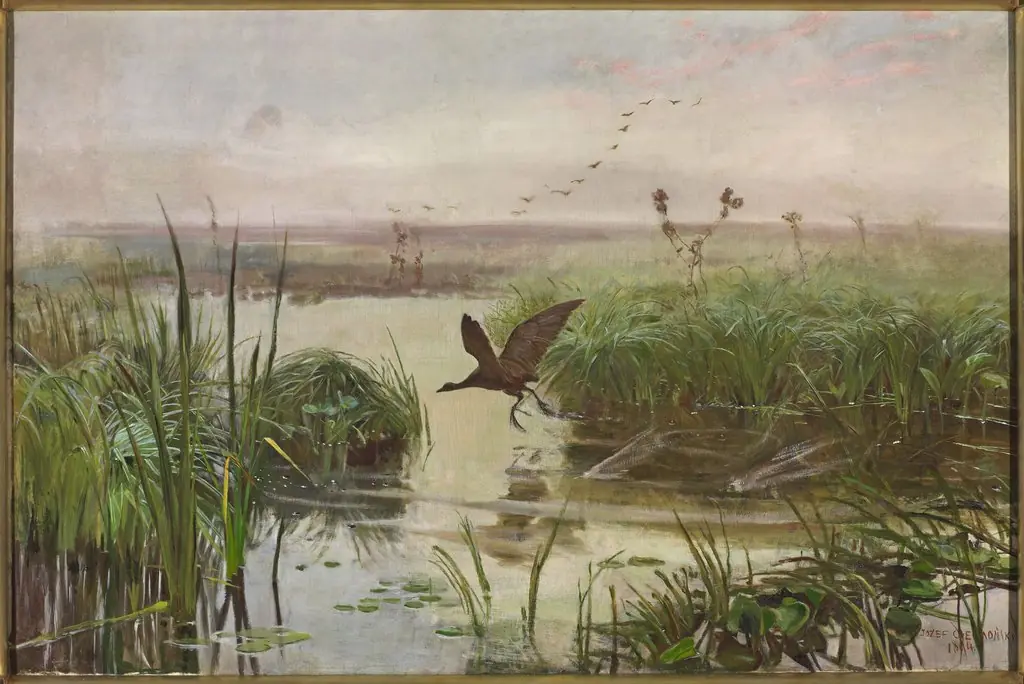
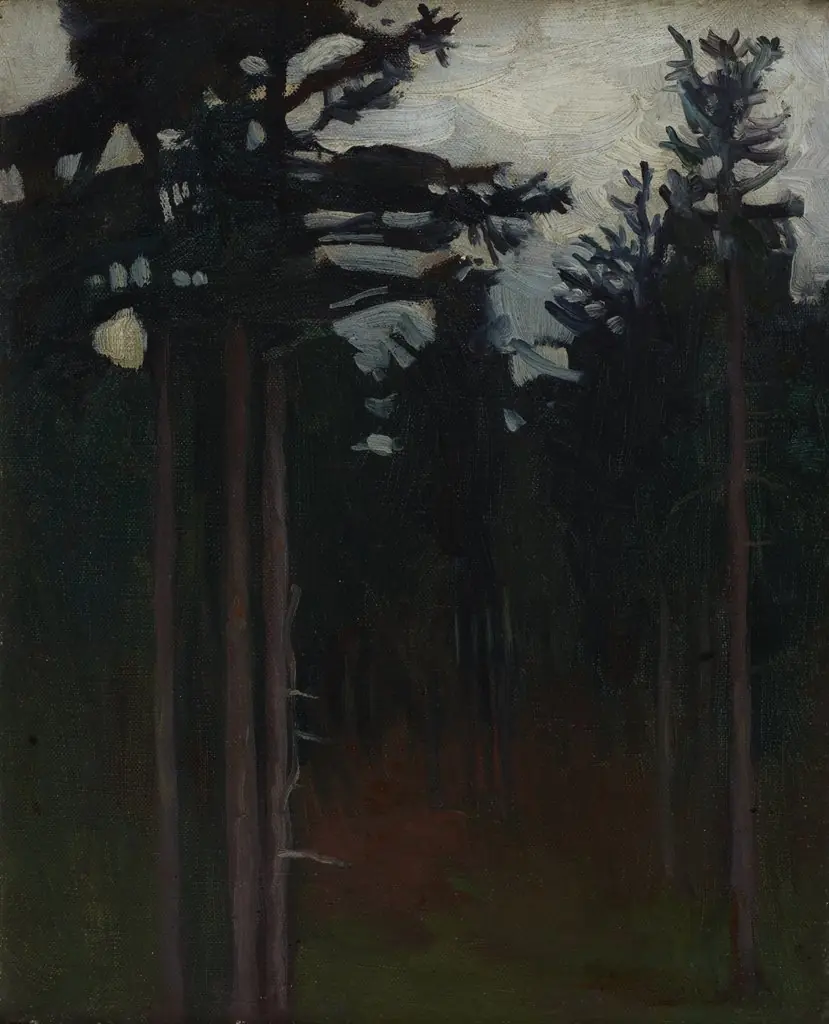
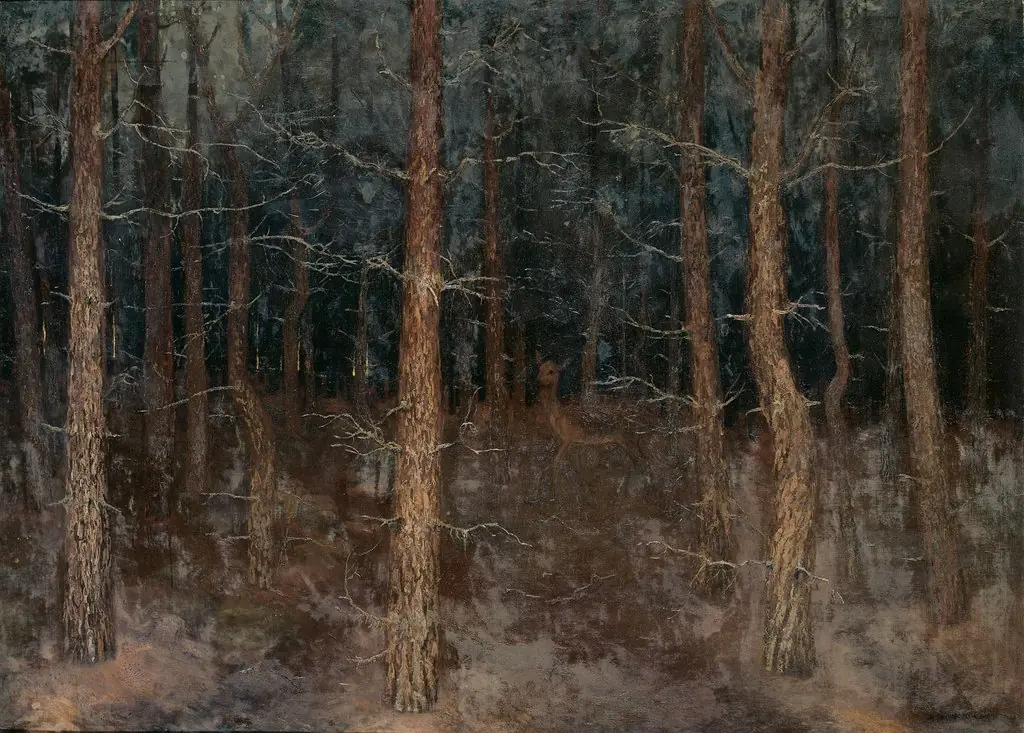
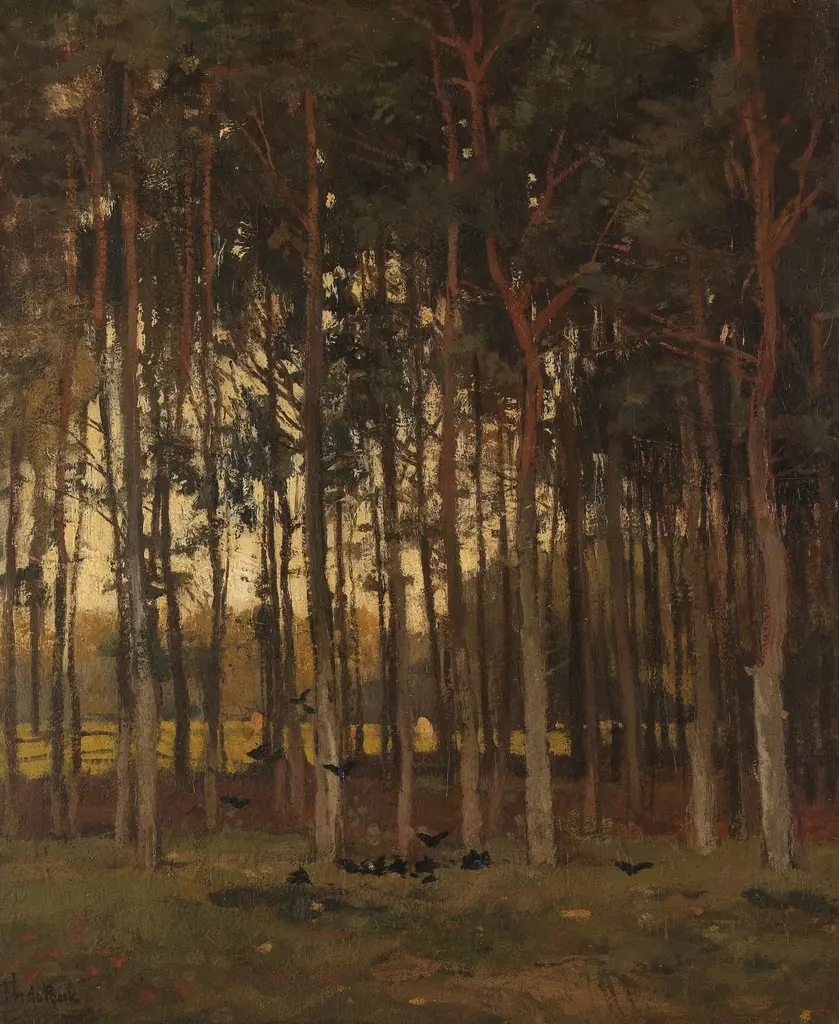
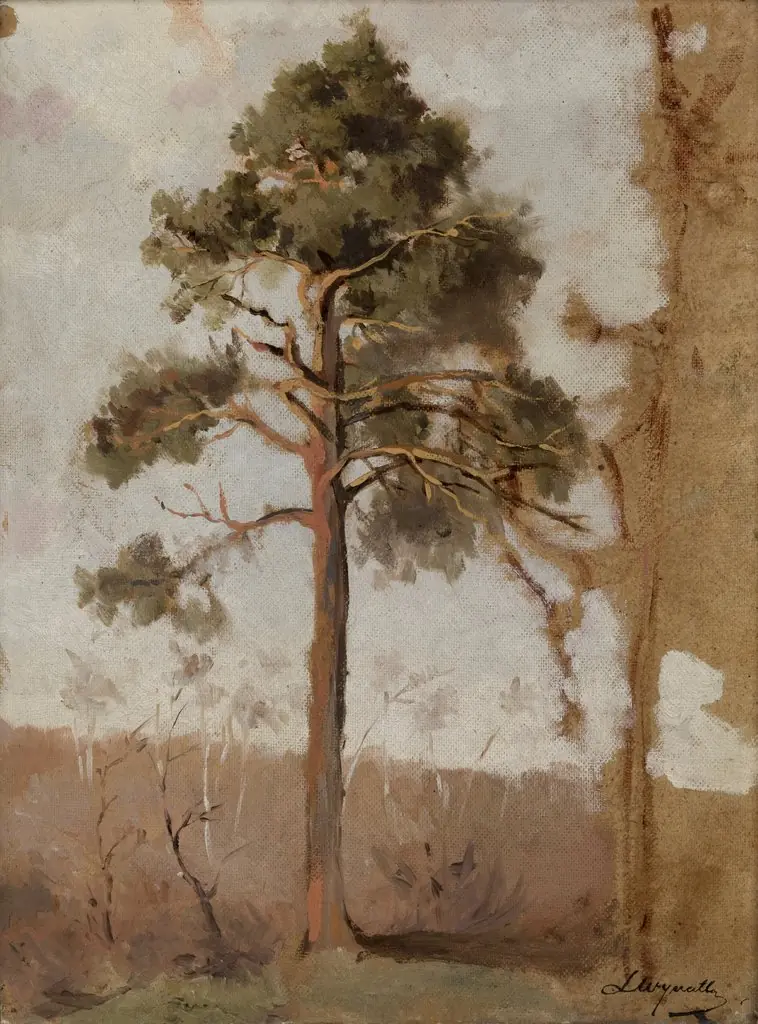
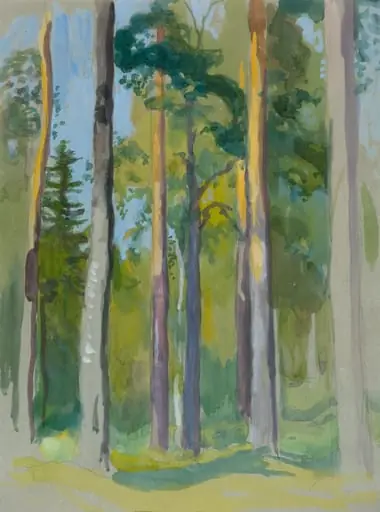
The sketch depicts a dense, vertical forest environment dominated by tall, slender tree trunks that partition the composition into narrow vertical bands. While the title references the wood grouse and the act of hunting, the painting itself avoids clear narrative or figuration. Small, dark, elongated shapes scattered across a lighter central sky passage suggest birds in flight, but no human or animal figures are clearly discernible. Instead, the thematic focus rests on the atmospheric tension of the enclosed woodland, capturing the wild, untamed qualities of the Polish countryside that would serve as the backdrop for the intended hunting scene.
History & Provenance
Created circa 1890, the painting was executed during Chełmoński's mature period after he had returned to Poland and settled in the village of Kuklówka Zarzeczna in 1889. The work was produced as a study for his larger composition, "Hunting for wood grouses." The canvas is currently housed in the National Museum in Warsaw, bearing the accession number 509767 within the museum's internal cataloging system and MP 426 MNW as its primary inventory identifier.
Context
Chełmoński was a central figure in Polish realist painting, with deep roots in the historical and social context of the late Romantic period in partitioned Poland. After studying in Warsaw under Wojciech Gerson and spending formative years in Munich alongside Jozef Brandt and Maksymilian Gierymski, he developed a style focused on the Polish landscape and rural life. His return to Poland in 1887, and specifically his 1889 settlement in Kuklówka Zarzeczna, marked a pivotal turn toward direct contact with his homeland and nature. This 1890 sketch aligns with the period that produced some of his most celebrated works, such as Partridge on the Snow and The Storks, representing a movement often termed Polish Patriotic Painting.
Legacy
As a preparatory work for a larger known composition, the sketch offers valuable insight into Chełmoński's creative process and his approach to landscape construction. The painting remains part of the permanent holdings of the National Museum in Warsaw, ensuring its preservation and accessibility for scholarly study. Its continued presence in the museum's digital collections and the availability of commercial reproductions indicate an ongoing public interest in the artist's working methods and his evocative depictions of the Polish woodland.
Own this work as a print
Artist & collection
Artist
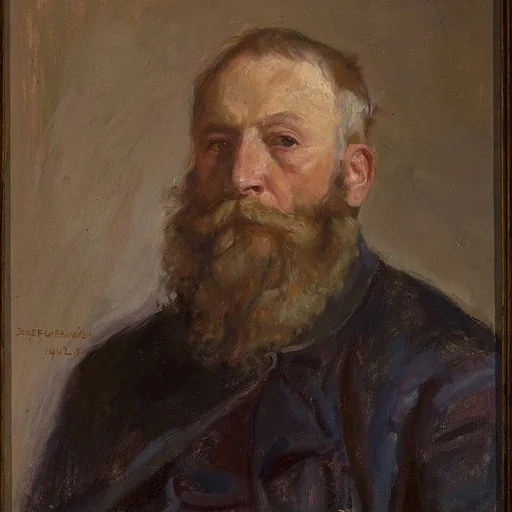
Józef Marian Chełmoński (7 November 1849 – 6 April 1914) was a Polish painter, known for his realistic paintings of landscapes, rural scenes and genre scenes presenting historical and social contexts of the late Romantic period in…