Artwork
Pallas and the Muses
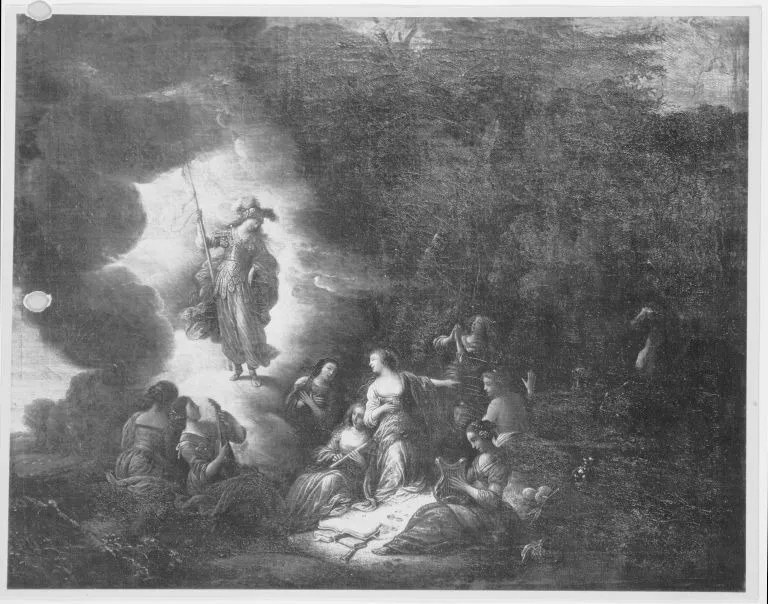
Pallas and the Muses is an oil painting by the Dutch Golden Age artist Jacob de Wet II. It dates from 1669 and is held in the collection of the Bavarian State Painting Collections.
About this work
Subject & Meaning
Pallas, identified with Athena, appears centrally as the figure of wisdom and warfare, while the surrounding Muses personify the arts and sciences.
The painting depicts the goddess Pallas Athena in the company of the Muses, a grouping drawn from classical mythology. Pallas, identified with Athena, appears centrally as the figure of wisdom and warfare, while the surrounding Muses personify the arts and sciences. The composition emphasizes the association of divine wisdom with creative and intellectual endeavor.
Executed in 1669 by Jacob de Wet II, the work translates this allegorical theme into visual form, aligning with the artist’s engagement with mythological subjects during this period.
Technique & Style
Pallas and the Muses is executed in oil paint on canvas, a standard support for seventeenth-century Dutch mythological cabinet pictures. The work is relatively modest in scale, measuring 53 cm in height by 68 cm in width, a horizontal format suited to the narrative grouping of Pallas and the Muses across the picture plane.
Stylistically, the painting belongs to the mythological genre tradition associated with Jacob de Wet II, who produced it in 1669. The classification as a mythological painting and its subject, Pallas together with the Muses, situates the composition within the classicizing mode of Dutch history painting of the period, in which figures from Greco-Roman antiquity are arranged in allegorical or narrative groupings.
History & Provenance
Jacob de Wet II created Pallas and the Muses in 1669 as a mythological painting on canvas, commissioned within the Dutch Golden Age tradition of allegorical works for private and institutional collections. The artwork entered the Bavarian State Painting Collections and has been housed at the Alte Pinakothek in Munich since its acquisition, reflecting a continuous ownership chain from the artist to the Bavarian State.
The painting's creation history is anchored to its 1669 inception date, with its medium and materials documented as oil paint on canvas, measuring 53 cm in height and 68 cm in width. Its genre aligns with mythological painting, depicting the allegorical figure of Pallas alongside a Muse, consistent with contemporary Dutch thematic conventions.
The painting is held by the Bavarian State Painting Collections in Munich, where it is inventoried as part of the holdings of the Alte Pinakothek.
It has been exhibited at the Alte Pinakothek as part of the museum’s permanent display of Dutch and Flemish paintings from the 17th century.
Context
Jacob de Wet II painted Pallas and the Muses in 1669, a mythological canvas now held by the Bavarian State Painting Collections at the Alte Pinakothek. The work depicts the goddess Pallas accompanied by a muse and was created during the Dutch Golden Age, reflecting contemporary fascination with classical allegory. Scholarship emphasizes its role within de Wet's oeuvre as a history painter working within the mythological genre, situating him among other 17th-century artists who adapted biblical and antiquity themes for civic and elite patronage.
Its formal qualities and iconography have been studied as examples of Dutch classicizing tendencies in mid-17th-century painting, though it remains less documented than works by more prominent contemporaries.
Legacy
The painting Pallas and the Muses by Jacob de Wet II was created in 1669 and is housed in the Alte Pinakothek, part of the Bavarian State Painting Collections. As a mythological canvas work, it exemplifies Dutch Golden Age painting through its depiction of allegorical figures. The composition has been studied for its representation of classical themes and continues to be referenced in discussions of 17th-century allegory.
Its inclusion in a major public collection has ensured sustained scholarly and public attention to de Wet’s artistic legacy.
Overview
Created in 1669, Pallas and the Muses is an oil painting on canvas by Dutch artist Jacob de Wet II. The work belongs to the collection of the Alte Pinakothek in Munich and illustrates a scene from classical mythology featuring the goddess Athena surrounded by the nine Muses.
Artist & collection
Artist
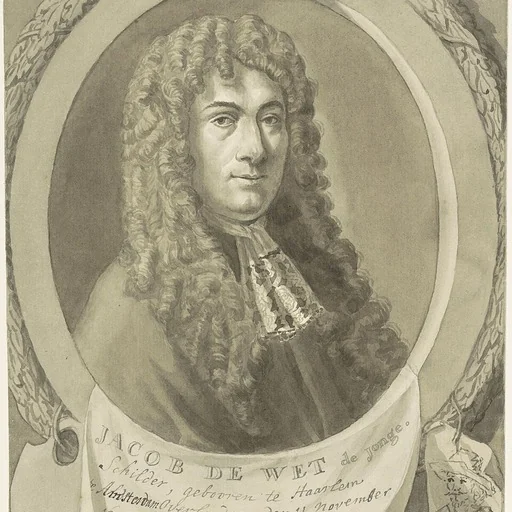
Jacob Jacobsz de Wet II (1641, Haarlem – 1697, Amsterdam), also known as James de Witt, was a Dutch Golden Age painter known for a series of 110 portraits of Scottish monarchs, many of them mythical, produced for the…

- Predigt Johannes des Täufers (?)
 Der Parnass
 Måneskinslandskab med mytologisk (?) motiv
 Verklärung Christi
 Christus am Ölberg
 Political allegory
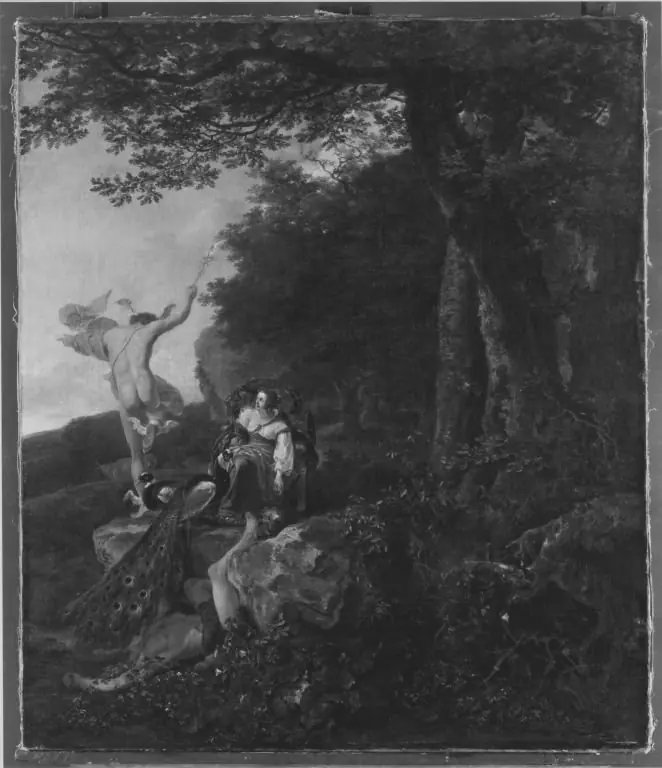 Landschaft mit Merkur, Juno und dem toten Argus
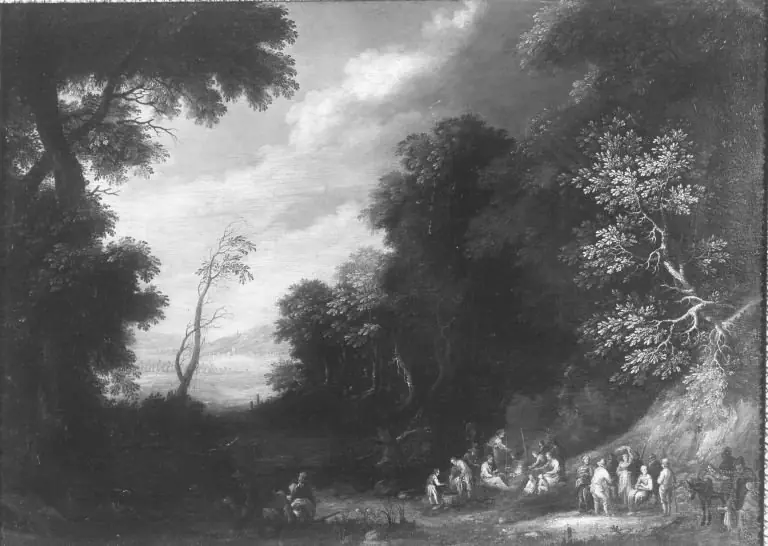 Rast am Waldrand
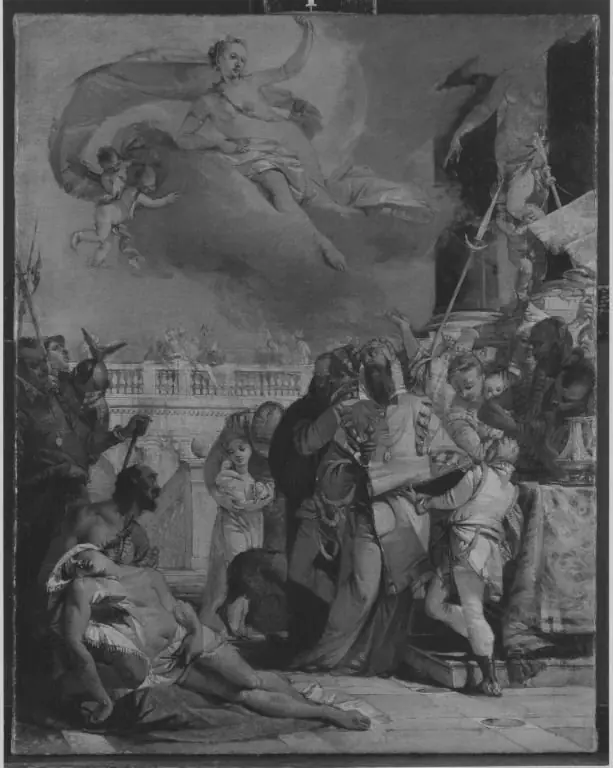 Opferung der Iphigenie
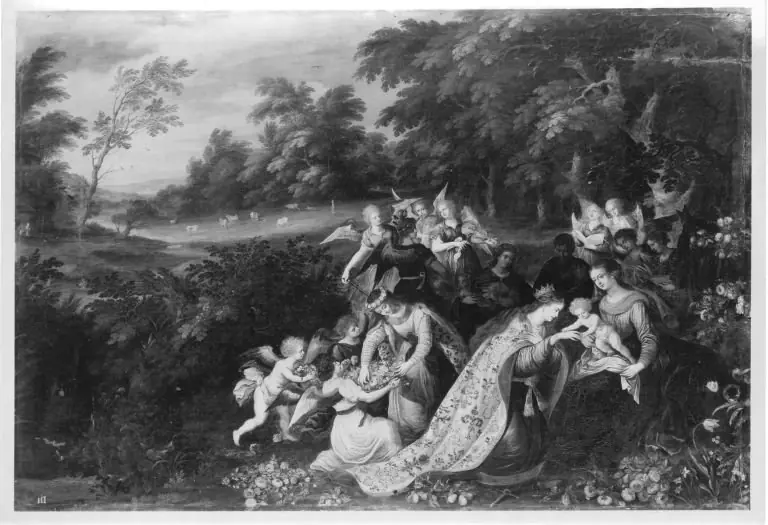 Vermählung der hl. Katharina
 Predigt Johannes des Täufers
 Die Ermordung des hl. Severus