Artwork
Study of a Bull
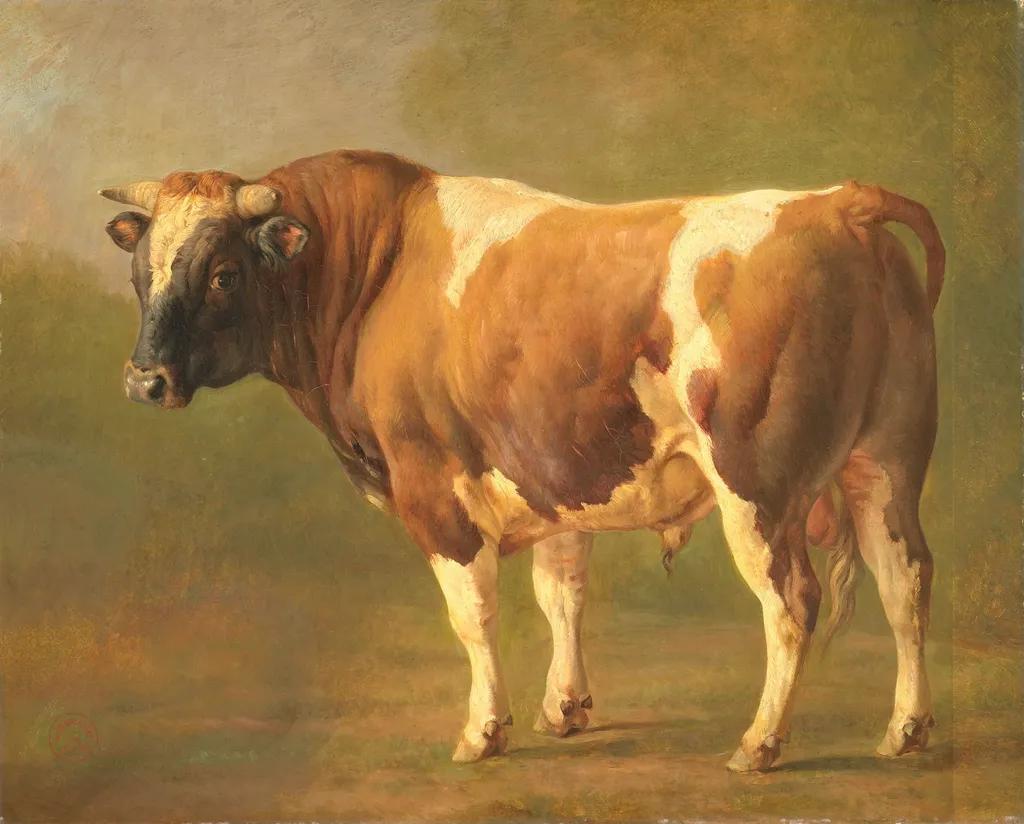
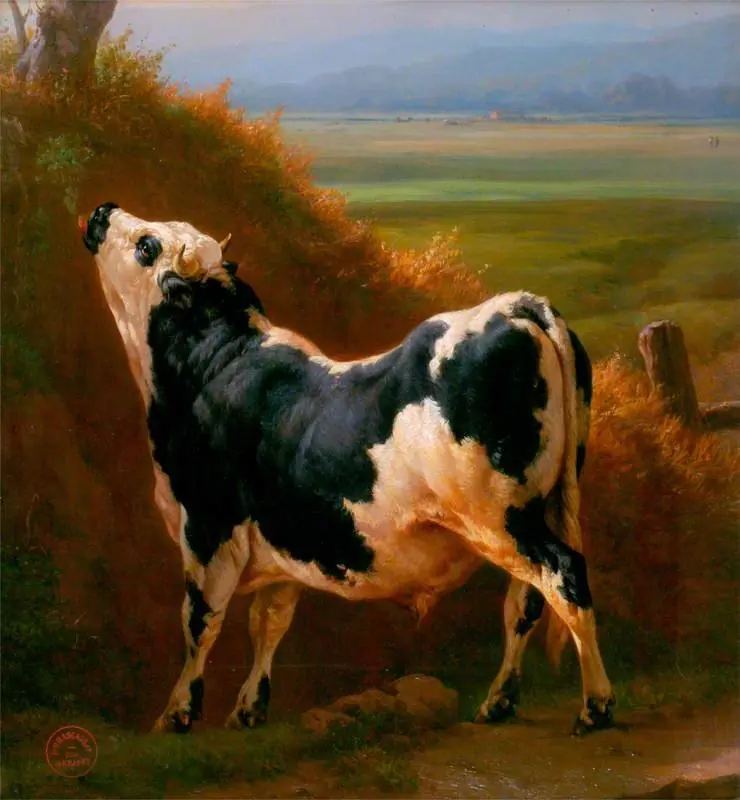
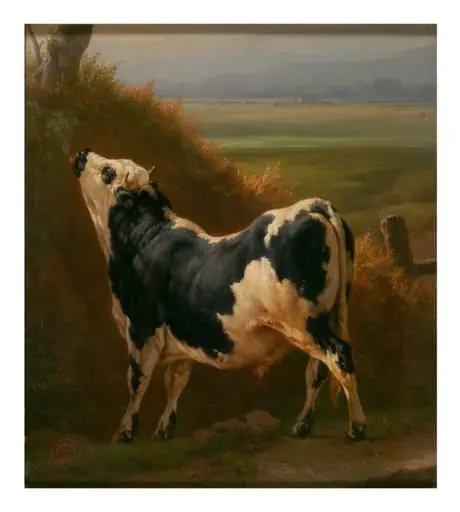
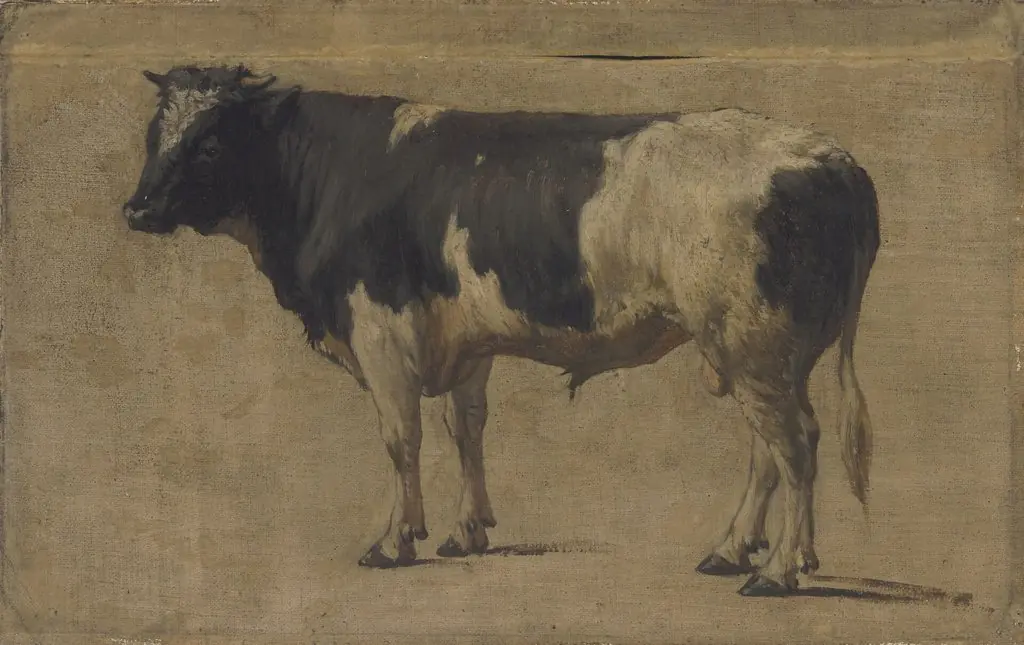
Study of a Bull is an oil painting by Jacques Raymond Brascassat. It dates from 1830 and is held in the collection of the Rijksmuseum.
About this work
Subject & Meaning
As a study, the work focuses on close observation of the animal rather than narrative or allegorical content, fitting within the genre of animal art.
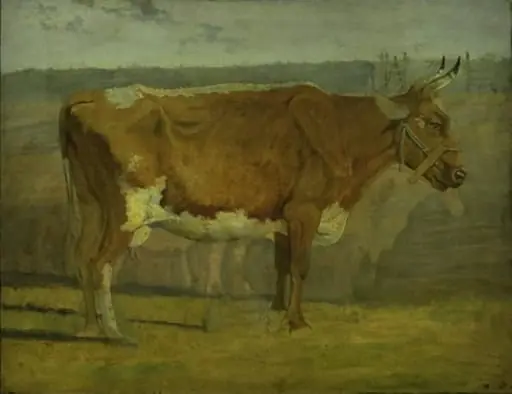
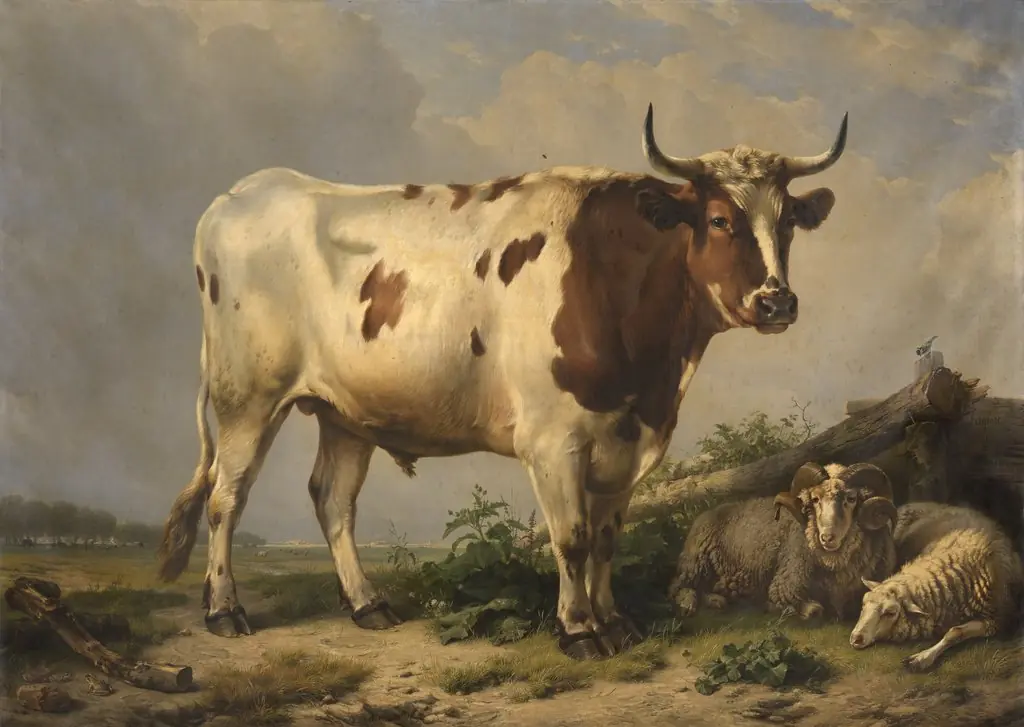
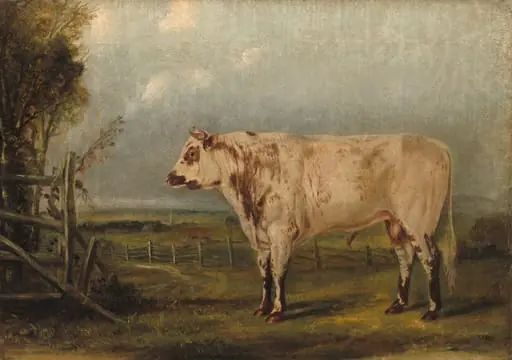
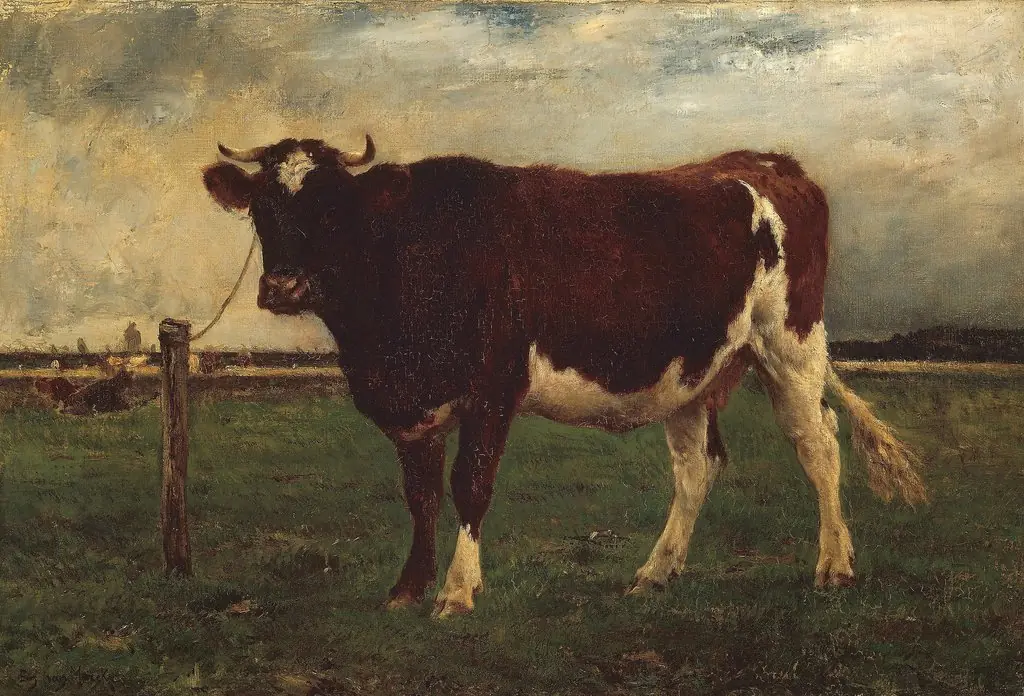
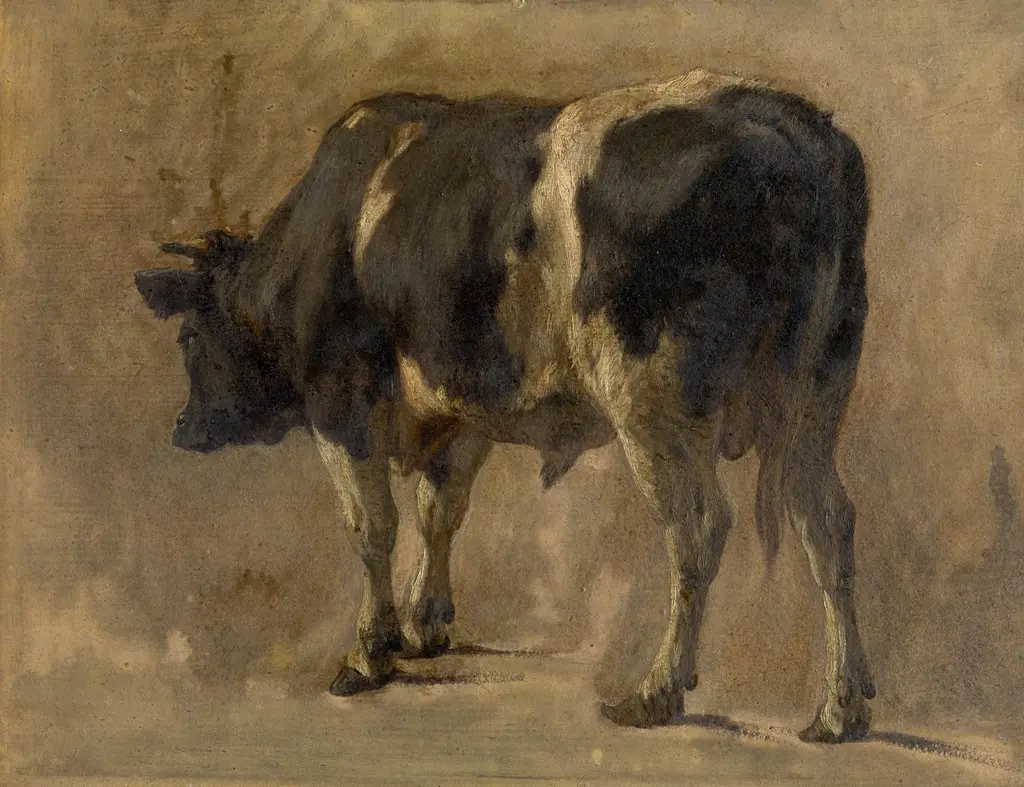
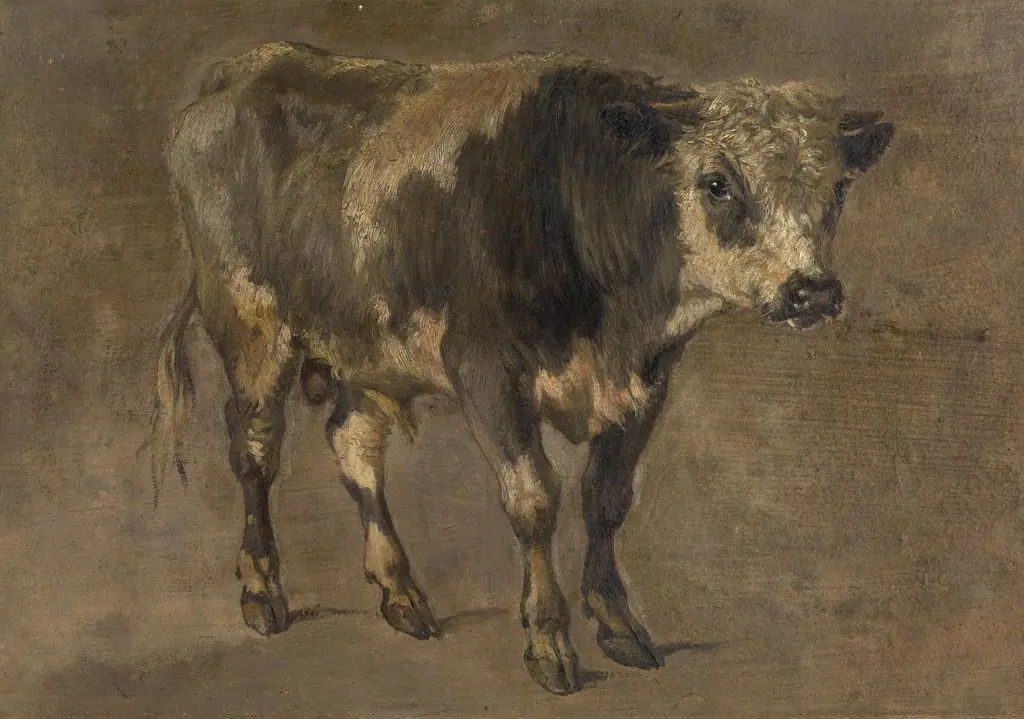
Study of a Bull by Jacques Raymond Brascassat is an animal painting whose subject is a bull, rendered in oil on canvas. As a study, the work focuses on close observation of the animal rather than narrative or allegorical content, fitting within the genre of animal art. The depiction of a single bull aligns with a nineteenth-century European tradition of animal portraiture, in which artists treated individual creatures as worthy subjects of sustained pictorial attention.
The Rijksmuseum holds the painting, and its modest scale (43 by 52.5 cm) suggests an intimate, observational study rather than a large exhibition piece. The bull itself carries no specific symbolic program in the available records; its meaning lies in the act of careful study of bovine form and character, a hallmark of Brascassat's broader interest in animal subjects.
Technique & Style
Study of a Bull is executed in oil paint on canvas, a standard support for nineteenth-century French animal painting. The work is modest in scale, measuring 43 cm in height by 52.5 cm in width, with the wider horizontal orientation suiting its animal subject. Classified as a painting within the genre of animal art, it depicts a bull, a recurring motif in Jacques Raymond Brascassat's oeuvre.
The medium and format are consistent with a study rather than a finished large-scale composition, allowing for focused observation of the animal's form.
The canvas is held in the Rijksmuseum collection, and no specific condition notes are recorded in the available sources.
History & Provenance
Jacques Raymond Brascassat created the oil painting Study of a Bull in 1830. The work depicts a bull and is executed on canvas using oil paint. While the primary creation date is established as 1830, some records also associate the piece with the year 1867, though the earlier date represents its inception. The painting is currently held in the collection of the Rijksmuseum in Amsterdam.
Overview
Painted in 1830 by French artist Jacques Raymond Brascassat, this oil-on-canvas work is a focused study of a bull in a natural setting. It belongs to the Rijksmuseum’s collection and exemplifies Brascassat’s interest in animal subjects within the broader context of 19th-century landscape painting. The composition emphasizes the animal’s physical presence without narrative embellishment, reflecting a direct observational approach common among artists of the period.
Context
In early 19th-century France, animal painting gained renewed attention as part of a broader interest in natural history and rural life. Brascassat, trained in the academic tradition, aligned with artists who sought to elevate depictions of animals beyond mere ornamentation. This work reflects a trend toward empirical observation, influenced by scientific illustration and the Romantic fascination with nature’s quiet power.
Legacy
Though Brascassat is less widely known today, this study remains a quiet testament to his skill in capturing animal anatomy with sensitivity. It contributes to a lineage of European animal studies that prioritize observation over symbolism. Its presence in a major public collection ensures continued access for scholars and viewers interested in 19th-century naturalist painting practices.
Own this work as a print
Artist & collection
Artist
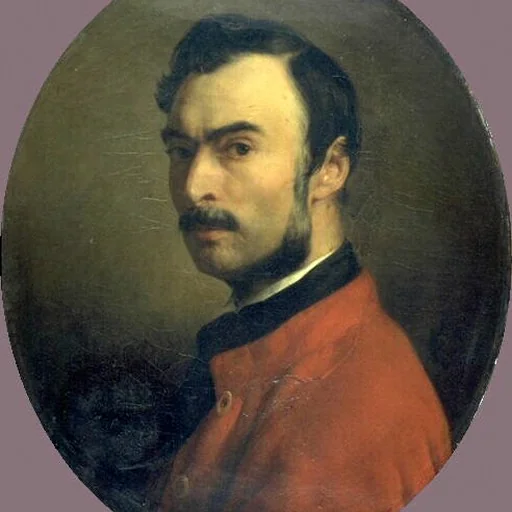
Jacques Raymond Brascassat (August 30, 1804 – February 28, 1867) was a famous French painter noted for his landscapes, and in particular his animal paintings.