Artwork
A Young Bull
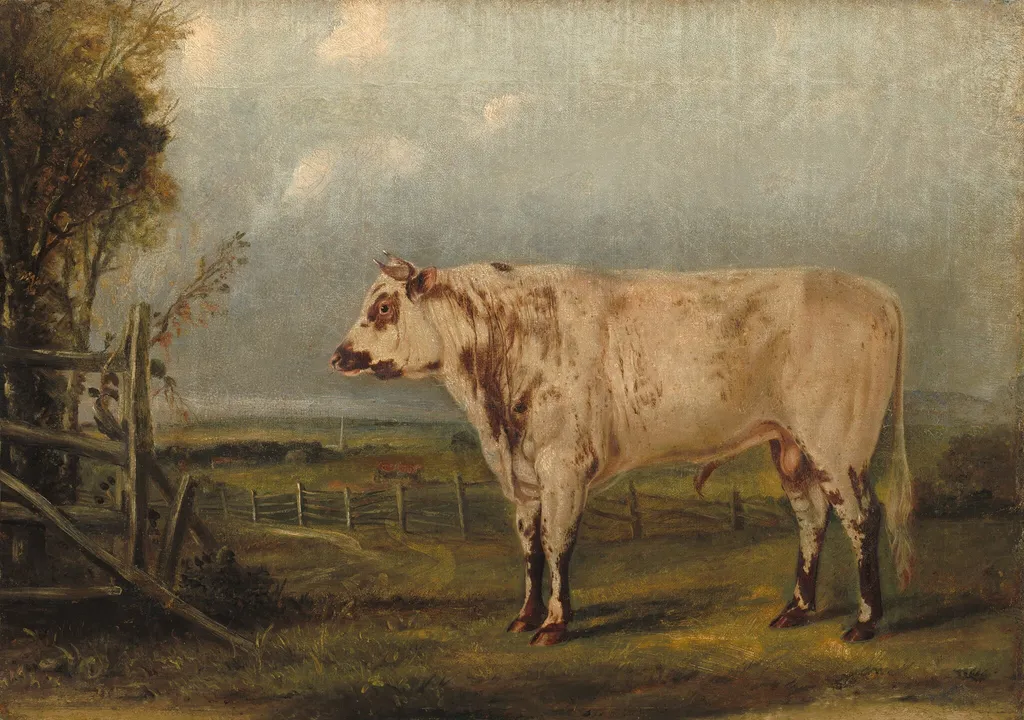
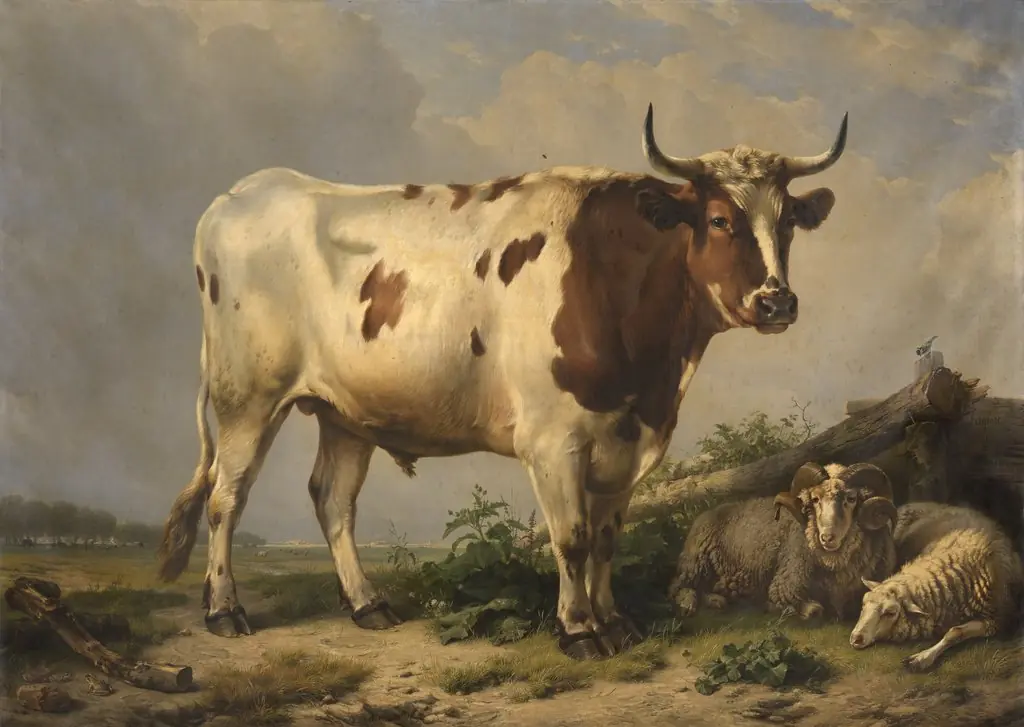
A Young Bull is an oil painting by the American Folk Art artist John Woodhouse Audubon. It dates from 1849 and is held in the collection of the National Gallery of Art.
About this work
Technique & Style
As a piece classified within the painting tradition, it utilizes standard materials of the period, specifically oil pigments applied to a woven fabric support.
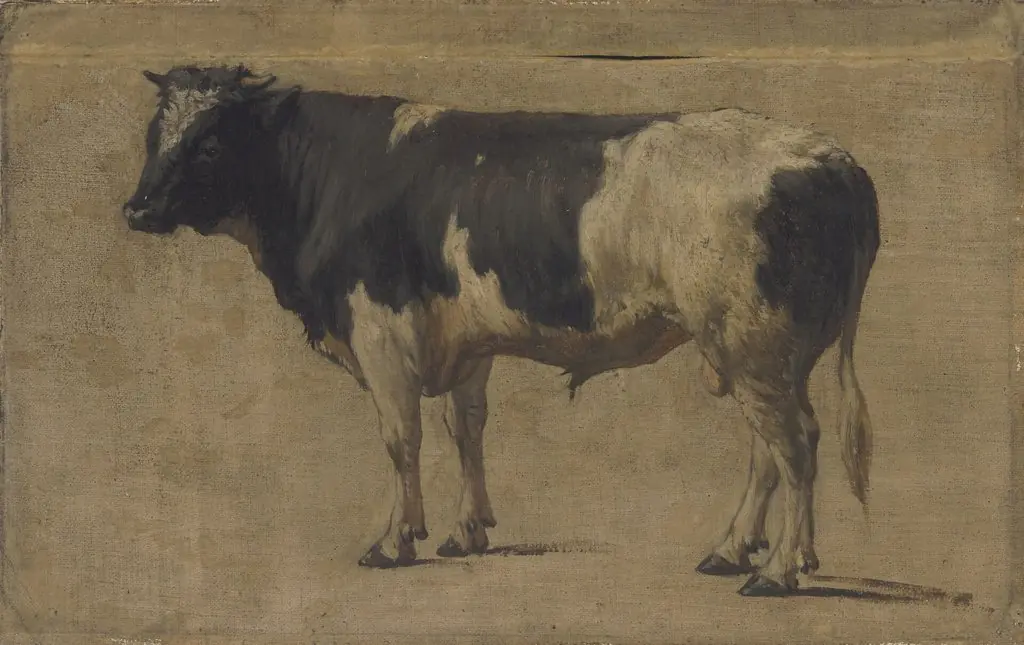
Executed in 1849, this work is an oil painting on canvas. The composition measures 35.3 cm in height and 50.5 cm in width. As a piece classified within the painting tradition, it utilizes standard materials of the period, specifically oil pigments applied to a woven fabric support.
The physical object bears historical labels on its reverse side, including handwritten inscriptions in ink and pencil that document its early family provenance, though these markings do not alter the primary artistic medium or technique employed by the artist.
History & Provenance
Created in 1849, A Young Bull is an oil painting on canvas by John Woodhouse Audubon. The work likely originated with the artist before passing by inheritance to his wife, Caroline Hall Audubon, in Salem, New York. Upon her death, ownership transferred to their daughters, Maria Rebecca and Florence Audubon, as indicated by inscriptions on the painting's reverse.
The sisters subsequently bequeathed the piece to their nephew, Leonard Benjamin Audubon, who resided in Sydney, Australia. Leonard sold the painting in 1950 to E.J.L. Hallstrom, also of Sydney. The following year, Hallstrom donated the work to the National Gallery of Art in Washington, D.C.
The painting A Young Bull is held by the National Gallery of Art in Washington, D.C. It entered the collection through a gift in 1951 from E.J.L. Hallstrom, who had acquired it in 1950 from Leonard Benjamin Audubon in Sydney, Australia. The work was previously in the Audubon family, passing from the artist to his wife Caroline Hall Audubon and then to their daughters Maria Rebecca and Florence Audubon, before moving to Leonard Benjamin Audubon and eventually to Hallstrom.
The National Gallery of Art records the work with accession number 1951.10.1 and has exhibited it as part of its permanent collection displays, including in the exhibition "American Masters: The Art of John James Audubon" in 2002.
Context
A Young Bull by John Woodhouse Audubon was painted in 1849 and is classified as an oil painting on canvas. It entered the National Gallery of Art collection through a chain of inheritance within the Audubon family, beginning with the artist's wife Caroline Hall Audubon and their daughters Maria Rebecca and Florence, eventually passing to a nephew in Australia before being acquired by E.J.L. Hallstrom and gifted to the museum in 1951. The work measures 50.5 by 35.3 centimeters and is held in the National Gallery of Art's collection in Washington, D.C., where it remains on view.
Scholarship on the painting emphasizes its significance within the Audubon family's artistic legacy and its role in documenting 19th-century American wildlife art. Its provenance reflects broader patterns of inheritance and transnational movement of artworks within artistic families, particularly during the late 19th and early 20th centuries.
Legacy
A Young Bull has remained in the collection of the National Gallery of Art since its donation in 1951, where it is displayed in the American wing. The work is noted for its role in shaping 19th-century American wildlife painting, influencing later artists who depicted domestic animals with a blend of scientific observation and romantic realism. Contemporary reviews have highlighted its technical precision and its contribution to the development of animal portraiture in the United States.
The painting entered the National Gallery of Art in 1951 as a gift from E.J.L. Hallstrom, who acquired it from the estate of Leonard Benjamin Audubon in Sydney. Its provenance reflects a familial chain from the artist to his daughters and nephew, linking the work to both American and Australian art histories.
Overview
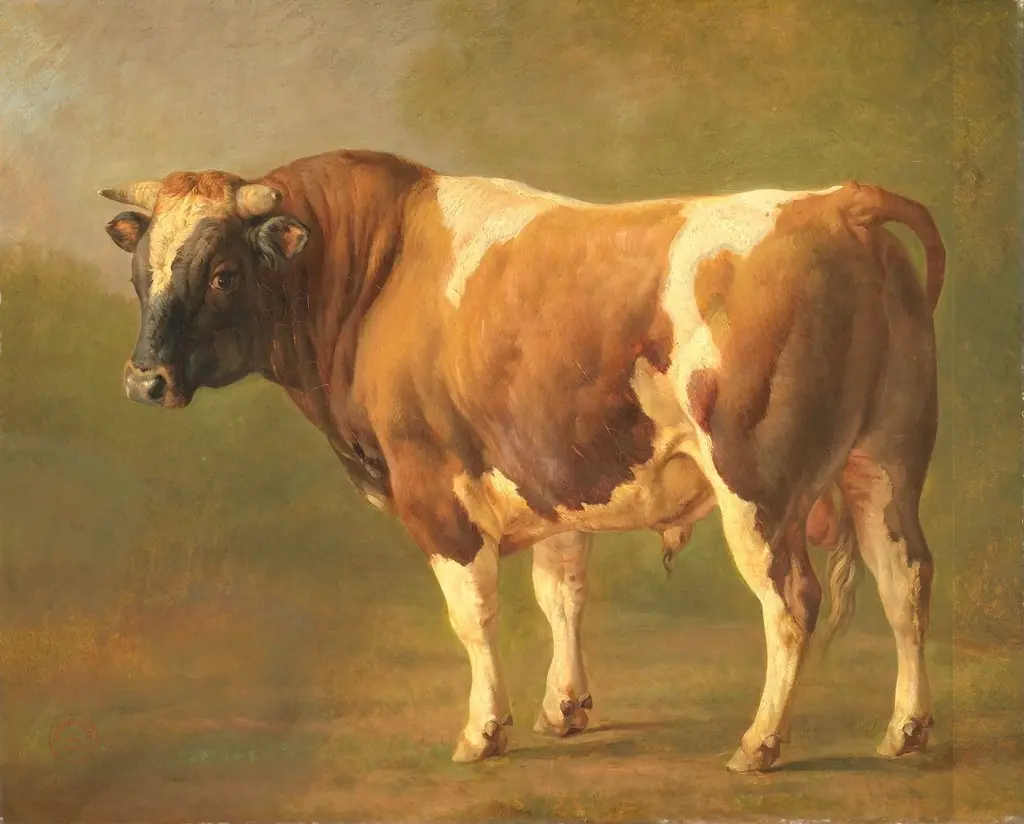
John Woodhouse Audubon painted A Young Bull around 1849 using oil on canvas. The work measures a solitary white bull positioned in a fenced pasture, its head turned forward. A simple wooden fence and a solitary tree border the animal, while a muted sky forms a soft backdrop. The composition centers on the bull, emphasizing its calm demeanor.
Subject & Meaning
The painting depicts a single young bull, its white coat interrupted by brown patches, standing serenely within a modest rural setting. The animal’s forward gaze and relaxed posture suggest a moment of quiet observation, inviting viewers to contemplate the everyday presence of livestock in 19th‑century agrarian life.
Own this work as a print
Artist & collection