Artwork
Untitled
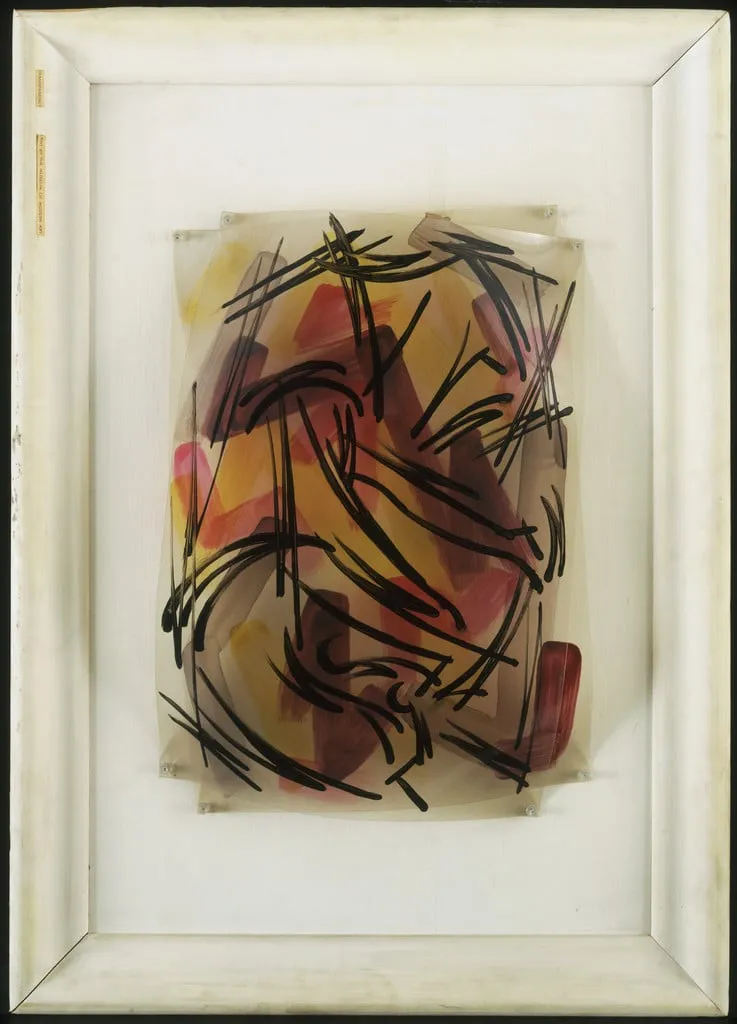
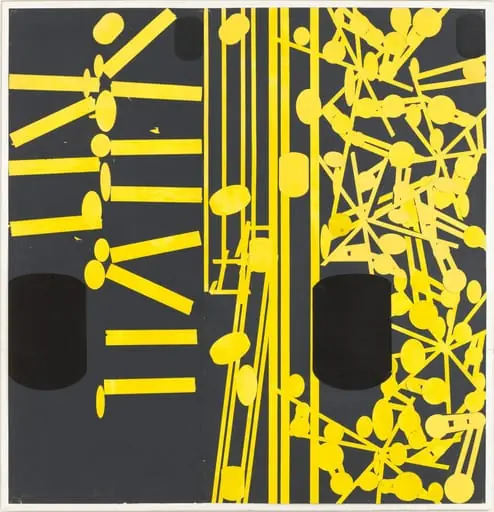
Untitled is a wood painting by the Abstract Expressionist artist James Edward Davis. It dates from 1944 and is held in the collection of the Museum of Modern Art.
About this work
Overview
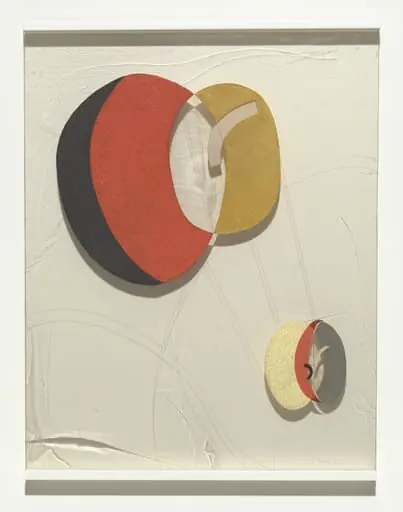
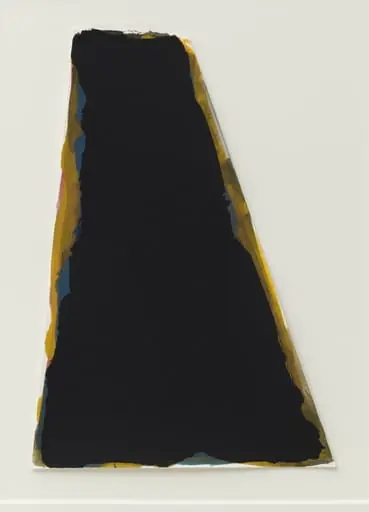
Created in 1944, this untitled work by James Edward Davis is an abstract composition composed of pigment applied to two sheets of translucent cellulose acetate that are mounted on a plywood panel. The piece belongs to the collection of the Museum of Modern Art and exemplifies the artist’s experimental approach to material and surface.
Subject & Meaning
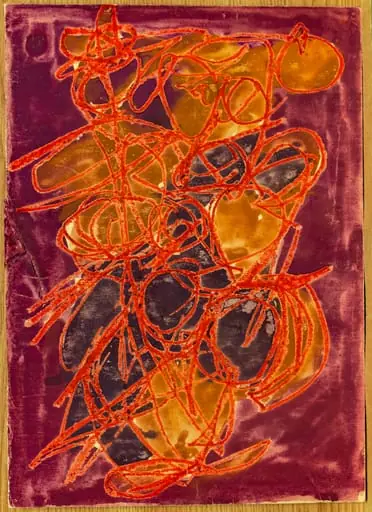
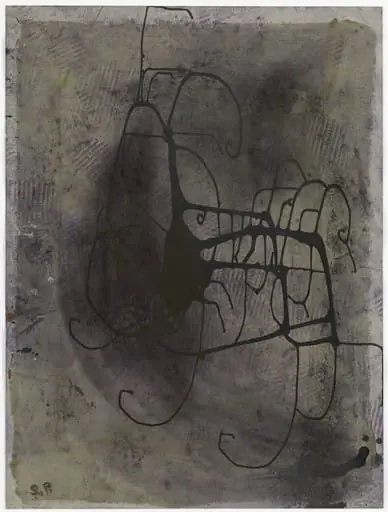
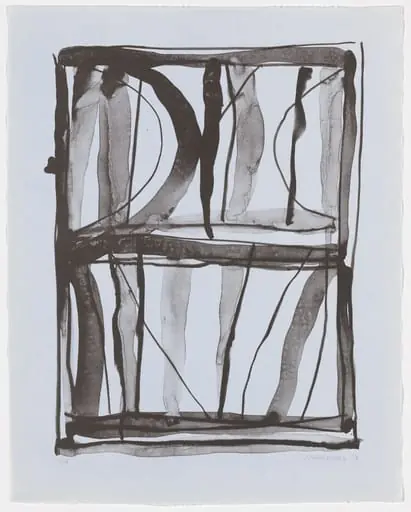
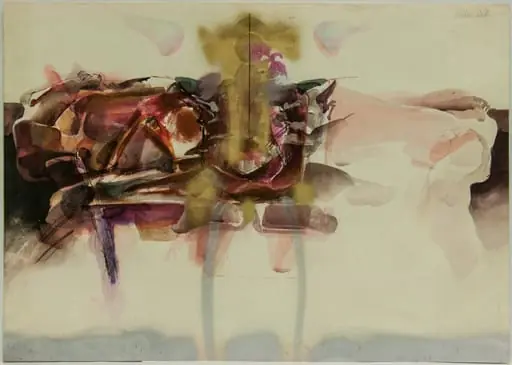
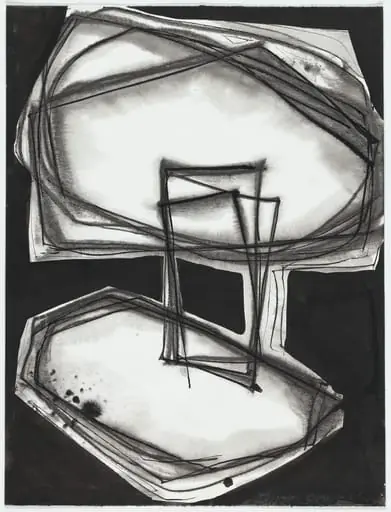
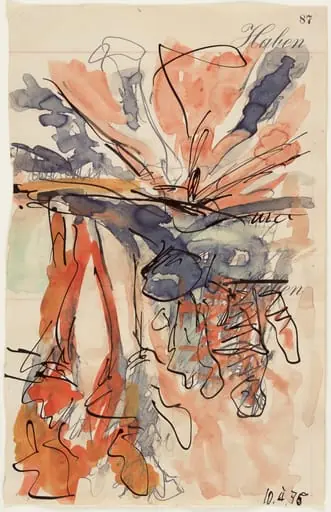
The painting presents an interplay of warm hues, predominantly yellows, oranges, and reds, interrupted by a network of bold black lines that twist and intersect across the surface. The loose, uneven forms suggest gestural marks or fleeting shadows, inviting viewers to consider the tension between color fields and linear disruption.
Technique & Style
Davis combined flat washes of color with incisive, sharp strokes of black pigment, producing a texture that feels both fluid and deliberately rough. The use of cellulose acetate, a semi‑transparent material, allows light to penetrate the layers, while the thick black lines provide a stark visual counterpoint, creating a dynamic surface quality.
History & Provenance
Since its creation in the mid‑1940s, the work has remained within institutional holdings, ultimately entering the permanent collection of the Museum of Modern Art. Its acquisition reflects MoMA’s interest in mid‑century American abstraction and experimental media.
Context
The painting emerges from a period when artists were exploring non‑traditional supports and embracing abstraction as a means of expressing interior experience. Davis’s choice of cellulose acetate aligns with contemporary investigations into transparency and the physicality of paint, situating the work within broader post‑war artistic developments.
Artist & collection